Artwork
六十余州名所図会 対馬 海岸 夕晴|Evening Glow, Tsushima Province, from the series Views of Famous Places in the Sixty-Odd Provinces
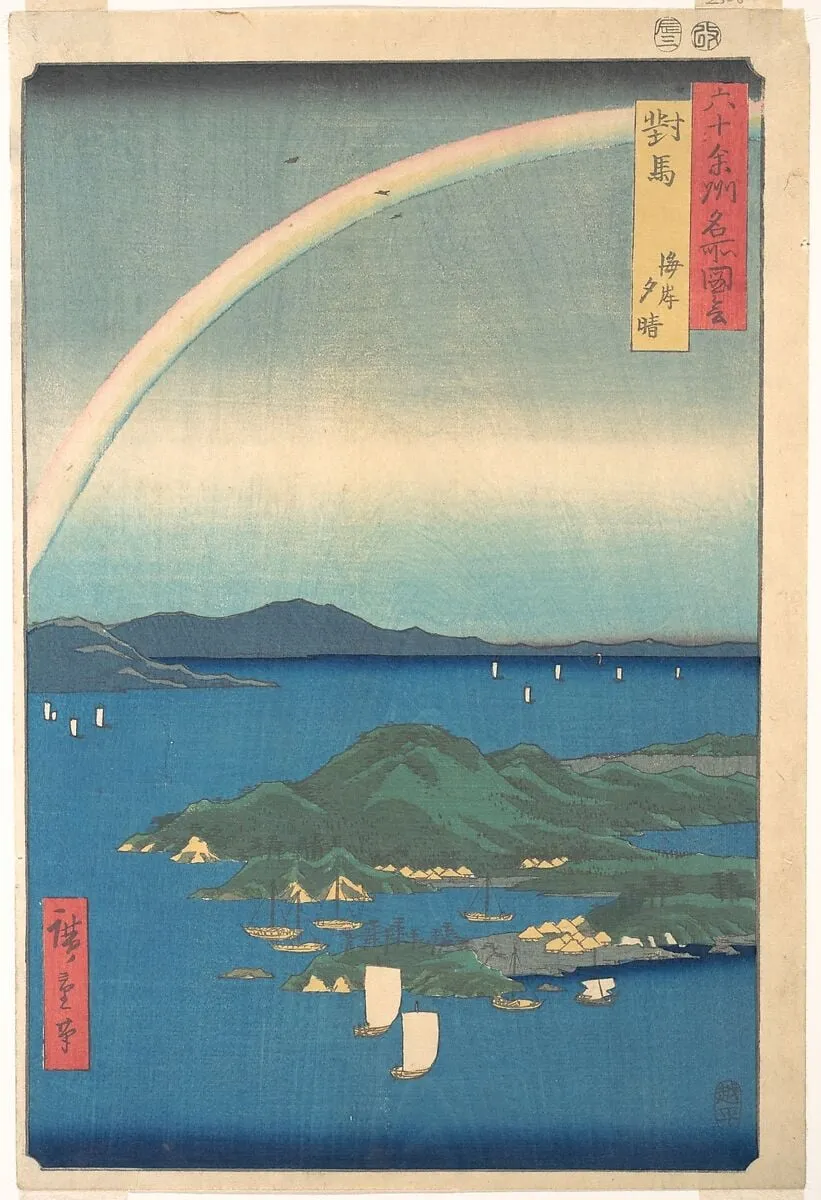
六十余州名所図会 対馬 海岸 夕晴|Evening Glow, Tsushima Province, from the series Views of Famous Places in the Sixty-Odd Provinces is an ink print by the Romanticist artist Utagawa Hiroshige. It dates from 1853 and is held in the collection of the Metropolitan Museum of Art.
About this work
Overview
Rendered in ink and color on paper, it captures a tranquil coastal view of Tsushima Province.
Created around 1853 by Utagawa Hiroshige, this woodblock print is part of the series *Views of Famous Places in the Sixty-Odd Provinces*, a project documenting Japan’s regional landscapes. Rendered in ink and color on paper, it captures a tranquil coastal view of Tsushima Province. The print exemplifies Hiroshige’s shift from urban scenes to natural settings, reflecting a broader trend in Edo-period printmaking toward serene, atmospheric landscapes.
Subject & Meaning
The scene portrays a quiet bay at dusk, with fishing huts and small boats dotting the shoreline beside a hilly island. A rainbow arches gently across the sky, its ends touching the horizon, suggesting a moment of transition between day and night. The composition evokes stillness and harmony, emphasizing nature’s quiet rhythms over human activity, a common theme in Hiroshige’s later work.
Technique & Style
Hiroshige employed flat planes of color and simplified forms to convey depth without perspective distortion. The palette features muted blues, greens, and a soft pink in the clouds, with the rainbow rendered in clean, unbroken bands. Woodblock carving allowed for precise outlines and subtle gradations, enhancing the calm mood. The lack of fine detail invites contemplation rather than narrative.
History & Provenance
The print was produced during the final years of the Edo period, when landscape prints gained popularity among urban audiences. It entered the collection of The Metropolitan Museum of Art through established acquisition channels, likely as part of a broader effort to document Japanese print traditions in the late 19th or early 20th century.
Context
Hiroshige’s series responded to growing domestic travel and regional pride under the Tokugawa shogunate. While earlier ukiyo-e focused on actors and courtesans, this work reflects a cultural turn toward celebrating Japan’s geography. Tsushima, a strategic island between Korea and Honshu, was rarely depicted, making this view both unusual and significant.
Legacy
This print contributes to Hiroshige’s reputation as a master of atmospheric landscape design. Its restrained palette and poetic composition influenced later Western artists, including the Impressionists, who admired its emotional subtlety. Though not widely reproduced, it remains a representative example of mid-19th-century Japanese printmaking’s quiet ambition.
Artist & collection
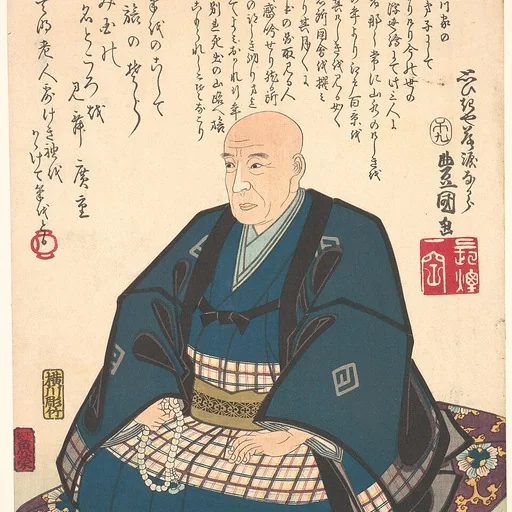
Artist
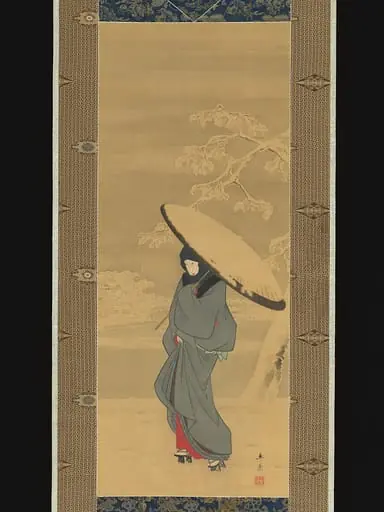
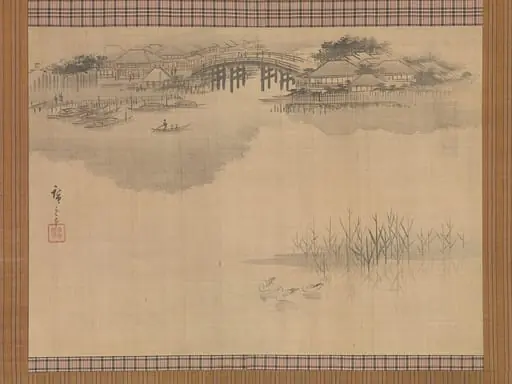
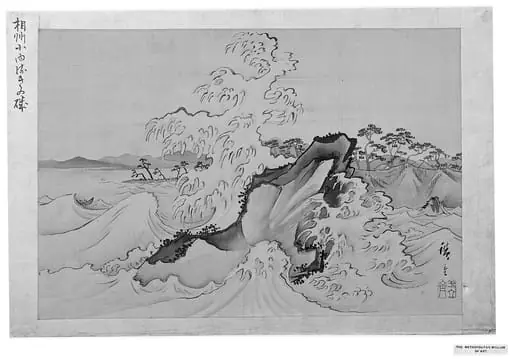
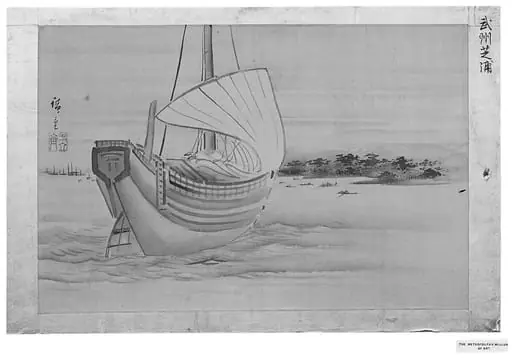
Utagawa Hiroshige (歌川 広重) or Andō Hiroshige (安藤 広重), born Andō Tokutarō (安藤 徳太郎; 1797 – 12 October 1858), was a Japanese ukiyo-e artist, considered the last great master of that tradition.

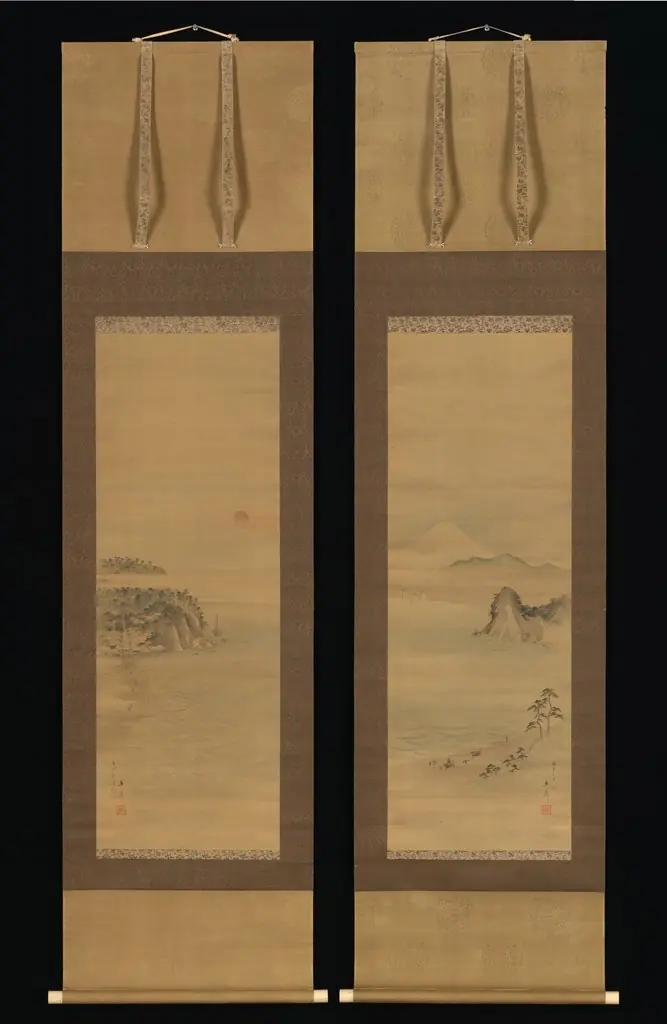
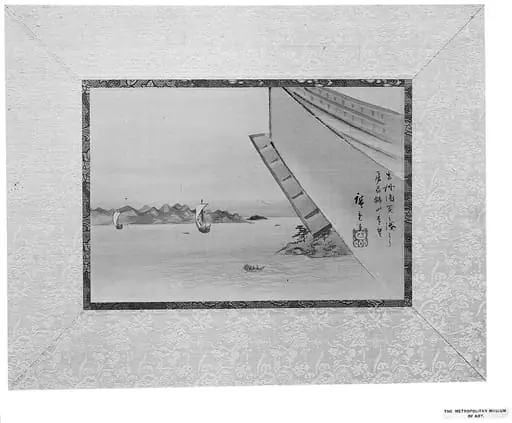
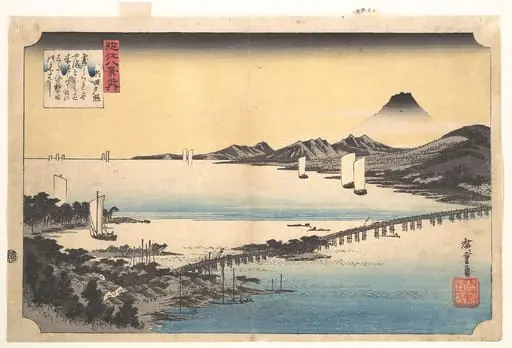 歌川広重画 近江八景の内 瀬田夕照|Sunset Glow at Seta (Seta sekishō), from the series Eight Views of Ōmi Province (Ōmi hakkei)
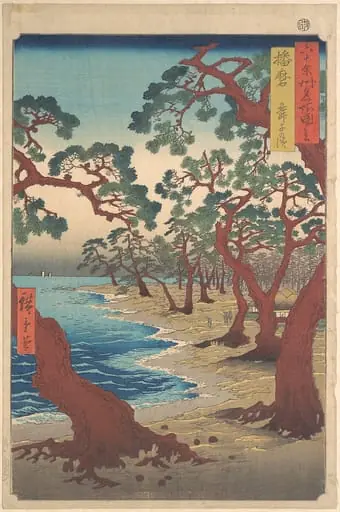 六十余州名所図会 播磨 舞子の浜|Maiko Beach, Harima Province, from the series Views of Famous Places in the Sixty-Odd Provinces
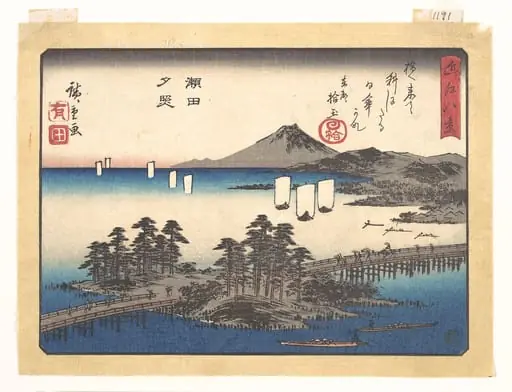 歌川広重画 「近江八景 瀬田夕照」|Sunset Glow at Seta, from the series Eight Views of Ōmi (Ōmi hakkei)
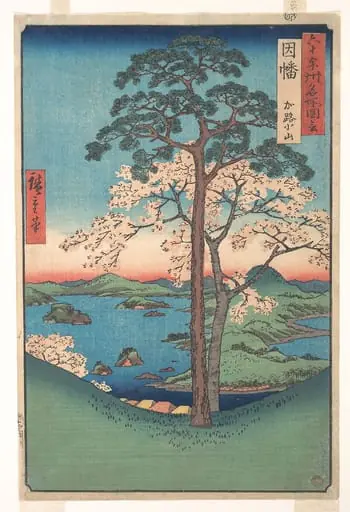 六十余州名所図会 因幡 か路小山|View of Kajikoyama, Inaba Province, from the series Views of Famous Places in the Sixty-Odd Provinces
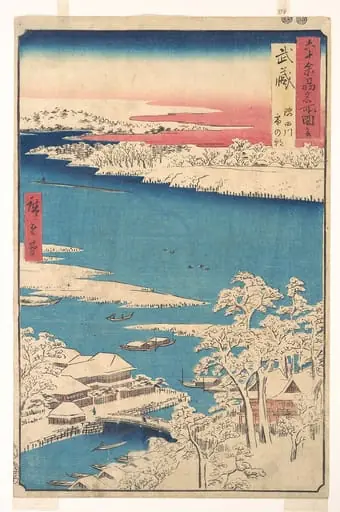 六十余州名所図会 武蔵 隅田川 雪の朝|Morning after a Snowfall, the Sumida River, Musashi Province, from the series Views of Famous Places in the Sixty-Odd Provinces
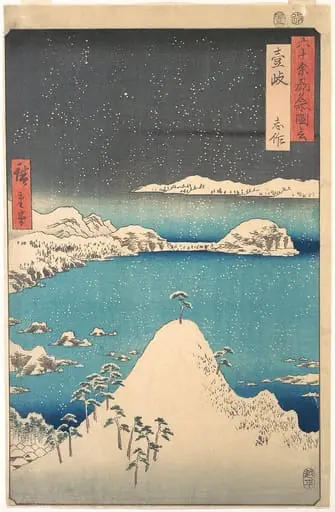 六十余州名所図会 壱岐 志作|Snowfall at Shimasaku, Iki Province, from the series Views of Famous Places in the Sixty-Odd Provinces
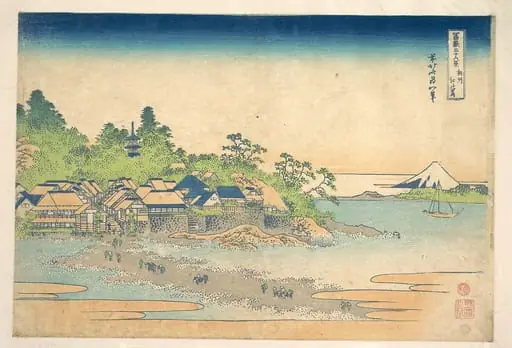 冨嶽三十六景 相州江の島|Enoshima in Sagami Province (Sōshū Enoshima), from the series Thirty-six Views of Mount Fuji (Fugaku sanjūrokkei)
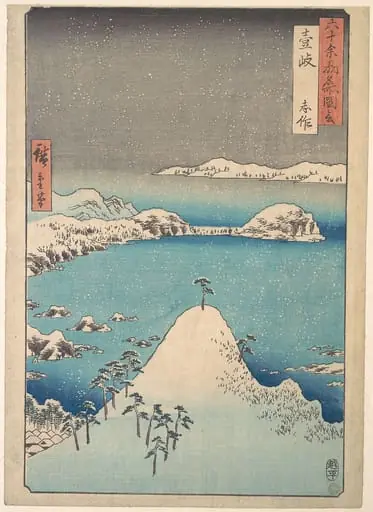 六十余州名所図会 壱岐 志作|Winter View of Shimasaku in the Province of Iki