Artwork
歌川広重画 「近江八景 瀬田夕照」|Sunset Glow at Seta, from the series Eight Views of Ōmi (Ōmi hakkei)
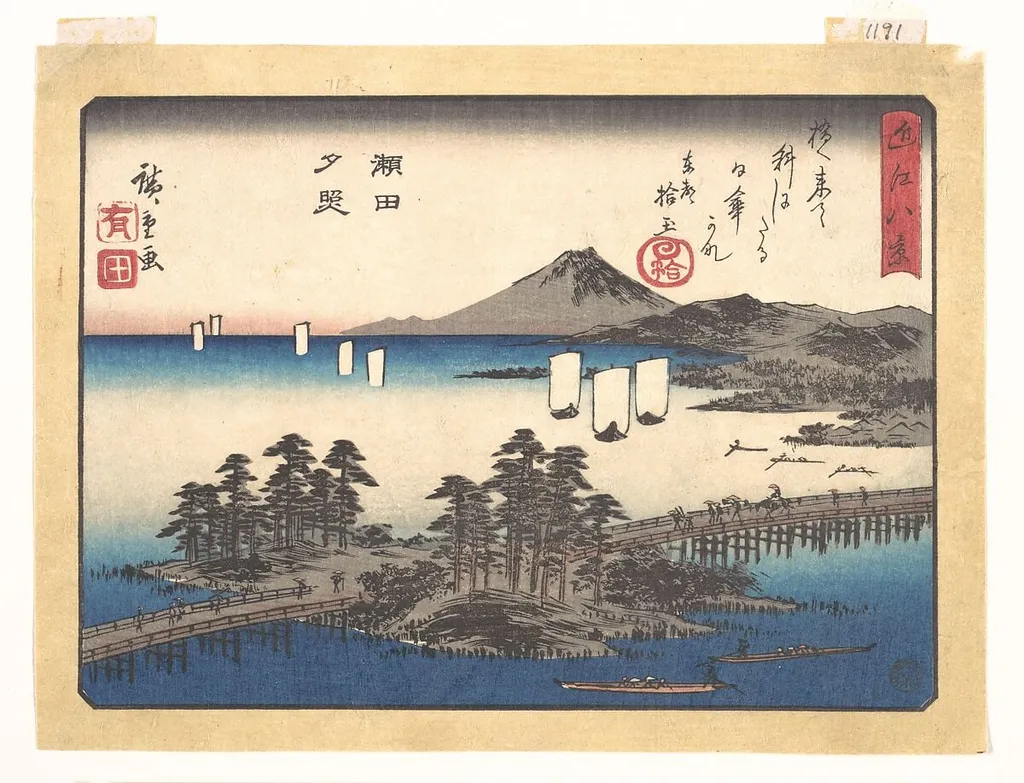
歌川広重画 「近江八景 瀬田夕照」|Sunset Glow at Seta, from the series Eight Views of Ōmi (Ōmi hakkei) is an ink print by the Romanticist artist Utagawa Hiroshige. It dates from 1834 and is held in the collection of the Metropolitan Museum of Art.
About this work
Overview
Created around 1834 by Utagawa Hiroshige, this woodblock print is one of eight scenes from the series Eight Views of Ōmi, which reimagines a traditional Chinese poetic motif through the lens of Japan’s Ōmi Province. Executed in ink and color on paper, the work exemplifies Hiroshige’s shift in ukiyo-e from depictions of urban life to contemplative landscapes, establishing a new direction in Japanese printmaking.
Subject & Meaning
The scene captures the moment of sunset over Lake Biwa, with a long bridge arching across the water and a solitary boat gliding beneath it. Behind, a distant mountain fades into the twilight. The composition evokes quiet solitude and transience, aligning with classical Japanese aesthetics that find beauty in fleeting natural moments, rather than grandeur or human activity.
Technique & Style
Hiroshige employed subtle gradations of color—soft pinks melting into cool blues—to suggest the fading light and atmospheric depth. The muted palette and delicate lines avoid sharp contrasts, enhancing the serene mood. His use of layered printing techniques allowed for nuanced tonal transitions, a hallmark of his mature style that prioritized emotional resonance over detailed realism.
History & Provenance
The print was produced during Hiroshige’s early period of landscape series, following his breakthrough with the Tōkaidō road prints. As part of a commercially published series, it was widely distributed among urban audiences in Edo. Original impressions are now held in major collections, including the Museum of Fine Arts, Boston, and the British Museum, reflecting its enduring scholarly interest.
Context
The Eight Views of Ōmi series drew from a Chinese literary tradition adapted by Japanese poets and painters since the medieval period. Hiroshige’s version localized the theme to Ōmi’s real topography, blending poetic convention with topographical accuracy. This fusion reflected a broader 19th-century Japanese interest in redefining classical motifs through contemporary visual language.
Legacy
Hiroshige’s atmospheric landscapes influenced later generations of Japanese artists and, through exports to Europe, impacted 19th-century Western painters such as Van Gogh and Monet. His approach to mood, light, and spatial recession helped redefine landscape as a subject worthy of serious artistic attention, moving beyond decorative function toward poetic expression.
Artist & collection
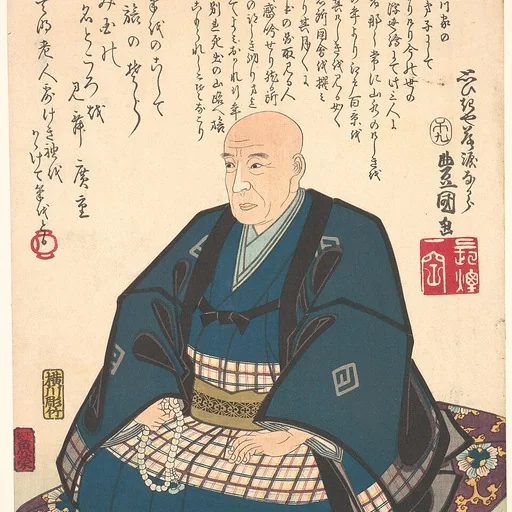
Artist
Utagawa Hiroshige (歌川 広重) or Andō Hiroshige (安藤 広重), born Andō Tokutarō (安藤 徳太郎; 1797 – 12 October 1858), was a Japanese ukiyo-e artist, considered the last great master of that tradition.

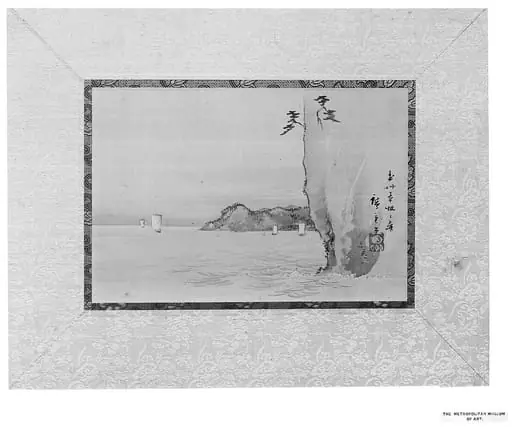
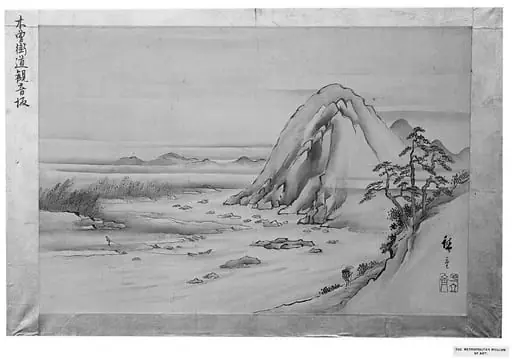
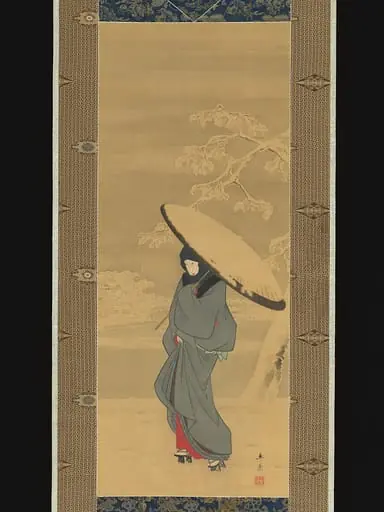
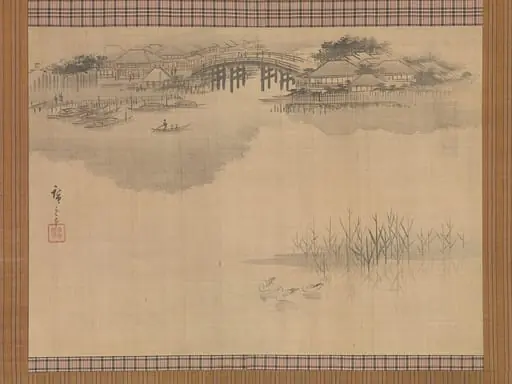
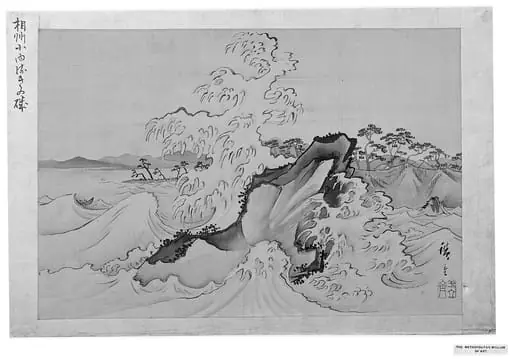
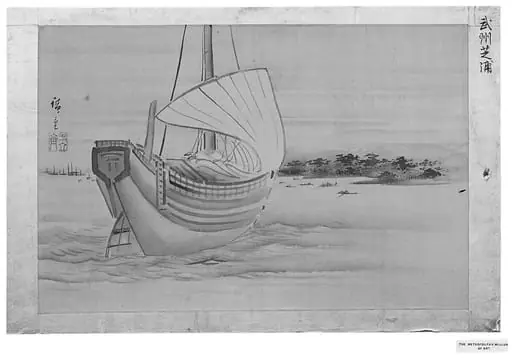
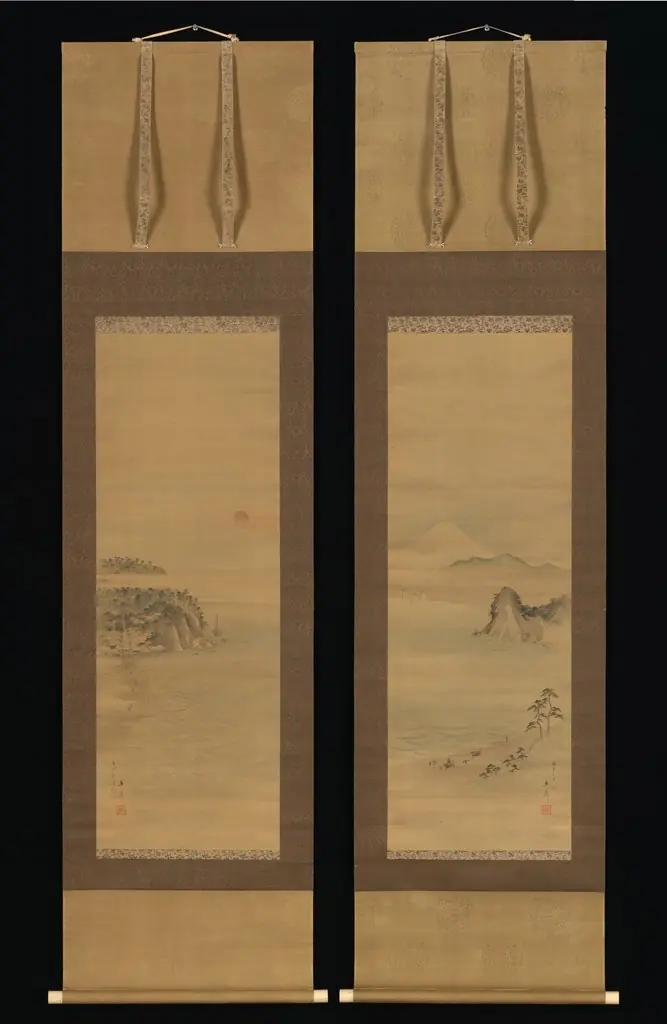
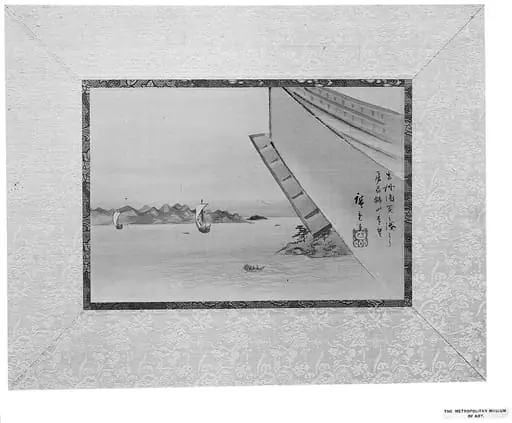
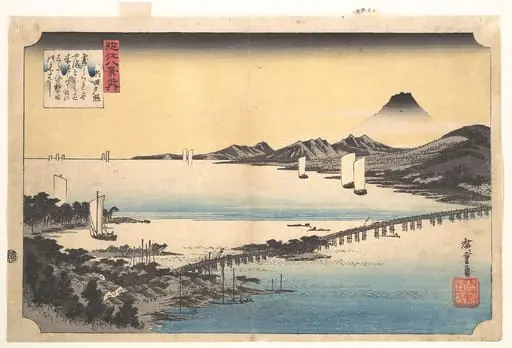 歌川広重画 近江八景の内 瀬田夕照|Sunset Glow at Seta (Seta sekishō), from the series Eight Views of Ōmi Province (Ōmi hakkei)
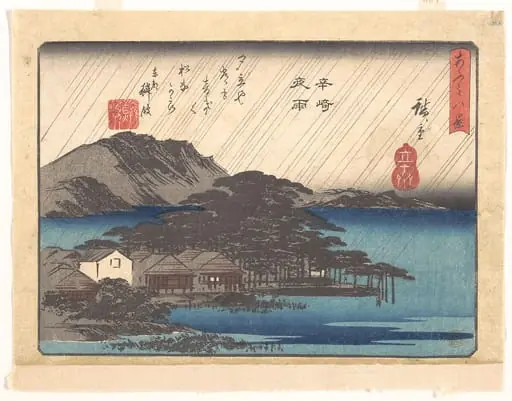 歌川広重画 「あふみ八景 辛崎夜雨」|Evening Rain at Karasaki, from the series Eight Views of Ōmi (Ōmi hakkei)
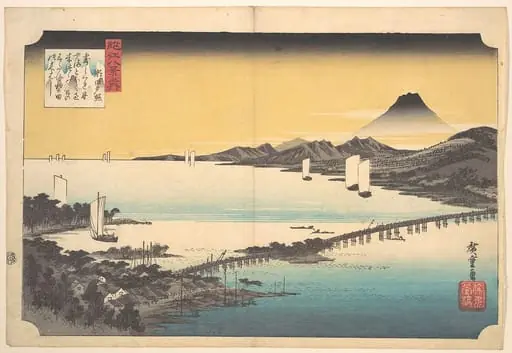 近江八景之内 瀬田夕照|Sunset at Seta
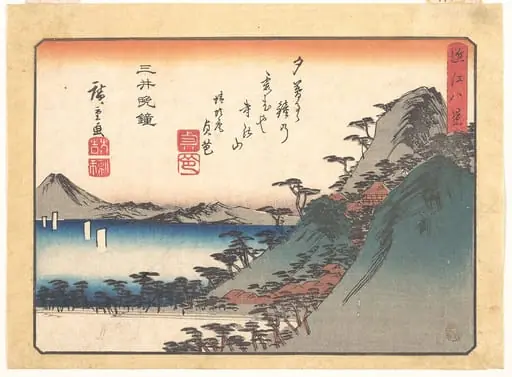 歌川広重画 「近江八景 三井晩鐘」|Evening Bell at Miidera Temple, from the series Eight Views of Ōmi (Ōmi hakkei)
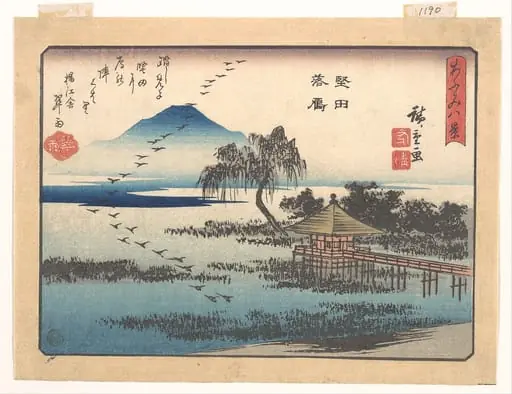 歌川広重画 「あふみ八景 堅田落雁」|Descending Geese at Katada, from the series Eight Views of Ōmi (Ōmi hakkei)
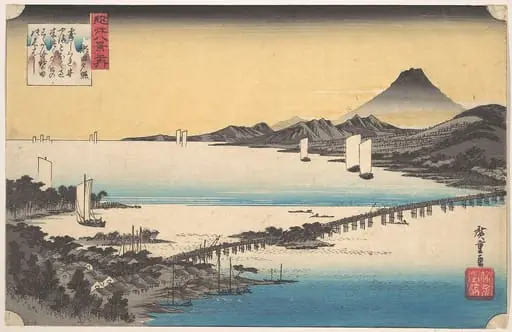 近江八景之内 瀬田夕照|Sunset at Seta
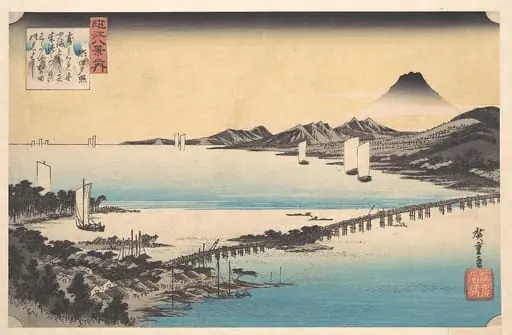 近江八景之内 瀬田夕照|Seta no Sekisho. Sunset, Seta. Lake Biwa
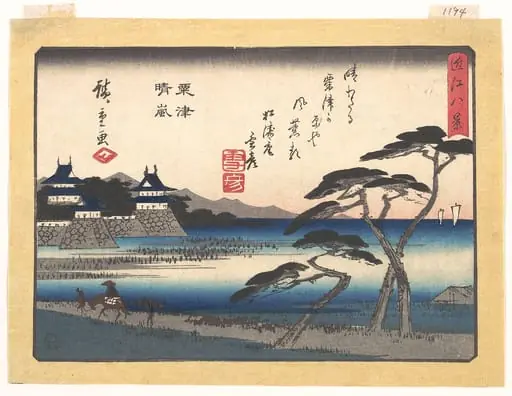 歌川広重画 「近江八景 粟津晴嵐」|Clearing Weather at Awazu (Awazu seiran), from the series Eight Views of Ōmi (Ōmi hakkei)
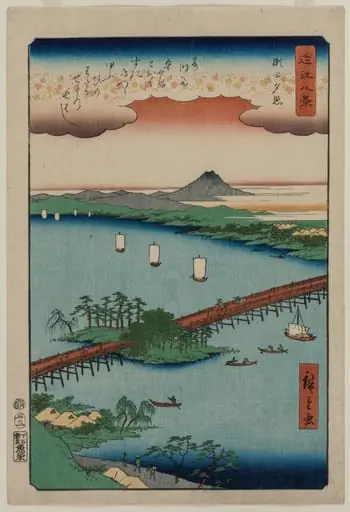 Evening Glow at Seta, from the series Eight Views of Ōmi
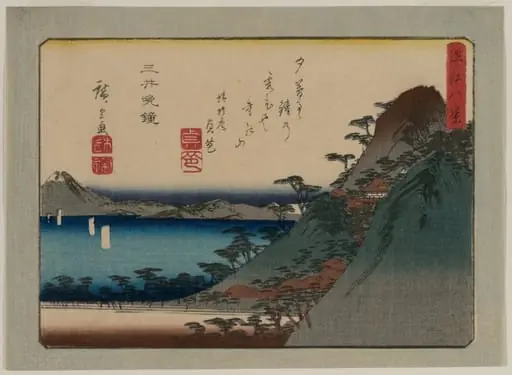 Evening Bell at Mii Temple, from the series Eight Views of Omi Province