Artwork
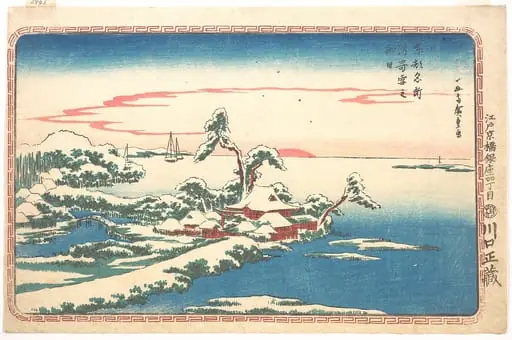
金沢八景 内川暮雪|Evening Snow at Uchikawa
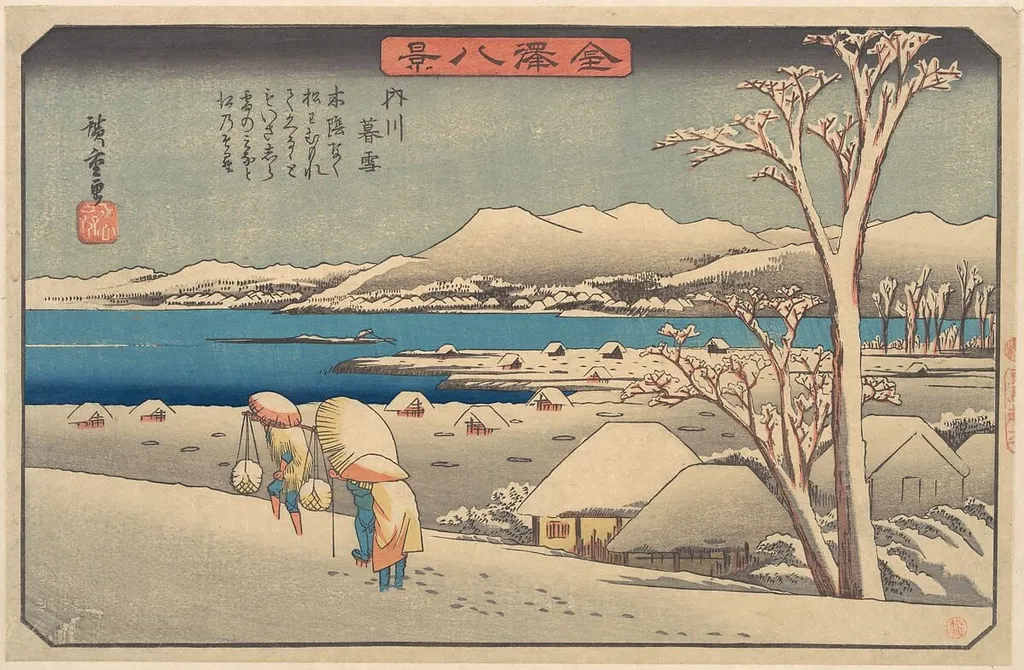
金沢八景 内川暮雪|Evening Snow at Uchikawa is an ink print by the Romanticist artist Utagawa Hiroshige. It dates from 1836 and is held in the collection of the Metropolitan Museum of Art.
About this work
Overview
Unlike many ukiyo-e works focused on city life, this piece centers on a tranquil rural landscape.
Created around 1836 by Utagawa Hiroshige, this woodblock print is part of the series *Eight Views of Kanazawa*, which reimagines traditional scenic motifs through the lens of Edo-period travel. Unlike many ukiyo-e works focused on city life, this piece centers on a tranquil rural landscape. Rendered in ink and color on paper, it reflects Hiroshige’s growing interest in natural settings and seasonal moods, capturing a quiet moment in the twilight of a winter day.
Subject & Meaning
The scene depicts a snow-dusted riverside village at dusk, with two figures walking along the bank—one carrying a parasol and a bundle—suggesting quiet travel or return home. Moored boats and bare trees frame the still water, while distant hills and rooftops vanish under a blanket of snow. The title, inscribed at the top, anchors the image in a specific time and place, evoking solitude and the passage of day into night, themes central to Japanese aesthetic traditions.
Technique & Style
Hiroshige employed precise woodblock carving and layered color printing to achieve subtle tonal contrasts. Deep indigo washes define the river, while crisp white pigment suggests fresh snow. The composition uses minimal detail in the background to emphasize depth, and the figures are rendered with slight elongation, enhancing their quiet presence. The balance between bold color areas and delicate linework reflects the refined craftsmanship of Edo-period printmaking.
History & Provenance
The print was produced during Hiroshige’s early period of landscape-focused work, before his more famous *Fifty-Three Stations of the Tōkaidō*. It entered the collection of The Metropolitan Museum of Art in the 20th century, part of a broader Western acquisition of Japanese prints following the opening of Japan to international trade. Its preservation reflects its significance as an example of regional ukiyo-e production beyond Edo’s urban centers.
Context
This work emerged during a time when Japanese audiences increasingly valued prints as souvenirs of travel and seasonal observation. The *Eight Views of Kanazawa* series responded to a cultural fascination with poetic landscapes, adapting classical Chinese themes to local Japanese sites. Hiroshige’s focus on weather and time of day aligned with contemporary literary and artistic trends that prized transient beauty and emotional resonance in nature.
Legacy
Though less widely known than Hiroshige’s later series, *Evening Snow at Uchikawa* exemplifies his evolving approach to landscape as a vehicle for mood rather than mere topography. Its quiet composition influenced later Western artists, including the Impressionists, who admired its flattened perspective and emphasis on atmosphere. The print remains a quiet testament to the dignity found in ordinary, fleeting moments of the natural world.
Artist & collection
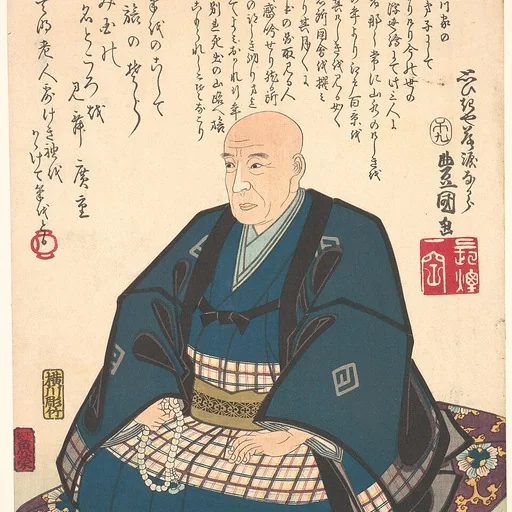
Artist
Utagawa Hiroshige (歌川 広重) or Andō Hiroshige (安藤 広重), born Andō Tokutarō (安藤 徳太郎; 1797 – 12 October 1858), was a Japanese ukiyo-e artist, considered the last great master of that tradition.

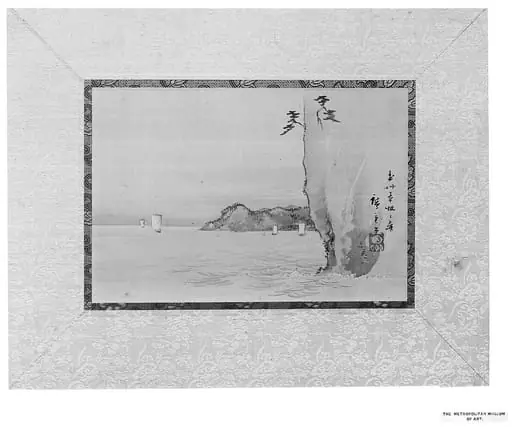
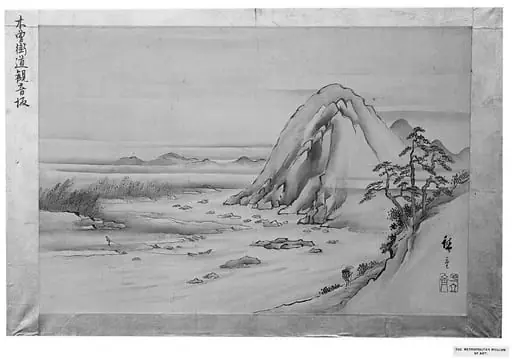
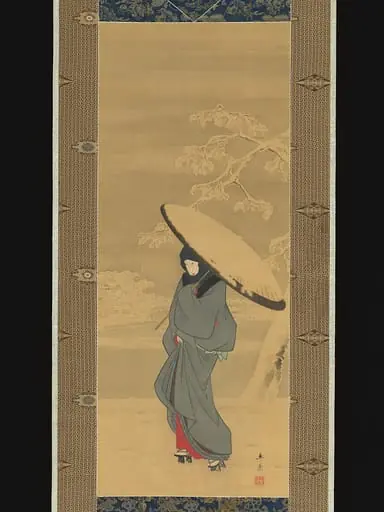
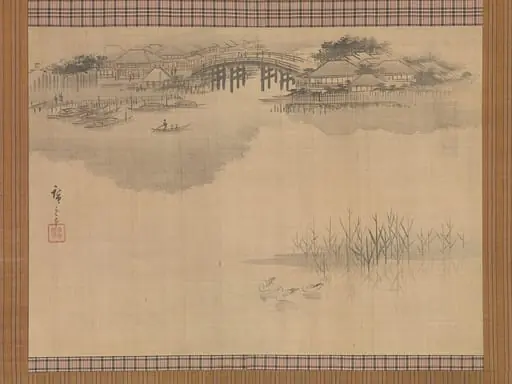
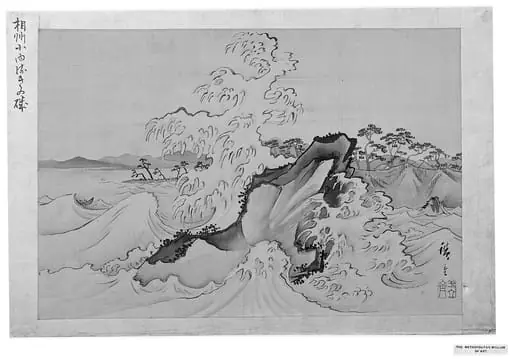
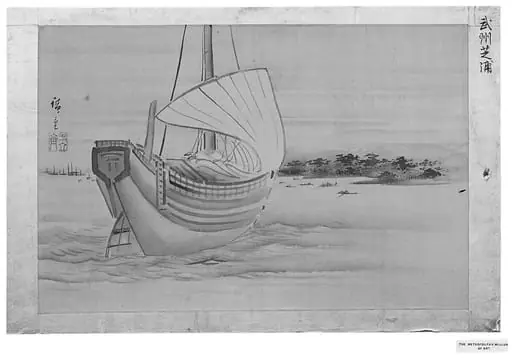

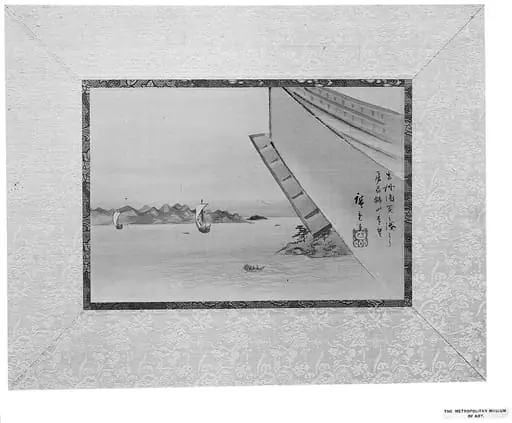
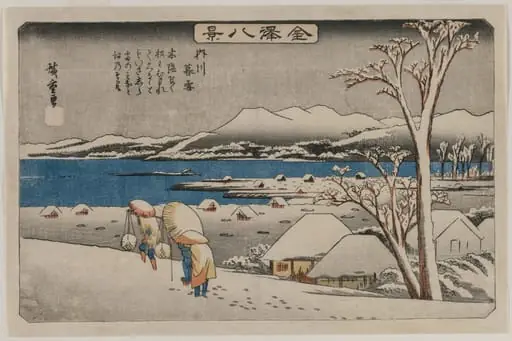 Evening Snow at Uchikawa, from the series Eight Views of Kanazawa
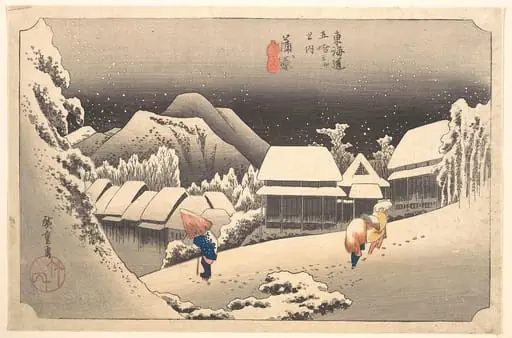 東海道五十三次之内 蒲原 夜の雪|Evening Snow
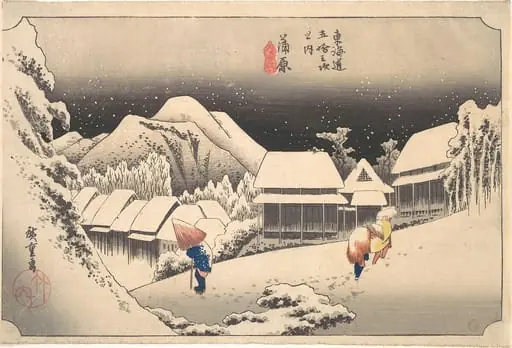 東海道五十三次之内 蒲原 夜の雪|A Snowy Evening at Kambara Station
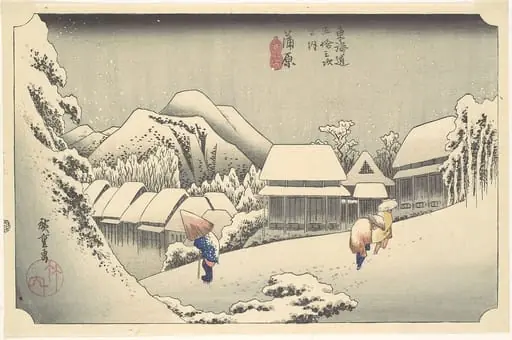 東海道五十三次之内 蒲原 夜の雪|Evening Snow at Kanbara, from the series "Fifty-three Stations of the Tōkaidō"
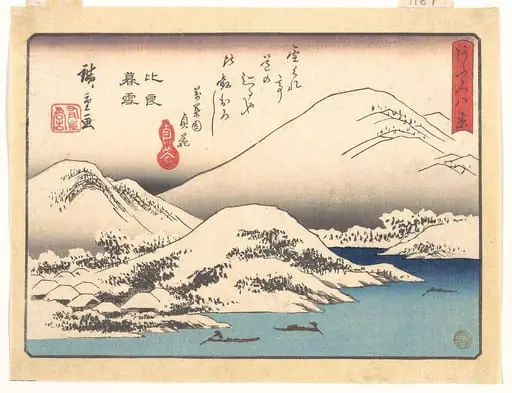 歌川広重画 「あふみ八景 比良暮雪」|Evening Snow at Mount Hira, from the series Eight Views of Ōmi (Ōmi hakkei)
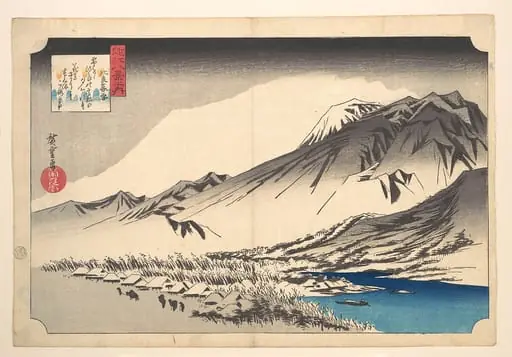 近江八景之内 比良暮雪|Evening Snow on Mount Hira
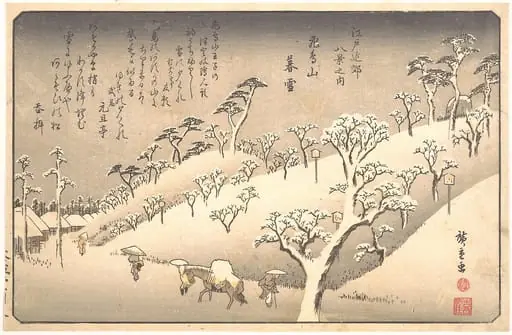 Asukayama Bosetsu|江戸近郊八景之内 飛鳥山暮雪|Asukayama in the Snow at Evening
 Susaki yuki no hatsuhi|東都名所 洲崎雪之初日|New Year's Sunrise after Snow at Susaki