Artwork
東海道五十三次 藤川|Fujikawa
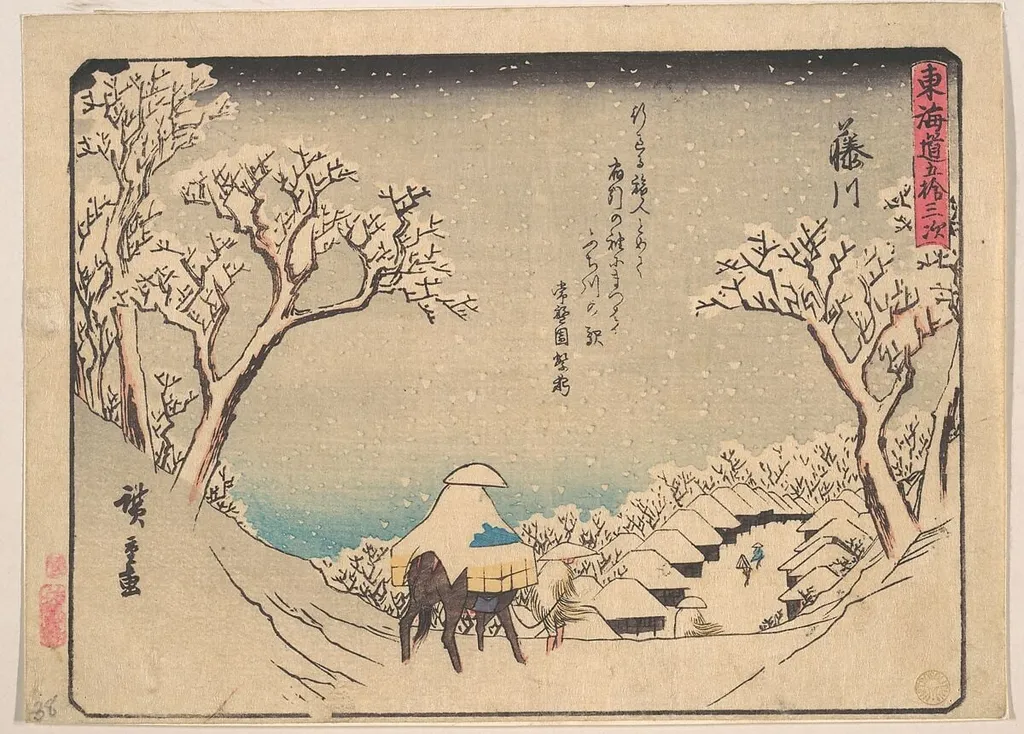
東海道五十三次 藤川|Fujikawa is an ink print by the Romanticist artist Utagawa Hiroshige. It dates from 1838 and is held in the collection of the Metropolitan Museum of Art.
About this work
Overview
Created around 1838 by Utagawa Hiroshige, this woodblock print is one of fifty-three scenes in the series *The Fifty-three Stations of the Tōkaidō*.
Created around 1838 by Utagawa Hiroshige, this woodblock print is one of fifty-three scenes in the series *The Fifty-three Stations of the Tōkaidō*. It depicts the Fujikawa post station along the major road connecting Edo and Kyoto. Rendered in ink and color on paper, the work exemplifies Hiroshige’s shift from traditional ukiyo-e themes toward contemplative landscape imagery, emphasizing atmosphere over narrative.
Subject & Meaning
The scene captures a solitary winter journey along a snow-laden path, with a traveler pulling a cart and a horse following behind. Bare trees frame the road, and a distant village emerges under a pale sky. A lone figure walks along the horizon, reinforcing the quiet solitude of travel. The image evokes the stillness and isolation of seasonal transit, reflecting the rhythms of everyday life on a well-traveled route.
Technique & Style
Hiroshige employed delicate linework and muted, layered pigments to convey the softness of snow and the chill of winter air. The composition uses spatial recession and minimal detail to suggest depth without clutter. Color is restrained—blues, grays, and earth tones dominate—enhancing the calm mood. Text inscriptions along the margins provide station identification and poetic context, grounding the image in its cultural setting.
History & Provenance
Produced during Hiroshige’s early career, this print was part of a commercially successful series commissioned by the publisher Hoeido. The *Tōkaidō* prints became widely distributed, appealing to travelers and urban audiences fascinated by distant places. Original impressions were printed in small batches, and surviving examples are now held in major museum collections worldwide, valued for their historical and aesthetic significance.
Context
The Tōkaidō was the most important road in Edo-period Japan, used by merchants, pilgrims, and samurai. Stations like Fujikawa offered rest and lodging, and their depiction in prints catered to a growing public interest in travel and regional identity. Hiroshige’s focus on weather, season, and quiet moments distinguished his work from the more dynamic, actor-centered prints of his contemporaries.
Legacy
Hiroshige’s *Tōkaidō* series influenced later generations of artists, both in Japan and abroad, particularly in the development of landscape printmaking. His emphasis on natural elements and transient moods prefigured aspects of Western impressionism. The series remains a key reference for understanding how Japanese visual culture interpreted place, movement, and the passage of time in the 19th century.
Artist & collection
Artist
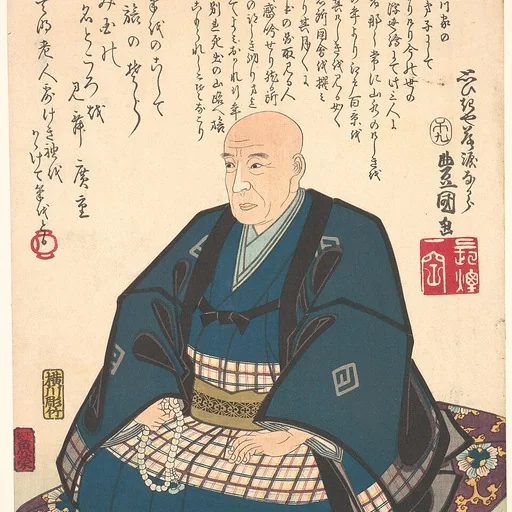
Utagawa Hiroshige (歌川 広重) or Andō Hiroshige (安藤 広重), born Andō Tokutarō (安藤 徳太郎; 1797 – 12 October 1858), was a Japanese ukiyo-e artist, considered the last great master of that tradition.

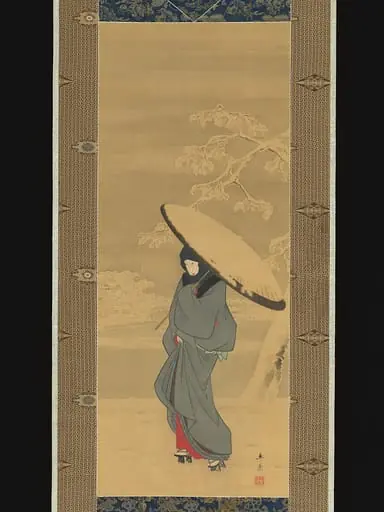
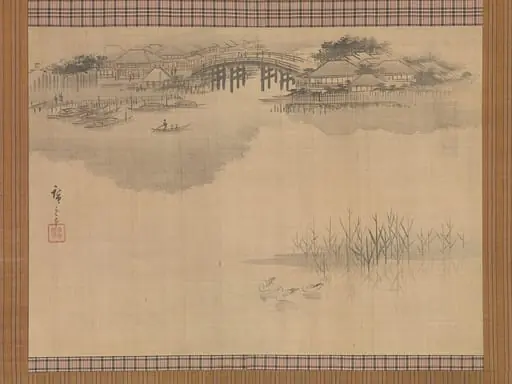
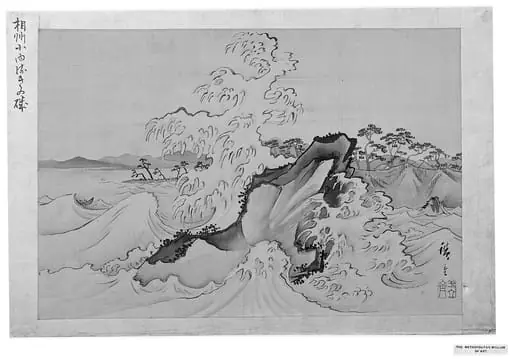
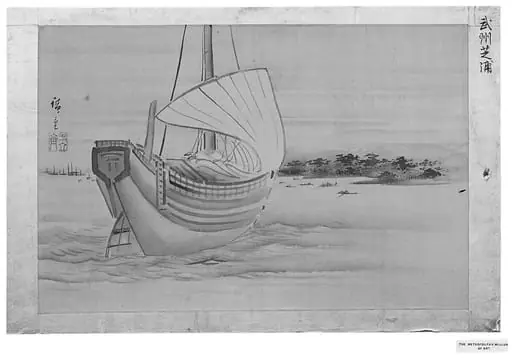
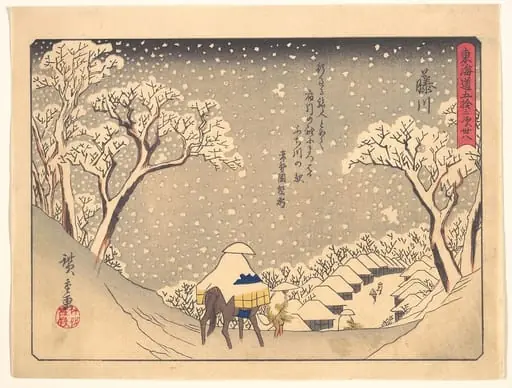 東海道五十三次 藤川|Fujikawa, from the series The Fifty-three Stations of the Tōkaidō Road
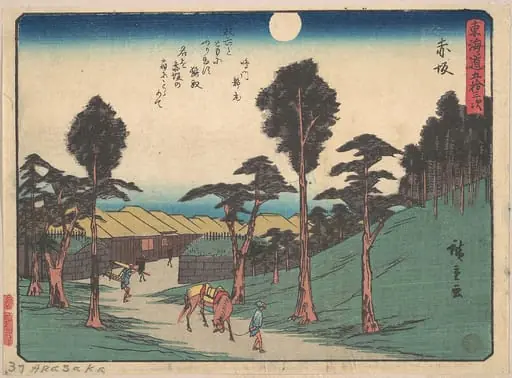 東海道五十三次 赤坂|Akasaka
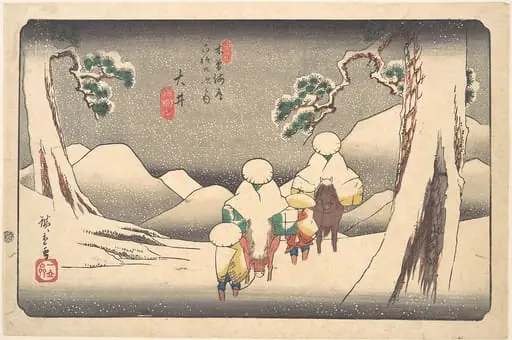 木曽海道六拾九次之内 大井|Ōi
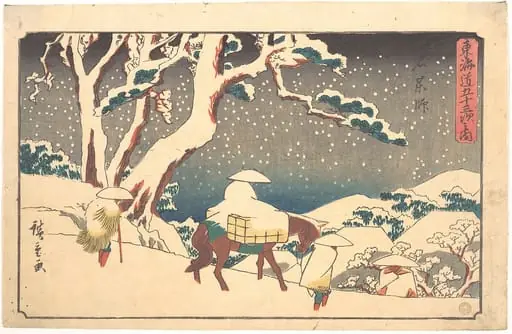 東海道五十三次之内 石薬師|Gyosho Tokaido: Ishikushi
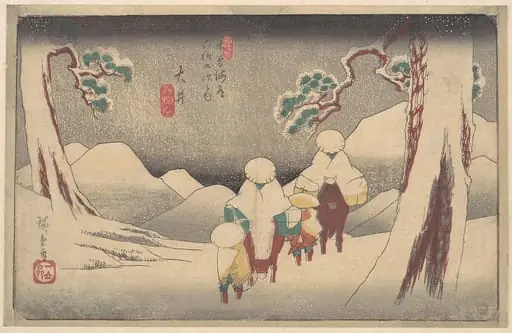 木曽海道六拾九次之内 大井|Ōi Station
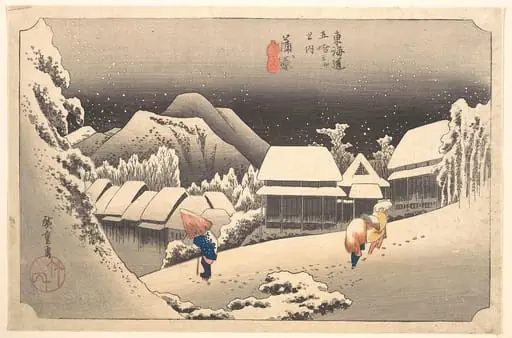 東海道五十三次之内 蒲原 夜の雪|Evening Snow
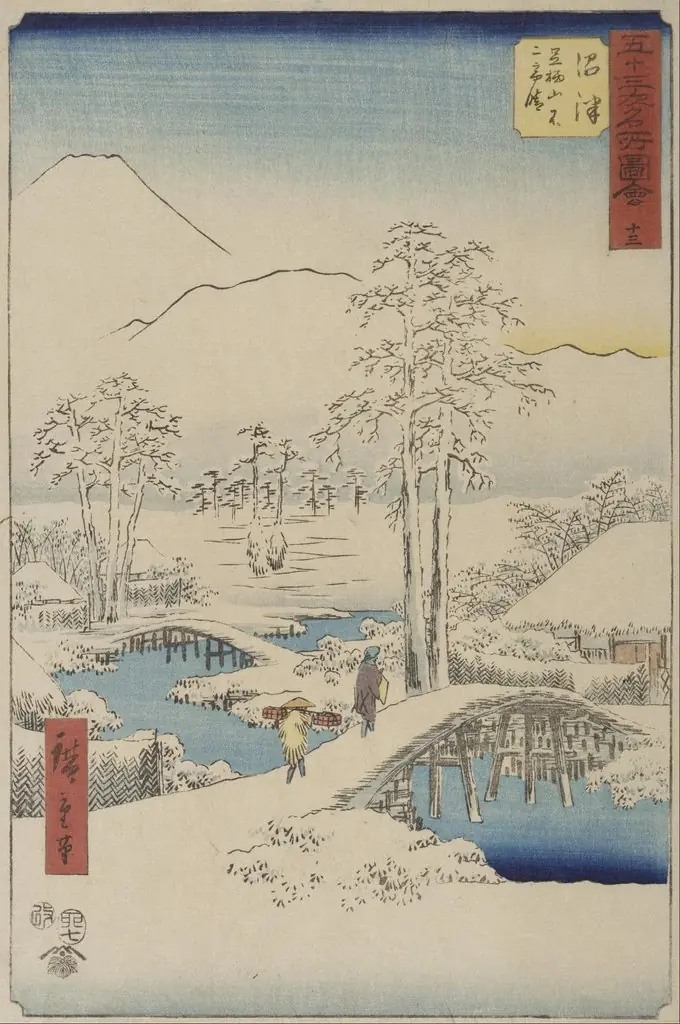 Mt. Fuji and Mt. Ashigara from Numazu from the series Vertical Tokaido (or "Famous Places of the Fifty-three Stations of the Tōkaidō")