Artwork
東海道五十三次之内 石薬師|Gyosho Tokaido: Ishikushi
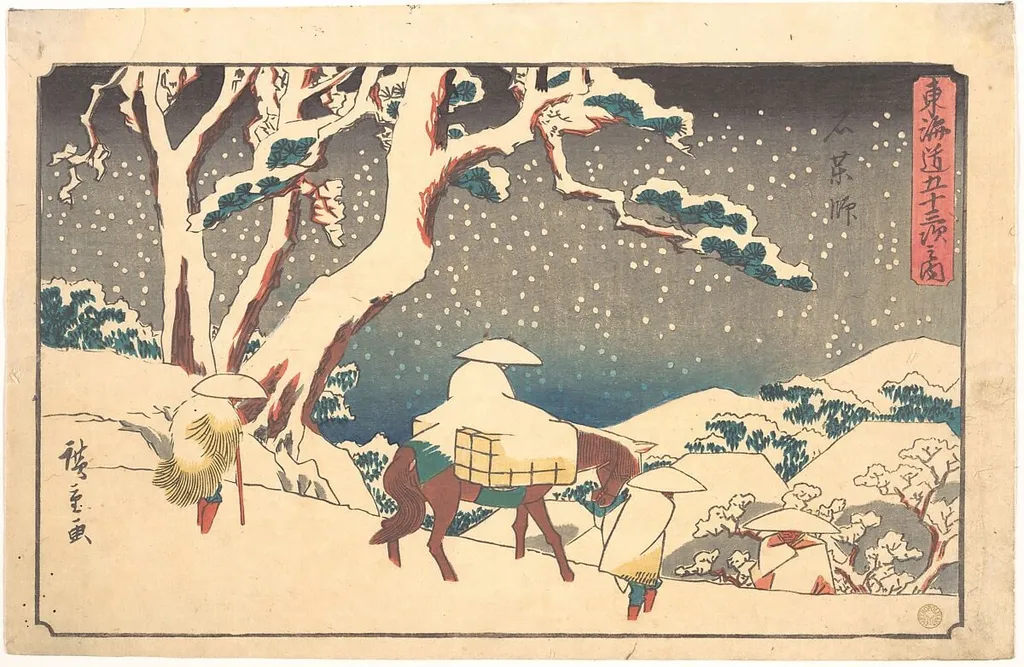
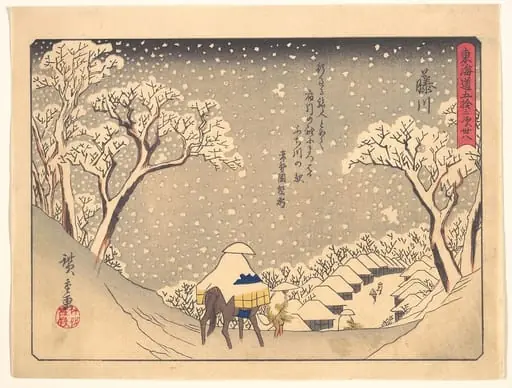
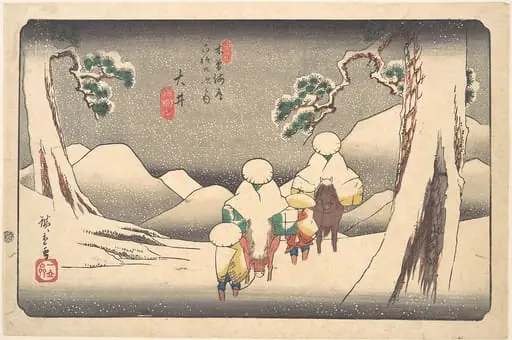
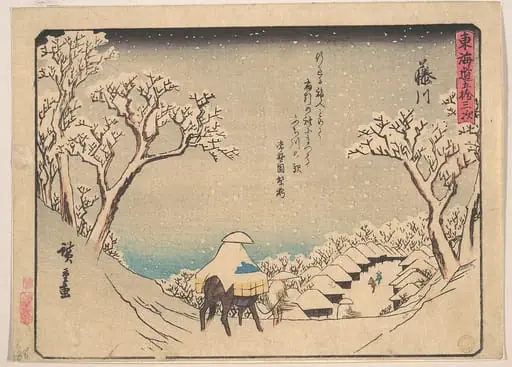
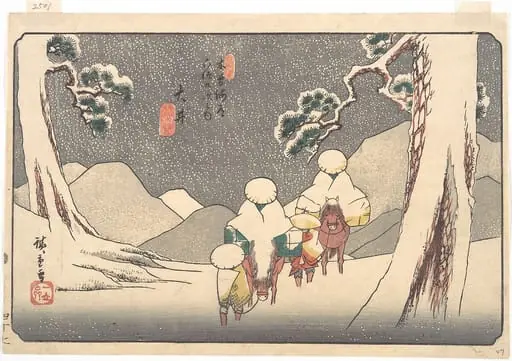
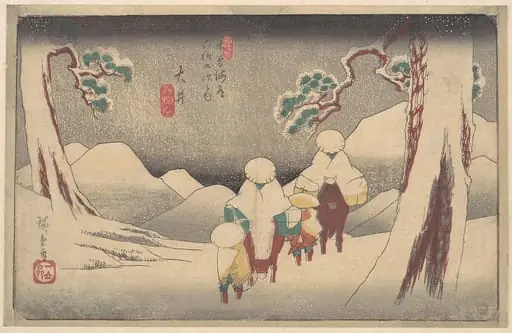
東海道五十三次之内 石薬師|Gyosho Tokaido: Ishikushi is an ink print by the Romanticist artist Utagawa Hiroshige. It dates from 1842 and is held in the collection of the Metropolitan Museum of Art.
About this work
Overview
Created around 1842 by Utagawa Hiroshige, this woodblock print is one of fifty-three scenes in the series *The Fifty-three Stations of the Tōkaidō*.
Created around 1842 by Utagawa Hiroshige, this woodblock print is one of fifty-three scenes in the series *The Fifty-three Stations of the Tōkaidō*. It depicts the Ishikushi post station along the major road connecting Edo and Kyoto. Executed in ink and color on paper, the work exemplifies Hiroshige’s focus on travel landscapes, distinguishing his output from the more common ukiyo-e themes of actors and courtesans.
Subject & Meaning
The scene captures a quiet winter moment at the Ishikushi station, where a brown horse bears a load, accompanied by two travelers in traditional attire. Snow blankets the ground and clings to trees and rooftops, suggesting the hardship and solitude of journeying in cold weather. The composition conveys the rhythm of daily travel along the Tōkaidō, emphasizing the relationship between people and the natural environment.
Technique & Style
Hiroshige employed fine woodblock carving and layered color printing to render subtle atmospheric effects. Cool tones of blue and gray dominate, while white pigment suggests falling snow. The delicate rendering of snowflakes and the soft gradation of sky and mountain forms reflect his mastery in evoking mood through minimal detail. The print’s composition balances horizontal bands of land, sky, and distant peaks.
History & Provenance
The print was produced during Hiroshige’s most prolific period, when the *Tōkaidō* series gained widespread popularity. It entered the collection of the Metropolitan Museum of Art, where it remains accessible for study. Its preservation reflects the international recognition of ukiyo-e as a significant artistic tradition, particularly in the 19th and 20th centuries.
Context
The Tōkaidō was a vital route for merchants, pilgrims, and officials during the Edo period. Hiroshige’s series responded to growing public interest in travel and regional identity. Unlike earlier ukiyo-e, which centered on urban entertainment, these landscapes offered viewers a contemplative vision of Japan’s countryside, aligning with broader cultural shifts toward nature and pilgrimage.
Legacy
Hiroshige’s *Tōkaidō* prints influenced later Western artists, including Impressionists and Post-Impressionists, who admired their compositional clarity and sensitivity to light and season. The series helped define the aesthetic of Japanese landscape art abroad and remains a key reference in the study of printmaking, travel culture, and Edo-period visual life.
Artist & collection
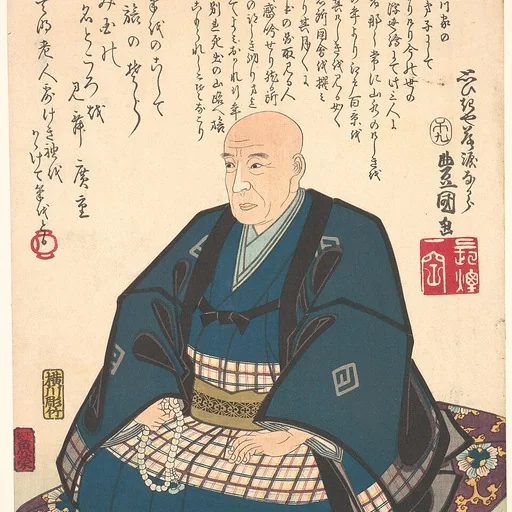
Artist
Utagawa Hiroshige (歌川 広重) or Andō Hiroshige (安藤 広重), born Andō Tokutarō (安藤 徳太郎; 1797 – 12 October 1858), was a Japanese ukiyo-e artist, considered the last great master of that tradition.