Artwork
雪月花 木曽路之山川|Kiso Gorge in the Snow
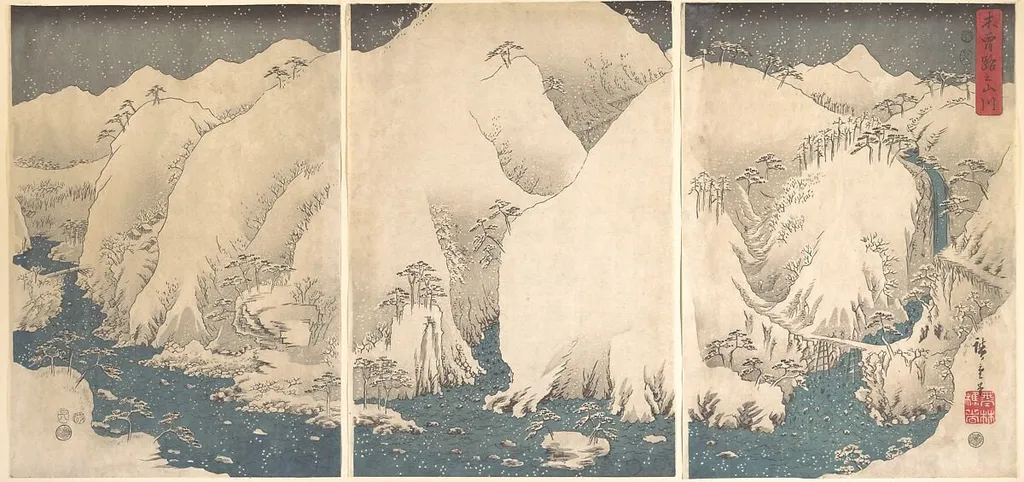
雪月花 木曽路之山川|Kiso Gorge in the Snow is an ink print by the Romanticist artist Utagawa Hiroshige. It dates from 1828 and is held in the collection of the Metropolitan Museum of Art.
About this work
Overview
Utagawa Hiroshige's *Kiso Gorge in the Snow* (1828) is a triptych of woodblock prints on paper, featuring a serene winter landscape along the Kiso Road. Composed of ink and color, the work showcases Hiroshige's emphasis on natural beauty.
Subject & Meaning
The triptych captures a snowy mountain landscape with jagged cliffs, icy rivers, and snow-laden trees. The contrast between the dark sky with twinkling stars and the serene, snow-covered landscape conveys a sense of stillness and peacefulness, highlighting the tranquility of nature in winter.
Technique & Style
Hiroshige employed woodblock printing techniques to achieve intricate details, combining ink and color to evoke the cold, quiet atmosphere of the winter scene. The use of contrasting elements—dark skies versus snowy peaks—demonstrates his mastery of ukiyo-e aesthetics.
History & Provenance
Created in 1828, *Kiso Gorge in the Snow* is characteristic of Hiroshige's late ukiyo-e period output, diverging from the genre's typical urban themes to focus on landscape. The work's provenance details are not specified in available information.
Context
As a leading ukiyo-e artist, Hiroshige's shift towards natural landscapes in *Kiso Gorge in the Snow* reflects the evolving interests of the late ukiyo-e period, appealing to audiences seeking depictions of Japan's natural beauty.
Legacy
*Kiso Gorge in the Snow* contributes to Hiroshige's reputation as a pivotal figure in ukiyo-e, particularly in popularizing serene, winter landscape themes that would influence subsequent artistic generations.
Artist & collection
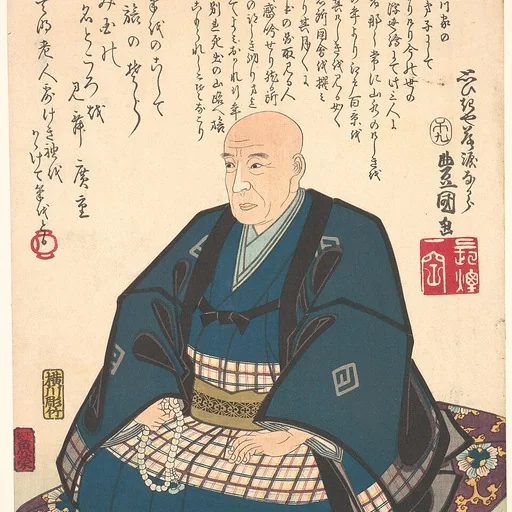
Artist
Utagawa Hiroshige (歌川 広重) or Andō Hiroshige (安藤 広重), born Andō Tokutarō (安藤 徳太郎; 1797 – 12 October 1858), was a Japanese ukiyo-e artist, considered the last great master of that tradition.

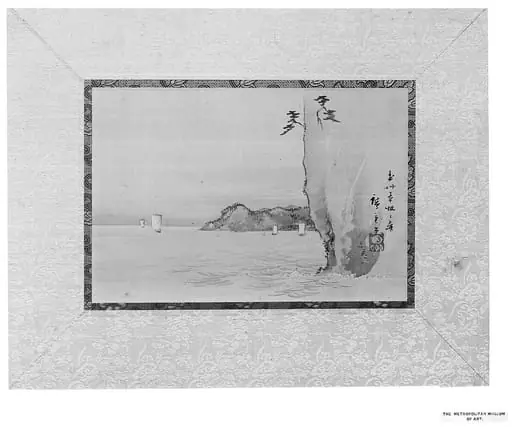
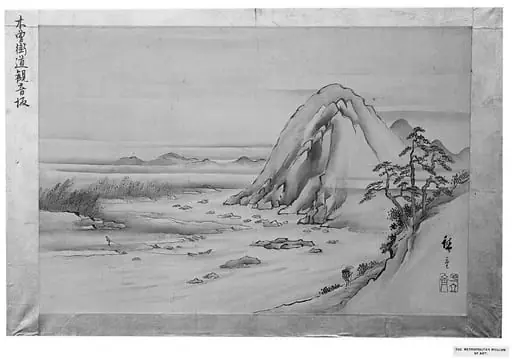
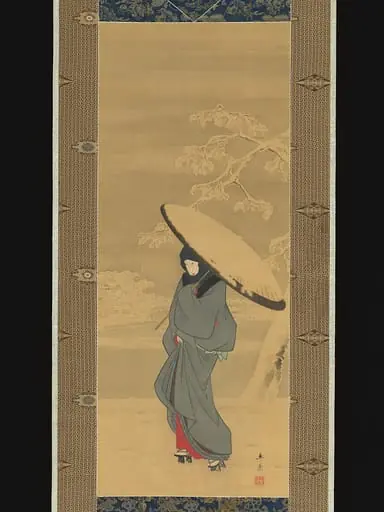
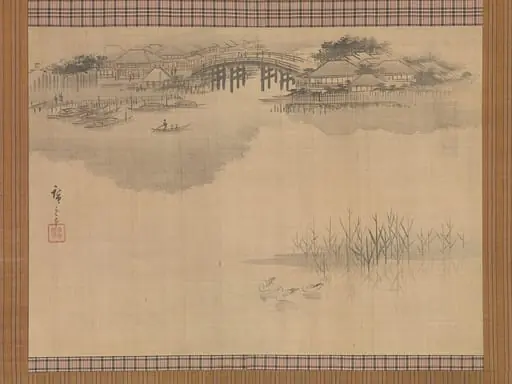
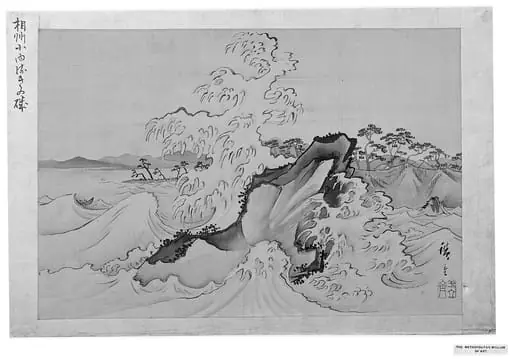
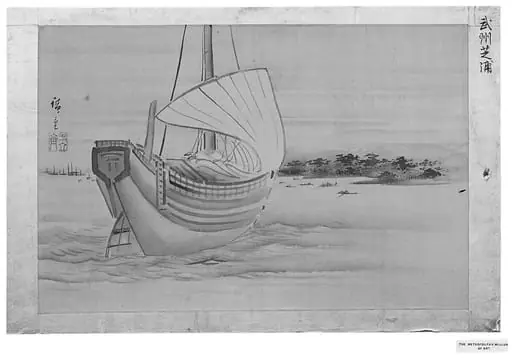
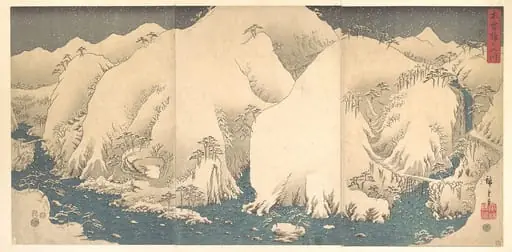 Kisojo no San Sen|木曽路之山川|The Kiso Mountains in Snow
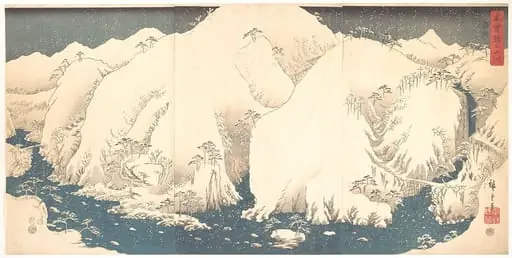 Kisoji no Sansen|雪月花 木曽路之山川|Kisō Mountains in Snow
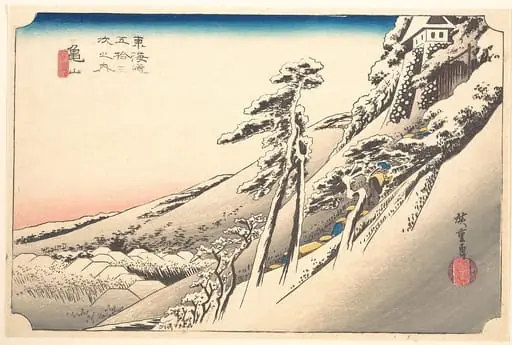 東海道五十三次之内 亀山 雪晴|Clear Weather after Snow
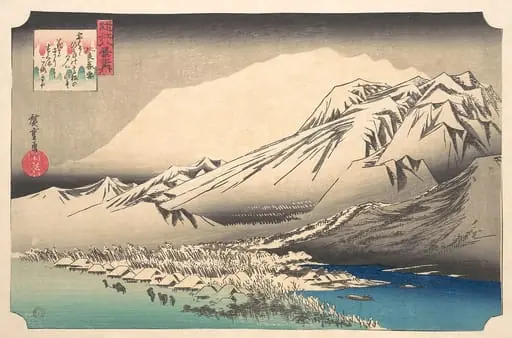 近江八景之内 比良暮雪|Evening Snow on Hira, Lake Biwa
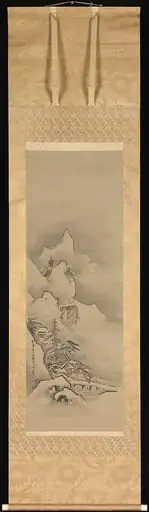 狩野探幽筆 神農・夏冬山水図|Winter Landscape
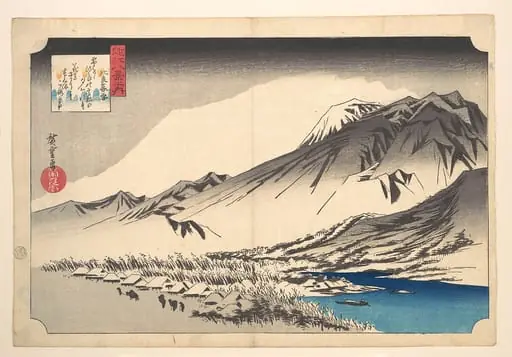 近江八景之内 比良暮雪|Evening Snow on Mount Hira
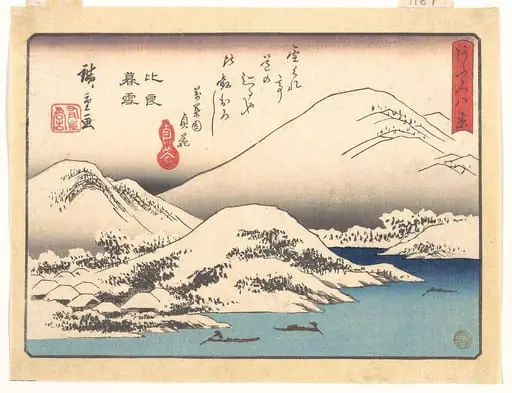 歌川広重画 「あふみ八景 比良暮雪」|Evening Snow at Mount Hira, from the series Eight Views of Ōmi (Ōmi hakkei)
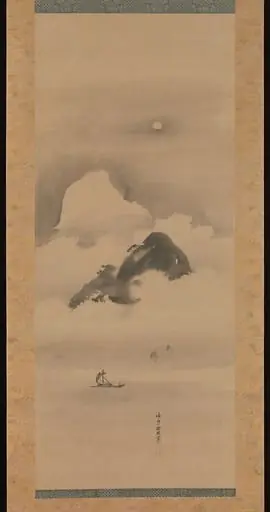 狩野探幽筆 月夜山水図|Landscape in Moonlight