Artwork
東海道五十三次 桑名 七里の渡舟|Kuwana
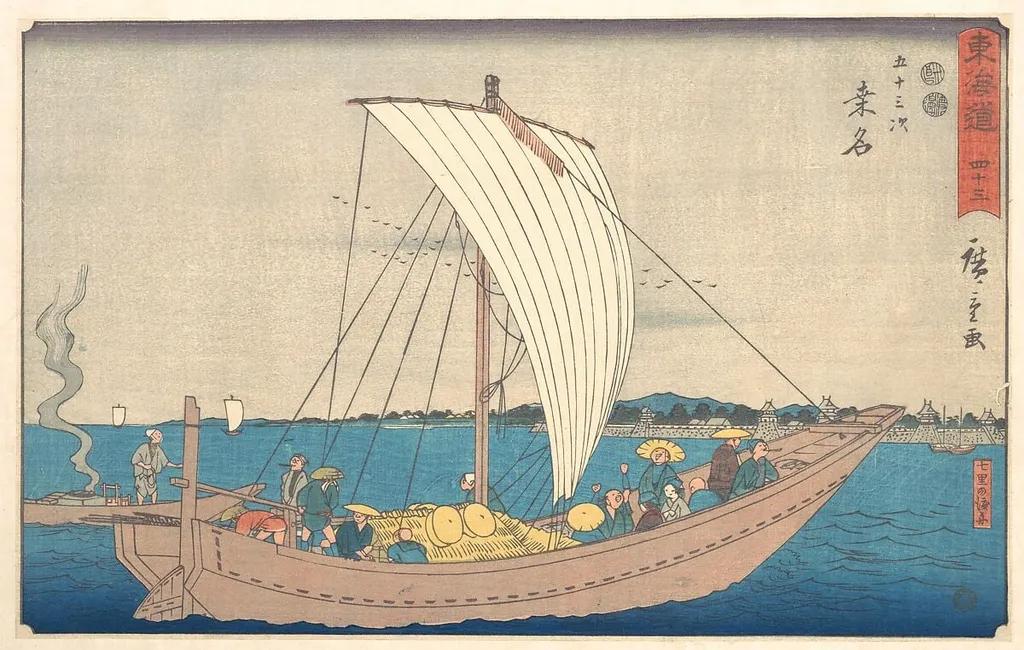
東海道五十三次 桑名 七里の渡舟|Kuwana is an ink print by the Romanticist artist Utagawa Hiroshige. It dates from 1840 and is held in the collection of the Metropolitan Museum of Art.
About this work
Overview
Utagawa Hiroshige's *Kuwana* is a woodblock print from his *The Fifty-three Stations of the Tōkaidō* series, created circa 1840. It captures a scene in Kuwana, a post town on the coastal Edo-Kyoto route.
Subject & Meaning
The print depicts a bustling river scene in Kuwana, showcasing daily life at a travel hub. A large boat transports people and cargo, while figures on the dock go about their activities, some protected by umbrellas. The background features the town's architecture and a bridge, with smoke rising in the distance.
Technique & Style
Hiroshige employed ink and color on paper, characterized by simple shapes, bold outlines, and a contrasting color palette. Vibrant blues for the water juxtapose the warm tones of the boat and buildings, maintaining clarity and liveliness in the composition.
History & Provenance
Created around 1840 by Utagawa Hiroshige (born Andō Tokutarō in 1797), a renowned ukiyo-e artist known for landscapes rather than urban themes. Part of *The Fifty-three Stations of the Tōkaidō* series.
Context
Reflects Hiroshige's atmospheric and narrative approach to travel scenes, typical of his contribution to ukiyo-e during the Edo period.
Legacy
*Kuwana* represents Hiroshige's enduring influence on landscape printing in ukiyo-e, inviting viewers to explore more of his works in the series and beyond.
Artist & collection
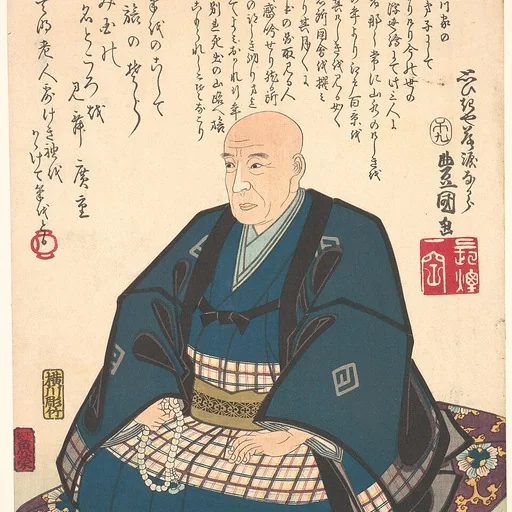
Artist
Utagawa Hiroshige (歌川 広重) or Andō Hiroshige (安藤 広重), born Andō Tokutarō (安藤 徳太郎; 1797 – 12 October 1858), was a Japanese ukiyo-e artist, considered the last great master of that tradition.

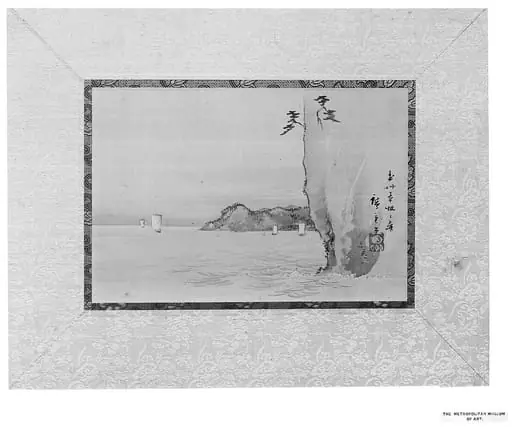
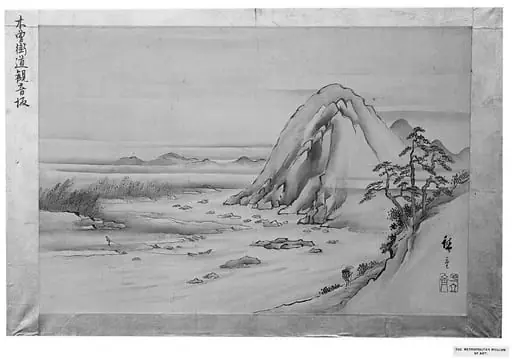
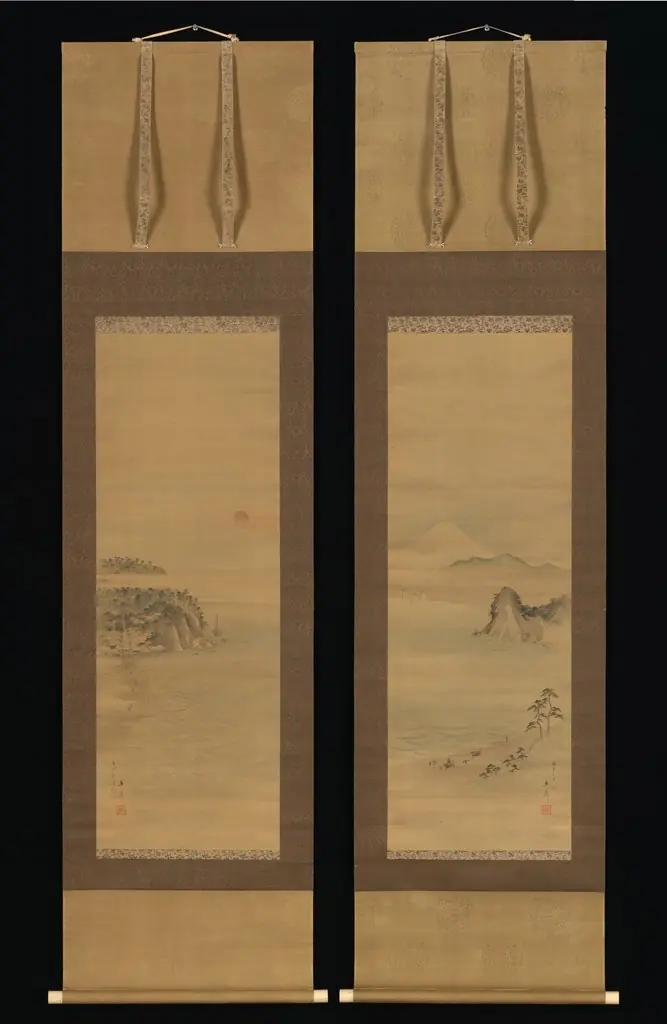
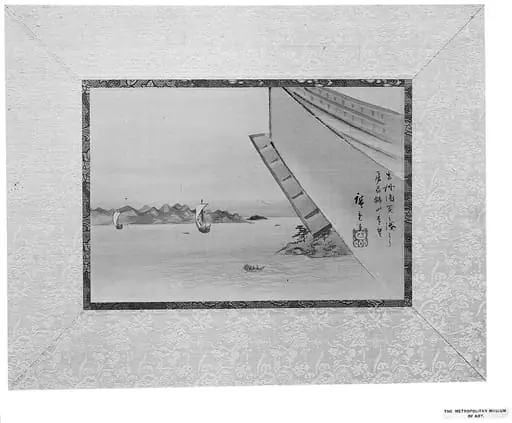
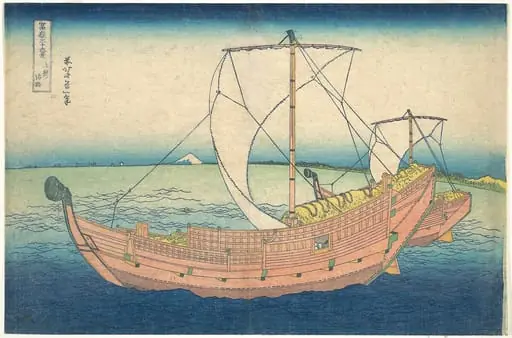 冨嶽三十六景 上総の海路|At Sea off Kazusa (Kazusa no kairo), from the series Thirty-six Views of Mount Fuji (Fugaku sanjūrokkei)
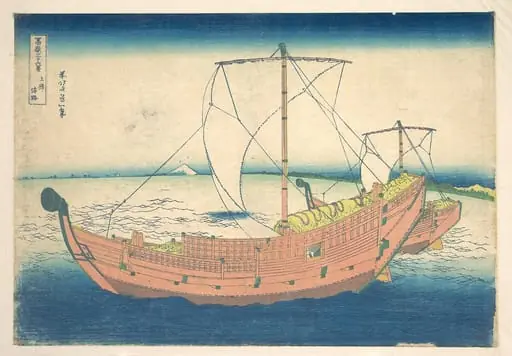 冨嶽三十六景 上総の海路|At Sea off Kazusa (Kazusa no kairo), from the series Thirty-six Views of Mount Fuji (Fugaku sanjūrokkei)
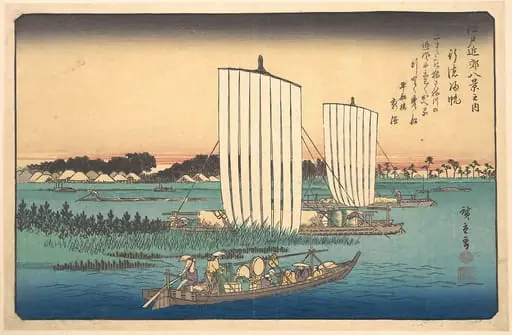 江戸近郊八景之内 行徳帰帆|Boats Returning to Gyotoku
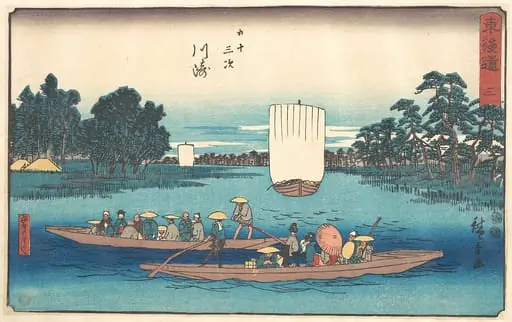 東海道五十三次 川崎 六郷のわたし|Kawasaki
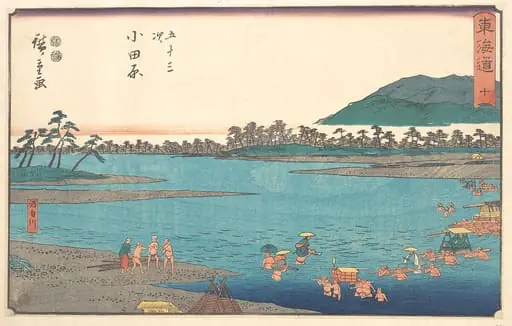 東海道五十三次 小田原 酒匂川|Odawara
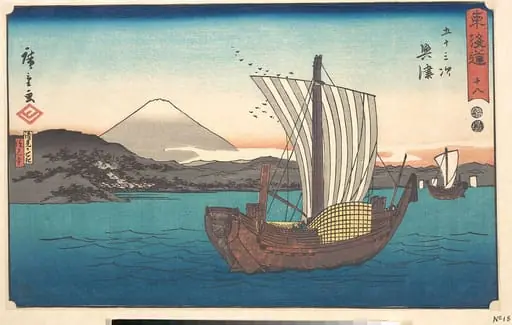 東海道五十三次 奥津 清見かせき 清見寺|Okitsu