Artwork
東海道五十三次 奥津 清見かせき 清見寺|Okitsu
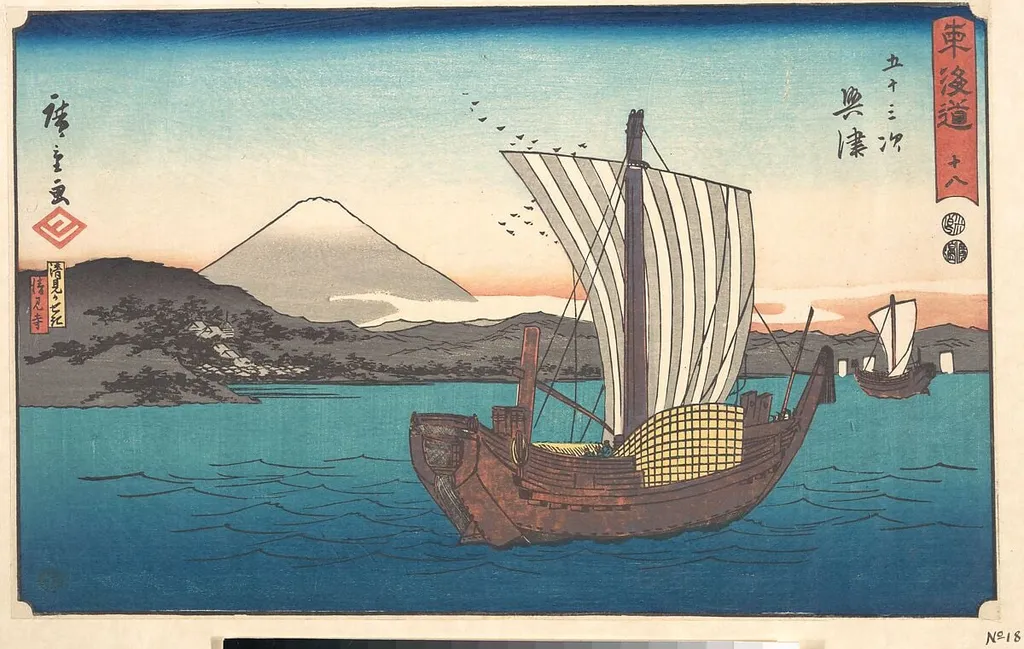
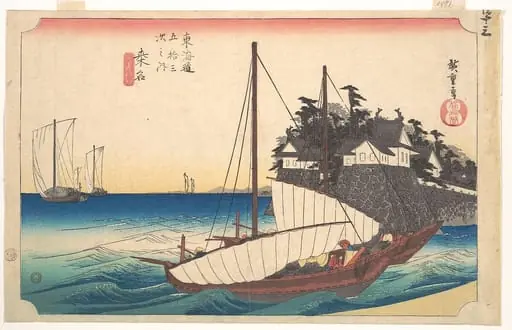
東海道五十三次 奥津 清見かせき 清見寺|Okitsu is an ink print by the Romanticist artist Utagawa Hiroshige. It dates from 1840 and is held in the collection of the Metropolitan Museum of Art.
About this work
Overview
Okitsu is a woodblock print created by Utagawa Hiroshige around 1840 as part of his series The Fifty-three Stations of the Tōkaidō.
Subject & Meaning
The print depicts a serene scene at Okitsu, with two stationary boats on calm water, a large mountain in the background, and trees lining the shore. The tranquil atmosphere is enhanced by the soft pink and pale blue hues of the sky.
Technique & Style
Hiroshige employed simple shapes and bold colors to convey a sense of peacefulness, characteristic of his landscape-focused ukiyo-e style.
Context
This work is part of a tradition of travel imagery that flourished during Japan's Edo period, capturing a scene along the historic Tōkaidō road.
Artist & collection
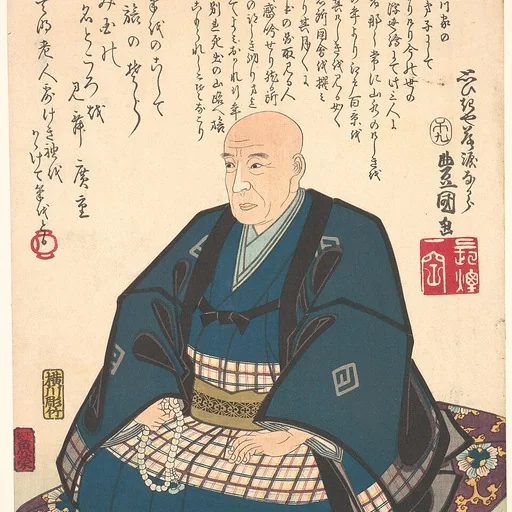
Artist
Utagawa Hiroshige (歌川 広重) or Andō Hiroshige (安藤 広重), born Andō Tokutarō (安藤 徳太郎; 1797 – 12 October 1858), was a Japanese ukiyo-e artist, considered the last great master of that tradition.


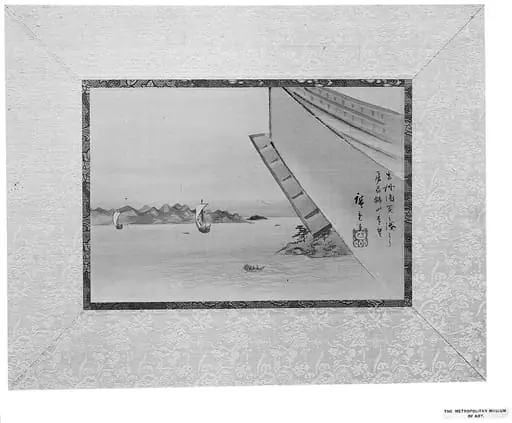
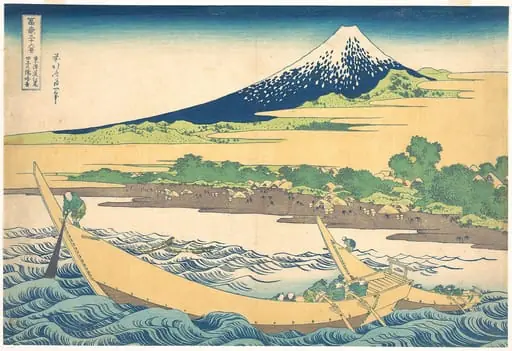 冨嶽三十六景 東海道江尻田子の浦略図|Tago Bay near Ejiri on the Tōkaidō (Tōkaidō Ejiri Tago no ura ryaku zu), from the series Thirty-six Views of Mount Fuji (Fugaku sanjūrokkei)
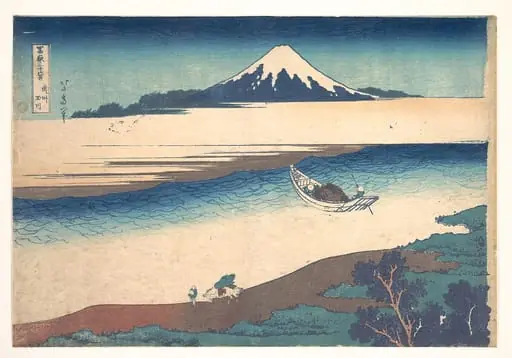 冨嶽三十六景 武州玉川|Tama River in Musashi Province (Bushū Tamagawa), from the series Thirty-six Views of Mount Fuji (Fugaku sanjūrokkei)
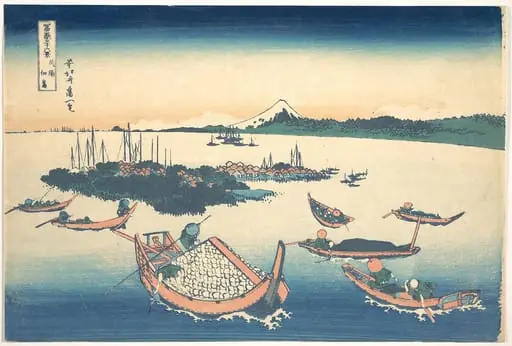 冨嶽三十六景 武陽佃島|Tsukudajima in Musashi Province (Buyō Tsukudajima), from the series Thirty-six Views of Mount Fuji (Fugaku sanjūrokkei)
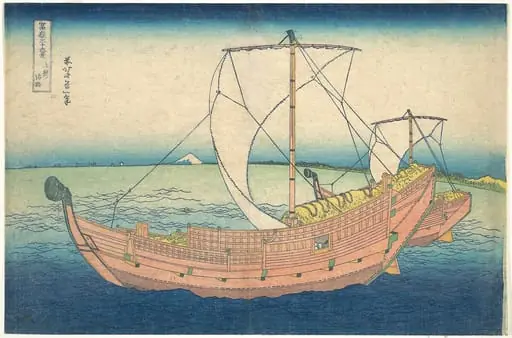 冨嶽三十六景 上総の海路|At Sea off Kazusa (Kazusa no kairo), from the series Thirty-six Views of Mount Fuji (Fugaku sanjūrokkei)
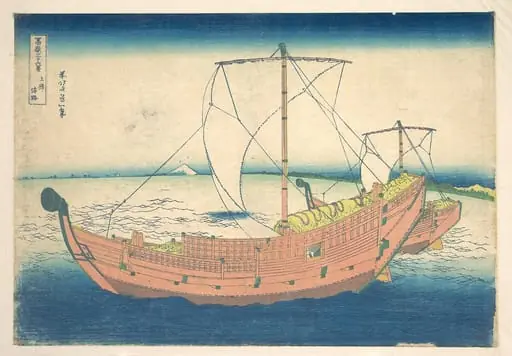 冨嶽三十六景 上総の海路|At Sea off Kazusa (Kazusa no kairo), from the series Thirty-six Views of Mount Fuji (Fugaku sanjūrokkei)
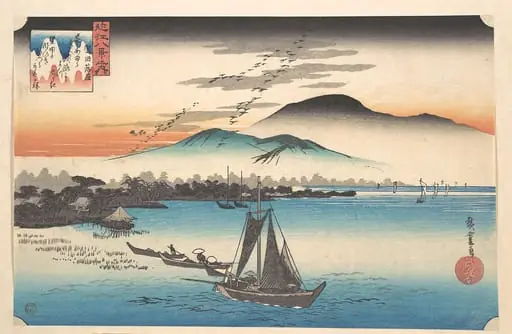 近江八景之内 堅田落雁|Geese Alighting at Katada, Lake Biwa
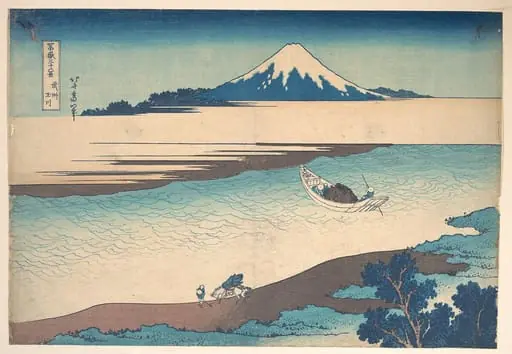 冨嶽三十六景 武州玉川|Fuji—The Tama River, Musashi Province, from the series Thirty-six Views of Mount Fuji (Fugaku sanjūrokkei)
 東海道五十三次之内 桑名 七里渡口|Station Forty-Three: Kuwana, Seven-Ri Ferry at the Port, from the Fifty-Three Stations of the Tokaido