Artwork
富士三十六景 相模七里ケ浜|View of Mount Fuji from Seven-ri Beach, Province of Sagami (Sōshū: Shichi-ri ga hama), from the series Thirty-six Views of Mount Fuji (Fugaku sanjūrokkei)
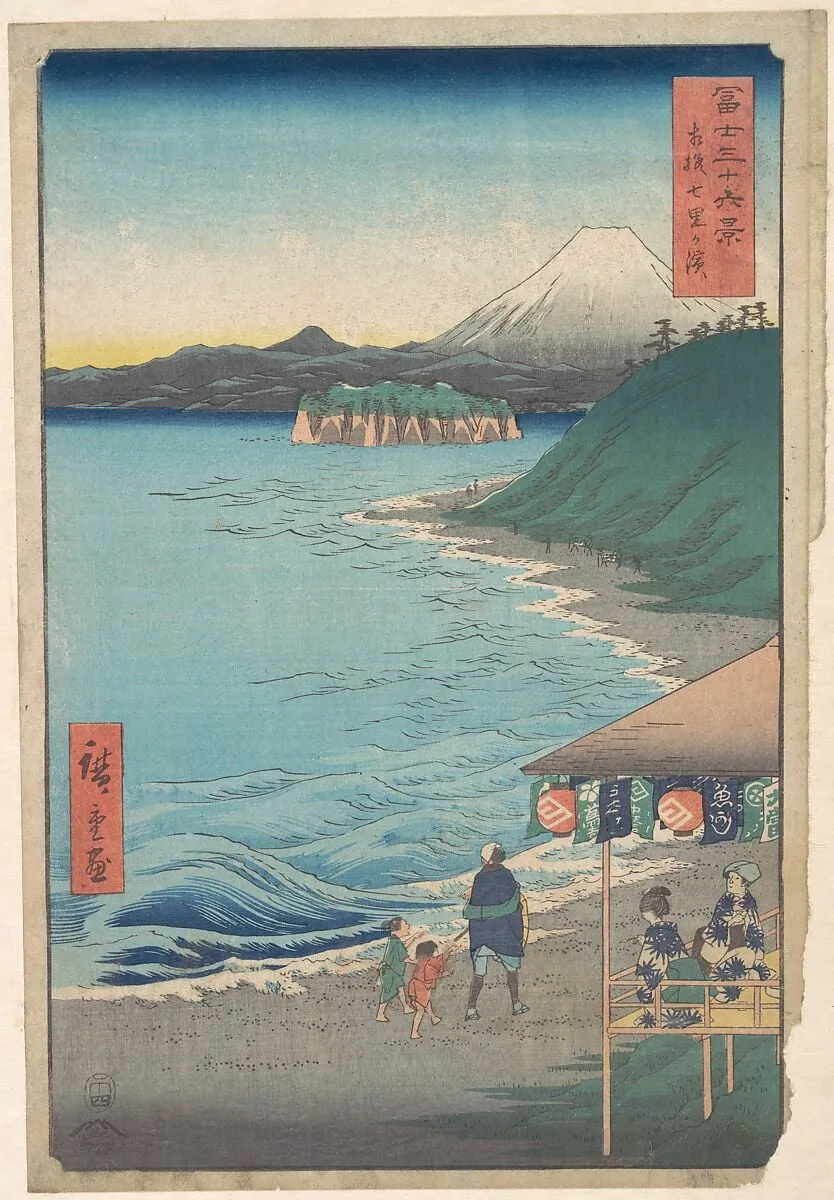
富士三十六景 相模七里ケ浜|View of Mount Fuji from Seven-ri Beach, Province of Sagami (Sōshū: Shichi-ri ga hama), from the series Thirty-six Views of Mount Fuji (Fugaku sanjūrokkei) is an ink print by the Impressionist artist Utagawa Hiroshige. It dates from 4 and is held in the collection of the Metropolitan Museum of Art.
About this work
Overview
In the distance, the iconic snow‑capped Mount Fuji looms behind undulating green hills, creating a balanced composition of land, sea, and mountain.
Utagawa Hiroshige’s woodblock print portrays a tranquil shoreline in Sagami Province, where a modest island rests beyond gentle waves. A solitary figure in dark attire walks with two children along the sand, while a thatched-roof structure on the right shelters two women. In the distance, the iconic snow‑capped Mount Fuji looms behind undulating green hills, creating a balanced composition of land, sea, and mountain.
Subject & Meaning
The scene captures everyday life at a seaside locale, emphasizing the harmony between human activity and the natural landscape. The presence of a family group and domestic interior suggests a moment of quiet routine, while the distant Fuji serves as a cultural and spiritual anchor, linking the local setting to the broader Japanese reverence for the mountain.
Technique & Style
Executed in the ukiyo‑e tradition, the print combines line work with vivid pigments applied to paper. Hiroshige employs a horizontal format that stretches the vista, using contrasting blues for the water and greens for the hills to enhance depth. The delicate rendering of the distant mountain and the crisp delineation of figures reflect his skill in balancing detail with atmospheric perspective.
History & Provenance
Created as part of Hiroshige’s series *Thirty‑six Views of Mount Fuji*, the print was produced in the mid‑19th century during the Edo period. It entered the collection of the Metropolitan Museum of Art, where it remains catalogued among the museum’s holdings of Japanese prints, illustrating the artist’s contribution to landscape imagery.
Context
While many ukiyo‑e works focus on urban scenes, Hiroshige’s series expands the genre to include rural and coastal vistas, highlighting the ubiquity of Fuji across Japan’s geography. This particular view reflects the artist’s interest in depicting seasonal and regional variations, offering a serene counterpoint to the bustling cityscapes that dominate much of Edo‑period printmaking.
Artist & collection
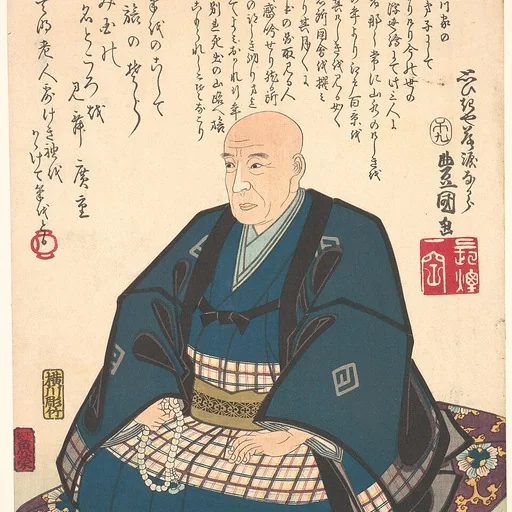
Artist
Utagawa Hiroshige (歌川 広重) or Andō Hiroshige (安藤 広重), born Andō Tokutarō (安藤 徳太郎; 1797 – 12 October 1858), was a Japanese ukiyo-e artist, considered the last great master of that tradition.

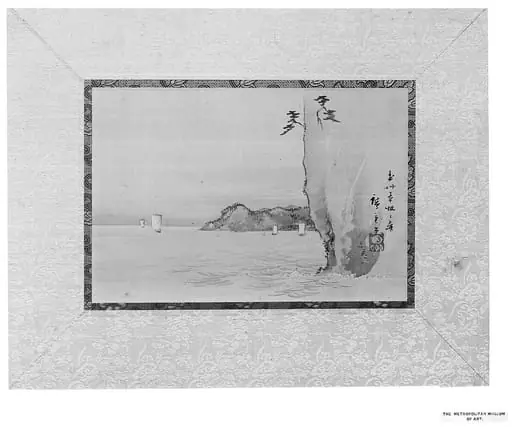
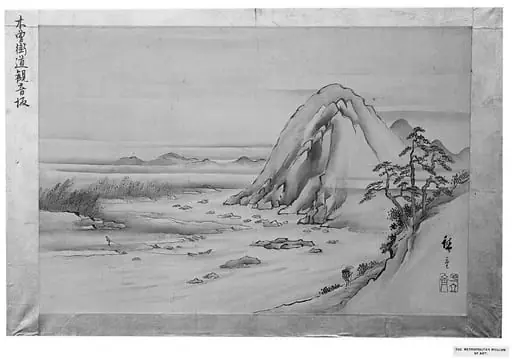
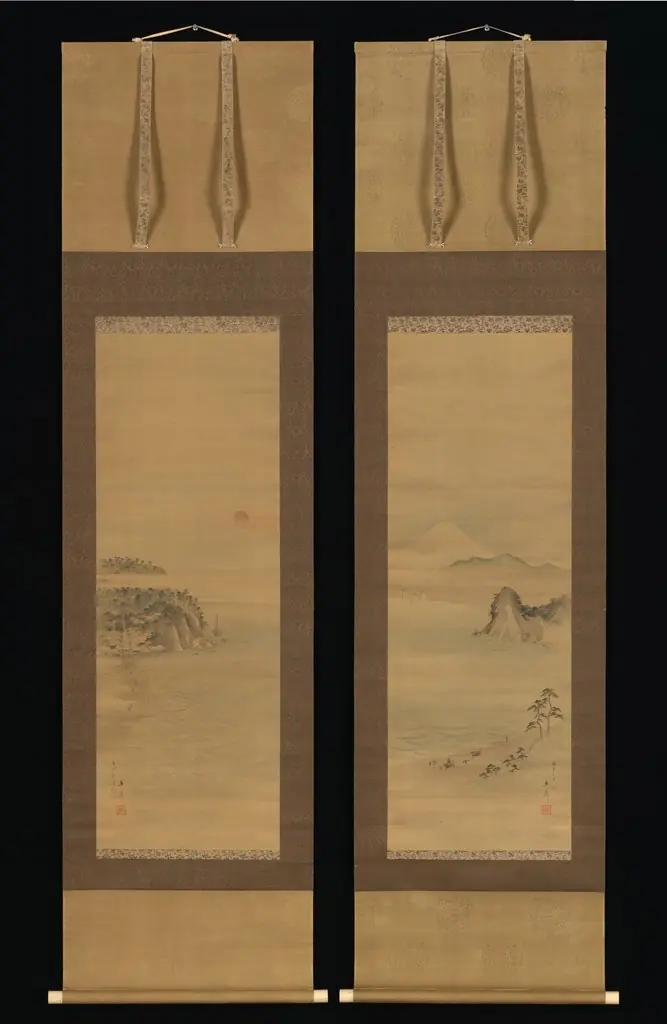
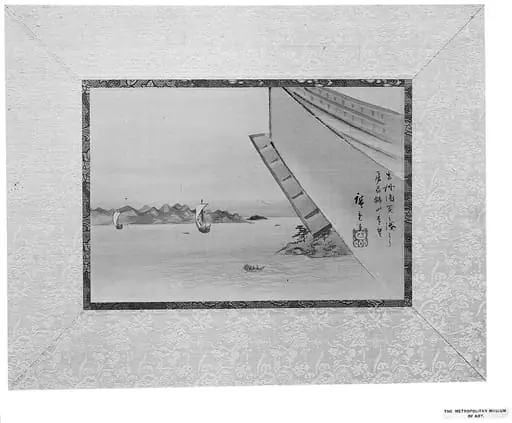
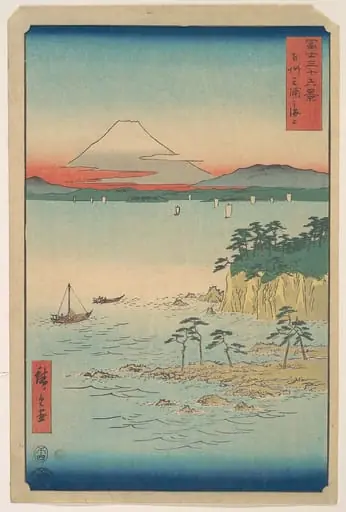 富士三十六景 相州三浦の海上|Fuji from Miura, Sagami (Soshu Miura no Kaijo), from the series Thirty-six Views of Mount Fuji (Fugaku sanjūrokkei)
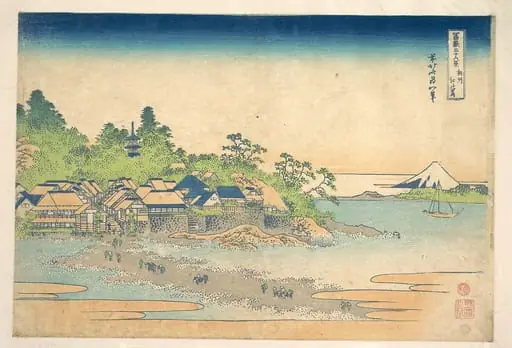 冨嶽三十六景 相州江の島|Enoshima in Sagami Province (Sōshū Enoshima), from the series Thirty-six Views of Mount Fuji (Fugaku sanjūrokkei)
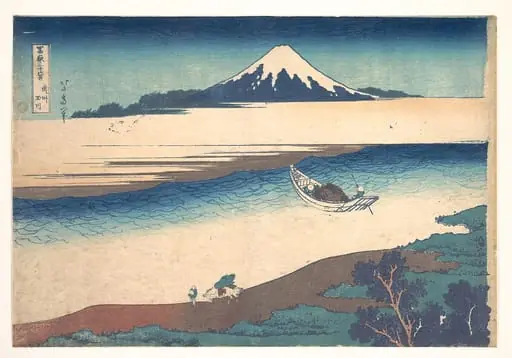 冨嶽三十六景 武州玉川|Tama River in Musashi Province (Bushū Tamagawa), from the series Thirty-six Views of Mount Fuji (Fugaku sanjūrokkei)
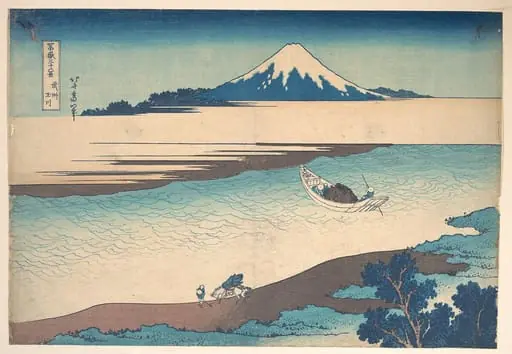 冨嶽三十六景 武州玉川|Fuji—The Tama River, Musashi Province, from the series Thirty-six Views of Mount Fuji (Fugaku sanjūrokkei)
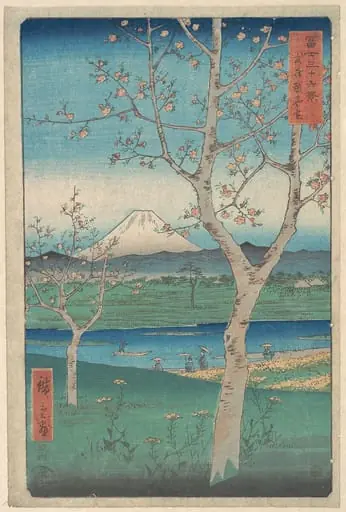 富士三十六景 武蔵越かや在|View of Mount Fuji from Koshigaya, Province of Musashi (Musashi, Koshigaya Zai), from the series Thirty-six Views of Mount Fuji (Fugaku sanjūrokkei)
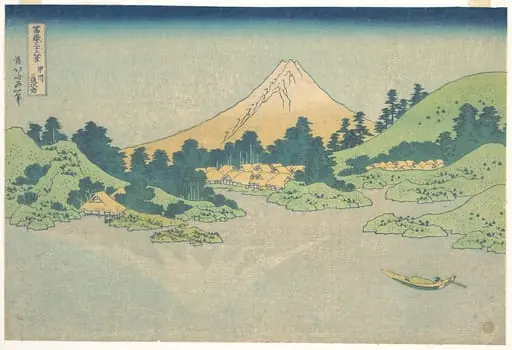 冨嶽三十六景 甲州三坂水面|Reflection in Lake at Misaka in Kai Province (Kōshū Misaka suimen), from the series Thirty-six Views of Mount Fuji (Fugaku sanjūrokkei)
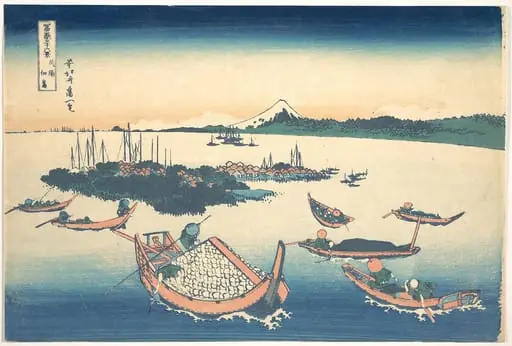 冨嶽三十六景 武陽佃島|Tsukudajima in Musashi Province (Buyō Tsukudajima), from the series Thirty-six Views of Mount Fuji (Fugaku sanjūrokkei)