Artwork
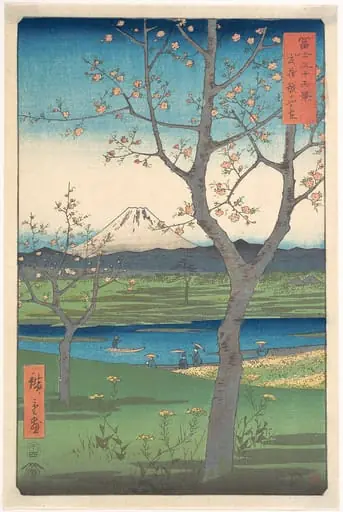
富士三十六景 武蔵越かや在|View of Mount Fuji from Koshigaya, Province of Musashi (Musashi, Koshigaya Zai), from the series Thirty-six Views of Mount Fuji (Fugaku sanjūrokkei)
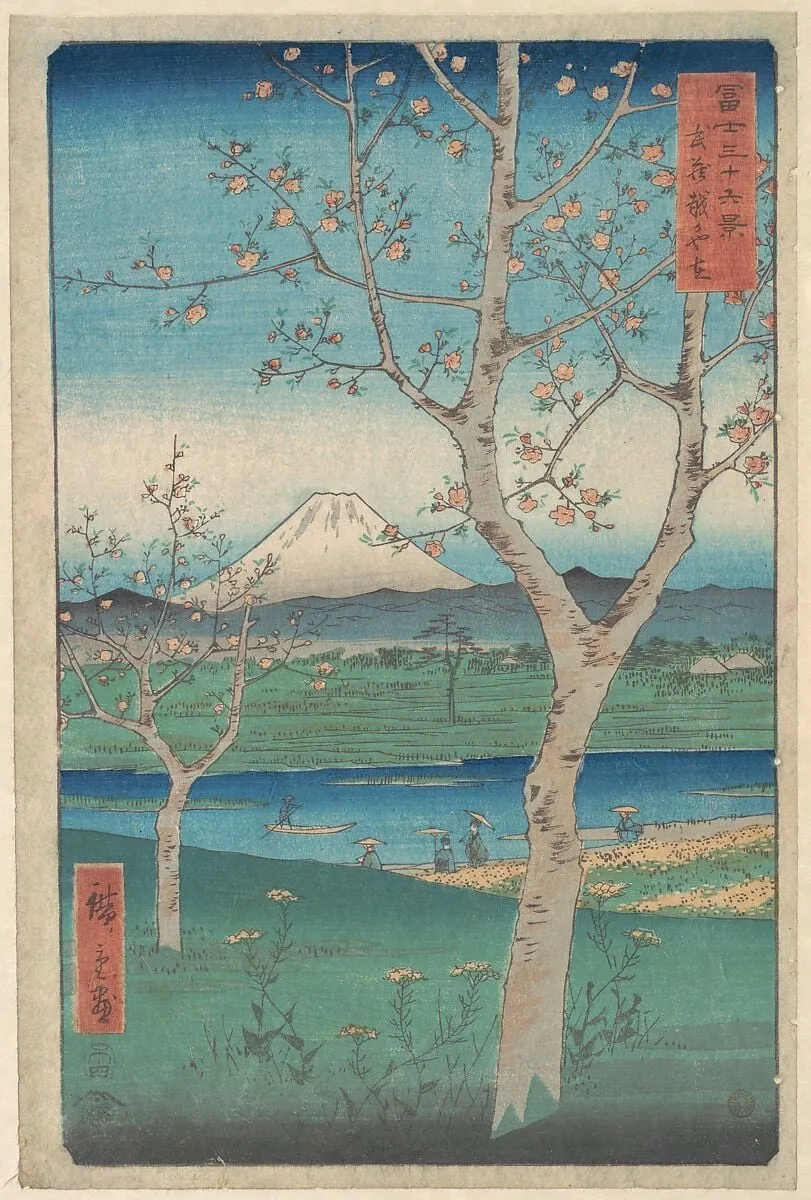
富士三十六景 武蔵越かや在|View of Mount Fuji from Koshigaya, Province of Musashi (Musashi, Koshigaya Zai), from the series Thirty-six Views of Mount Fuji (Fugaku sanjūrokkei) is an ink print by the Impressionist artist Utagawa Hiroshige. It dates from 4 and is held in the collection of the Metropolitan Museum of Art.
About this work
Overview
The print captures a quiet moment in Koshigaya, a town in Musashi Province, with Mount Fuji visible on the horizon, rendered in soft tones against a pale sky.
This woodblock print is one of thirty-six landscapes in Utagawa Hiroshige’s series *Thirty-six Views of Mount Fuji*, produced during the Edo period. Unlike earlier ukiyo-e works centered on actors or courtesans, this series emphasizes natural and urban scenery. The print captures a quiet moment in Koshigaya, a town in Musashi Province, with Mount Fuji visible on the horizon, rendered in soft tones against a pale sky.
Subject & Meaning
The scene portrays everyday life in a suburban setting, with figures tending to a field and a body of water reflecting the sky. Two flowering trees dominate the foreground, their pink blossoms contrasting with the white bark and distant mountain. Mount Fuji, though distant, anchors the composition, symbolizing permanence amid transient human activity. The image suggests harmony between nature and the cultivated land, a recurring theme in Hiroshige’s work.
Technique & Style
Hiroshige employed precise woodblock carving and layered color printing to achieve subtle gradations, particularly in the sky and water. The delicate rendering of blossoms and the sparse use of color enhance the print’s quiet mood. Perspective is flattened yet spatially suggestive, with the mountain receding into the background through atmospheric haze. The composition guides the eye from foreground details to the distant peak, balancing intimacy with grandeur.
History & Provenance
Created around 1858, this print was part of a commercially successful series that helped define Japanese landscape printing. It was produced by Hiroshige’s workshop using traditional methods, with multiple blocks for each color. Copies circulated widely in Edo, appealing to middle-class collectors. The print’s survival in good condition reflects its popularity and careful handling over time.
Context
During the late Edo period, travel became more accessible, and depictions of famous places gained cultural significance. Mount Fuji, revered as sacred and symbolic, appeared in numerous artistic forms. Hiroshige’s series responded to this interest by presenting the mountain from varied vantage points, integrating it into daily life rather than idealizing it as a distant monument.
Legacy
Hiroshige’s *Thirty-six Views of Mount Fuji* influenced later artists in Japan and Europe, particularly Impressionists drawn to its compositional clarity and naturalism. The series helped elevate landscape printmaking as a serious artistic genre. Today, it remains a key reference for understanding how Japanese artists interpreted nature, place, and perception in the 19th century.
Artist & collection
Artist
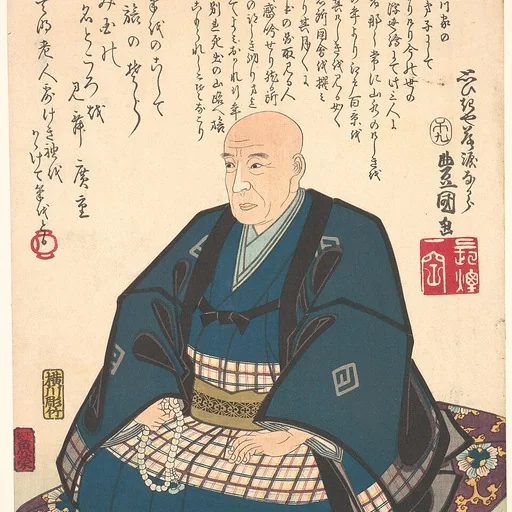
Utagawa Hiroshige (歌川 広重) or Andō Hiroshige (安藤 広重), born Andō Tokutarō (安藤 徳太郎; 1797 – 12 October 1858), was a Japanese ukiyo-e artist, considered the last great master of that tradition.

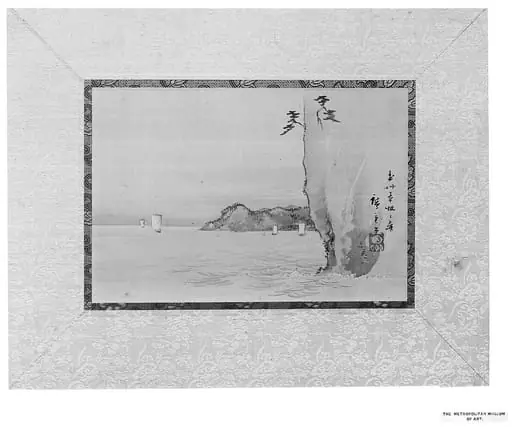
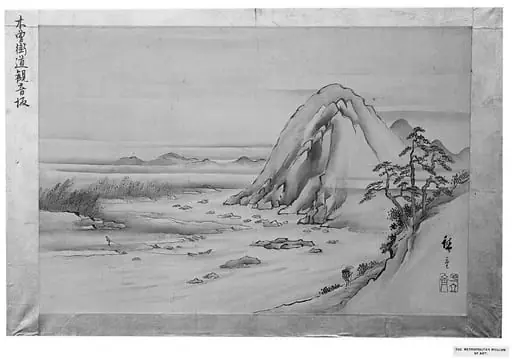
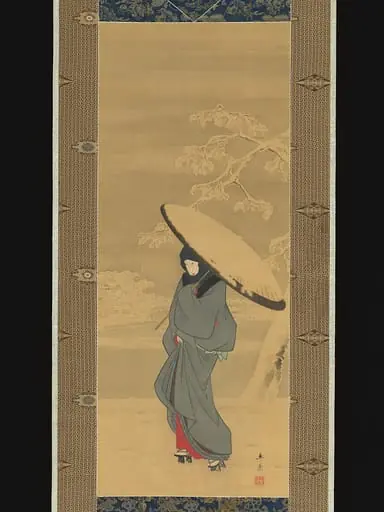
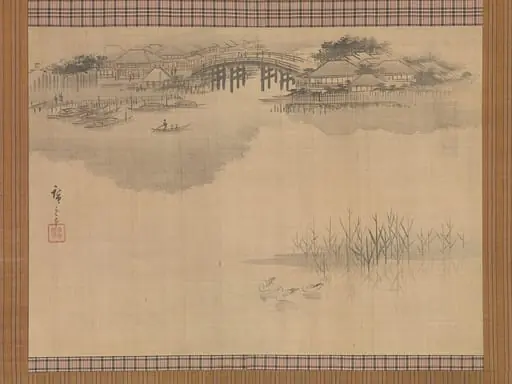
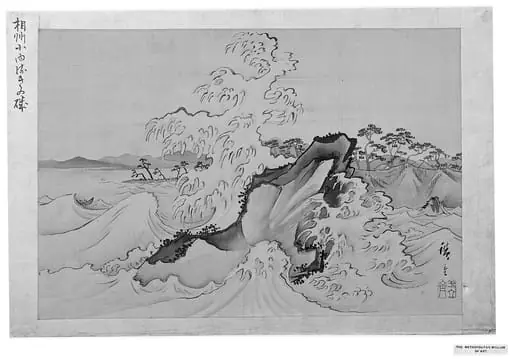
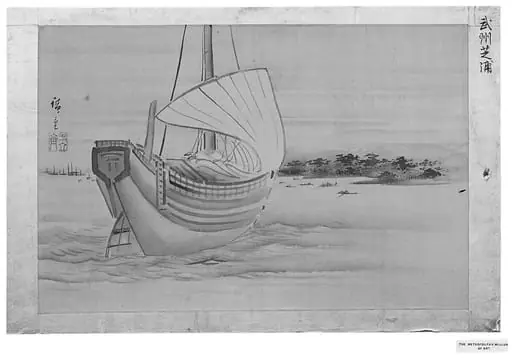
 富士三十六景 武蔵越かや在|Musashi, Koshigaya Zai
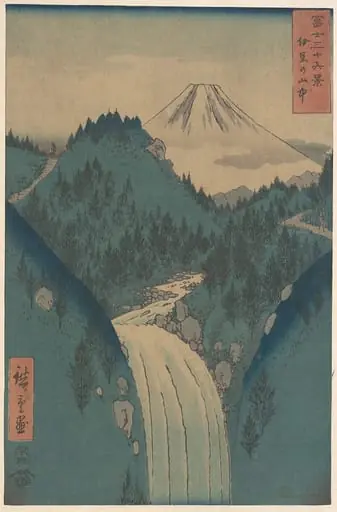 富士三十六景 伊豆の山中|View of Fuji san from the Mountains in the Province of Izu (Izu no Sanchu), from the series Thirty-six Views of Mount Fuji (Fugaku sanjūrokkei)
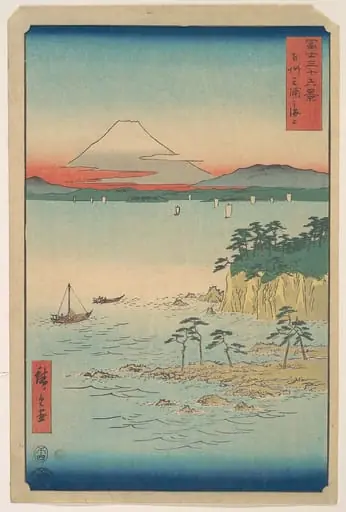 富士三十六景 相州三浦の海上|Fuji from Miura, Sagami (Soshu Miura no Kaijo), from the series Thirty-six Views of Mount Fuji (Fugaku sanjūrokkei)
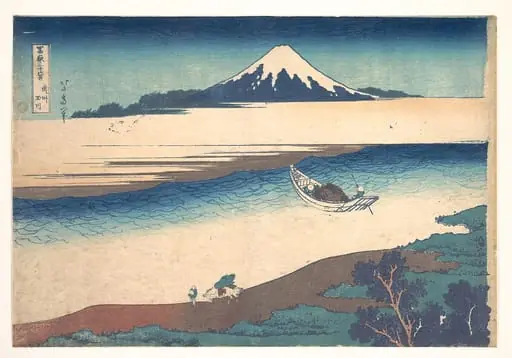 冨嶽三十六景 武州玉川|Tama River in Musashi Province (Bushū Tamagawa), from the series Thirty-six Views of Mount Fuji (Fugaku sanjūrokkei)
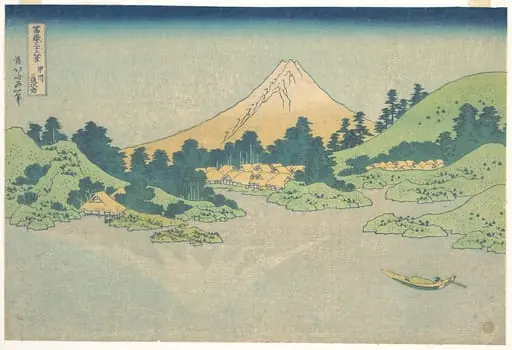 冨嶽三十六景 甲州三坂水面|Reflection in Lake at Misaka in Kai Province (Kōshū Misaka suimen), from the series Thirty-six Views of Mount Fuji (Fugaku sanjūrokkei)
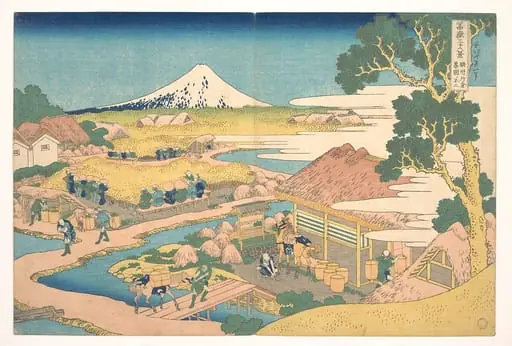 冨嶽三十六景 駿州片倉茶園の不二|Fuji from the Katakura Tea Fields in Suruga (Sunshū Katakura chaen no Fuji), from the series Thirty-six Views of Mount Fuji (Fugaku sanjūrokkei)
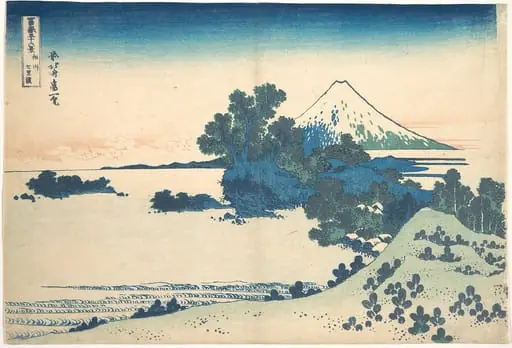 冨嶽三十六景 相州七里浜|Shichirigahama in Sagami Province (Sōshū Shichirigahama), from the series Thirty-six Views of Mount Fuji (Fugaku sanjūrokkei)
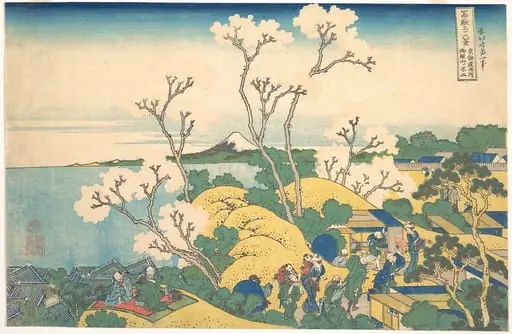 冨嶽三十六景 東海道品川御殿山の不二|Fuji from Gotenyama at Shinagawa on the Tōkaidō (Tōkaidō Shinagawa Gotenyama no Fuji), from the series Thirty-six Views of Mount Fuji (Fugaku sanjūrokkei)
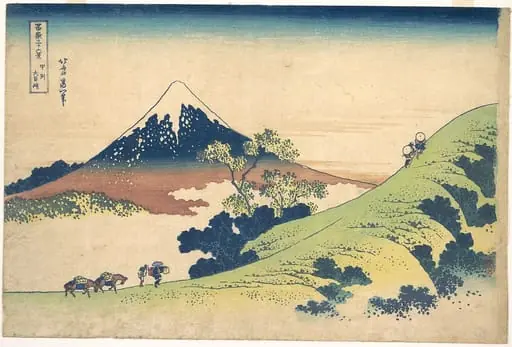 冨嶽三十六景 甲州犬目峠|The Inume Pass in Kai Province (Kōshū Inume tōge), from the series Thirty-six Views of Mount Fuji (Fugaku sanjūrokkei)