Artwork
The Courtesan Hinaogi of the Daikokuya at the Entrance of Kadomachi
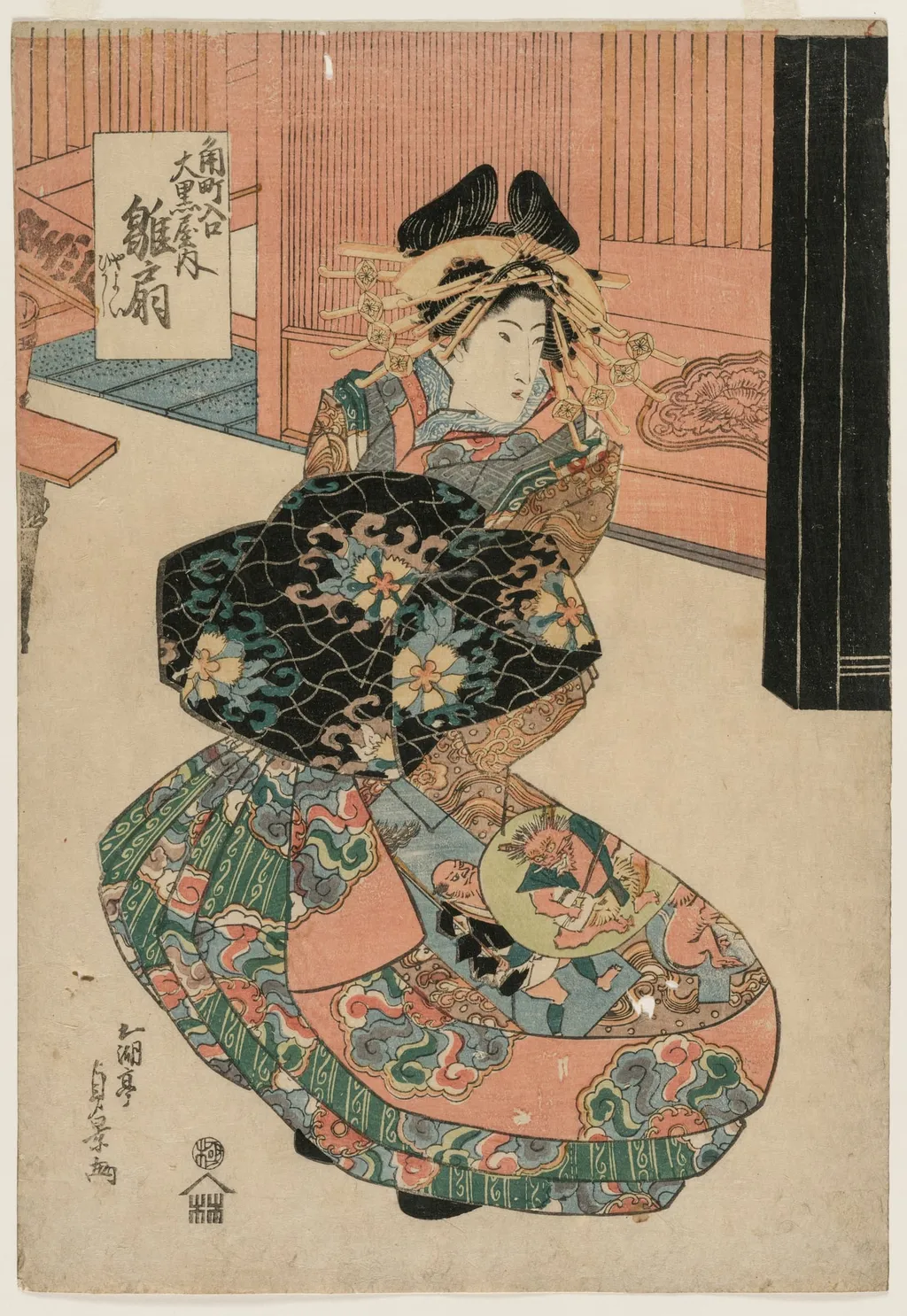
The Courtesan Hinaogi of the Daikokuya at the Entrance of Kadomachi is a print by the Romanticist artist Utagawa Sadakage. It dates from 1830 and is held in the collection of the Cleveland Museum of Art.
About this work
Overview
Utagawa Sadakage’s woodblock print, dated around 1830, portrays a woman in an elaborate kimono positioned before a modest wooden façade. The composition is framed by a hanging sign bearing Japanese characters, suggesting a commercial or residential entrance. The work is part of the collection of the Cleveland Museum of Art.
Subject & Meaning
The figure’s richly patterned garment, black obi, and prominent hair bow identify her as a high‑ranking courtesan, a common subject in Edo‑period imagery. Her stance, poised before the doorway of the Daikokuya establishment, evokes the social visibility of such entertainers within the bustling street life of the era.
Technique & Style
Executed in the ukiyo‑e tradition, Sadakage employs bold, saturated pigments to delineate the kimono’s floral, cloud and wave motifs. Fine line work defines the architectural details, while the flat colour planes and stylised background create a sense of depth without realistic perspective, characteristic of early 19th‑century prints.
History & Provenance
The print was produced in the late Edo period, a time when the Utagawa school dominated commercial publishing. It entered the Cleveland Museum of Art’s holdings through a 20th‑century acquisition, joining a broader collection of Japanese prints that document urban culture of the period.
Context
Courtesan portraits served both as advertisements and as popular visual culture, reflecting the interplay between entertainment districts and consumer society. The Daikokuya name on the sign indicates a specific teahouse or brothel, anchoring the scene in a recognizable locale for contemporary viewers.
Artist & collection

 Eyes for Looking at a Courtesan
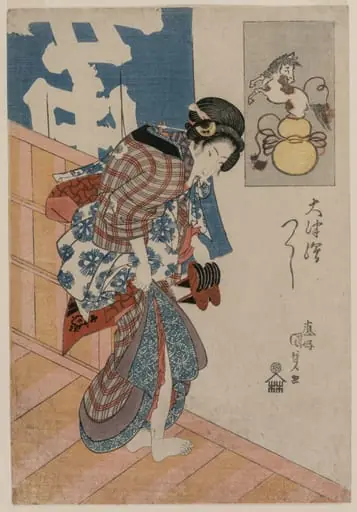 Woman Leaving a Bath House (from the series Pictures from Otsu)
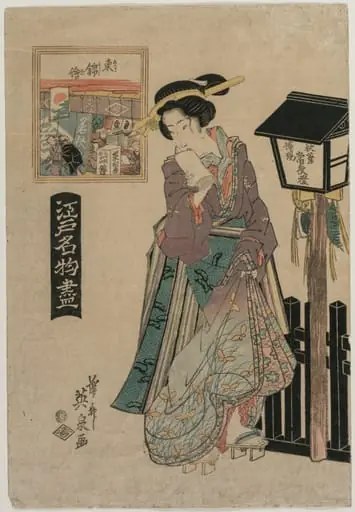 Pictures of Eastern Brocade (from the series Famous Products of Edo)
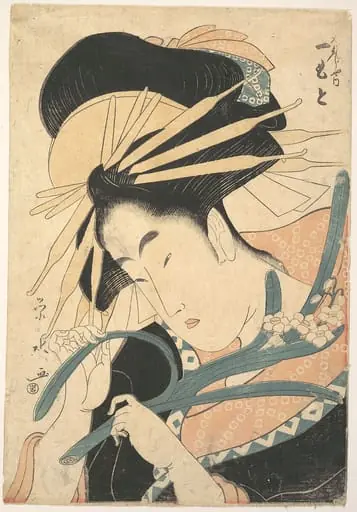 Untitled
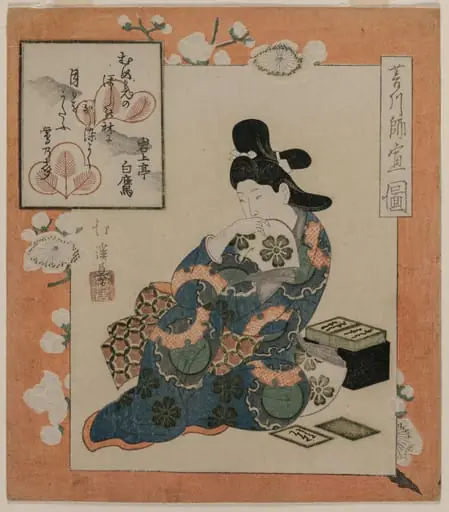 A Picture by Hishikawa Moronobu: Woman with a Set of Poem Cards
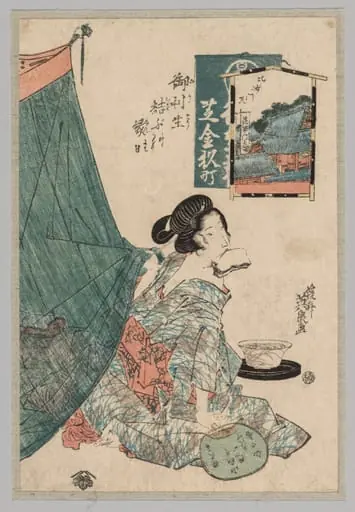 Woman with Papers in Mouth and Fan in Hand
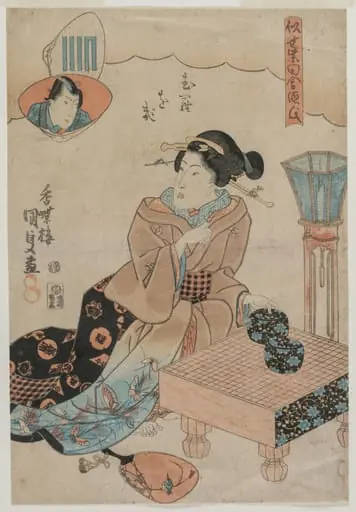 Muraogi, from the series The False Murasaki's Rustic Genji (Nise Murasaki Inaka Genji)