Artwork
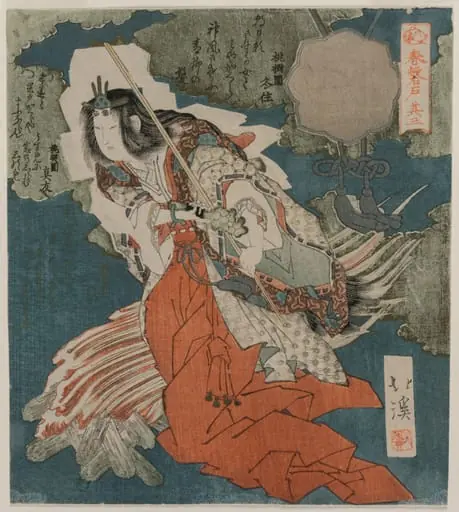
A Picture by Hishikawa Moronobu: Woman with a Set of Poem Cards
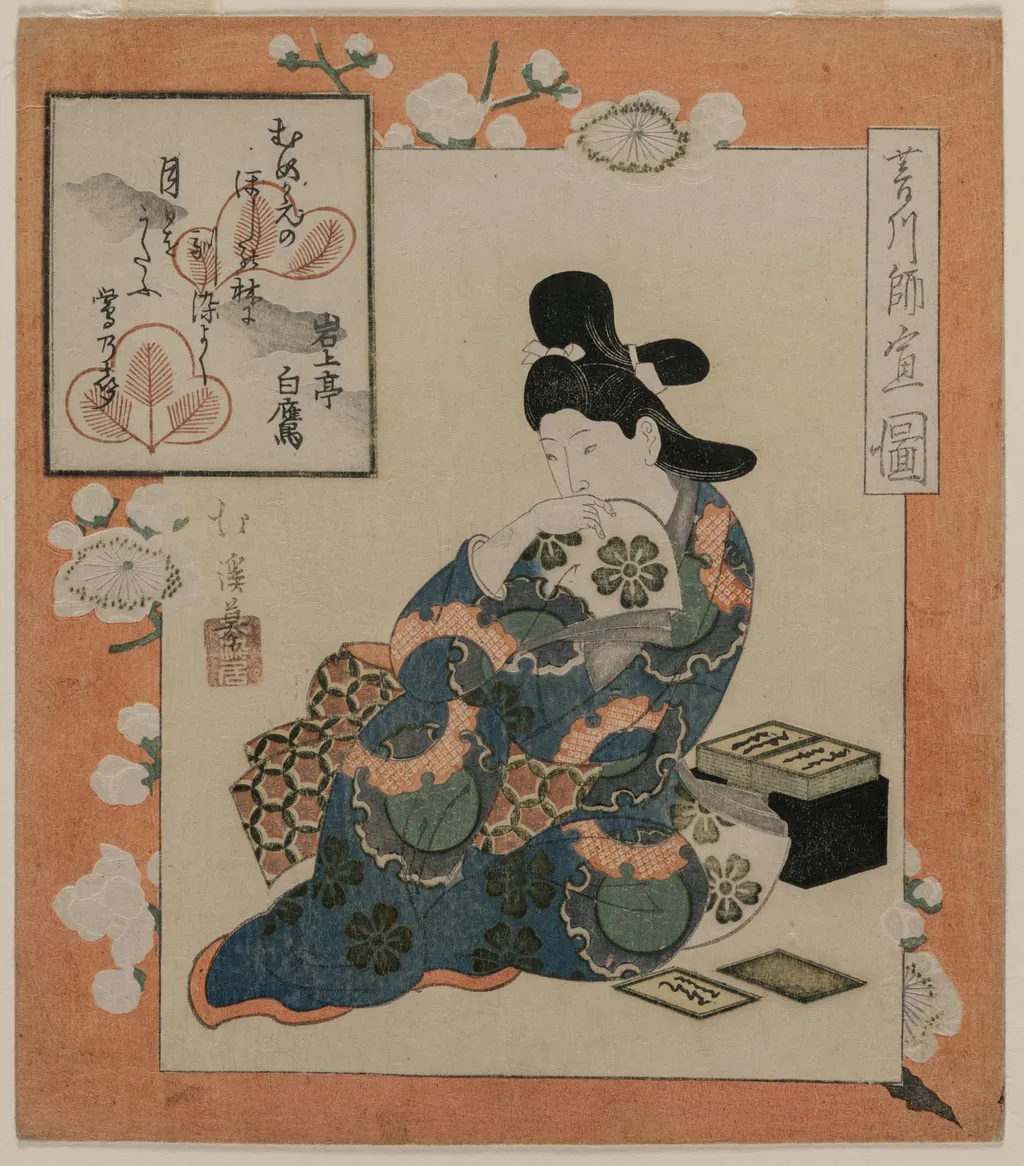
A Picture by Hishikawa Moronobu: Woman with a Set of Poem Cards is a print by the Romanticist artist Totoya Hokkei. It dates from 1824 and is held in the collection of the Cleveland Museum of Art. This woodblock print by Hishikawa Moronobu depicts a woman holding a set of poem cards, rendered in delicate lines and muted tones.
About this work
The poem on the cards is about nature and the passing of time.
This painting shows a woman holding a set of poem cards.
She's dressed in traditional Japanese clothing.
The poem on the cards is about nature and the passing of time.
The poem is by a Japanese poet named Ganjotei Shirataka. It's a quiet moment in the painting. The woman seems lost in thought.
You can learn more about this style by looking at the work of artist: Totoya Hokkei (Japanese, 1780–1850)
Overview
This woodblock print by Hishikawa Moronobu depicts a woman holding a set of poem cards, rendered in delicate lines and muted tones. The composition centers on her quiet contemplation, framed by the subtle texture of traditional garments. The scene evokes introspection rather than narrative action, aligning with early ukiyo-e’s focus on everyday moments and literary culture.
Subject & Meaning
The woman, immersed in thought, holds cards inscribed with a verse by Ganjotei Shirataka, which evokes a plum grove under starlight and the song of a warbler. The imagery links natural cycles—seasons, day and night—to human emotion, suggesting a meditation on transience. Her stillness amplifies the poem’s quiet resonance, transforming the cards into vessels of memory and seasonal awareness.
Technique & Style
Moronobu employs fine ink outlines and restrained color to define form and texture, characteristic of early ukiyo-e. The woman’s robe is rendered with subtle gradations, while the poem cards are rendered with precision, emphasizing their textual content. The background remains minimal, directing focus to the figure and the written word, reflecting the print’s literary intent.
History & Provenance
Created in the late 17th century, this print belongs to Moronobu’s pioneering output in mass-produced illustrated prints. It likely circulated as part of a series pairing poetry with visual scenes, popular among urban literati. Its survival suggests it was valued as both art and cultural artifact, though its early provenance remains undocumented.
Context
During Moronobu’s time, ukiyo-e prints increasingly merged visual art with waka poetry, reflecting Edo’s growing literate class. Poem cards, or uta-garuta, were common in domestic and recreational settings. This print situates the viewer within that cultural practice, where nature-themed verses served as both aesthetic pleasure and moral reflection.
Legacy
Moronobu’s integration of poetry and image influenced later ukiyo-e artists, including Totoya Hokkei, who expanded on similar themes. While not widely reproduced, this work exemplifies the genre’s foundational shift toward intimate, text-driven scenes, helping establish printmaking as a medium for literary expression in early modern Japan.
Artist & collection
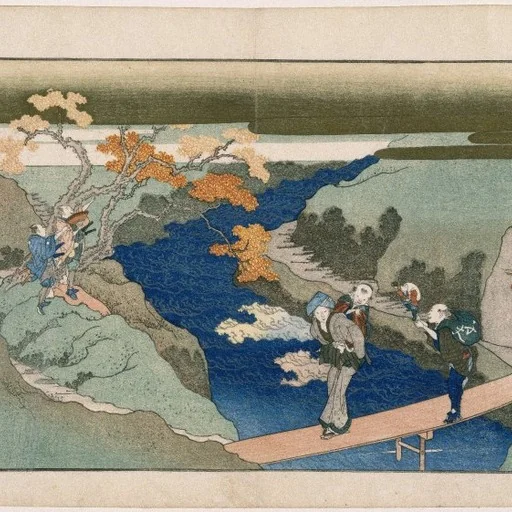
Artist
Totoya Hokkei (魚屋 北渓; 1780–1850) was a Japanese artist best known for his prints in the ukiyo-e style.

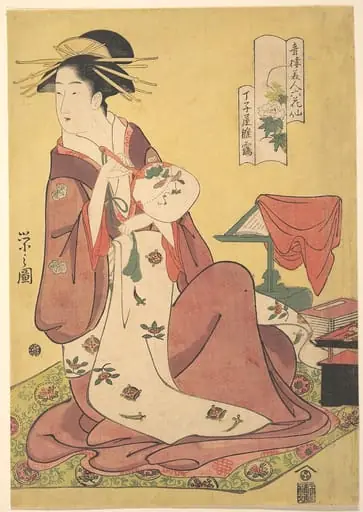 鳥文斎栄之画 「青楼美人六花仙 丁子屋雛鶴鸖」|The Courtesan Hinazuru of the Chōjiya Brothel (Chōjiya Hinazuru), from the series Beauties of the Pleasure Quarters as Six Floral Immortals (Seirō bijin rokkasen)
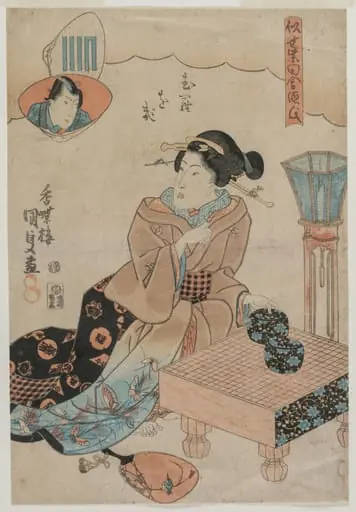 Muraogi, from the series The False Murasaki's Rustic Genji (Nise Murasaki Inaka Genji)
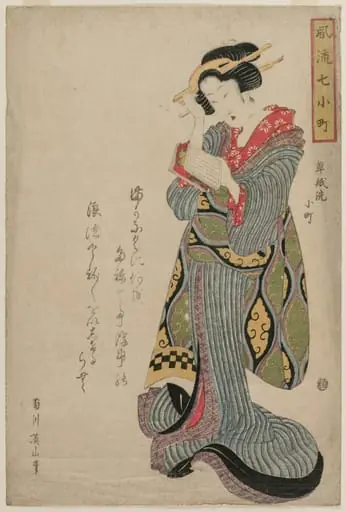 Komachi Washes the Book (from the series Seven Elegant Episodes from the Life of the Poetess Ono no Komachi)
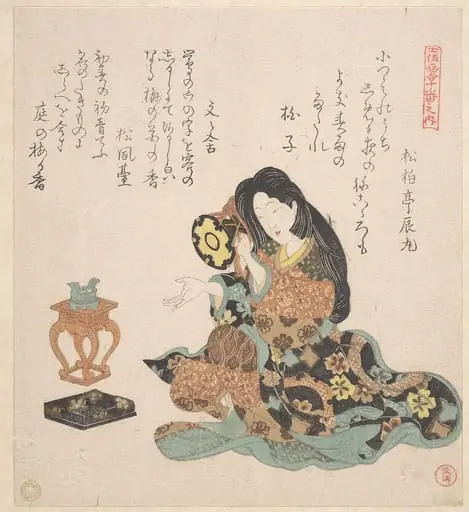 Untitled
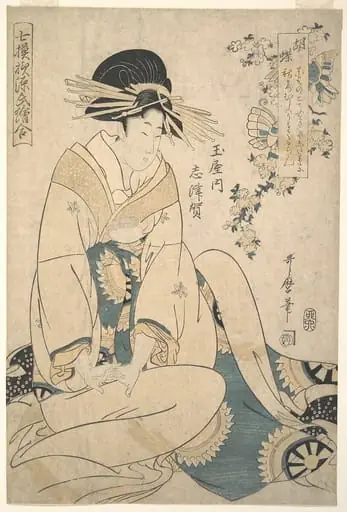 玉屋内 志津賀|A Courtesan
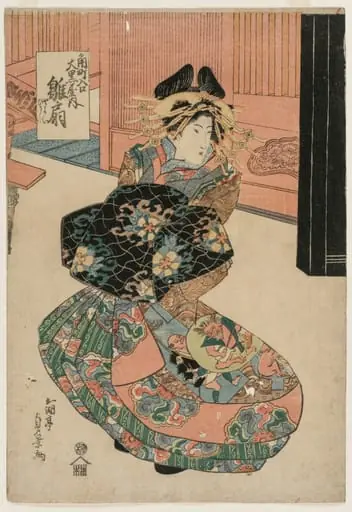 The Courtesan Hinaogi of the Daikokuya at the Entrance of Kadomachi
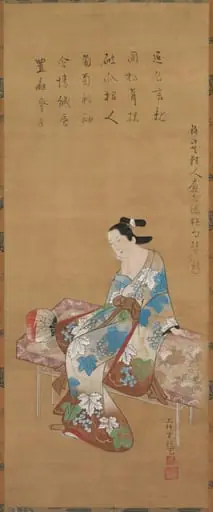 Courtesan Seated on a Bench Enjoying the Evening Cool in Summer
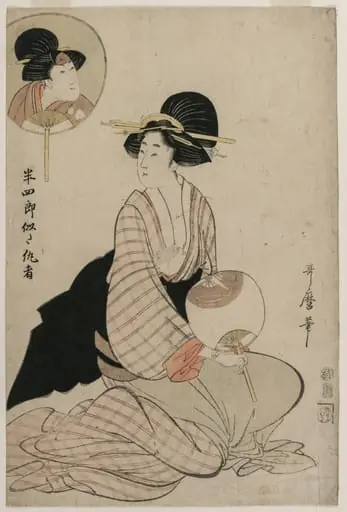 An Attractive Woman Who Looks Like the Actor Iwai Hanshiro V
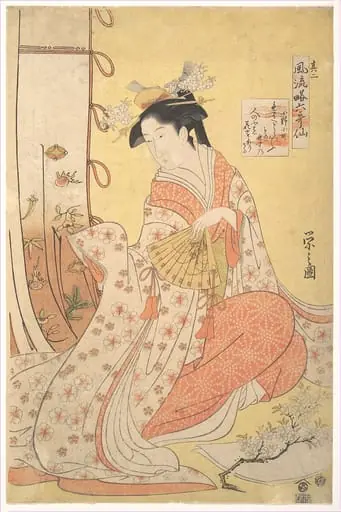 鳥文斎栄之画 「風流略六哥仙 其の二」小野小町|Ono no Komachi: Number Two (Sono ni), from the series Stylish Parodies of the Six Poetic Immortals (Fūryū yatsushi rokkasen)
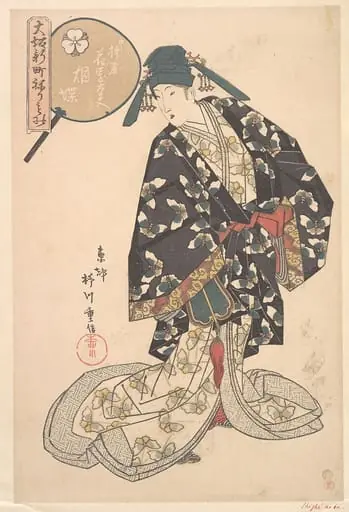 Untitled
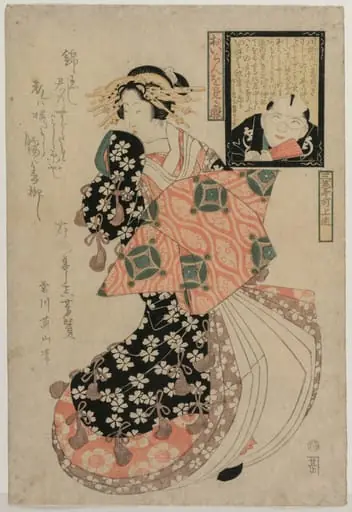 Eyes for Looking at a Courtesan
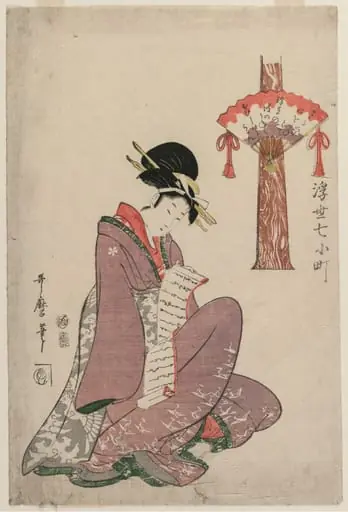 Woman Reading a Letter (from the series Seven Episodes in the Life of Komachi in the Floating World)