Artwork
Doi africani (doi mauri)
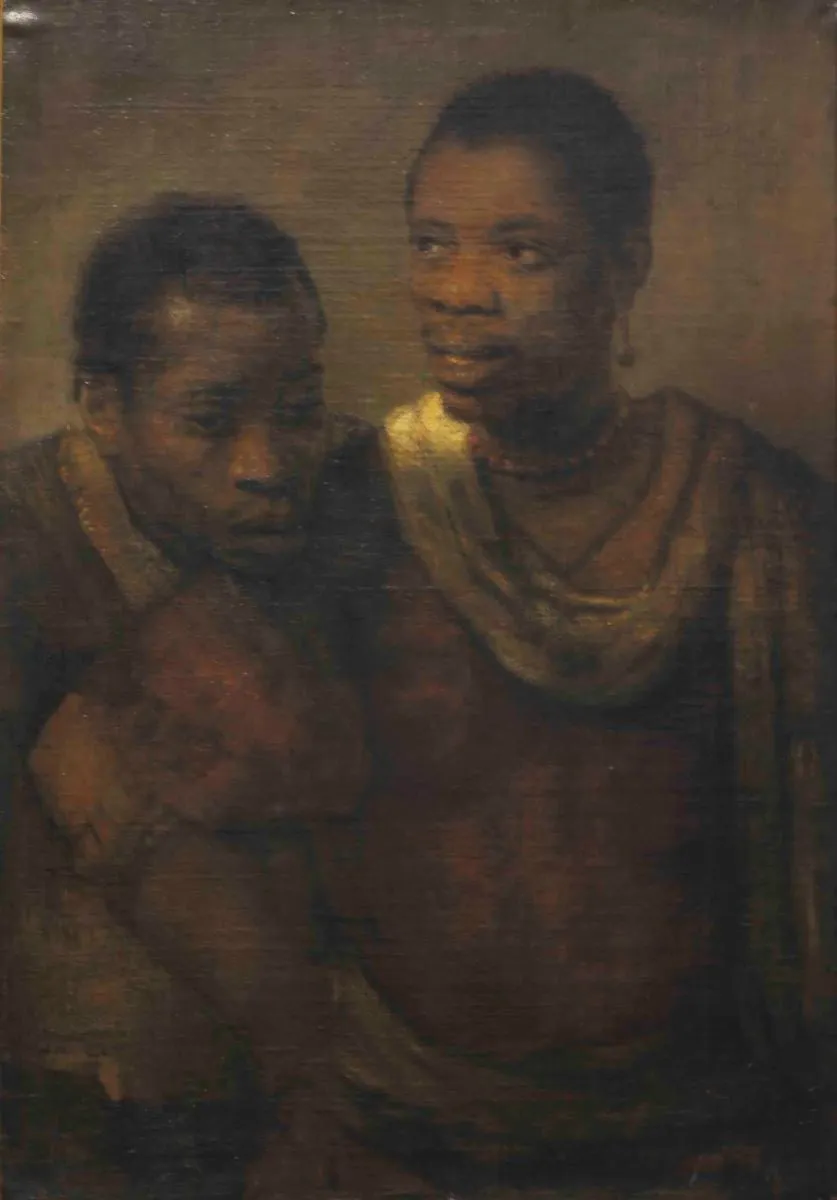
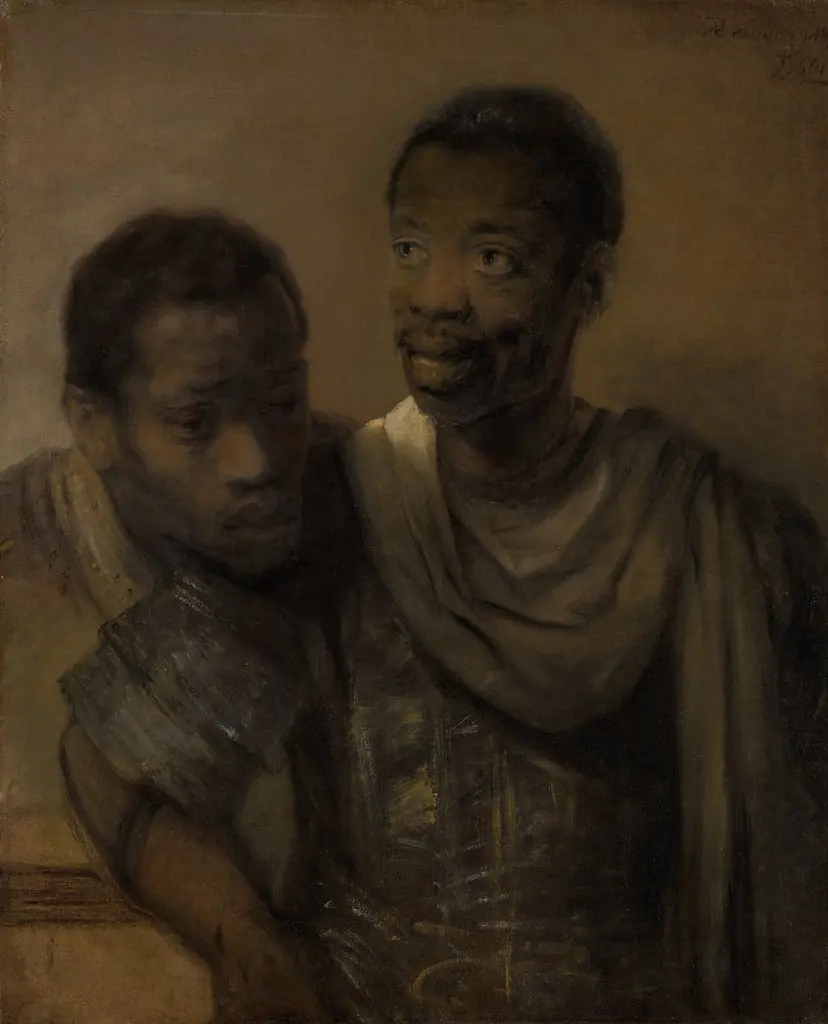
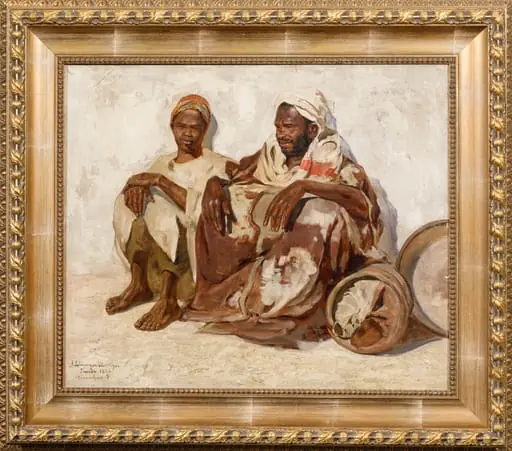
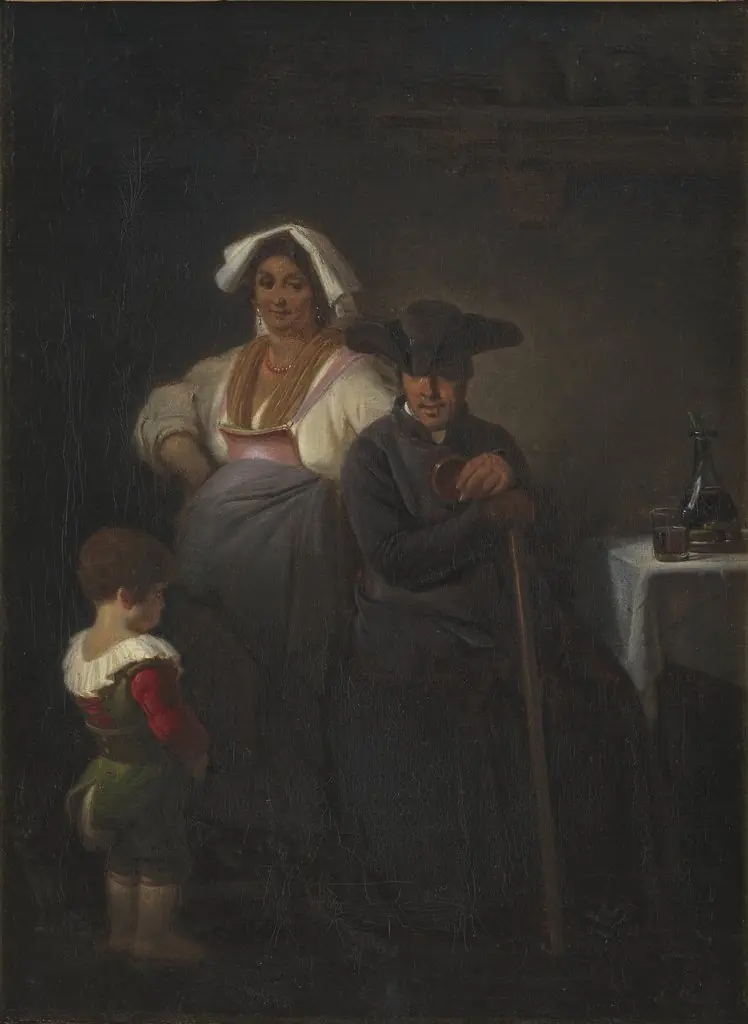
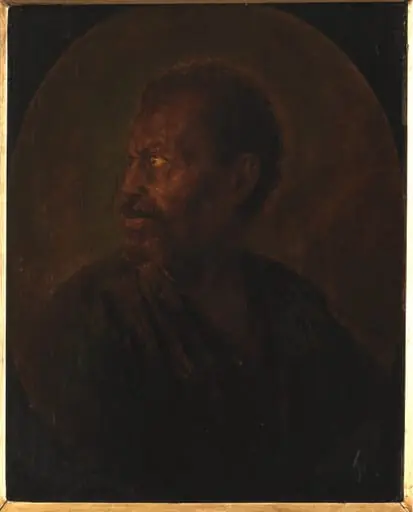
Doi africani (doi mauri) is a print by the Baroque artist Rembrandt Harmensz Van Rijn. It is held in the collection of the National Museum of Art of Romania. The work presents a pair of seated figures positioned closely together against a dark, unadorned backdrop.
About this work
Overview
The composition concentrates on the interaction of the two bodies, emphasizing their proximity and the contrast of light and dark.
The work presents a pair of seated figures positioned closely together against a dark, unadorned backdrop. The left-hand individual is turned slightly away, their visage obscured by shadow, while the companion on the right faces forward, clothed in a dark, textured fabric with a lighter drape across the shoulders. The composition concentrates on the interaction of the two bodies, emphasizing their proximity and the contrast of light and dark.
Subject & Meaning
The intimate arrangement of the two sitters suggests a personal relationship, perhaps familial or affectionate, conveyed through their nearness and the subtle exchange of gazes. The obscured face of the left figure introduces an element of mystery, inviting viewers to contemplate the dynamics of presence and absence within the pair.
Technique & Style
The artist employs chiaroscuro, a method that manipulates strong contrasts between illuminated areas and deep shadows to model form and evoke atmosphere. Soft, diffused lighting highlights the textures of the garments and the contours of the faces, while the surrounding darkness isolates the figures, creating a warm, enclosed space that enhances the sense of intimacy.
Context
Set within a minimalist background, the painting aligns with traditions that prioritize figure study over elaborate settings. By reducing extraneous detail, the work focuses attention on the human subjects and the interplay of light, a concern shared by many artists who explore psychological depth through controlled illumination.
Artist & collection
Artist
This printmaker turned his etching needle into a spotlight for faces on the edge of the known world.