Artwork
Study of a Woman's Dress
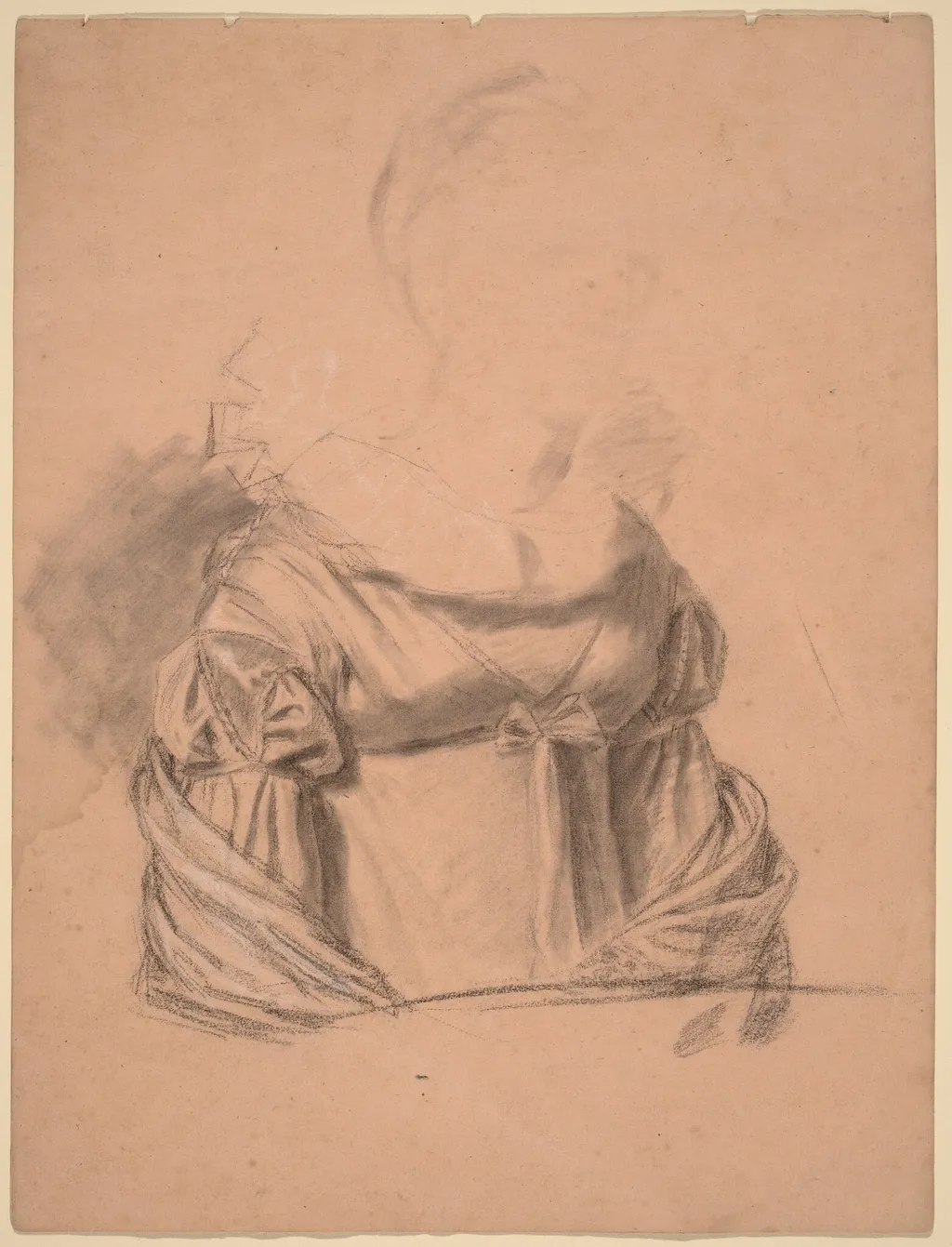
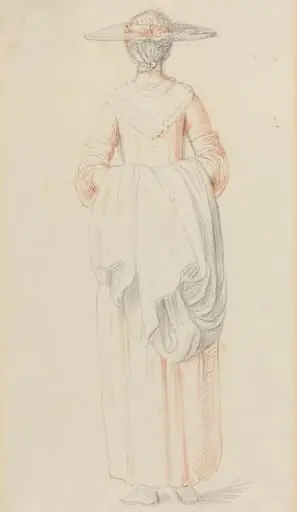
Study of a Woman's Dress is a chalk drawing by the Romanticist artist John Vanderlyn. It dates from 1820 and is held in the collection of the National Gallery of Art.
About this work
Overview
Created around 1820, this drawing by John Vanderlyn explores the form of a woman’s dress through delicate graphic means.
Created around 1820, this drawing by John Vanderlyn explores the form of a woman’s dress through delicate graphic means. Executed in graphite and black chalk, with selective highlights in white chalk, it is rendered on pink wove paper. The piece functions as a study, capturing the drape and structure of fabric rather than a full figure, suggesting an interest in textile behavior for later compositional use.
Subject & Meaning
The subject is the silhouette and folds of a woman’s garment, isolated from the body it once covered. By focusing solely on the dress, Vanderlyn shifts attention to the materiality and movement of fabric, possibly in preparation for a portrait or historical scene. The absence of the figure invites contemplation of clothing as an indicator of posture, status, or motion, rather than identity.
Technique & Style
Vanderlyn employed a restrained palette of graphite and black chalk, enhanced with white chalk accents to suggest light catching fabric edges. The pink paper provides a warm midtone, allowing the chalk to modulate value with subtlety. Lines are precise yet fluid, indicating careful observation and a sensitivity to how light interacts with draped textiles.
History & Provenance
The drawing is attributed to Vanderlyn based on stylistic analysis and paper type consistent with his known works from the 1820s. It likely originated in his New York studio, where he prepared studies for portraits and historical paintings. Its survival suggests it was retained as a working reference rather than discarded after use.
Context
During the early 1820s, Vanderlyn was transitioning from European academic training to American commissions, often depicting aristocratic subjects. Studies like this reflect the influence of Neoclassical ideals, where attention to drapery echoed classical sculpture. Such preparatory drawings were common among artists refining their depiction of costume in narrative works.
Legacy
This drawing exemplifies Vanderlyn’s methodical approach to rendering fabric, a skill that informed his larger portraits and historical scenes. While not widely exhibited, it remains a quiet testament to the labor behind his finished works, illustrating how even minor studies contribute to understanding an artist’s process and visual priorities.
Artist & collection




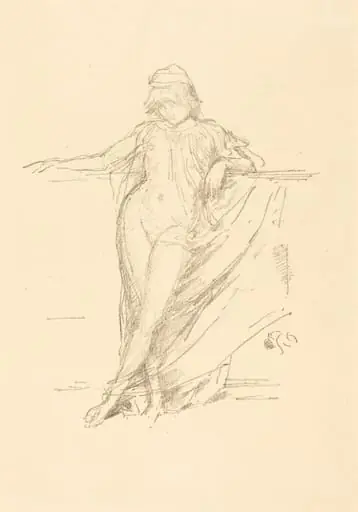 Little Draped Figure, Leaning
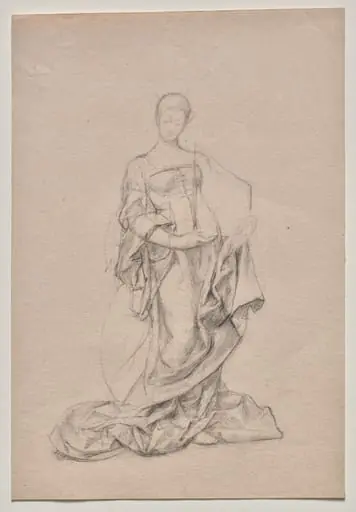 Architecture
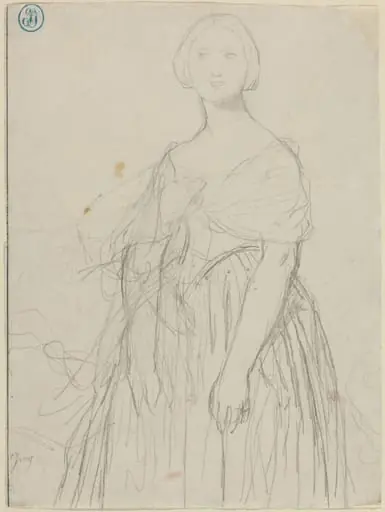 Sketch for Madame Moitessier
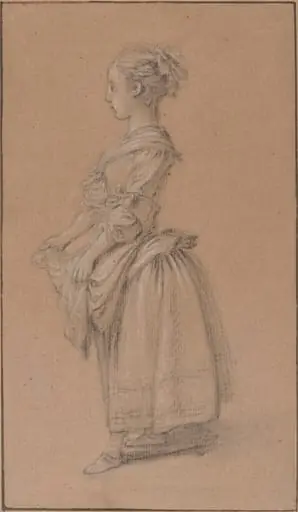 A Girl in Peasant Dress
![Study of the Statue of Diana in the Vatican [verso], by Benjamin Haydon](https://artifactworldgallery.com/img/benjamin-haydon--study-of-the-statue-of-diana-in-the-vatican-verso--a30cde8a9d697c60-w320.webp) Study of the Statue of Diana in the Vatican [verso]
Study of the Statue of Diana in the Vatican [verso]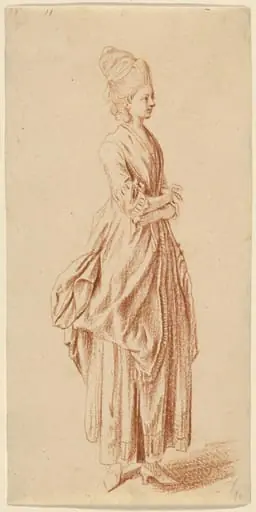 A Standing Lady in a Day Dress
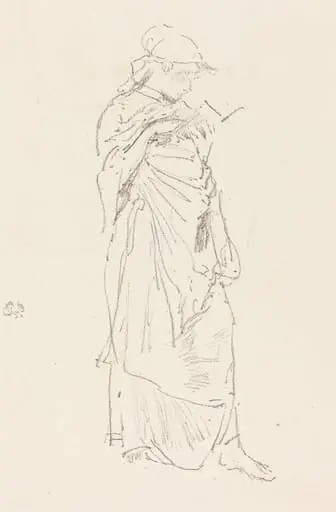 The Novel: Girl Reading
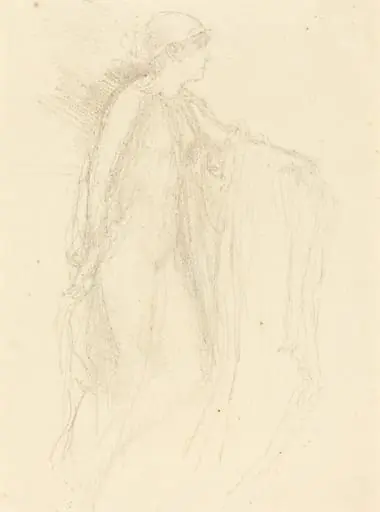 The Cap
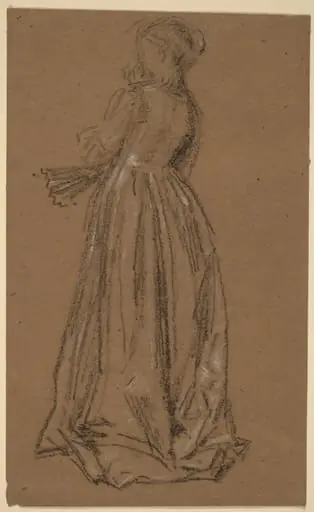 Woman with a Fan
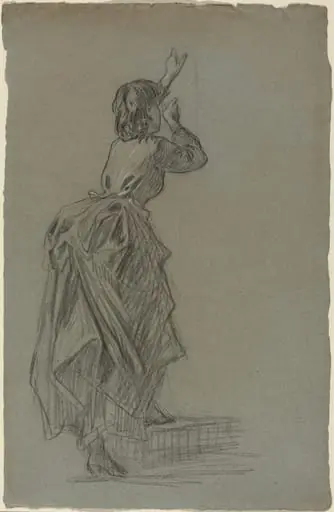 Young Woman Climbing a Step
 Lady Holding Her Cloak from Behind
![Studies of a Woman and Her Dress [verso], by Perry, Enoch Wood, Jr.](https://artifactworldgallery.com/img/perry-enoch-wood-jr--studies-of-a-woman-and-her-dress-verso--abf8075589814203-w320.webp) Studies of a Woman and Her Dress [verso]
Studies of a Woman and Her Dress [verso]