Artwork
Marriage at Cana
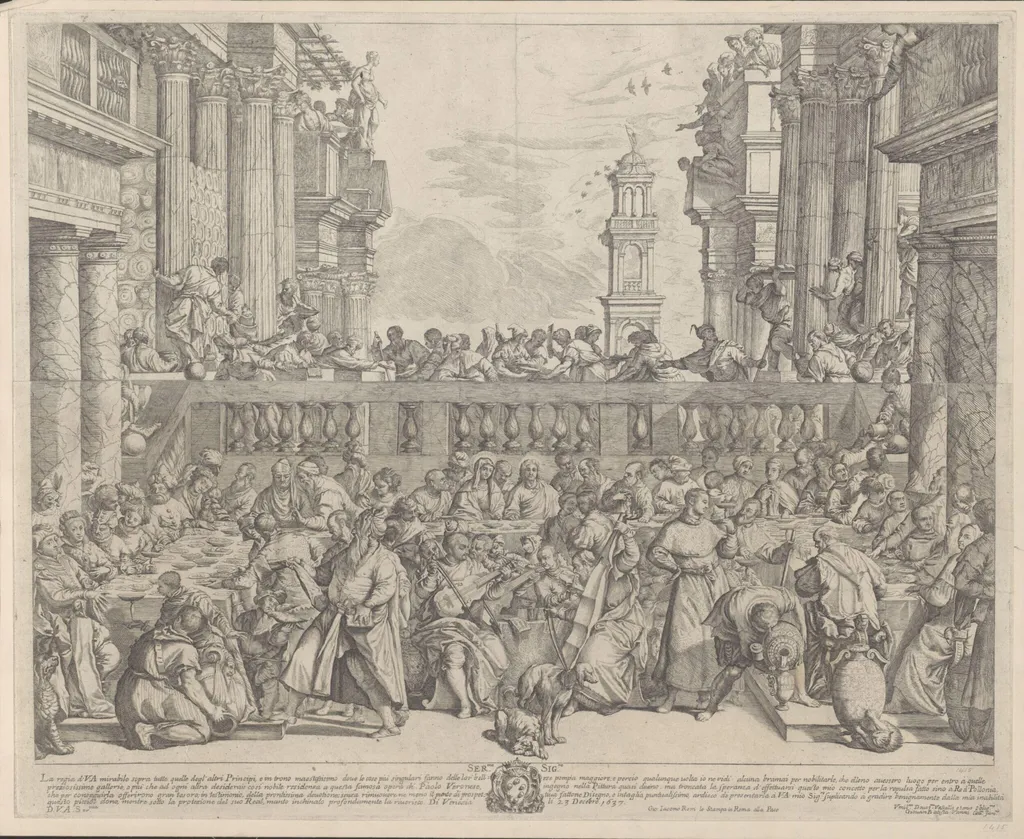
Marriage at Cana is a print by Giovanni Battista Vanni. It dates from 1650 and is held in the collection of the Victoria and Albert Museum.
About this work
Overview
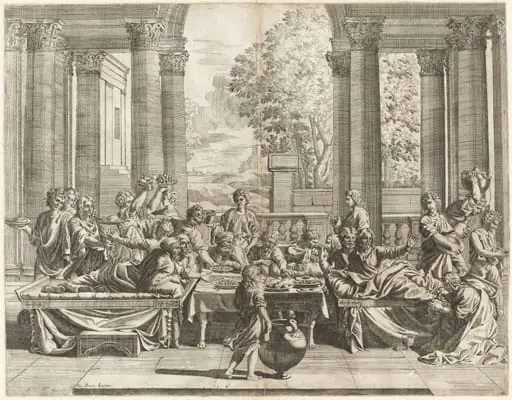
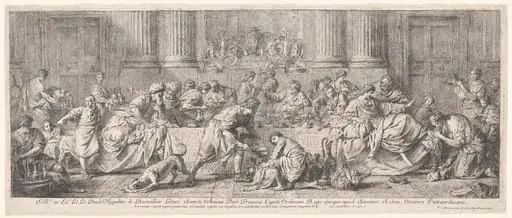
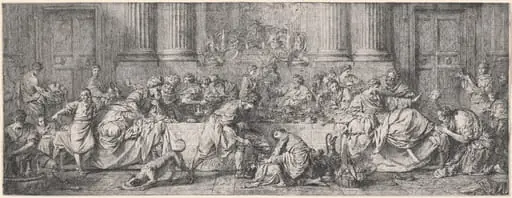
Giovanni Battista Vanni’s 1650 print reproduces Paolo Veronese’s celebrated composition of the biblical Marriage at Cana. Executed on paper, the image translates the original’s grand banquet into a dense network of figures, architectural elements, and decorative details, preserving the narrative’s festive atmosphere.
Subject & Meaning
The scene captures the moment of the miracle at Cana, where Jesus turns water into wine. Central to the composition are the bride and groom beneath an ornate arch, surrounded by guests, musicians, and servants, all rendered in sumptuous attire that underscores the celebratory and communal aspects of the event.
Technique & Style
Vanni employed fine etching lines to model light and shadow across the crowded tableau. Delicate cross‑hatching creates depth on faces and fabrics, while broader strokes suggest architectural forms and background statues, echoing Veronese’s vivid color palette through tonal variation.
History & Provenance
The print was produced in mid‑17th‑century Italy as part of a broader practice of disseminating famous paintings through reproductive prints. It entered the collection of the Victoria and Albert Museum, where it remains catalogued as an example of Baroque printmaking after a major Venetian master.
Context
During the Counter‑Reformation, depictions of biblical feasts served both devotional and didactic purposes. Vanni’s rendition reflects the period’s taste for elaborate, theatrical compositions that combined religious narrative with the spectacle of aristocratic ceremony.
Artist & collection

Artist
Giovanni Battista Vanni was an Italian painter and engraver of the Baroque period.