Artwork
The foreigners
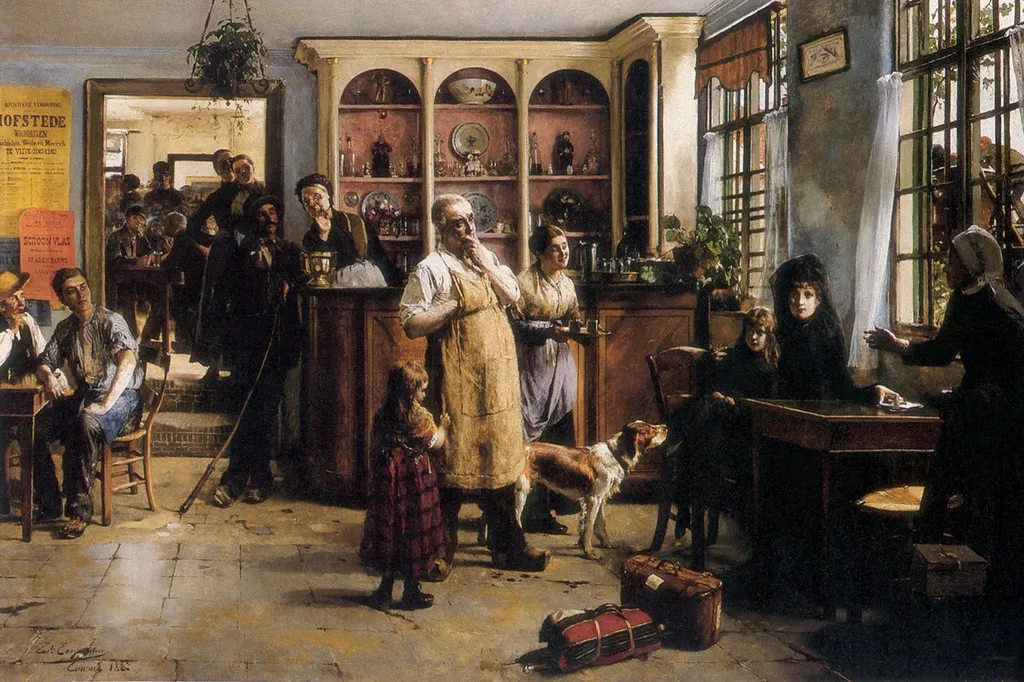
The foreigners is an oil painting by Évariste Carpentier. It dates from 1894 and is held in the collection of the Royal Museums of Fine Arts of Belgium.
About this work
Overview
Painted in 1894 by Belgian artist Évariste Carpentier, this oil-on-canvas work captures a quiet interior scene in a modest establishment.
Painted in 1894 by Belgian artist Évariste Carpentier, this oil-on-canvas work captures a quiet interior scene in a modest establishment. Carpentier, known for transitioning from academic traditions toward luminist and impressionist approaches, here focuses on everyday life rather than grand narratives. The painting is held in the Groeningemuseum’s collection, reflecting its significance in Belgian regional art of the late 19th century.
Subject & Meaning
The scene portrays a domestic moment in what appears to be a local tavern or inn. A barkeep in an apron stands near shelves of bottles, while a woman and child sit at a table, and a dog rests nearby. A suitcase on the floor suggests transient presence, hinting at migration or travel. The composition conveys stillness and observation, inviting reflection on ordinary lives rather than dramatizing them.
Technique & Style
Carpentier employs fine, deliberate brushwork to render textures—stone tiles, fabric, glass, and wood—with precision. Light filters through a large window, casting soft shadows and illuminating surfaces with subtle gradations. The use of reflected light in the mirror and the curtain’s translucence aligns with luminist principles, emphasizing natural illumination over theatrical contrast.
History & Provenance
Created during Carpentier’s mature period, the painting entered the Groeningemuseum’s holdings in the 20th century, likely through acquisition or donation. It has remained in the museum’s permanent collection since, serving as an example of Belgian genre painting that bridges academic detail and impressionist sensitivity to light and atmosphere.
Context
In late 19th-century Belgium, artists increasingly turned to scenes of common life as industrialization reshaped society. Carpentier, alongside contemporaries like Émile Claus, helped develop luminism—a movement focused on the effects of natural light in domestic and rural settings. This work reflects that shift, portraying ordinary people with dignity and quiet realism.
Legacy
Though not widely exhibited beyond regional collections, the painting endures as a representative example of Carpentier’s genre work and the broader luminist tendency in Belgian art. Its attention to detail and atmospheric light continues to inform studies of how everyday spaces were rendered in the transition from academic to modern painting.
Artist & collection
Artist
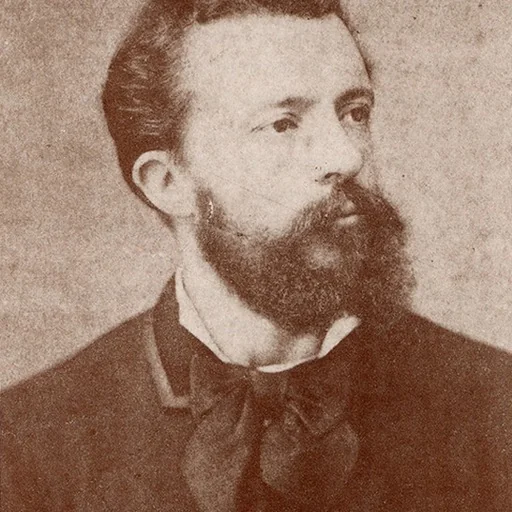
Évariste Carpentier (French pronunciation: ; 1845 – 1922) was a Belgian painter of genre scenes and animated landscapes.

Museum
Royal Museums of Fine Arts of Belgium
Continue through works from the same source collection.
 The Story of a Battle
 Country Tavern, Feasting
 Courtesy
 An Offer of Marriage
 Soup of the poor
 A Victim
 Le Franc, Wine Merchant, Boulevard de Clichy, Paris
 Figaro's Shop
 ‘The Skaters’: Peasants in an Interior
 Archäologe in der Kirche von Valeria
 Die ereilten Flüchtlinge
 ‘De schaatsenrijders’: boerengezelschap in interieur