Artwork
Untitled
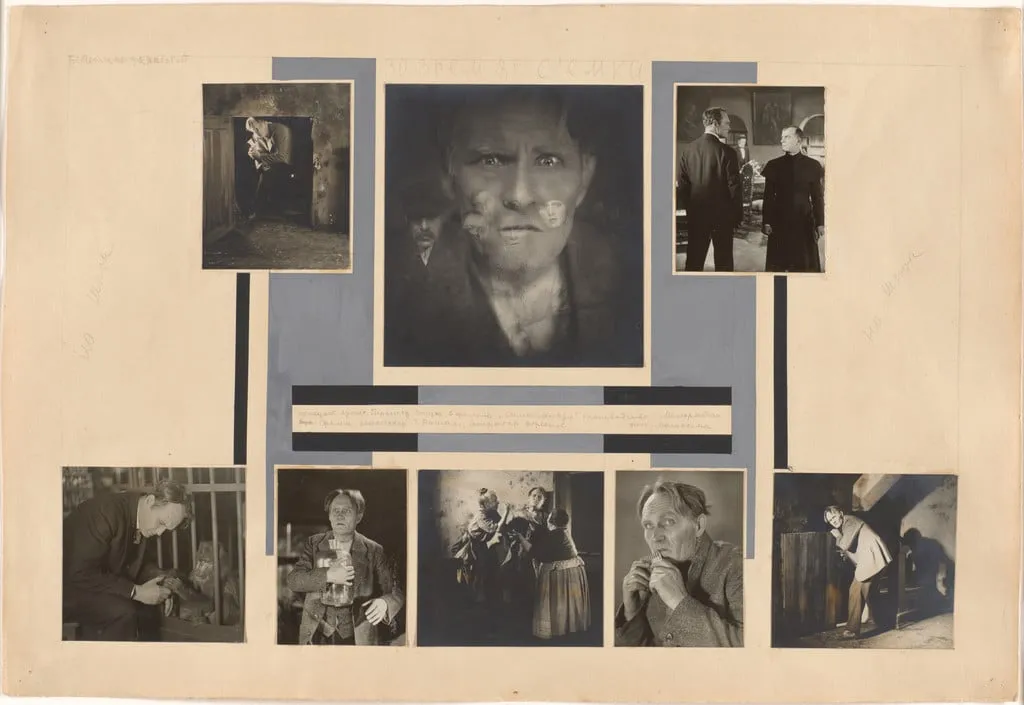
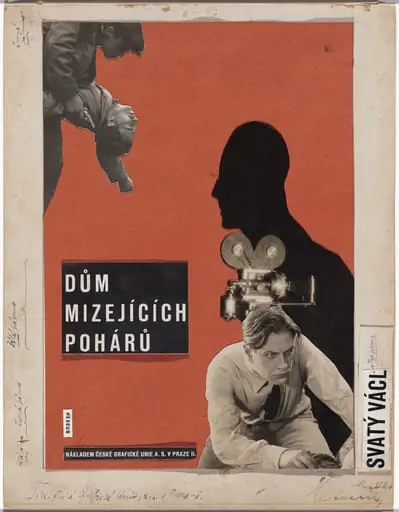
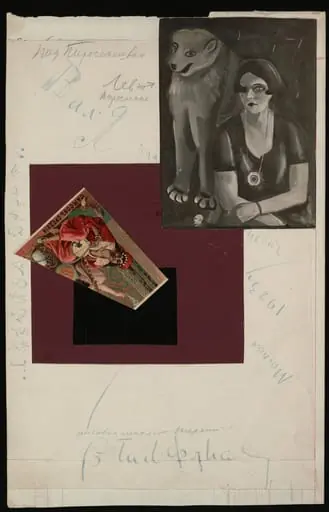
Untitled is a gouache drawing by Varvara Stepanova. It dates from 1928 and is held in the collection of the Museum of Modern Art.
About this work
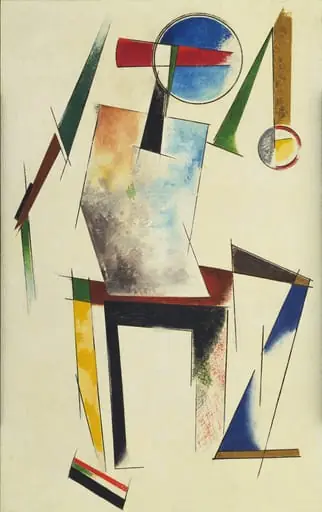
You see black-and-white photos cut into jagged shapes and glued onto paper, with bright red and blue paint splashed around them.
You see black-and-white photos cut into jagged shapes and glued onto paper, with bright red and blue paint splashed around them.
This was a mock-up for a magazine spread about a 1928 film. Stepanova wasn’t just illustrating—she was designing how the movie would feel on the page. The sharp angles and bold colors were meant to grab readers fast, like a movie trailer.
Look up how other artists used gouache to add punch to their work.
Overview
Created in 1928, this work by Varvara Stepanova is a composite drawing made from cut and pasted gelatin silver prints, enhanced with gouache and pencil. It was conceived as a mock-up for a magazine layout promoting a contemporary film. Rather than serving as mere illustration, it functions as a design prototype, integrating photographic fragments with abstract color accents to shape the viewer’s visual experience of the film before publication.
Subject & Meaning
The piece does not depict a narrative scene but evokes the energy and rhythm of a 1928 motion picture through abstraction. Jagged photographic fragments suggest movement and fragmentation, while vibrant red and blue gouache strokes act as visual punctuation. These elements convey the dynamism of cinema without literal representation, aligning with Constructivist ideals of art as a tool for active engagement rather than passive observation.
Technique & Style
Stepanova assembled the composition from pre-existing photographs, cutting them into sharp, angular shapes and adhering them to paper. She then applied gouache in bold, non-representational washes and added pencil lines for structure. This hybrid approach merges photomechanical reproduction with hand-applied pigment, reflecting a Constructivist strategy of recombining industrial and artistic media to produce new visual languages.
History & Provenance
The work was produced in 1928 as part of Stepanova’s editorial design practice for Soviet publications. It remained in her personal archive until acquired by The Museum of Modern Art, where it is now held as part of its collection of avant-garde graphic design. Its survival as a preparatory study is rare, offering insight into the behind-the-scenes processes of early 20th-century magazine production.
Context
In late 1920s Soviet Russia, artists like Stepanova were redefining the role of design in mass media. Magazine spreads were treated as dynamic spaces for ideological and sensory impact. Her use of collage and vivid color aligned with broader Constructivist efforts to break from traditional illustration, instead treating layout as a form of visual propaganda and kinetic communication.
Legacy
This work exemplifies how early modernist designers transformed editorial spaces into immersive experiences. Stepanova’s integration of photography, paint, and cut forms influenced later movements in graphic design and photomontage. Though created for a transient medium—periodical printing—its preservation allows ongoing study of how visual rhythm and abstraction were harnessed to shape public perception in the age of mechanical reproduction.
Artist & collection

Artist
Varvara Fyodorovna Stepanova was a Russian artist. With her husband Alexander Rodchenko, she was associated with the Constructivist branch of the Russian avant-garde, which rejected aesthetic values in favour of…