Artwork
Untitled
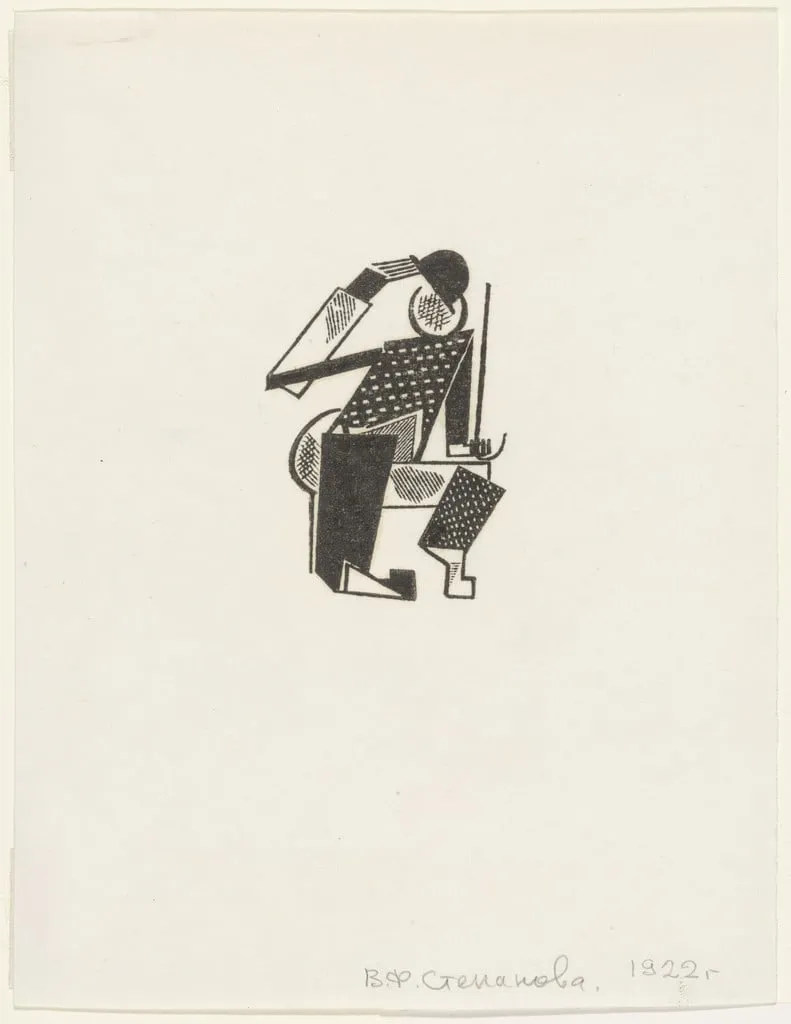
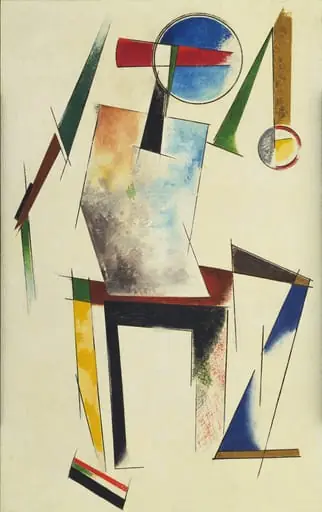
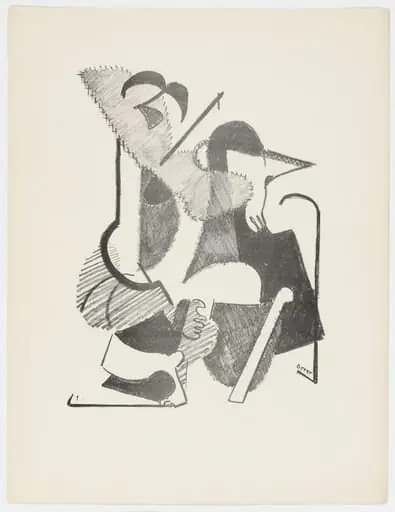
Untitled is a print by Varvara Stepanova. It dates from 1922 and is held in the collection of the Museum of Modern Art.
About this work
Overview
The work exemplifies the graphic simplicity and industrial aesthetic favored by avant-garde artists in post-revolutionary Russia.
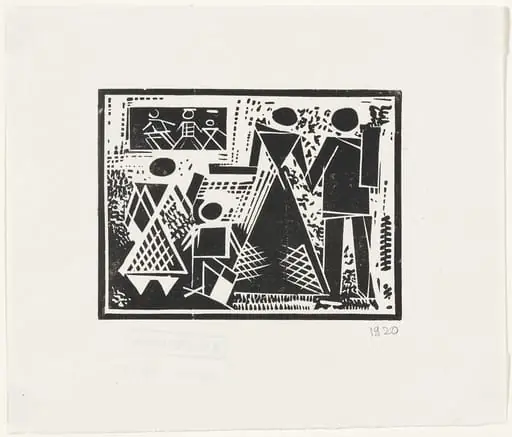
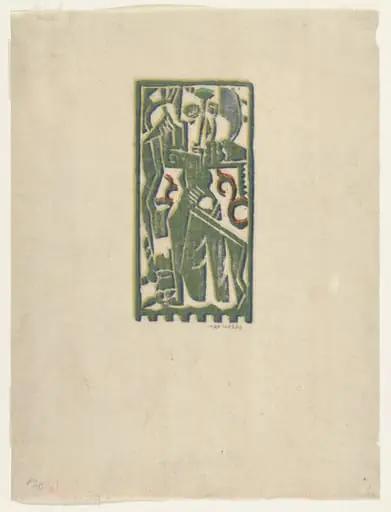
Created in 1922, Untitled is a linoleum cut print by Russian artist Varvara Stepanova. It belongs to the collection of The Museum of Modern Art in New York. The work exemplifies the graphic simplicity and industrial aesthetic favored by avant-garde artists in post-revolutionary Russia. Its stark black-and-white composition reflects the era’s interest in mass-produced visual language and functional design.
Subject & Meaning
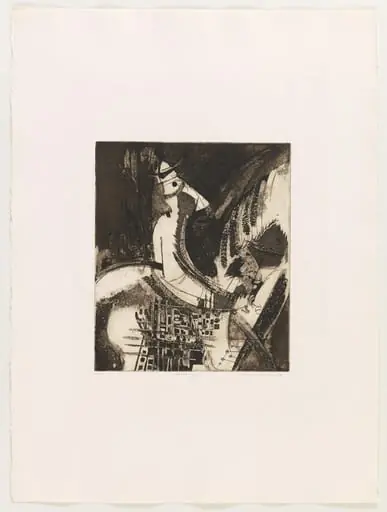
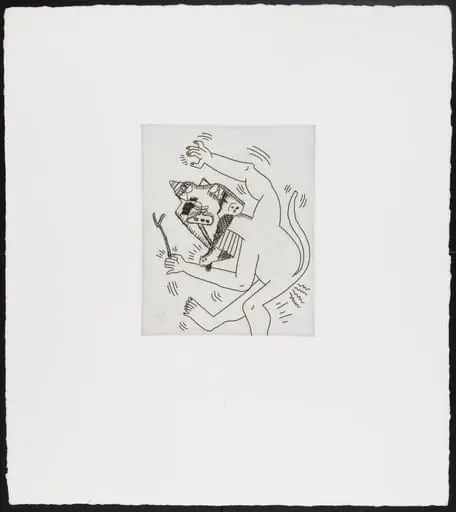
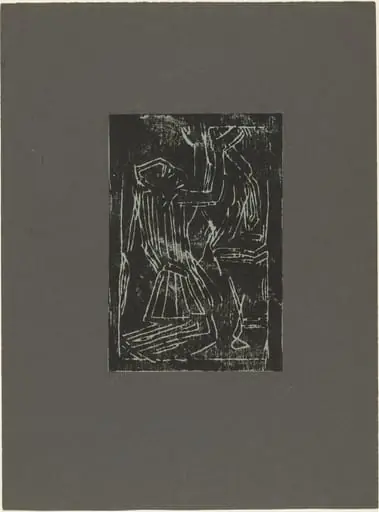
The print depicts a solitary figure seated on a chair, leaning forward with head resting on a hand. Dressed in loose, patterned clothing, the figure appears absorbed in quiet contemplation. A small object beside them—possibly a book or tool—suggests a moment of pause amid labor or study. The anonymity of the figure and minimal context emphasize introspection over narrative, aligning with Constructivist ideals of universal human experience.
Technique & Style
Steponova employed the linoleum cut technique, carving bold, simplified forms into a linoleum block and printing them in ink. The image relies on sharp contrasts between solid black shapes and the untouched paper background. Lines are clean and unmodulated, rejecting shading or texture in favor of geometric clarity. This method was favored by Constructivists for its reproducibility and alignment with industrial production methods.
History & Provenance
The work was produced during Stepanova’s active years in the Russian avant-garde, shortly after the 1917 Revolution. It reflects her engagement with Constructivism and her role in redefining art as a tool for social transformation. The print entered The Museum of Modern Art’s collection in the mid-20th century, where it remains part of a broader effort to document early modernist graphic design from the Soviet context.
Context
In early 1920s Russia, artists like Stepanova sought to dissolve boundaries between fine art and applied design. Linoleum cuts were valued for their accessibility and suitability for posters, publications, and propaganda. Untitled emerges from this milieu, where the human form was reduced to essential lines to serve collective ideals. The work resonates with contemporaneous efforts to visualize a new, egalitarian society through visual economy.
Legacy
Stepanova’s linoleum cuts, including Untitled, contributed to the international recognition of Soviet graphic design as a serious artistic discipline. Their influence extended to later movements in modernist typography and poster art. Though not widely exhibited, the work remains a quiet testament to the fusion of political ideology and formal innovation that defined the Russian avant-garde’s brief but impactful moment.
Artist & collection

Artist
Varvara Fyodorovna Stepanova was a Russian artist. With her husband Alexander Rodchenko, she was associated with the Constructivist branch of the Russian avant-garde, which rejected aesthetic values in favour of…