Artwork
Sf. Teodor Tiron
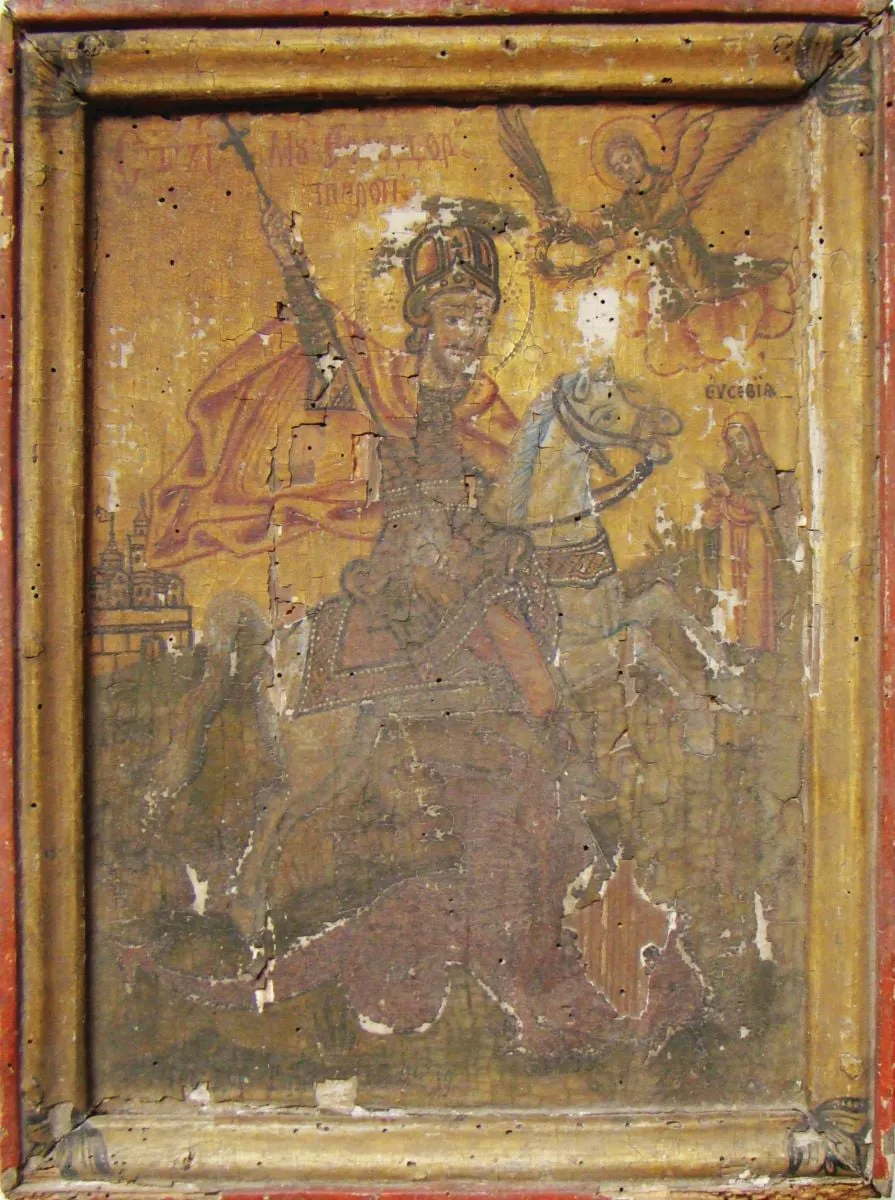
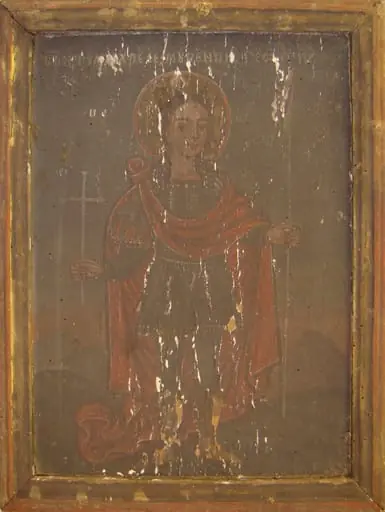
Sf. Teodor Tiron is a drawing by the Romanticist artist Vasile Munteanu din Săliște. It dates from 1808 and is held in the collection of the Alba Iulia Orthodox Archdiocese. Created in 1808 by the Romanian artist Vasile Munteanu of Săliște, this image titled “Sf.
About this work
In the background, a small building and a standing woman appear, but the paint is worn and cracked in places.
This faded drawing shows a soldier on horseback, holding a spear and a flag. The soldier wears armor and a helmet with a plume, and the horse is decorated with a saddle blanket. Above them, a winged figure floats, holding a banner with writing. In the background, a small building and a standing woman appear, but the paint is worn and cracked in places.
The soldier’s name is written in Greek letters near his head. This drawing was made in 1808 by a Romanian artist.
Look up Romanticism next to see how this style shaped art of the time.
Overview
Created in 1808 by the Romanian artist Vasile Munteanu of Săliște, this image titled “Sf. Teodor Tiron” is part of the collection of the Museum of Ethnography. The work is a faded drawing that depicts a mounted figure accompanied by symbolic elements, rendered in a style characteristic of early nineteenth‑century Romanian visual culture.
Subject & Meaning
The central figure is a soldier on horseback, armed with a spear and bearing a flag, his armor topped by a helmet crowned with a plume. Above the rider, a winged personage hovers, clutching a banner inscribed with text, suggesting a protective or divine presence. A small building and a standing woman appear in the background, adding narrative depth to the composition.
Technique & Style
The drawing is executed in a linear, monochrome manner, with the artist employing fine lines to delineate armor, horse tack, and the delicate wings of the floating figure. The surface shows signs of age: paint has faded, and cracks interrupt the original surface, indicating the work’s long exposure to environmental conditions.
History & Provenance
Vasile Munteanu produced the piece in 1808, inscribing the soldier’s name in Greek letters near the head, reflecting the multilingual milieu of the region at the time. The drawing later entered the holdings of the Museum of Ethnography, where it remains accessible for study and public viewing.
Context
The image emerges from a period when Romanian visual arts were influenced by broader European currents, including the early Romantic fascination with heroic and mythic subjects. The inclusion of a saint’s name and the combination of martial and celestial motifs align with contemporary efforts to blend local religious identity with emerging national narratives.
Artist & collection
Artist
This painter from Săliște in the late 1700s made religious scenes on wood and paper.
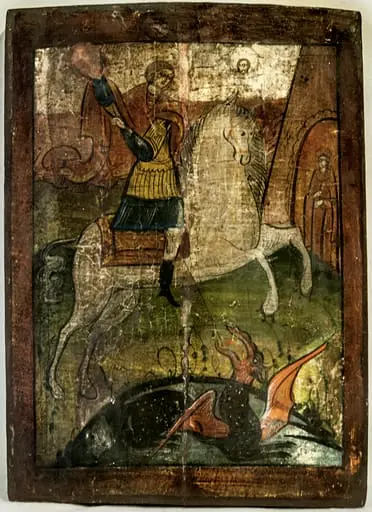 Tema iconografică este "Sfântul Gheorghe omorând balaurul". În prim plan, Sf. Gheorghe, în veșminte ostășești, călare pe un cal alb, cambrat, ridicat în două picioare, omoară balaurul plasat în registrul inferior. Veșmintele sfântului au o tentă țărănească(tunica albastră acoperită 3/4 de lorica argintie, pantaloni albi, cu motiv floral, cizme înalte. Calul are ambii ochi vizibili, coama bogată, coada în fuior. Partea dinspre privitor a ansamblului cal cu călăreț este supradimensionată, creând o impresie optică de înălțare a sfântului. În partea dreaptă, fata de împărat pe care o salvează sfântul, sub portalul palatului. privind scena. Veșminte lungi, simple, coroană împărătească. Înveșmântată în haine simple, lungi, cu coroană pe cap, privește scena cu brațele la piept. În colțul din stânga dreapta sus, Iisus Hristos așa cum apare pe sfântul Keramion. Nimbul cruciger. Balaurul plasat în registrul inferior asemănător unui grifon, corp diform, terminat cu o coadă în săgeată, aripile și capul roșii. Motiv mai elaborat decât în alte icoane unde redarea balaurului este minimizată. Compoziția este dinamică, chipurile expresive, gesturile bine realizate. Linia desenului variază, contribuind la efectul optic. Fondul foiței argintii(superior), relief din benzi late în tonuri de brun, brun roșcat, galben, alb, verde, cu elemente de vegetație. Bordura roșiatică lată, specifică icoanelor de tip krashnuska. Inscripție pe chenar, în partea superioară.
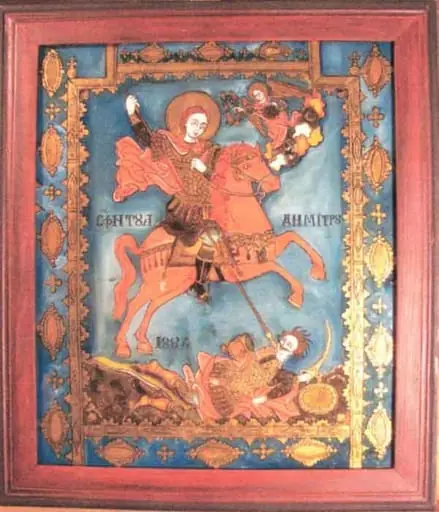 Sfântul Dumitru
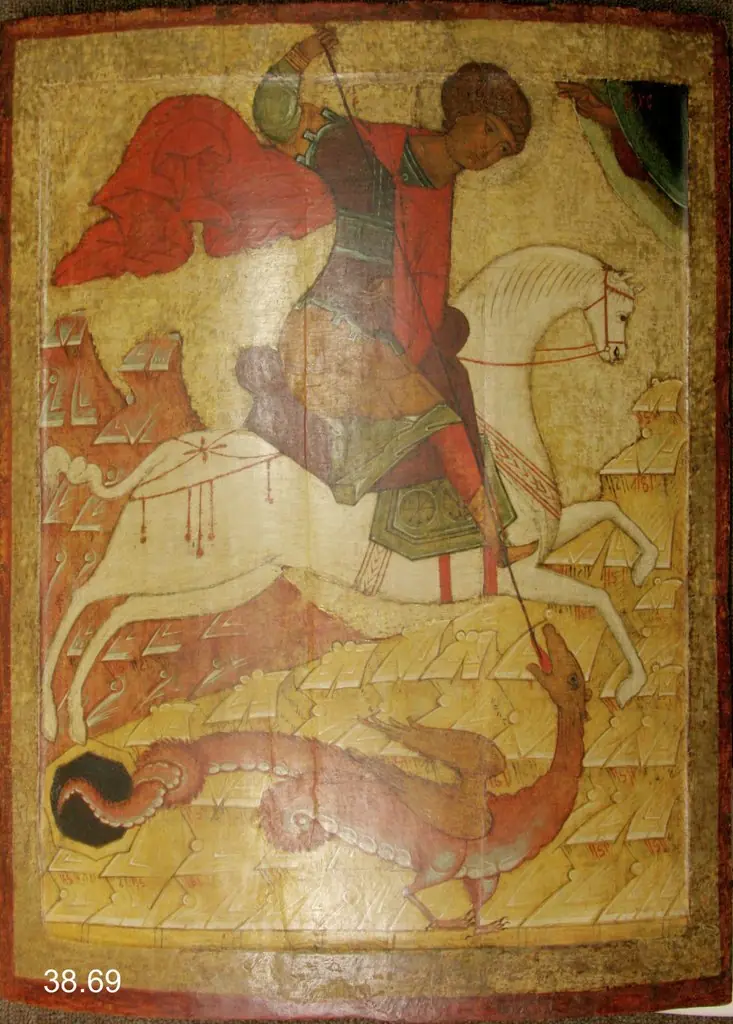 Saint George and the Dragon
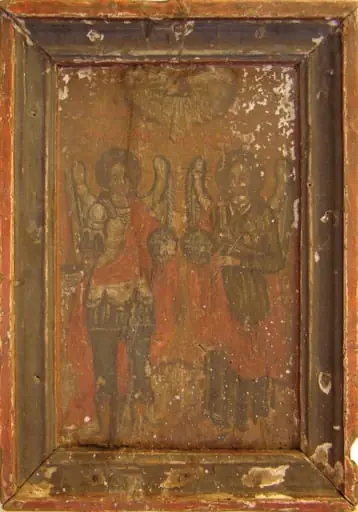 Arhanghelii Mihail și Gavriil
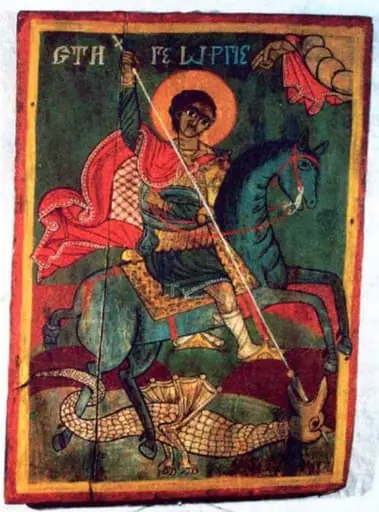 Sfântul Gheorghe
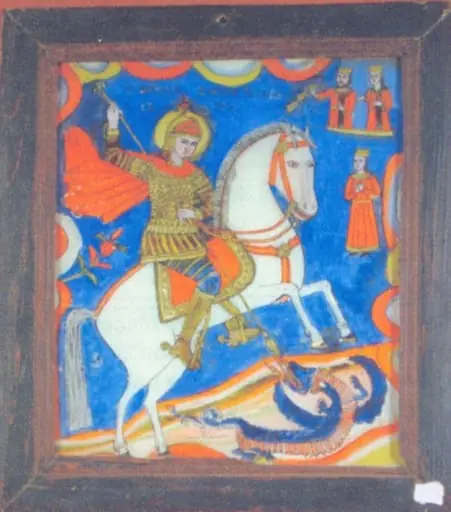 Sfântul Mare Mucenic Gheorghe
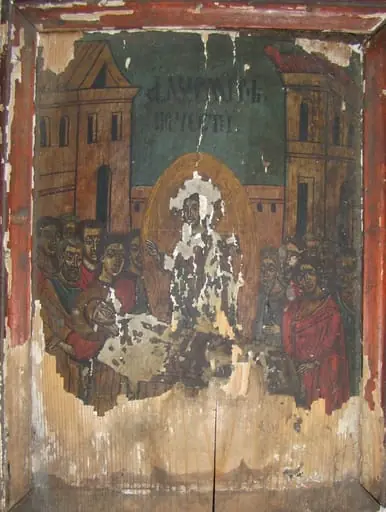 Adormirea Maicii Domnului
 Sf. Gheorghe