Artwork
Schimbarea la față
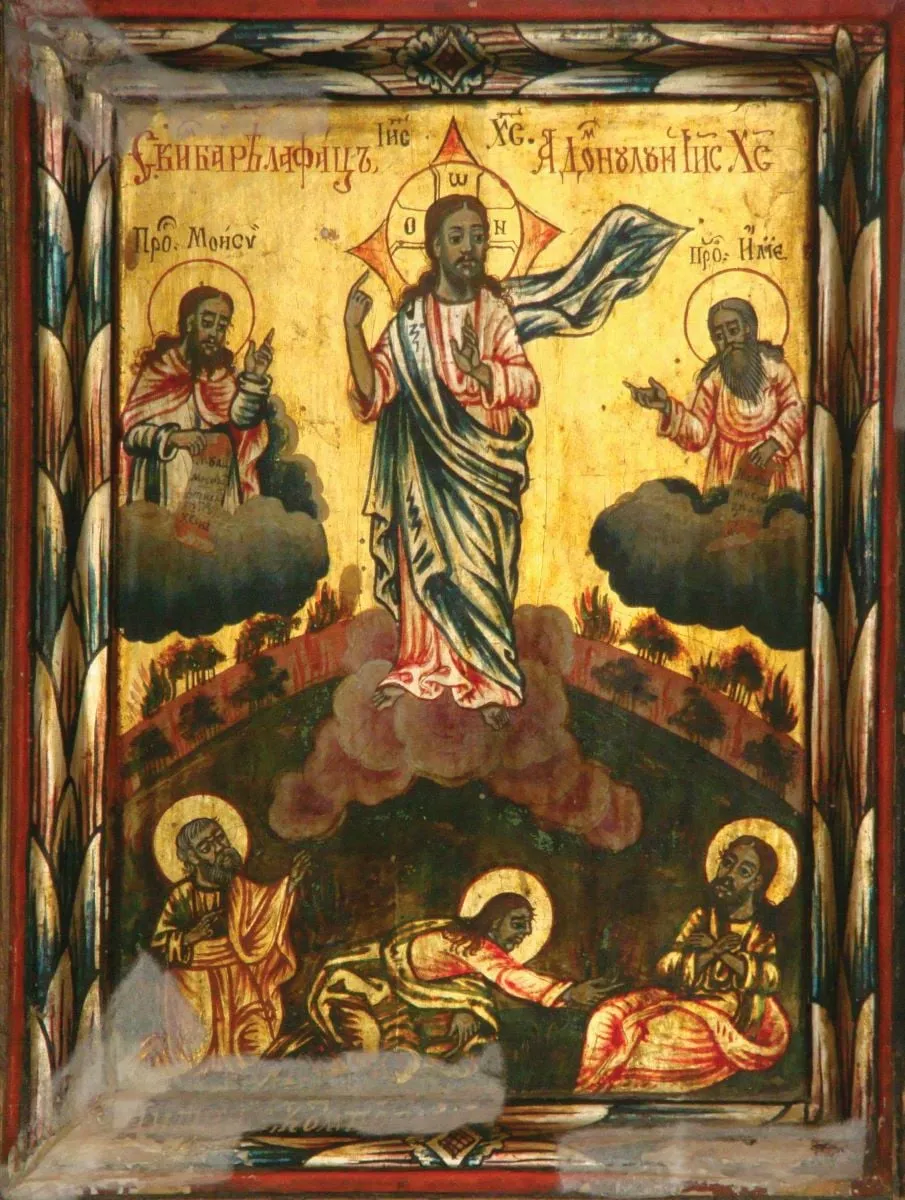
Schimbarea la față is a drawing by Vasile Munteanu din Săliște. It is held in the collection of the Alba Iulia Orthodox Archdiocese.
About this work
Overview
It portrays a moment of divine revelation centered on Jesus, rendered with quiet precision against a layered backdrop of clouds and trees.
Schimbarea la față is a religious drawing by Vasile Munteanu din Săliște, executed in muted tones of yellow, blue, and red. It portrays a moment of divine revelation centered on Jesus, rendered with quiet precision against a layered backdrop of clouds and trees. The work is held in the collection of the Museum of Ethnography and reflects the conventions of local devotional art traditions, emphasizing spiritual stillness over dramatic intensity.
Subject & Meaning
The scene illustrates the Transfiguration, a biblical event in which Jesus is revealed in divine glory. He stands centrally, clad in a white robe with a blue sash, holding a book in one hand and raising the other in blessing. Surrounding figures in flowing robes suggest Moses and Elijah, while the clouds imply heavenly presence. The composition conveys quiet revelation rather than spectacle, aligning with devotional practices that valued contemplation over theatricality.
Technique & Style
The drawing employs a restrained palette and soft, linear forms to suggest depth and atmosphere. Figures are rendered with simplified contours, and the background layers of clouds and trees are built through subtle gradations rather than detailed rendering. The style echoes regional religious iconography, prioritizing symbolic clarity and spiritual resonance over naturalistic detail, characteristic of folk-influenced sacred art in Transylvania.
History & Provenance
The work is part of the Museum of Ethnography’s collection, suggesting it was acquired as an example of local religious expression. Vasile Munteanu din Săliște, a lesser-known artist from a rural community, likely created it for private or communal devotion. Its preservation in an ethnographic context indicates its value as a cultural artifact, reflecting the intersection of faith and regional artistic practice in the early 20th century.
Context
Created within a tradition where religious imagery served both spiritual and educational roles, the drawing reflects the persistence of Byzantine-inspired motifs in rural Romanian communities. Unlike urban ecclesiastical art, it lacks elaborate ornamentation, instead relying on elemental forms and symbolic color. Its existence underscores how local artisans adapted sacred narratives using accessible materials and inherited visual languages.
Legacy
Though not widely exhibited beyond institutional collections, Schimbarea la față contributes to the understanding of vernacular religious art in Romania. It represents a quiet, localized response to broader Christian iconography, preserving the aesthetic values of its time and place. Its continued presence in the Museum of Ethnography affirms its role as a document of cultural and spiritual life in rural Transylvania.
Artist & collection
Artist
This painter from Săliște in the late 1700s made religious scenes on wood and paper.
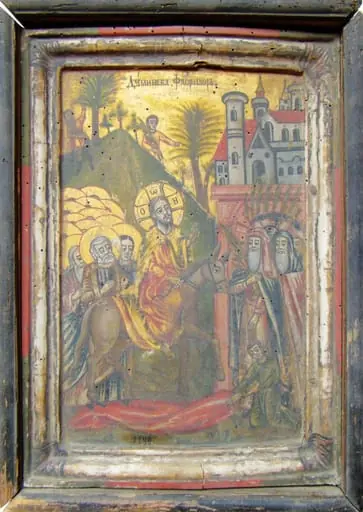
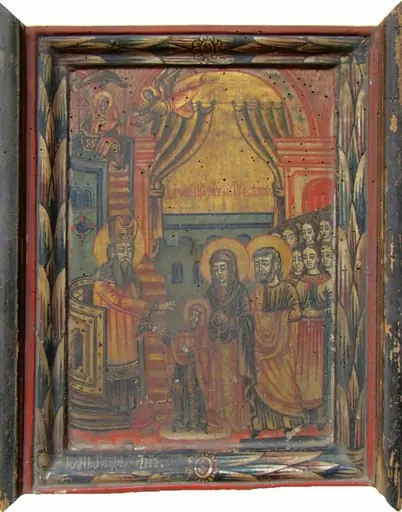
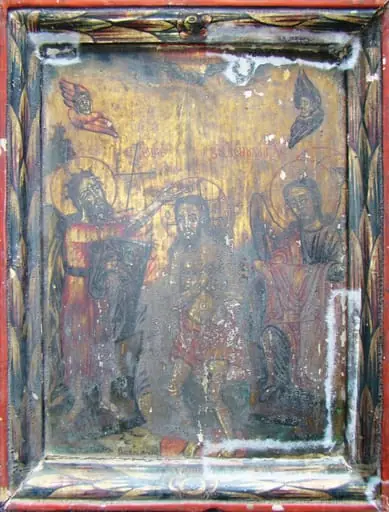
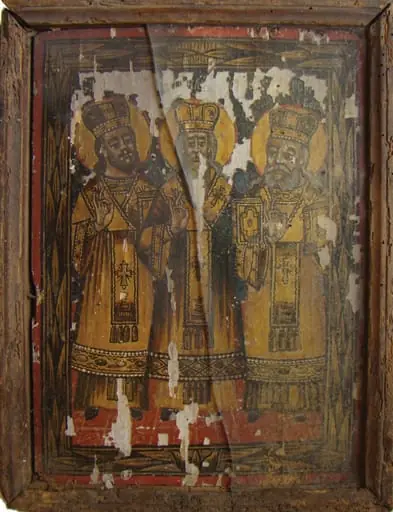
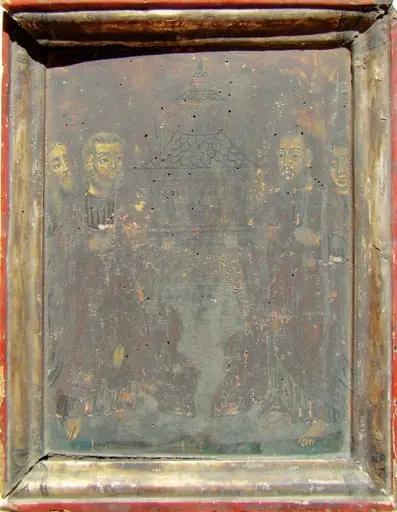
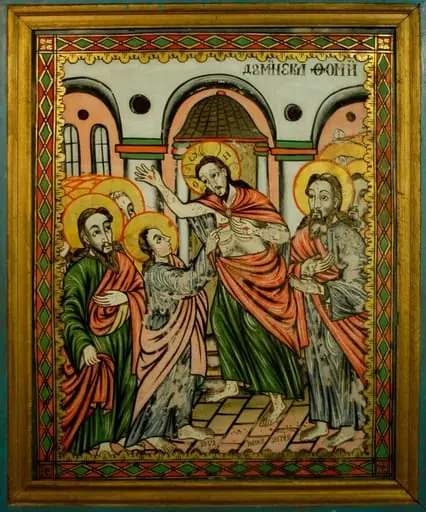 Duminica Tomii
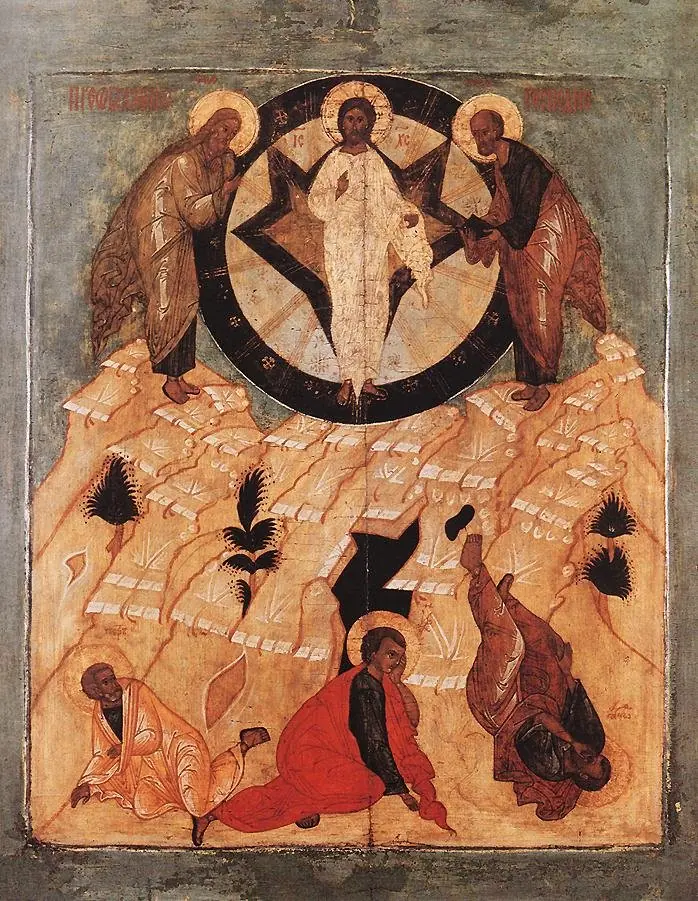 Icon: The Transfiguration
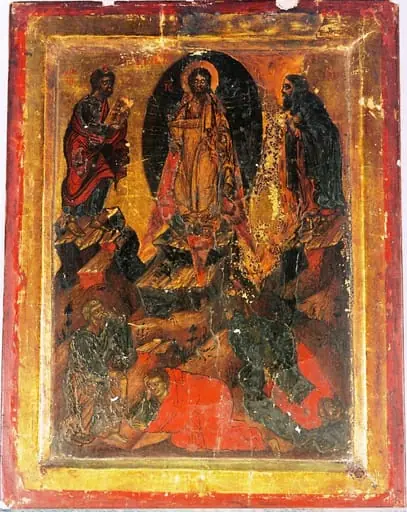 SCHIMBAREA LA FATA
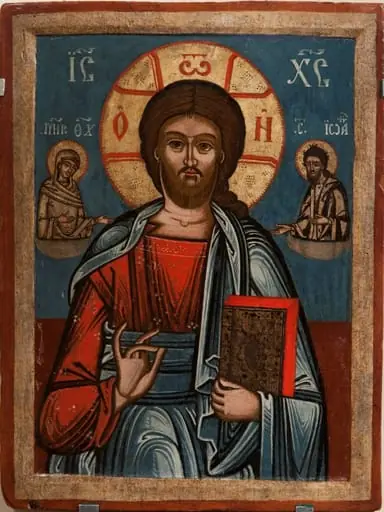 “Mica Deisis” ; Icoană împărătească Mica Deisis; Icoană împărătească
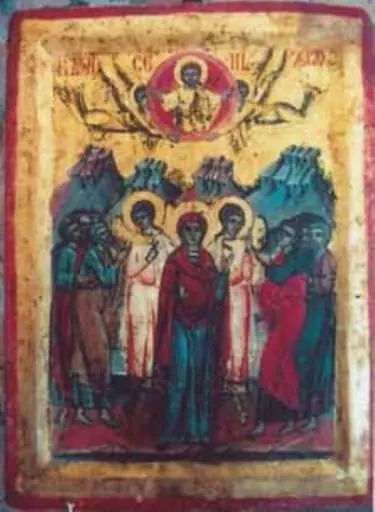 Înălțarea Domnului
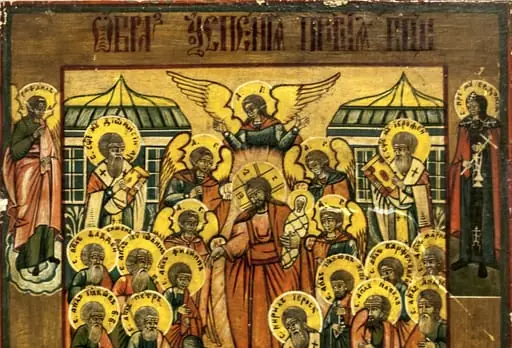 Maica Domului, întinsă pe catafalcul drapat cu material verde, deasupra Iisus Hristos, înconjurat de 5 îngeri(inscripția A:G.pe nimb, ține sufletul Maicii(în fomră de prunc înfășat)pe mâna stângă, iar cu dreapta binecuvântează. Maica are mâinile împreunate pe piept,stola verde cu falduri albe, marforion roșu cu stelele Fecioriei. În jurul catafalcului: Sfântul Kiril Ierosa și sfântul apostol Petru cădelnițând, la picioare Sf. Pavel cu veșmântul stergându-și ocii, Sf. Andrei, alături de alți sfinți ierarhi și apostoli: Sf.Vartolomei, Sf. apostol, ,Sf. Apostol Iakov Zevedei, , Filip, Sf. Apostol Ioan, Simon, Tadei. Îm planul următor, pe fundalul unor clădiri cu arhitectură ipic rusească, Sf. Mucenic Dionisii, și Ierotei, în veșminte argierești, cu Evanghelia în mână. În fața catafalcului redată scena apocrifă, Arhanghelul Mihail taindu-i mâinile cu sabia evreului fanatic Atonie pentru că a îndrăznit să batjocorească patul funerar al Maicii Domnului. Pe chenarul lat 4 sfinți : Sf. Arhanghel Rafail pe nori, Sf. Muceniță Evdochia și sfântul Feodor, în veșminte monahale, cu mătăniile în mână, Sf. Fotinia .Cromatica: Fondul galben ocru, chenar în nuanță mai închisă, colțurile de jos verde, marginal verde și roșu, benzi înguste.Veșminte: roșu cărămiziu, albastru, verde, galben, alb, negru. Linia desenului groasă, culorile tari.