Artwork
Study for the Renovation of a Law Classroom at the Sorbonne
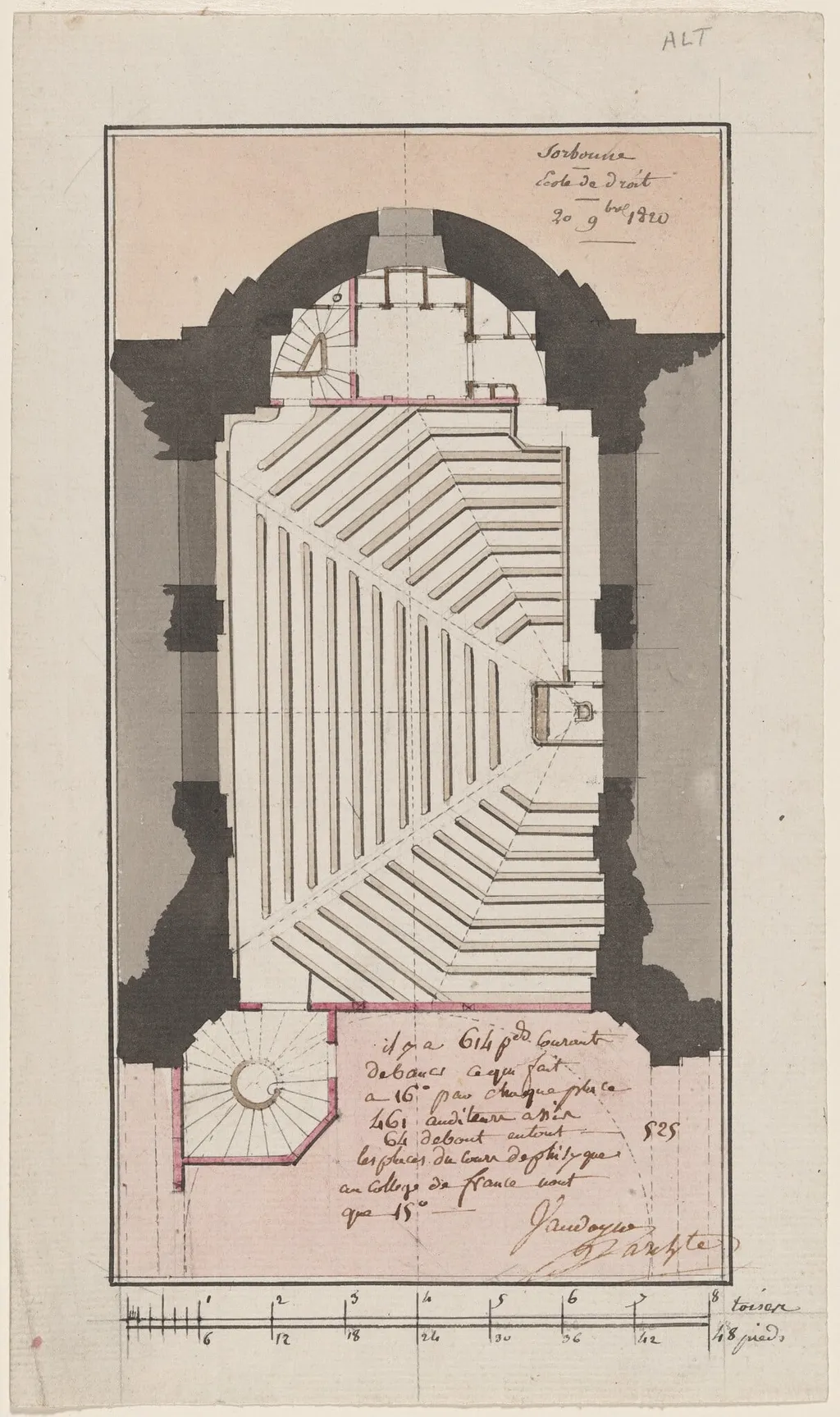
Study for the Renovation of a Law Classroom at the Sorbonne is a watercolor drawing by the Romanticist artist Antoine Laurent Thomas Vaudoyer. It dates from 1820 and is held in the collection of the National Gallery of Art.
About this work
Overview
This 1820 drawing by Antoine Laurent Thomas Vaudoyer was prepared as a design proposal for renovating a law classroom at the Sorbonne.
This 1820 drawing by Antoine Laurent Thomas Vaudoyer was prepared as a design proposal for renovating a law classroom at the Sorbonne. Executed in pen and ink with watercolor, it functions as a working architectural plan rather than a finished artwork. The composition emphasizes spatial organization, with annotated measurements and scaled references to guide construction. Its purpose was practical, reflecting the administrative needs of academic renovation in early 19th-century France.
Subject & Meaning
The drawing depicts a rectangular classroom with rows of student desks aligned toward a low platform, suggesting a lecture setting. Thick walls and a prominent arched entrance indicate structural priorities, possibly for acoustics or institutional gravitas. Handwritten notations in the margins imply the design was tailored to the Sorbonne’s legal studies program, where formal pedagogy and spatial order were central to instruction. The plan reveals an emphasis on function over ornamentation.
Technique & Style
Vaudoyer employed precise pen lines to define architectural elements, layered with translucent watercolor washes to suggest material depth without distraction. The absence of decorative detail underscores the drawing’s utilitarian aim. Annotations in ink—dimensions, material notes, and spatial ratios—reveal a methodical approach common in architectural drafts of the period. The scale bar at the base confirms its role as a technical instrument, not a display piece.
History & Provenance
Created in 1820 during Vaudoyer’s tenure as an architect involved in academic buildings, the drawing was likely submitted as part of a renovation proposal for the Sorbonne’s law faculty. It entered the National Gallery of Art’s collection through established institutional transfers, though its exact path from the university to the museum remains undocumented. Its survival reflects its value as a record of educational architecture rather than artistic merit.
Context
In early 19th-century France, universities like the Sorbonne underwent modernization to accommodate growing student populations and standardized curricula. Architectural plans such as this one responded to demands for orderly, functional spaces suited to legal education. Vaudoyer’s work aligns with broader trends in public building design, where clarity and efficiency took precedence over historical revival styles, reflecting Enlightenment ideals of rational organization.
Legacy
This drawing survives as a quiet testament to the administrative architecture of French higher education. It offers insight into how institutional spaces were conceived before the rise of modern architectural documentation. While not widely exhibited, it remains a valuable resource for scholars studying pedagogical environments and the material culture of 19th-century academia.
Artist & collection

![Floor Plan [verso], by Filippo Juvarra](https://artifactworldgallery.com/img/filippo-juvarra--floor-plan-verso--77b62087740b42b9-w320.webp) Floor Plan [verso]
Floor Plan [verso]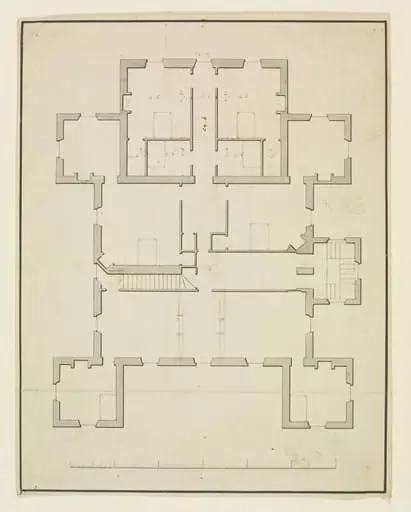 Plan of the Chamber floor, Combe Bank
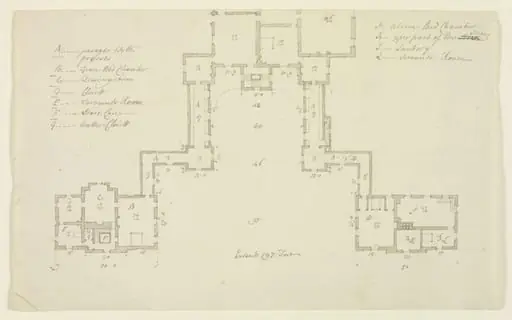 Sketch plan of additions to the North side of Combe Bank.
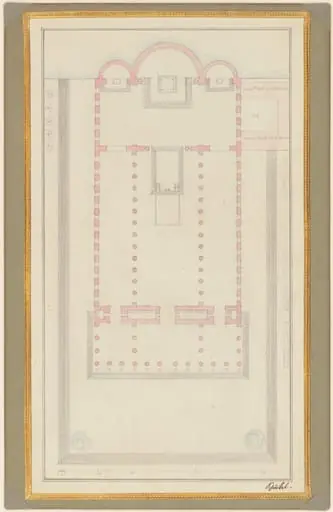 Ground Plan of a Cathedral for Berlin
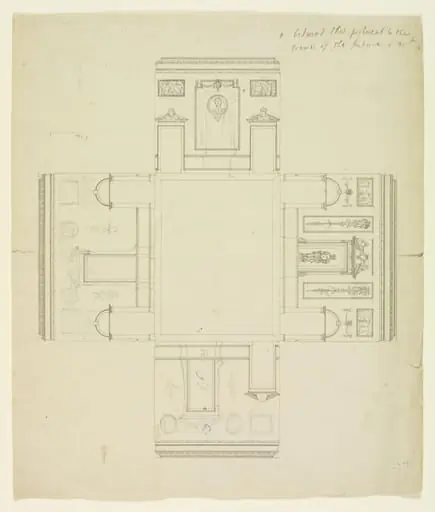 Elevations of the interior walls of the Hall, Combe Bank.
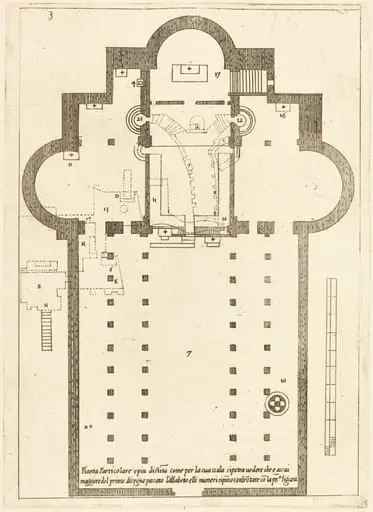 Plan of the Church of the Holy Manger
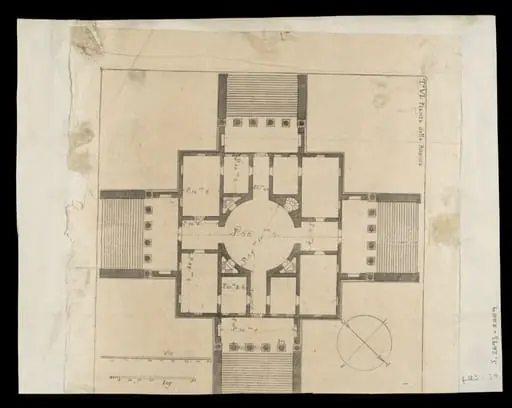
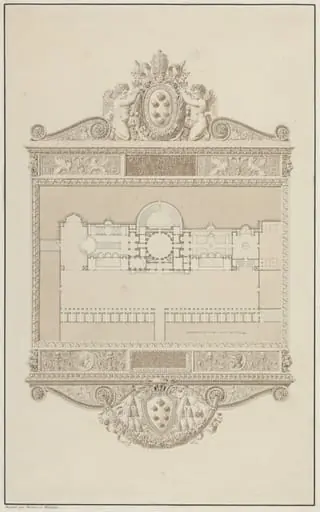 Villa Madama a Rome
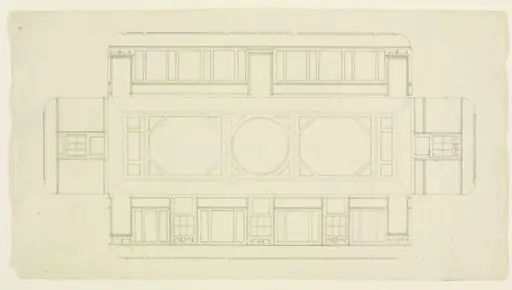 Elevations of the interior wall of Combe Bank
 H Beard Print Collection
![Ichnographia Templi Divi Petri [Plan of Saint Peter's Basilica in Rome], by Étienne Dupérac](https://artifactworldgallery.com/img/etienne-duperac--ichnographia-templi-divi-petri-plan-of-saint-peter-s-basilic--f1844fd1b6664111-w320.webp) Ichnographia Templi Divi Petri [Plan of Saint Peter's Basilica in Rome]
Ichnographia Templi Divi Petri [Plan of Saint Peter's Basilica in Rome]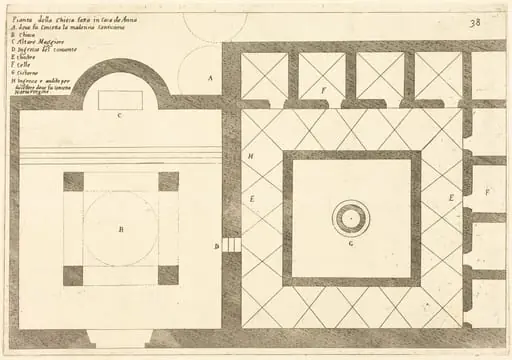 Plan of the Church near the House of Annas
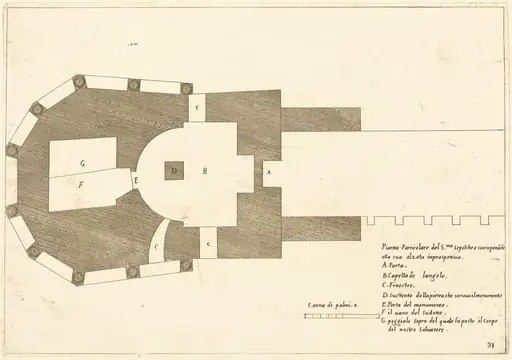 Plan of the Church of the Holy Sepulchre