Artwork
Plan of the Chamber floor, Combe Bank
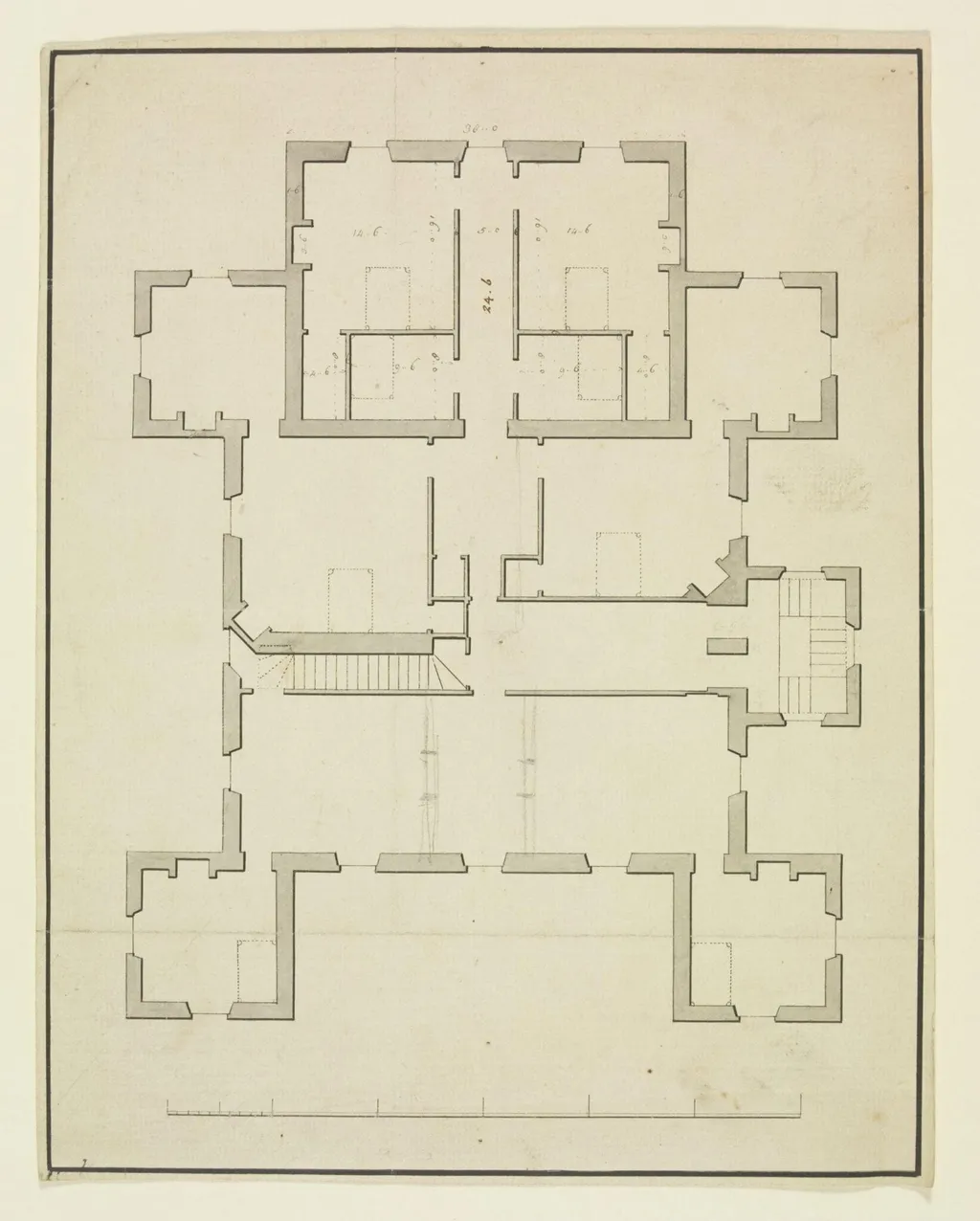
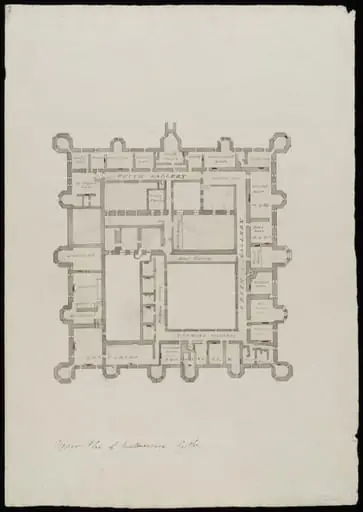
Plan of the Chamber floor, Combe Bank is a drawing by the Baroque artist Roger Morris. It dates from 1728 and is held in the collection of the Victoria and Albert Museum. This architectural drawing presents a scaled floor plan of the Chamber floor at Combe Bank, drawn at one inch to ten feet.
About this work
Overview
Executed in pencil with fine, deliberate lines, it prioritizes clarity over ornamentation, serving as a functional record of the building’s interior structure.
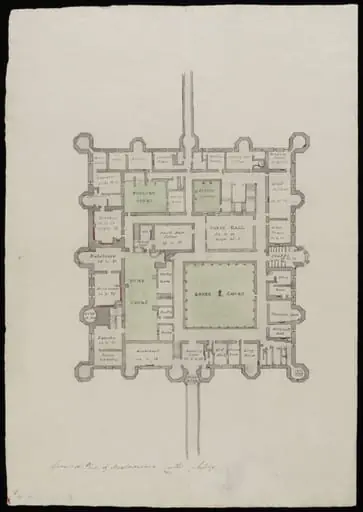
This architectural drawing presents a scaled floor plan of the Chamber floor at Combe Bank, drawn at one inch to ten feet. It details the spatial organization of rooms, staircases, and doorways, with two prominent towers flanking the central area. Unlike earlier published versions, this plan reflects a revised layout, indicating changes in design intent. Executed in pencil with fine, deliberate lines, it prioritizes clarity over ornamentation, serving as a functional record of the building’s interior structure.
Subject & Meaning
The plan documents the functional arrangement of a private domestic space, emphasizing circulation and room relationships rather than decorative elements. The inclusion of towers suggests a deliberate architectural statement, possibly referencing classical or defensive motifs. The absence of a single grand drawing room—unlike earlier depictions—implies a shift toward more compartmentalized, private living arrangements, reflecting evolving domestic ideals in early 18th-century England.
Technique & Style
Rendered in pencil with light, precise strokes, the drawing uses minimal linework to define walls, openings, and measurements. Windows are indicated by small, uniform marks, and staircases are shown with simple directional lines. A scale bar at the base ensures practical usability. The hand-drawn quality, with subtle revisions and faint guidelines, reveals a working document rather than a finished presentation, prioritizing accuracy and legibility over aesthetic finish.
History & Provenance
This plan was created as a revision to an earlier version published in Vitruvius Britannicus, indicating ongoing architectural refinement during the building’s development. Its existence suggests the involvement of a surveyor or architect actively adjusting the design after initial publication. The drawing likely served as a construction or administrative reference, preserved as part of the estate’s architectural records rather than as a public illustration.
Context
Produced in the early 1700s, the plan aligns with a period when country houses increasingly emphasized functional interior layouts over grand ceremonial spaces. The shift from a single large room between towers to smaller, interconnected chambers reflects broader trends in domestic architecture, where privacy and practicality gained precedence over theatrical display. Such plans were essential tools for builders and patrons navigating evolving social norms.
Legacy
As a working document, this plan contributes to the understanding of how architectural designs evolved in practice, beyond published ideals. It preserves evidence of iterative design decisions, offering insight into the gap between theoretical publications and actual construction. Though not widely known, it remains a valuable resource for historians studying the material culture of early Georgian domestic architecture.
Artist & collection
Artist
Roger Morris drew floor plans and wall elevations for grand 18th-century homes. His ink-on-paper designs show rooms like the Combe Bank Parlour ceiling or the north-side additions, all from the 1720s. These are…

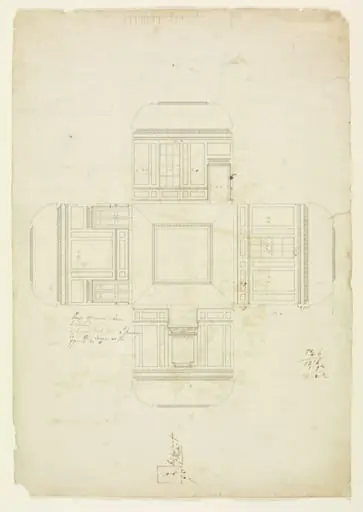 Elevations of the interior walls and a plan of the ceiling of the Parlour
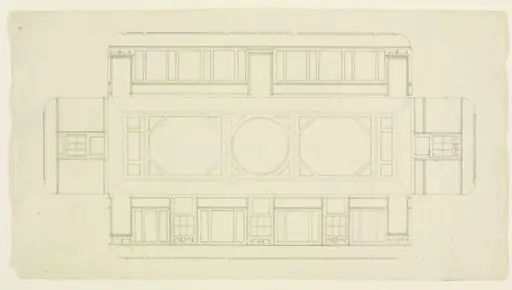 Elevations of the interior wall of Combe Bank
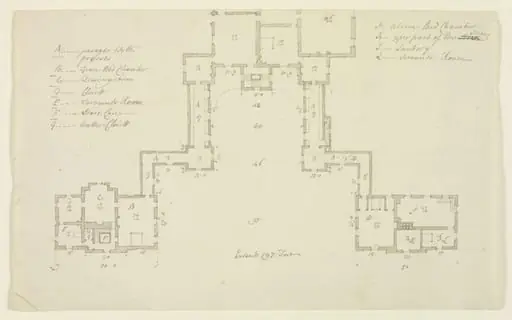 Sketch plan of additions to the North side of Combe Bank.
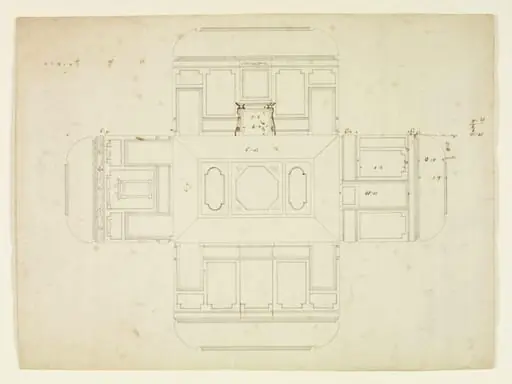 Elevations of the interior walls and a plan of the ceiling, Combe Bank
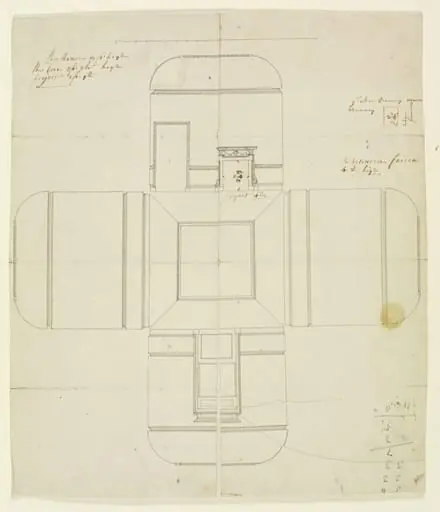 Elevations of the interior walls of Combe Bank
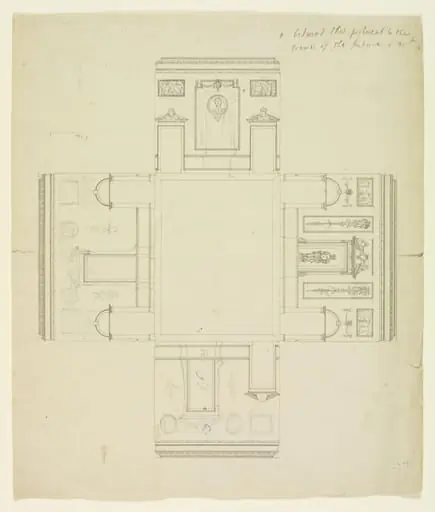 Elevations of the interior walls of the Hall, Combe Bank.
![Floor Plan [verso], by Filippo Juvarra](https://artifactworldgallery.com/img/filippo-juvarra--floor-plan-verso--77b62087740b42b9-w320.webp)