Artwork
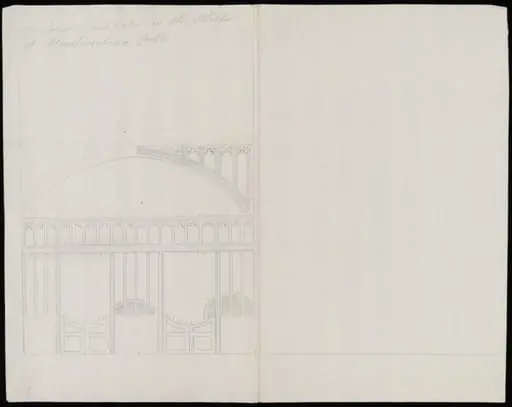
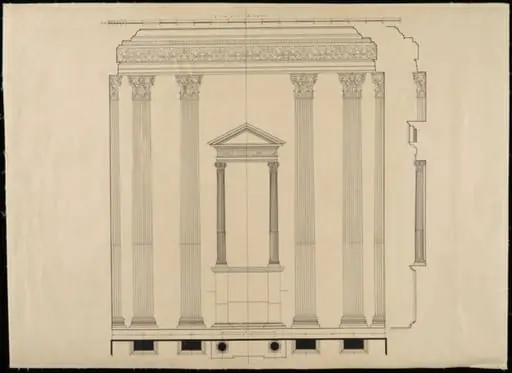
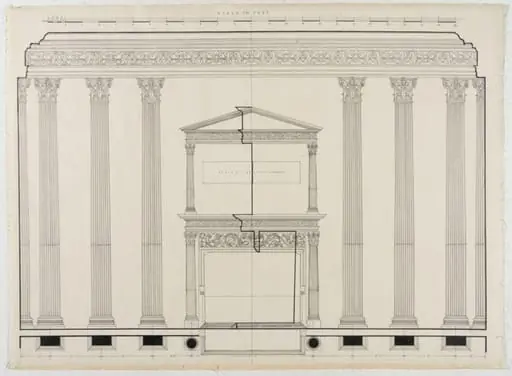
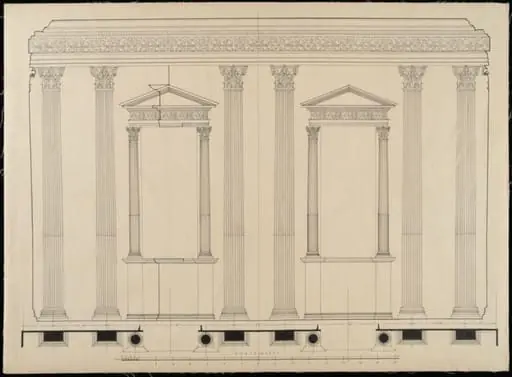
Elevations of the interior wall of Combe Bank
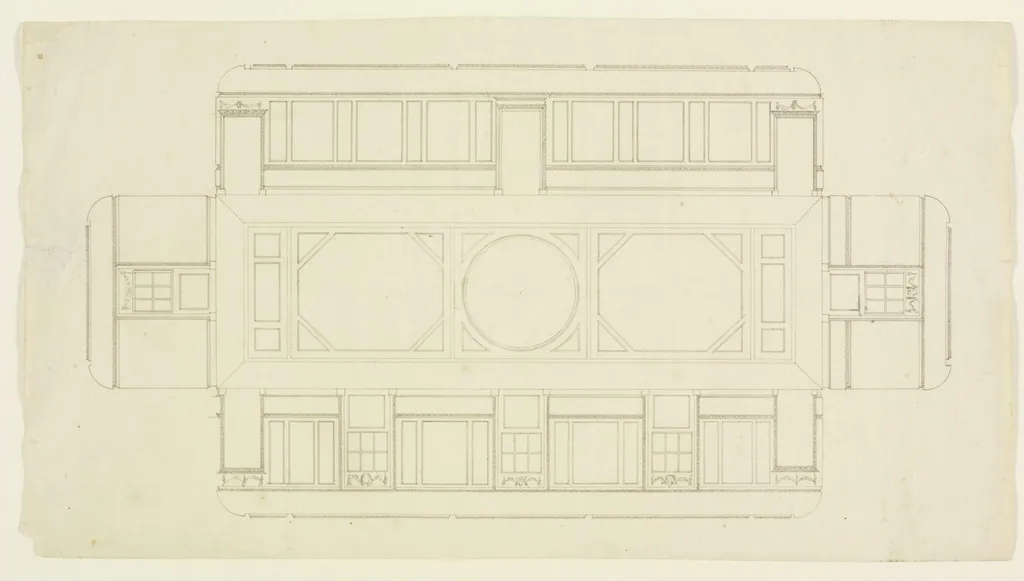
Elevations of the interior wall of Combe Bank is a drawing by the Baroque artist Roger Morris. It dates from 1728 and is held in the collection of the Victoria and Albert Museum. The drawing records the interior elevations and ceiling layout of the Gallery situated on the Chamber floor of Combe Bank.
About this work
Overview
The drawing records the interior elevations and ceiling layout of the Gallery situated on the Chamber floor of Combe Bank. Rendered in monochrome, it presents two opposite walls with their window and door arrangements, accompanied by a plan of the ceiling. The composition emphasizes precise geometry and balanced proportions, serving as a technical reference for the space’s construction.
Subject & Meaning
The illustration details the architectural elements of a formal gallery, highlighting tall, regularly spaced windows capped with ornamental mouldings on the upper wall, and a lower wall featuring a series of smaller openings, including doors and a central circular window. By documenting these features, the drawing conveys the intended visual rhythm and light distribution within the room.
Technique & Style
Executed with fine ink lines on paper, the drawing employs clear, measured strokes to delineate walls, openings, and ceiling geometry. The use of black‑and‑white contrast underscores structural relationships, while the symmetrical arrangement reflects the neoclassical drafting conventions prevalent in 19th‑century architectural documentation.
History & Provenance
Created as a working plan for the interior of Combe Bank, the drawing was likely produced during the building’s alteration or construction phase. It later entered a collection of architectural drawings, eventually becoming part of the holdings of the Victoria and Albert Museum, where it is preserved as an example of historic building documentation.
Context
Combe Bank, a country house with a series of classical interiors, required detailed visual records to guide craftsmen. Such elevation and ceiling plans were standard practice in the period, facilitating coordination among architects, builders, and decorators to achieve cohesive interior schemes.
Legacy
The drawing remains a valuable resource for scholars studying historic interior design and construction methods. Its precise representation offers insight into the spatial organization of elite domestic architecture and continues to inform conservation efforts at Combe Bank and comparable heritage sites.
Artist & collection
Artist
Roger Morris drew floor plans and wall elevations for grand 18th-century homes. His ink-on-paper designs show rooms like the Combe Bank Parlour ceiling or the north-side additions, all from the 1720s. These are…

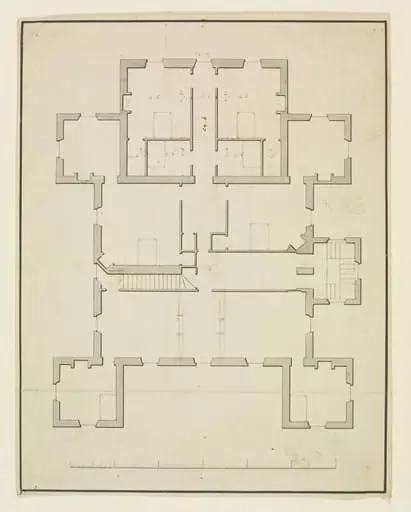 Plan of the Chamber floor, Combe Bank
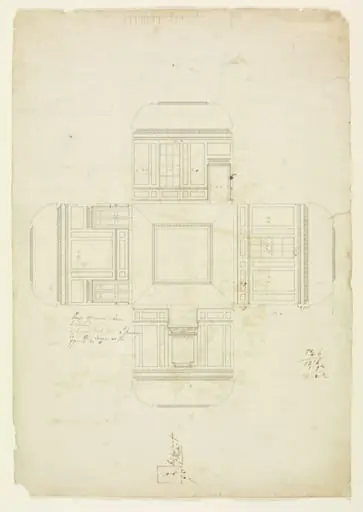 Elevations of the interior walls and a plan of the ceiling of the Parlour
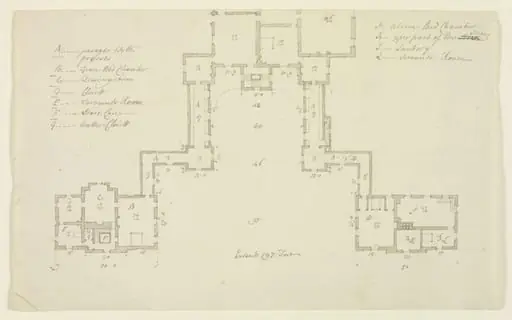 Sketch plan of additions to the North side of Combe Bank.
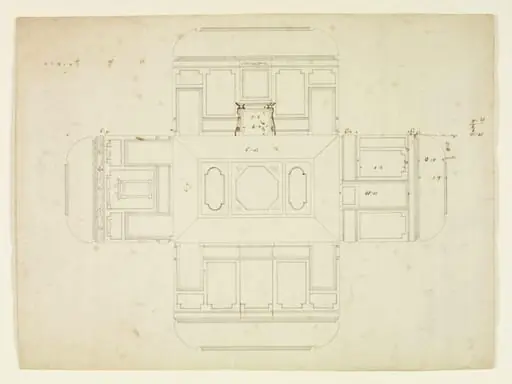 Elevations of the interior walls and a plan of the ceiling, Combe Bank
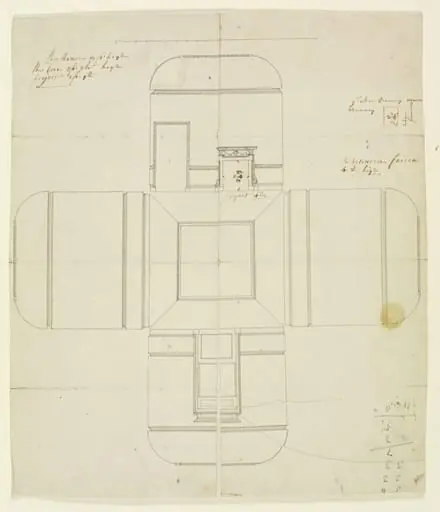 Elevations of the interior walls of Combe Bank
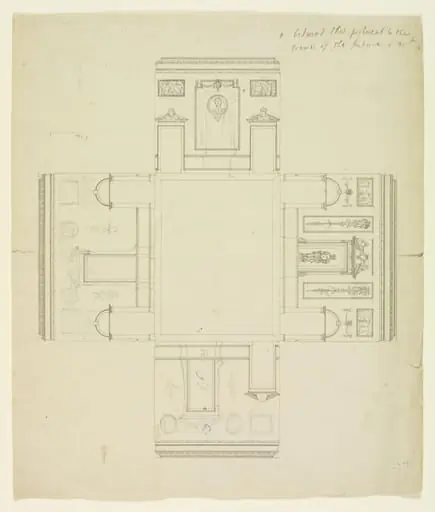 Elevations of the interior walls of the Hall, Combe Bank.