Artwork
Orvieto
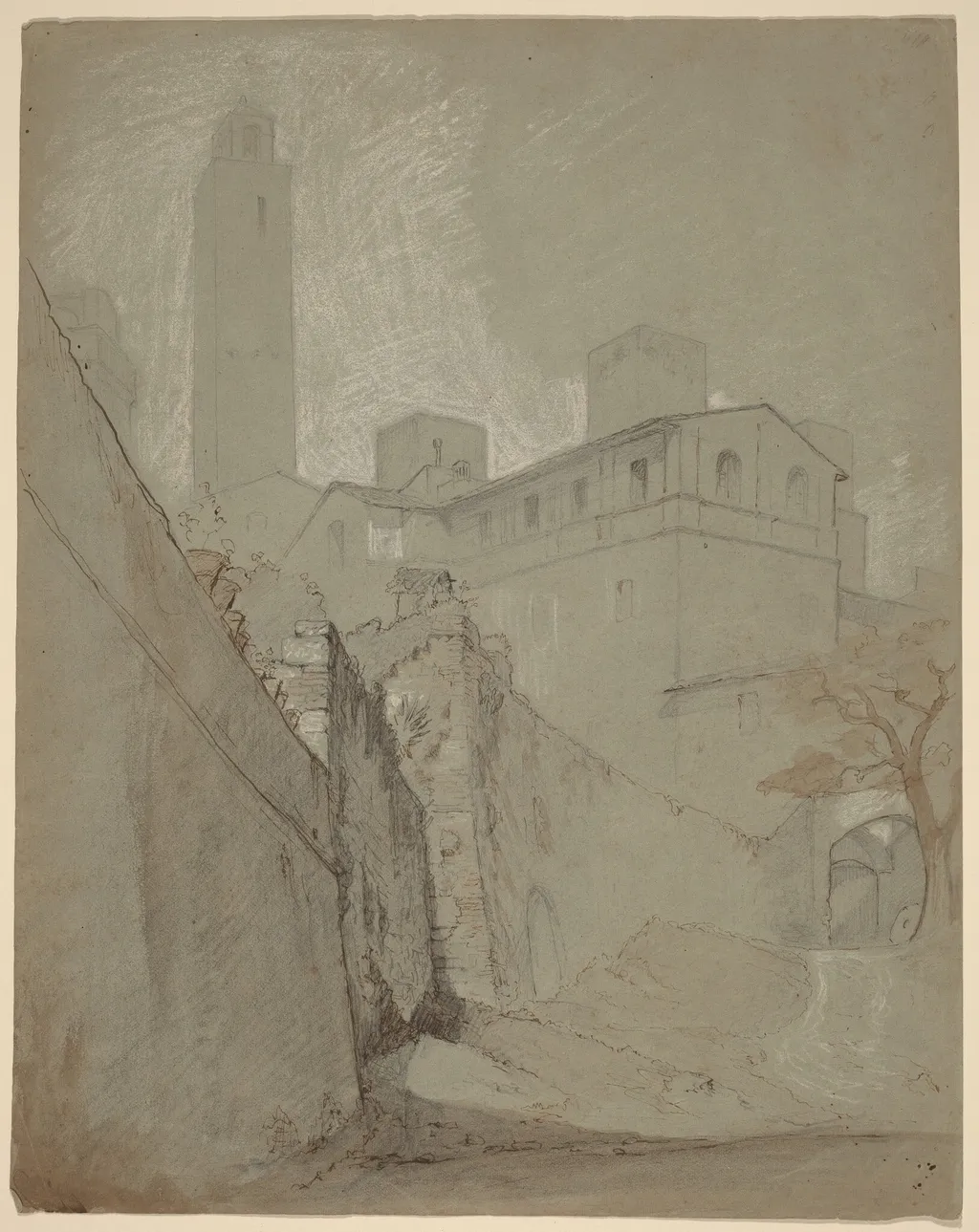
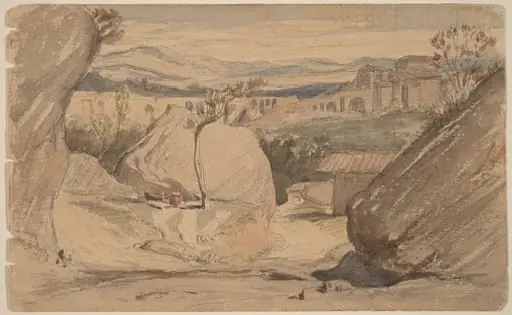
Orvieto is an ink drawing by the Impressionist artist Elihu Vedder. It dates from 1890 and is held in the collection of the National Gallery of Art.
About this work
Overview
Created around 1890 by American artist Elihu Vedder, *Orvieto* is a draft-like drawing executed in graphite, crayon, and brown ink on gray-green wove paper.
Created around 1890 by American artist Elihu Vedder, *Orvieto* is a draft-like drawing executed in graphite, crayon, and brown ink on gray-green wove paper. It captures a momentary observation rather than a polished composition, emphasizing immediacy over finish. The work reflects Vedder’s broader interest in architectural forms and atmospheric mood, aligning with his practice of sketching during travels in Europe.
Subject & Meaning
The drawing depicts a vertical tower and a broader stone structure, likely inspired by the cathedral complex in Orvieto, Italy. No figures or narrative elements are present; the focus is on mass, shadow, and terrain. The steeply sloping ground and minimal sky suggest a contemplative, almost solitary encounter with ancient architecture, evoking time’s erosion without explicit symbolism.
Technique & Style
Vedder employed loose, scratchy strokes to render the rough stone surfaces, using crayon for dense texture and pen for sharp, angular shadows. Cross-hatching builds depth in the dark areas, while the pale wash of the sky implies atmosphere without detail. The gray-green paper subtly informs the tonal range, allowing the medium’s natural grain to contribute to the sense of aged stone and uneven ground.
History & Provenance
The drawing emerged from Vedder’s travels in Italy during the 1880s and 1890s, a period when he frequently sketched ruins and ecclesiastical structures. It remained in his personal collection until his death in 1923, after which it entered institutional holdings. Its status as a working sketch, not a saleable work, suggests it was part of his private visual research rather than public output.
Context
Vedder’s work in this period was shaped by Symbolist ideals, which favored mood and suggestion over literal representation. While his illustrations for *The Rubaiyat* gained wider recognition, his travel sketches like *Orvieto* reveal a quieter, more introspective side of his practice. These drawings connected him to European artistic traditions that valued the sketch as a vehicle for personal perception.
Legacy
Though not widely exhibited during his lifetime, *Orvieto* exemplifies Vedder’s commitment to capturing transient impressions of place. Its rawness and technical economy have since drawn attention from scholars studying American Symbolist drawing practices. The work stands as a quiet testament to the artist’s habit of observing architecture not as monument, but as lived environment.
Artist & collection

Artist
Elihu Vedder (26 February 1836 – 29 January 1923) was an American symbolist painter, book illustrator and poet from New York City.

 The Fable of the Miller, His Son, and the Donkey
 The Fable of the Miller, His Son, and the Donkey
 The Fable of the Miller, His Son, and the Donkey
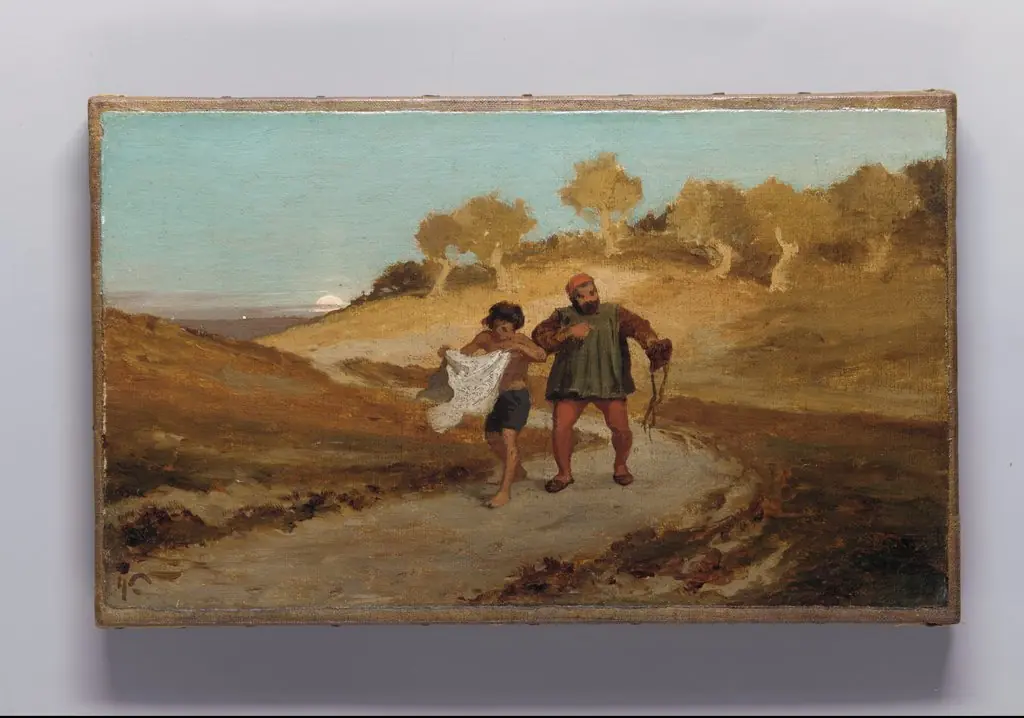 The Fable of the Miller, His Son, and the Donkey
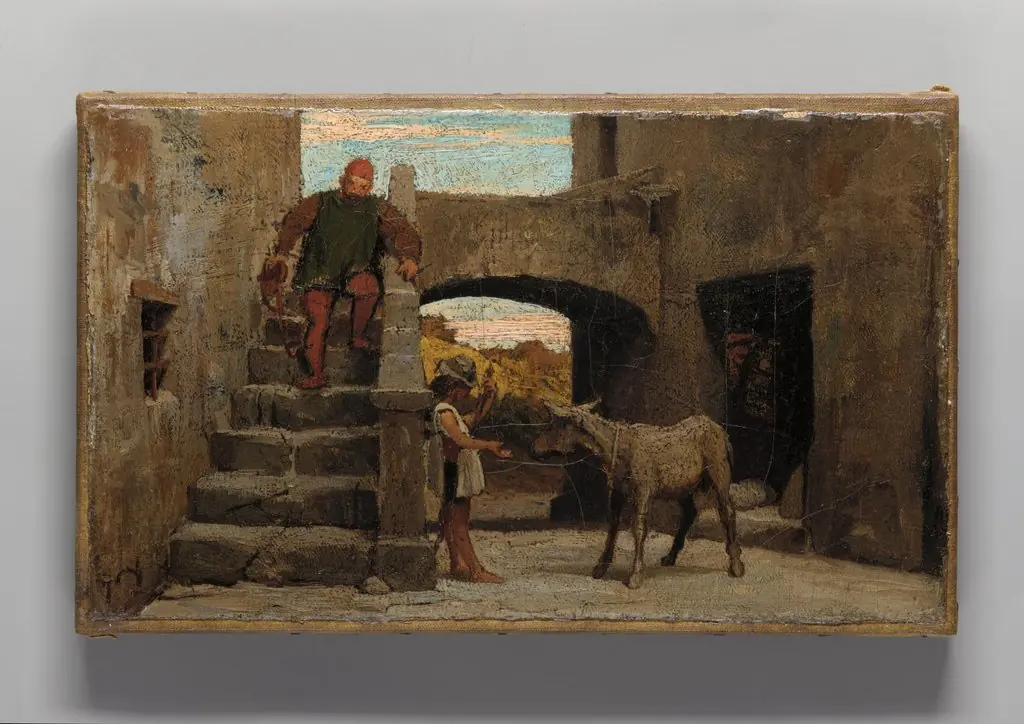 The Fable of the Miller, His Son, and the Donkey
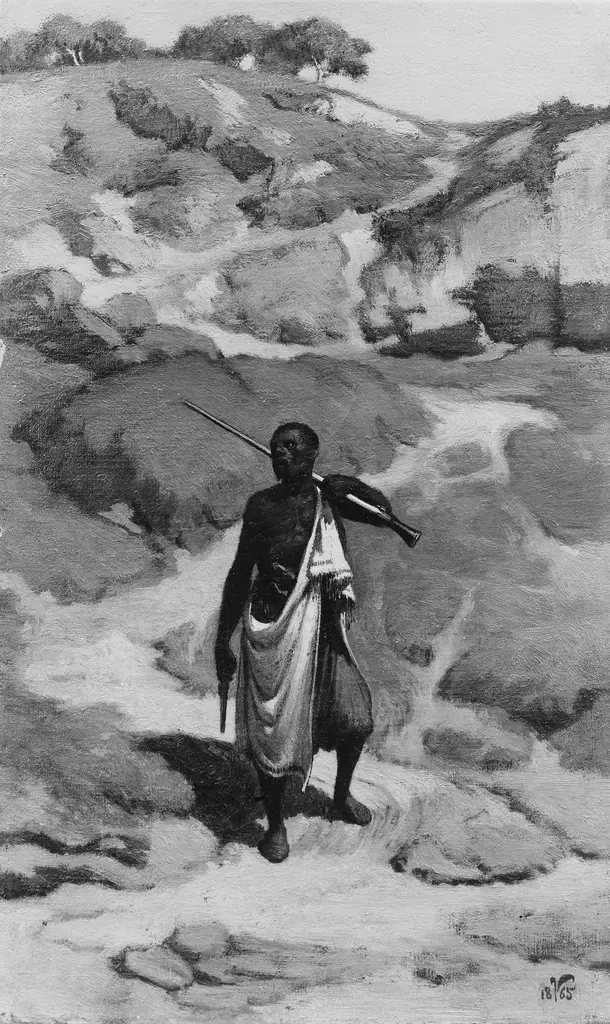 The African Sentinel
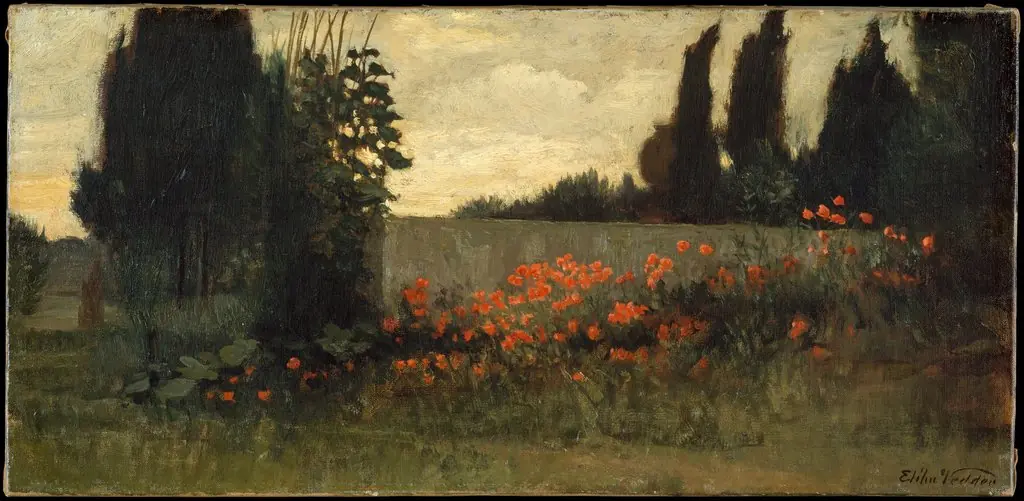 Cypress and Poppies
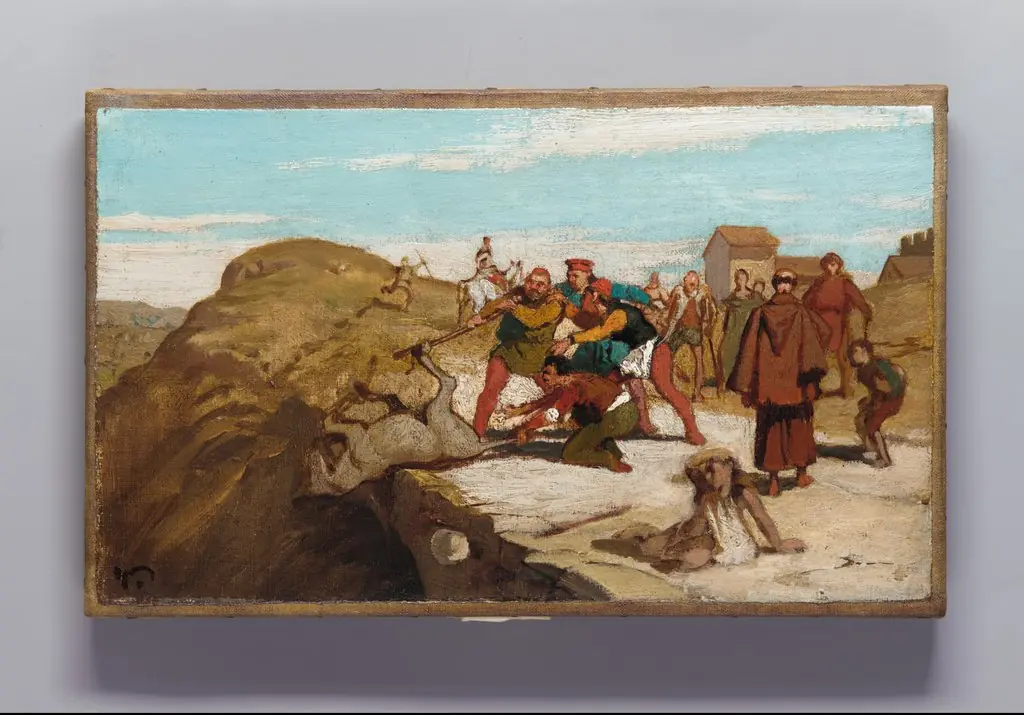 The Fable of the Miller, His Son, and the Donkey
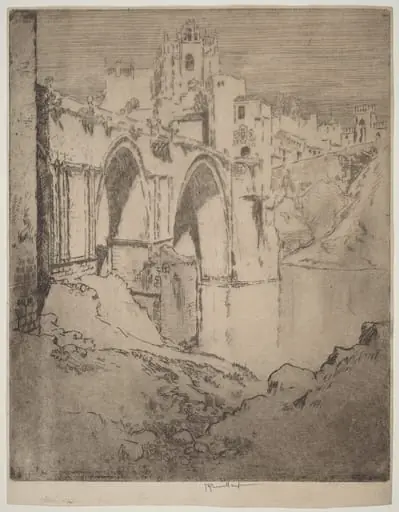 Bridge of San Juan D'Los Reyos, Toledo
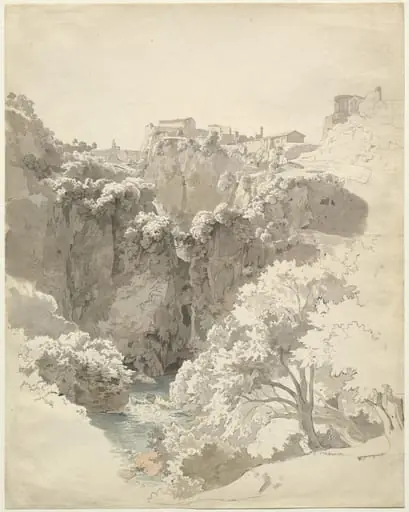 Tivoli and the Temple of the Sibyl Above the Aniene Gorge
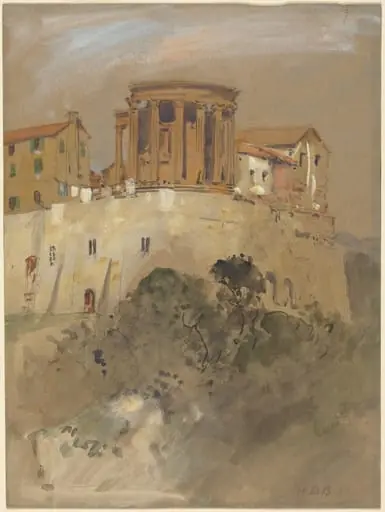 Temple of Vesta at Tivoli
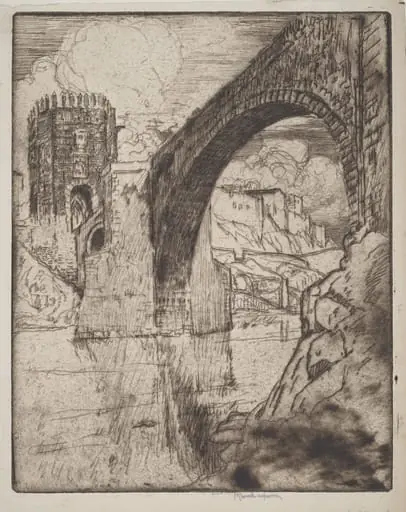 Arch of Bridge of Alcantara
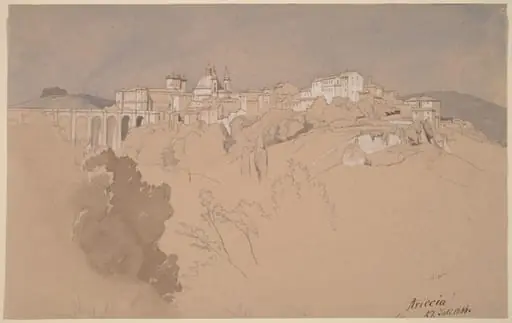 Ariccia Seen from across a Valley
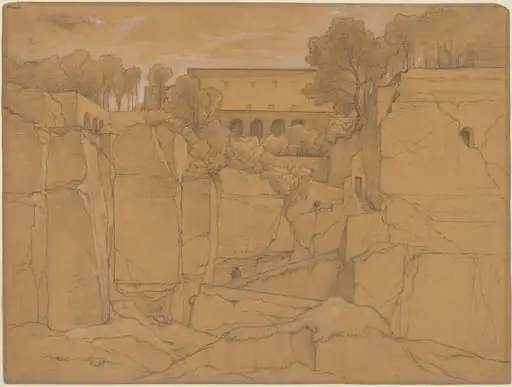 Sorrento
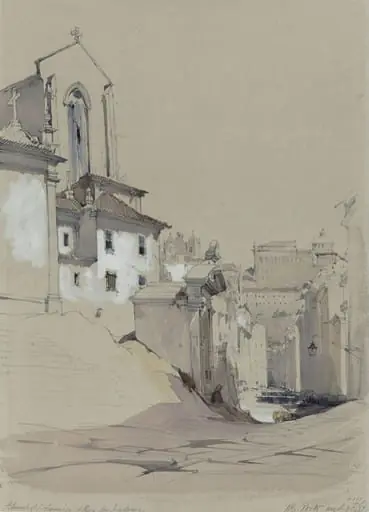 Church of San Francisco and Rua dos Ingleses, Oporto
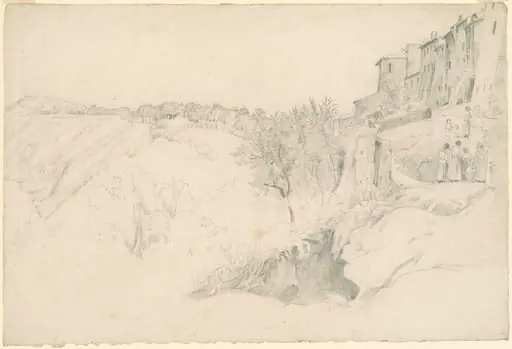 Hillside with Houses and Figures
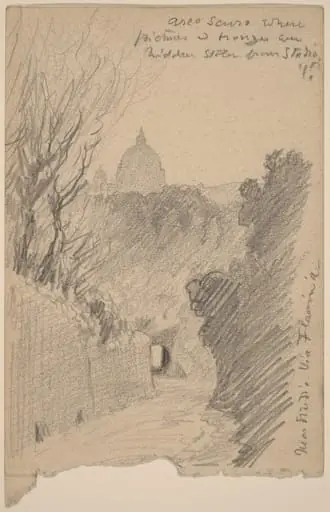 Arco Oscuro--Over the Via Fiaminia
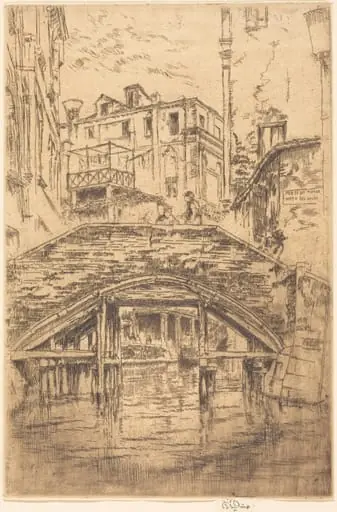 Ponte del Piovan
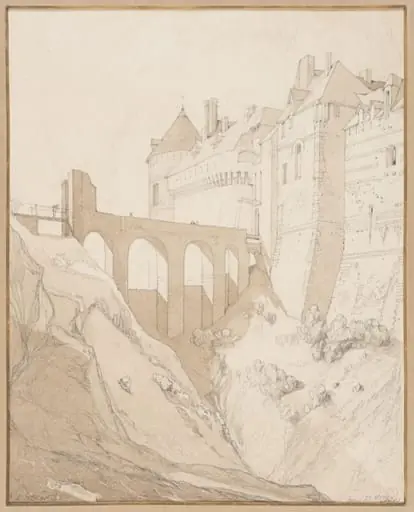 Principal Entrance to the Castle of Dieppe
 Orte
Orte