Artwork
Temple of Vesta at Tivoli
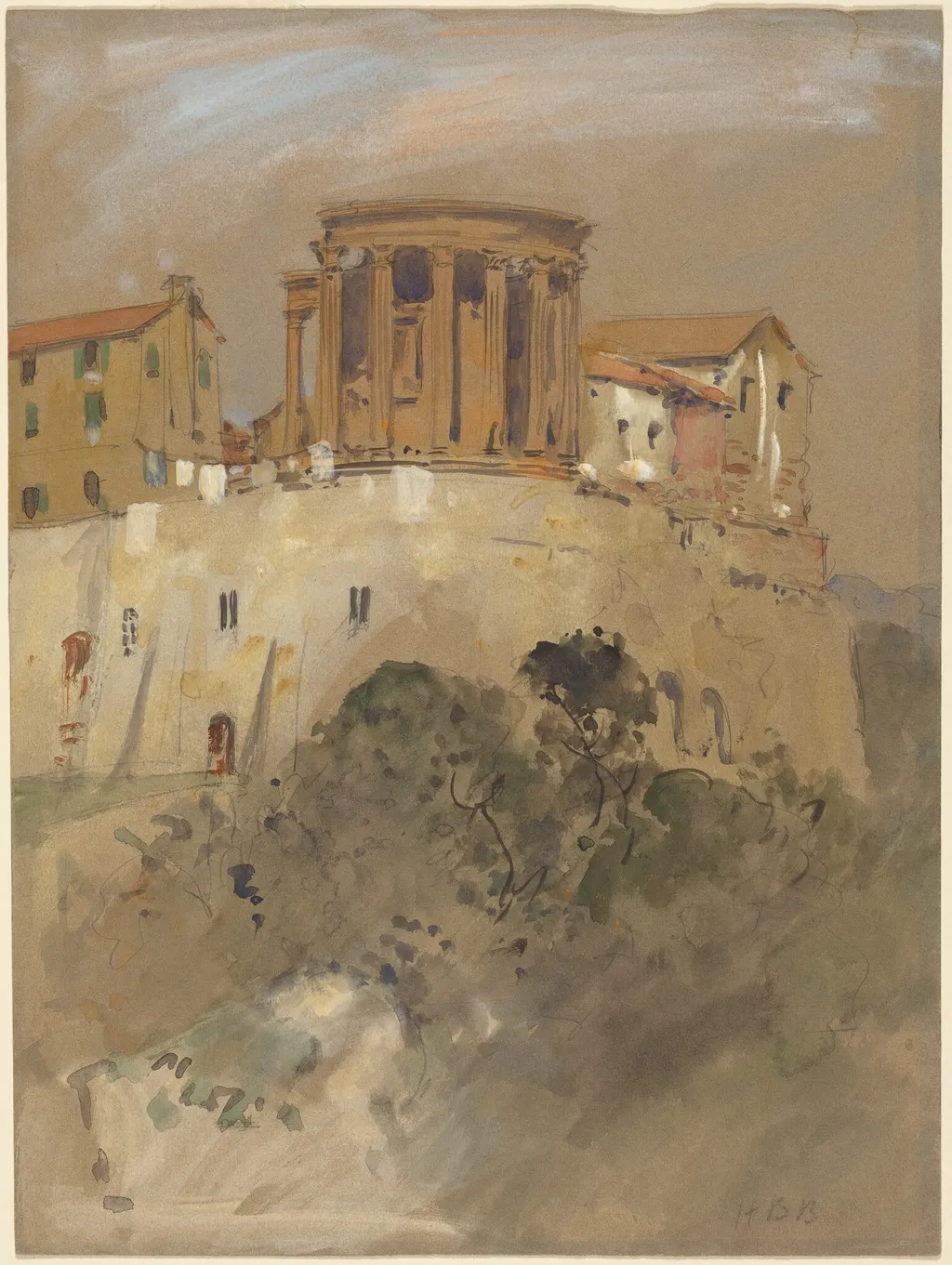
Temple of Vesta at Tivoli is a graphite drawing by the Romanticist artist Hercules Brabazon Brabazon. It dates from 1864 and is held in the collection of the National Gallery of Art.
About this work
Overview
Its loose, evocative handling prioritizes atmosphere over meticulous detail, a hallmark of the period’s approach to landscape and architectural subjects.
Hercules Brabazon Brabazon’s 1864 drawing depicts the Temple of Vesta in Tivoli, executed in watercolor with white gouache on brown wove paper. The work exemplifies the artist’s engagement with Romantic watercolor traditions, particularly those associated with J.M.W. Turner. Its loose, evocative handling prioritizes atmosphere over meticulous detail, a hallmark of the period’s approach to landscape and architectural subjects.
Subject & Meaning
The drawing centers on the ancient Temple of Vesta, a circular structure perched on a raised platform. Its weathered surfaces and partial ruin suggest the passage of time, a theme resonant with Romantic interpretations of antiquity. The surrounding vegetation and low wall evoke a sense of quiet decay, while the open space in the foreground invites contemplation of the site’s historical and emotional weight.
Technique & Style
Brabazon employs watercolor heightened with white gouache, a method that allows for luminous, translucent effects. The graphite underdrawing provides structure, while loose, rapid brushstrokes convey immediacy. Layered glazes build depth, particularly in the interplay of light and shadow. This technique aligns with Turner’s influence, favoring suggestion over precision to capture fleeting atmospheric conditions.
History & Provenance
Created in 1864, the drawing reflects Brabazon’s travels in Italy, where he frequently sketched classical ruins. As a work on paper, it likely circulated among private collectors or within artistic circles before entering institutional holdings. Its survival underscores the value placed on such studies as both artistic exercises and records of historical sites.
Context
The work emerges from the Romantic era’s fascination with ruins and the sublime. Artists of the period often depicted ancient monuments to evoke themes of impermanence and the passage of civilizations. Brabazon’s focus on Tivoli, a site long admired by travelers and artists, situates the drawing within a broader tradition of European landscape studies that emphasized mood and historical resonance.
Legacy
The drawing contributes to the legacy of 19th-century watercolor practice, particularly in its synthesis of Turner’s techniques with Brabazon’s own approach. While not widely reproduced, such works helped sustain interest in watercolor as a medium for both rapid sketching and finished compositions. They also document the enduring appeal of classical ruins as subjects for artistic exploration.
Artist & collection
Artist
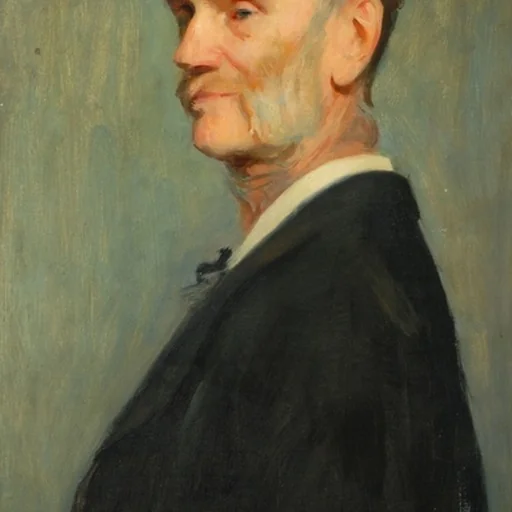
Hercules Brabazon Brabazon (born Hercules Brabazon Sharpe; 27 November 1821 – 14 May 1906) was an English artist, accomplished in Turner-manner watercolours.

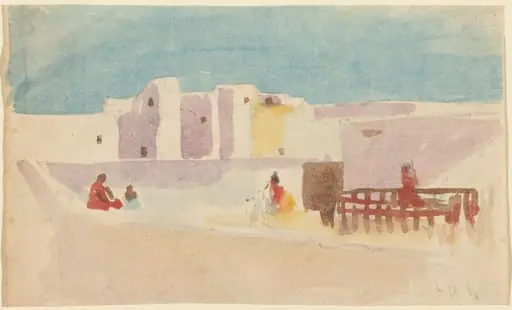 Walls of a North African City
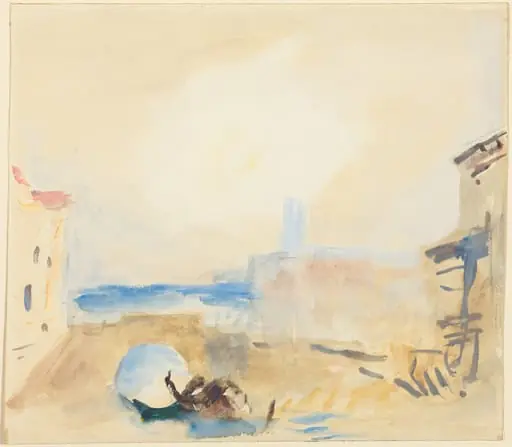 A Gondola Passing Under a Bridge in Venice
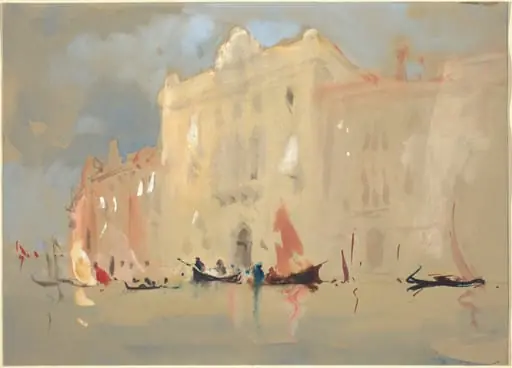 Gondolas Before a Palace on the Grand Canal in Venice
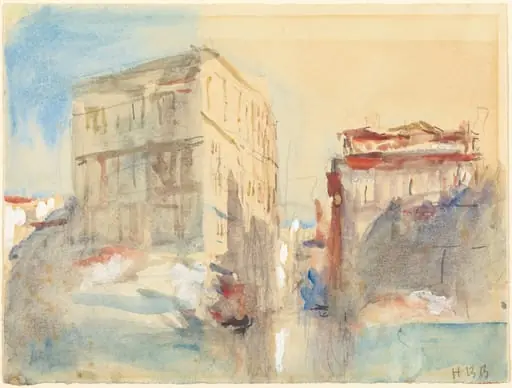 Palaces on the Grand Canal in Venice
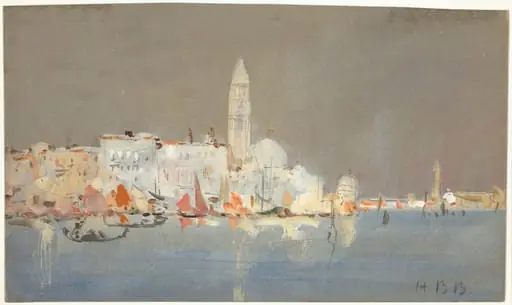 Venetian Capriccio with a Campanile
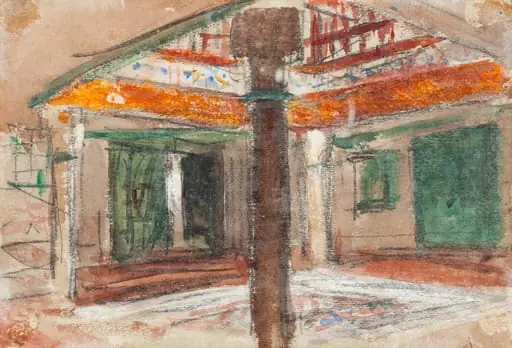 Interior of an Exotic Palace
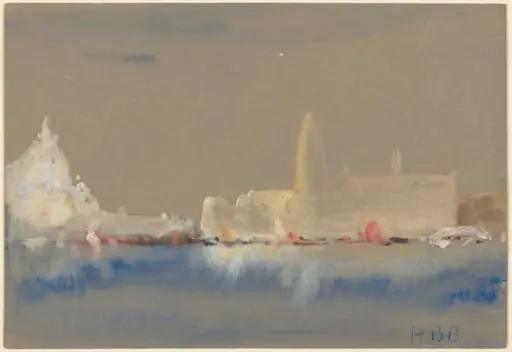 The Salute and the Palazzo Ducale from the Bacino di San Marco
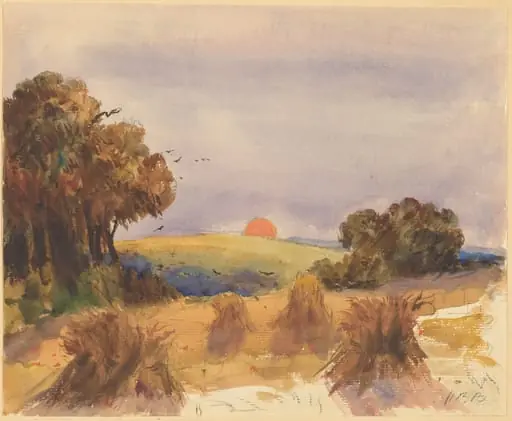 A Cornfield at Sunset
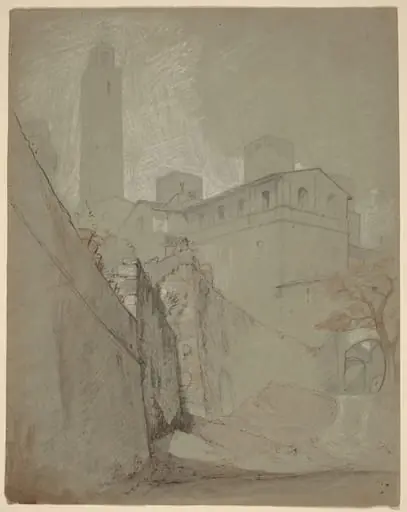 Orvieto
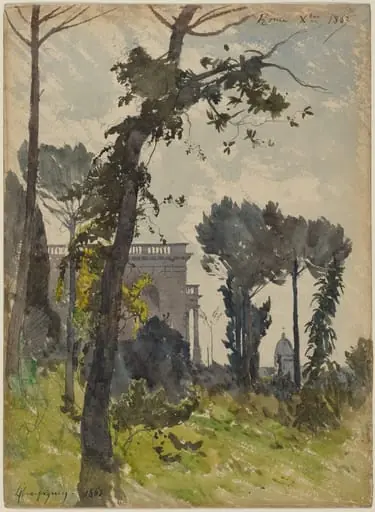 View of the Dome of Saint Peter's, Rome
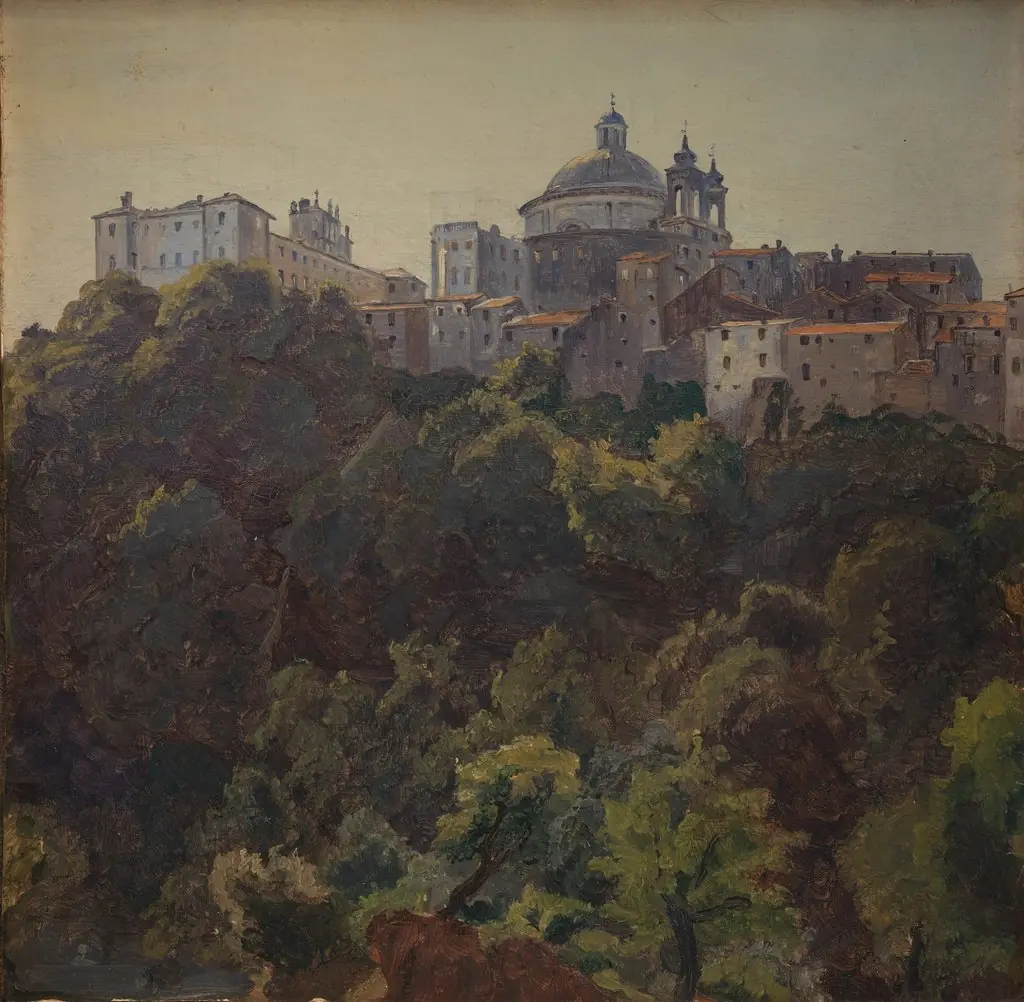 View towards Ariccia and the Palazzo Chigi and S. Maria dell'Assunzione, Italy
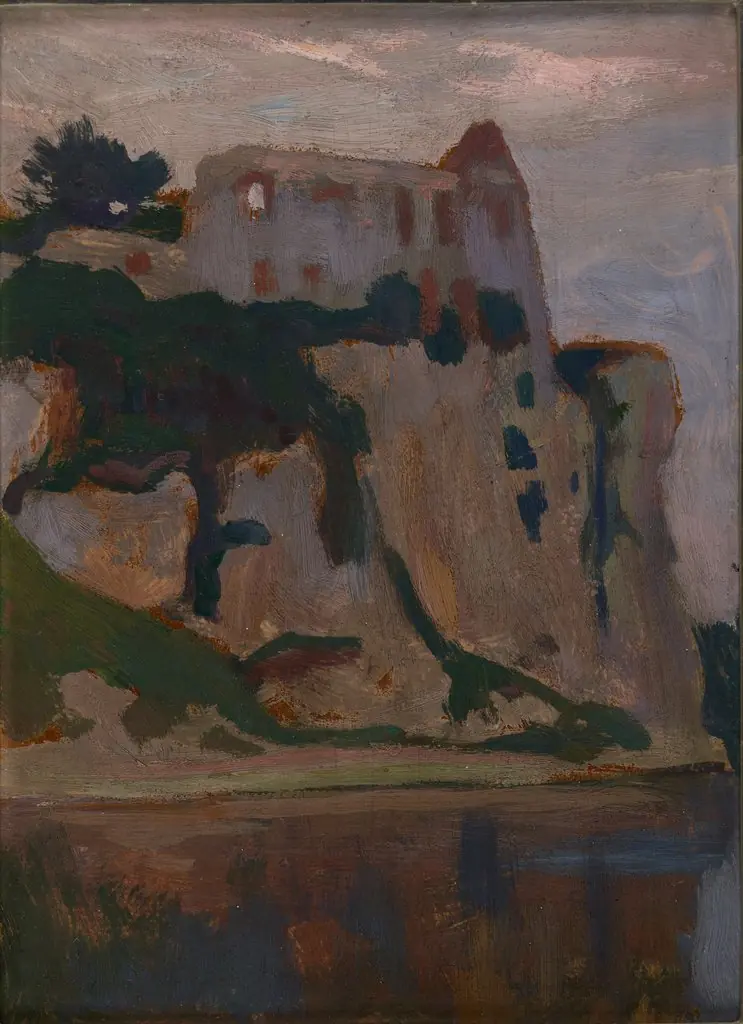 Tyniec at Dawn
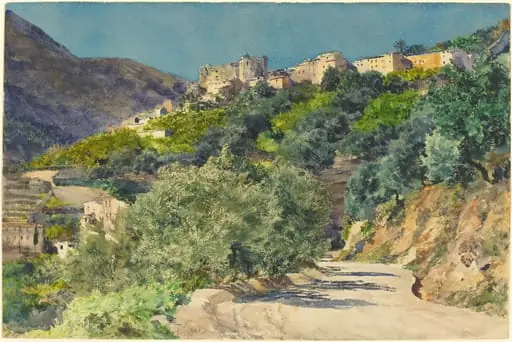 Sun-Drenched Hills near Menton
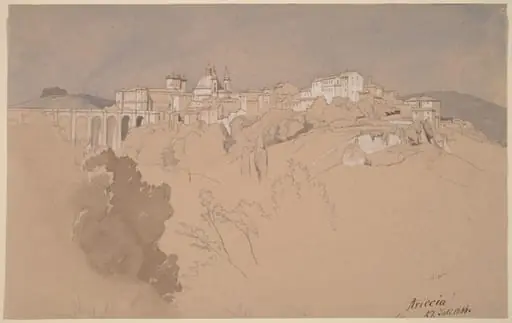 Ariccia Seen from across a Valley
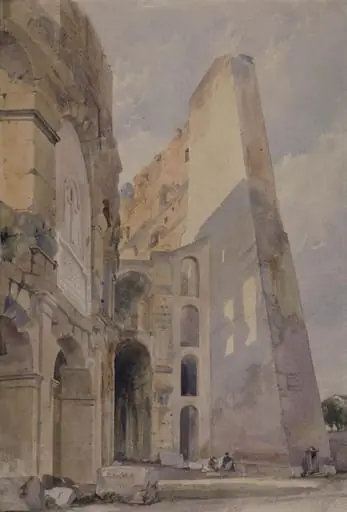 Walls of the Colosseum in Rome
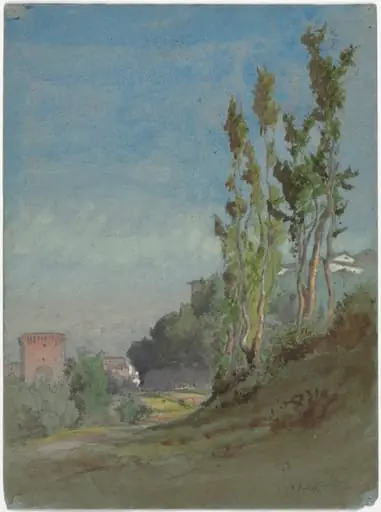 Albano, Italy
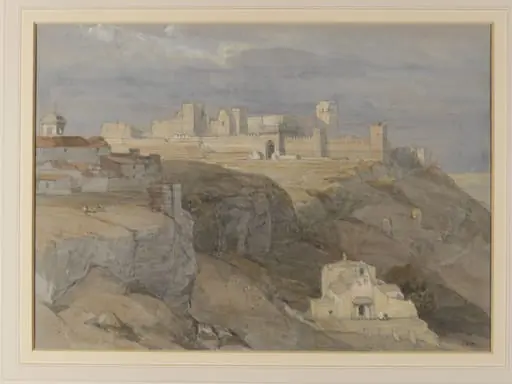 The Alcazar of Carmona, Andalusia
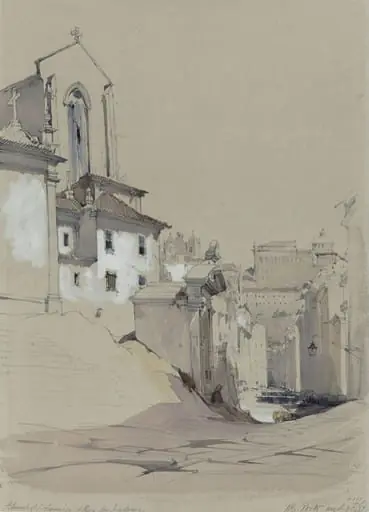 Church of San Francisco and Rua dos Ingleses, Oporto