Artwork
A Seated Soldier
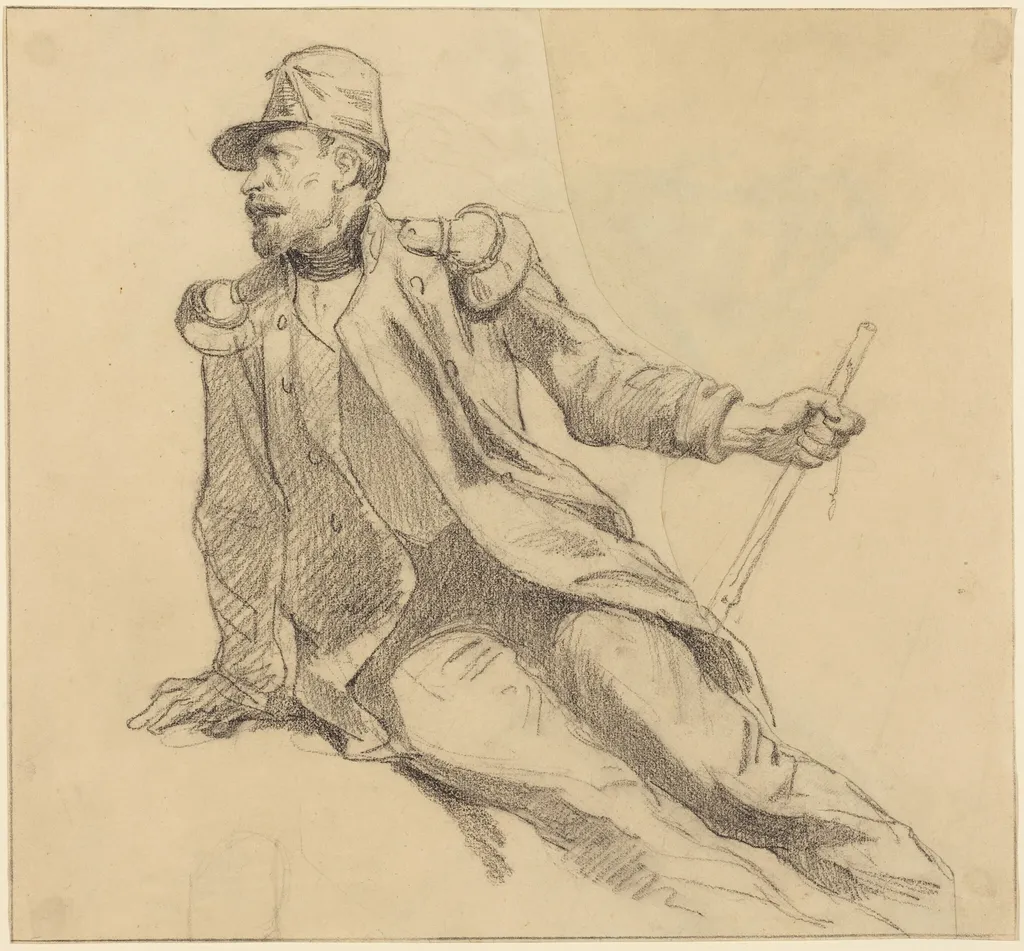
A Seated Soldier is a chalk drawing by the Romanticist artist Hippolyte Bellangé. It dates from 1830 and is held in the collection of the National Gallery of Art.
About this work
Overview
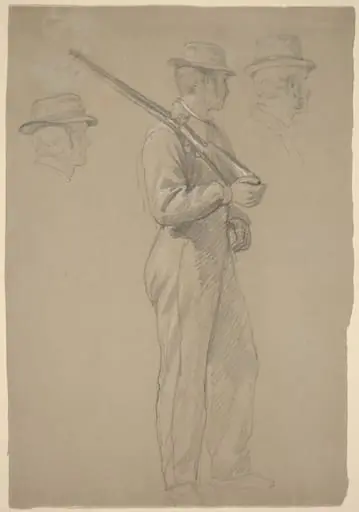
A Seated Soldier is a drawing by French artist Hippolyte Bellangé, executed in 1830. The work depicts a soldier in a relaxed pose, characterized by loose, expressive lines and minimal detail, achieved through black chalk over graphite on wove paper.
Subject & Meaning
The subject, a soldier at ease, conveys a sense of casual demeanor. His attire, including a loose coat, tall hat, and necktie, suggests a focus on the individual rather than military pomp. The overall portrayal may imply a humanizing or introspective aspect of military life.
Technique & Style
Bellangé employed a rapid, rough drawing technique, evident in the hasty lines. The use of black chalk against the light-colored paper creates high contrast, drawing attention to the figure while omitting intricate details. This approach aligns with expressive drawing practices common during the period.
History & Provenance
Created in 1830, the drawing’s provenance history is not detailed here, highlighting a need for further research into its ownership and exhibition timeline.
Context
A Seated Soldier can be contextualized within the Romantic movement, which emphasized emotion, individuality, and expressive technique. The sketch’s loose style and focus on a solitary figure reflect these Romantic ideals, though its subject matter adds a unique military dimension.
Legacy
The legacy of A Seated Soldier is not extensively outlined in available information, suggesting a potential for deeper analysis into its influence on subsequent artists or its place within Bellangé’s broader oeuvre.
Artist & collection


![Two Soldiers Resting [verso], by Winslow Homer](https://artifactworldgallery.com/img/winslow-homer--two-soldiers-resting-verso--989d55e6cbbf0806-w320.webp)