Artwork
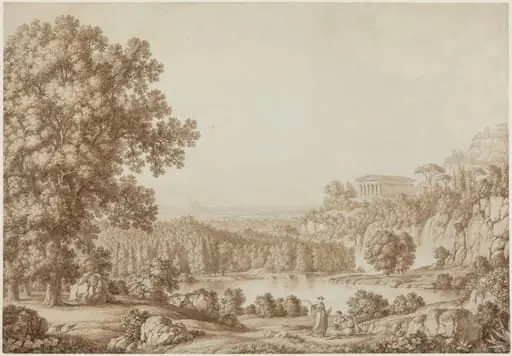
Arcadian Landscape with a Mausoleum
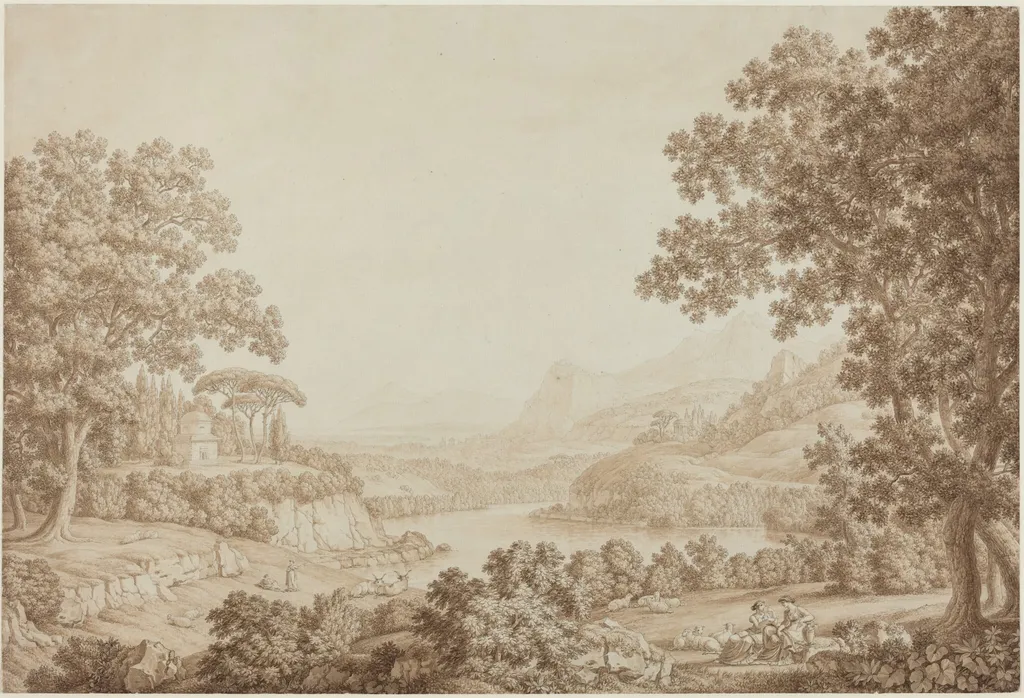
Arcadian Landscape with a Mausoleum is an ink drawing by the Romanticist artist Christoph Heinrich Kniep. It dates from 1794 and is held in the collection of the National Gallery of Art.
About this work
Overview
Created around 1794, this drawing by Christoph Heinrich Kniep depicts a tranquil rural scene in the Italian countryside. Executed in pen and brown ink with wash over graphite on laid paper, it captures a quiet moment in nature with subtle tonal gradations. The work reflects Kniep’s interest in landscape as a contemplative subject, rendered with precision and restraint.
Subject & Meaning
The scene presents an idealized pastoral setting: rolling hills, a meandering river, and a distant classical structure resembling a mausoleum. Figures rest beneath trees, tend to livestock, or stroll along a path, suggesting harmony between humans and nature. The ruin-like monument evokes memory and antiquity, reinforcing a mood of serene reflection rather than narrative drama.
Technique & Style
Kniep employed fine pen lines and layered brown washes to model form and suggest atmospheric depth. Graphite underdrawing guided the composition, while the soft, muted palette enhances the quietude of the scene. The technique avoids dramatic contrast, favoring gentle transitions that unify the landscape into a cohesive, meditative whole.
History & Provenance
Kniep produced this work during his time in Italy, where he traveled as part of a German artistic delegation. The drawing likely served as a study for larger compositions or as a personal record of the landscape. It remained within private collections in Germany before entering institutional holdings, where it is now preserved as an example of late 18th-century topographical drawing.
Context
Created during the height of Grand Tour culture, the drawing reflects European fascination with classical ruins and idealized nature. While not overtly sentimental, it aligns with emerging Romantic sensibilities that valued solitude, antiquity, and the emotional resonance of landscape. Kniep’s approach differs from theatrical landscape painting, favoring quiet observation over dramatic effect.
Legacy
This drawing exemplifies the shift in German art toward intimate, observational landscape studies in the late 18th century.
This drawing exemplifies the shift in German art toward intimate, observational landscape studies in the late 18th century. Kniep’s restrained technique influenced later artists interested in naturalism and the poetic potential of rural scenes. Though not widely exhibited, it remains a significant record of how travelers interpreted the Italian countryside beyond grandeur, toward stillness and timelessness.
Own this work as a print
Artist & collection


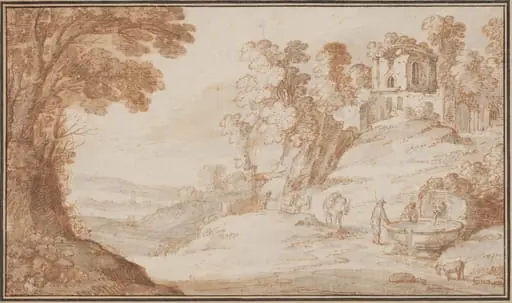 Classical Landscape with a Fountain
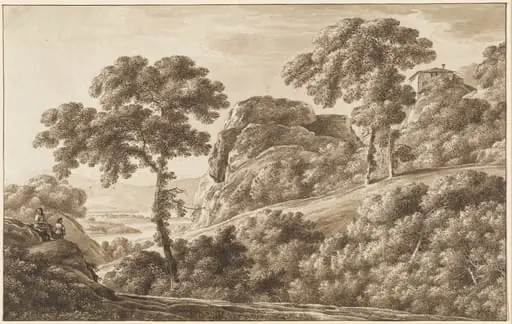 The Isar with Boulders on the Isarhohe
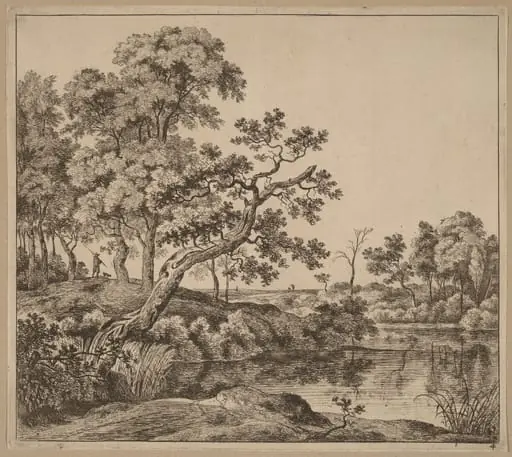 Landscape with a Bending Tree
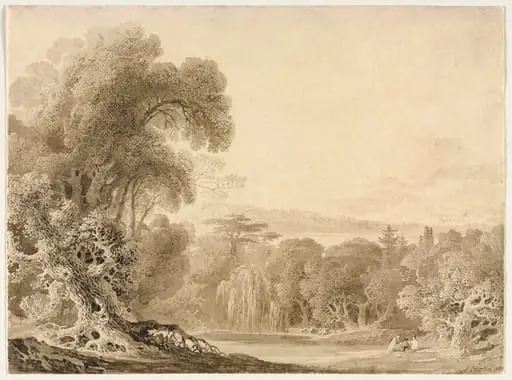 Figures Seated by a Lake in a Wooded Landscape
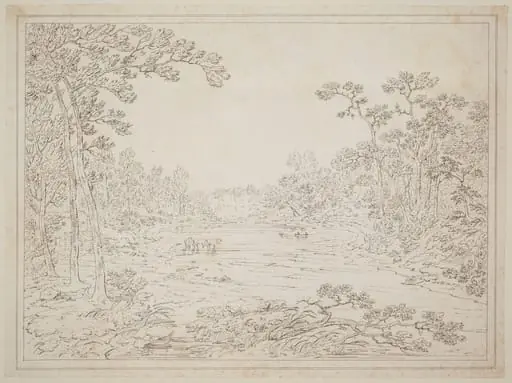 Pennsylvania Landscape
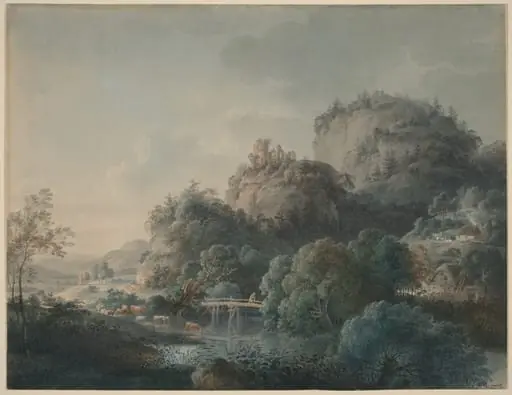 The Ruins of the Monastery of Oybin in the Zittau Mountains
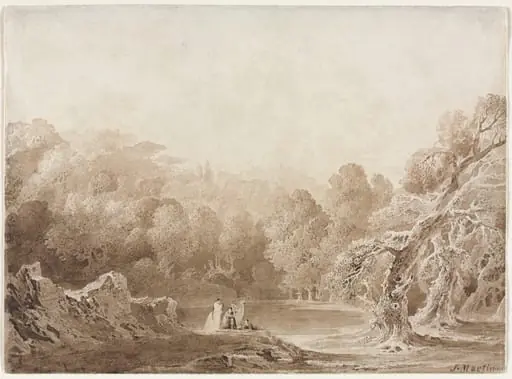 A Man Playing a Harp with other Figures beside a Lake
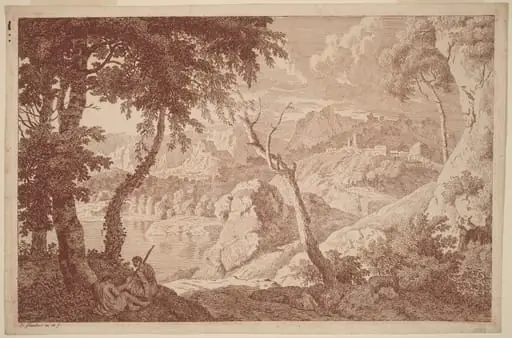 Mountain Landscape with Two Men Resting
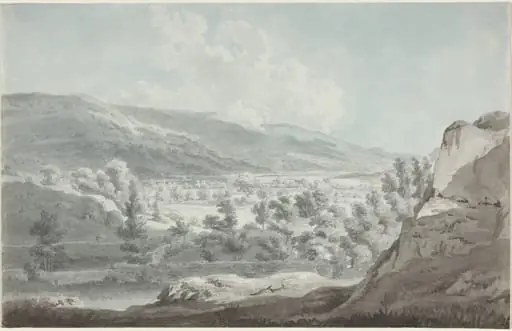 The Head of Ullswater
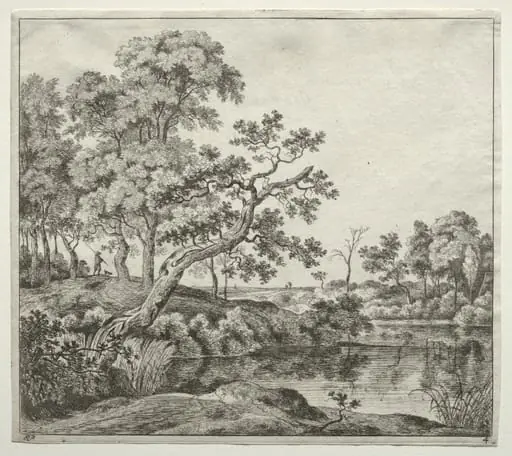 The Bent Tree
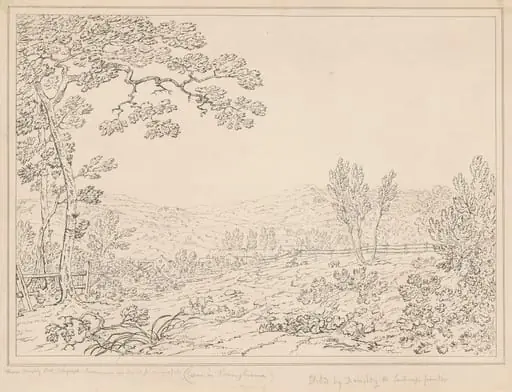 Pennsylvania Landscape
 Arcadian Landscape with a Doric Temple