Artwork
View of a Dutch Town (Delft?)
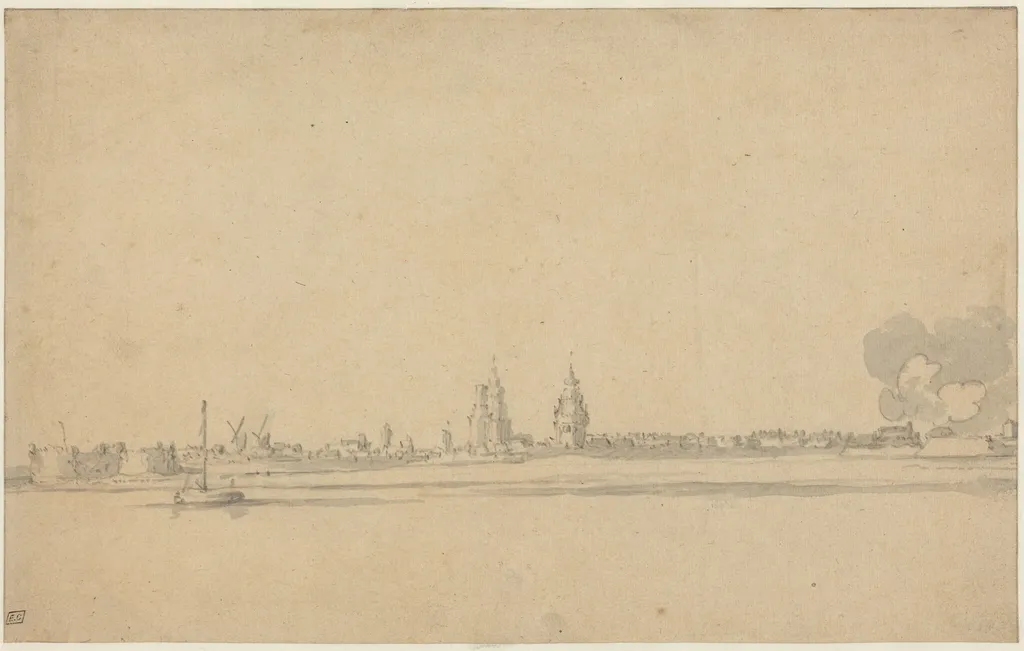
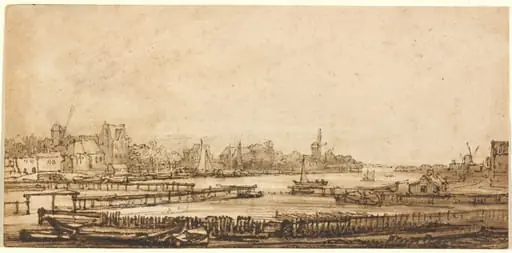
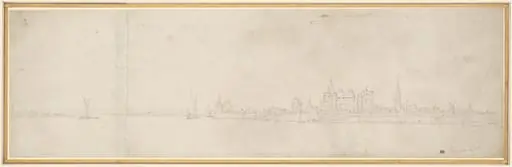
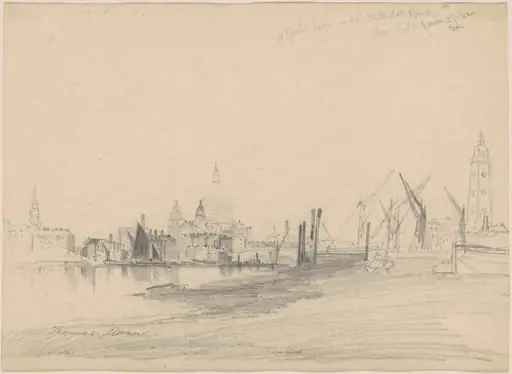
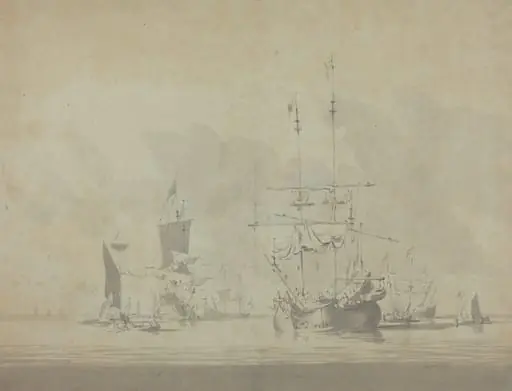
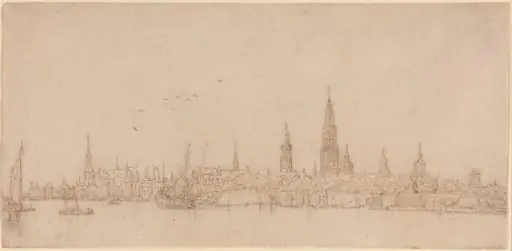
View of a Dutch Town (Delft?) is a graphite drawing by the Baroque artist Velde, Willem van de, the Younger. It dates from 1670 and is held in the collection of the National Gallery of Art. Willem van de Velde the Younger produced this 1670 drawing of a Dutch urban scene, likely representing Delft.
About this work
Overview
Willem van de Velde the Younger produced this 1670 drawing of a Dutch urban scene, likely representing Delft. Executed on laid paper, the work combines graphite line work with a gray wash, and includes incised marks made with a stylus. The composition centers on a waterway populated by a few vessels and a prominent distant building, conveying a tranquil atmosphere.
Subject & Meaning
The image captures a modest cityscape viewed from the water, emphasizing the relationship between built environment and canal. The presence of small boats suggests everyday commercial activity, while the expansive sky and reflective surface evoke a sense of quiet routine in a 17th‑century Dutch town.
Technique & Style
Van de Velde employs a restrained palette of graphite and diluted gray wash, allowing tonal gradations to model depth. Incised lines add definition to architectural elements, while broader washes suggest atmospheric haze. The balance of precise linear detail with softer tonal areas reflects the artist’s skill in rendering both structure and ambience.
History & Provenance
Created in 1670, the drawing belongs to the oeuvre of the younger van de Velde, known for marine subjects. Its attribution to a specific town remains tentative, with Delft being the most plausible identification based on architectural cues. The work is catalogued as a drawing rather than a finished painting, typical of preparatory studies of the period.
Artist & collection

Artist
Velde, Willem van de, the Younger
Velde, Willem van de, the Younger (1633–1707) was an artist.

![View of Scheveningen [recto], by Jan van Goyen](https://artifactworldgallery.com/img/jan-van-goyen--view-of-scheveningen-recto--0f9cb319c9b082d3-w320.webp)