Artwork
St. Paul's from Under Waterloo Bridge, Low Tide
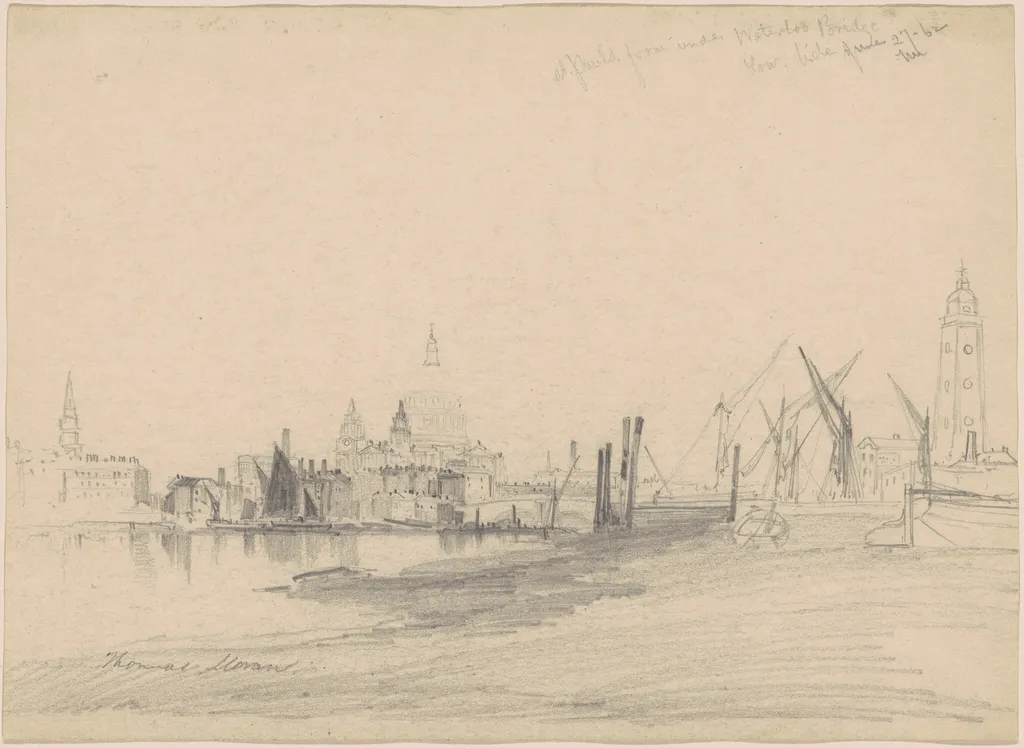
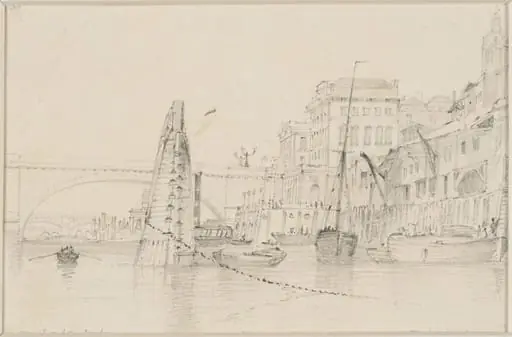
St. Paul's from Under Waterloo Bridge, Low Tide is a graphite drawing by the Impressionist artist Thomas Moran. It dates from 1862 and is held in the collection of the National Gallery of Art. This 1862 graphite drawing on wove paper, *St.
About this work
Overview
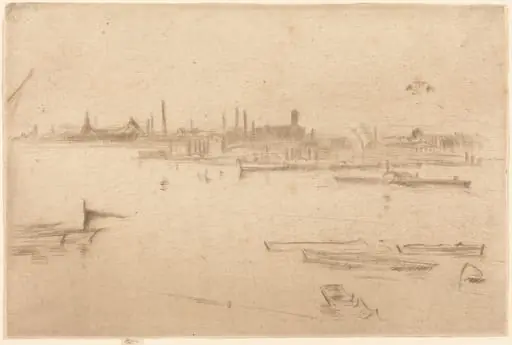
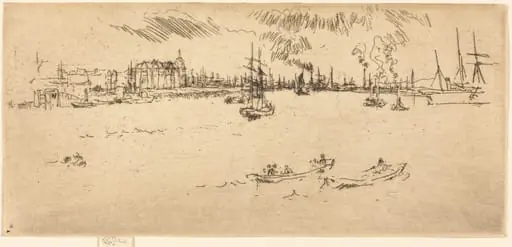
This 1862 graphite drawing on wove paper, *St. Paul's from Under Waterloo Bridge, Low Tide*, captures a London waterfront scene during low tide, featuring St. Paul's Cathedral in the background.
Subject & Meaning
The drawing depicts everyday life along the Thames, emphasizing mundane details such as docked ships with crisscrossing masts, wooden piers, and the cathedral's presence amidst ordinary urban activity.
Technique & Style
Characterized by loose yet precise lines, the work simply conveys light and shadow, aligning with Realist principles of plain representation of ordinary life.
History & Provenance
Created by Thomas Moran, an American artist more commonly associated with Hudson River School landscapes and illustration work for *Scribner's Monthly*, this piece reflects his versatility beyond typical subjects.
Context
Moran's broader practice included sharing a studio with his brother Edward and contributing to periodicals, indicating a multifaceted career spanning illustration and fine art.
Artist & collection

Artist
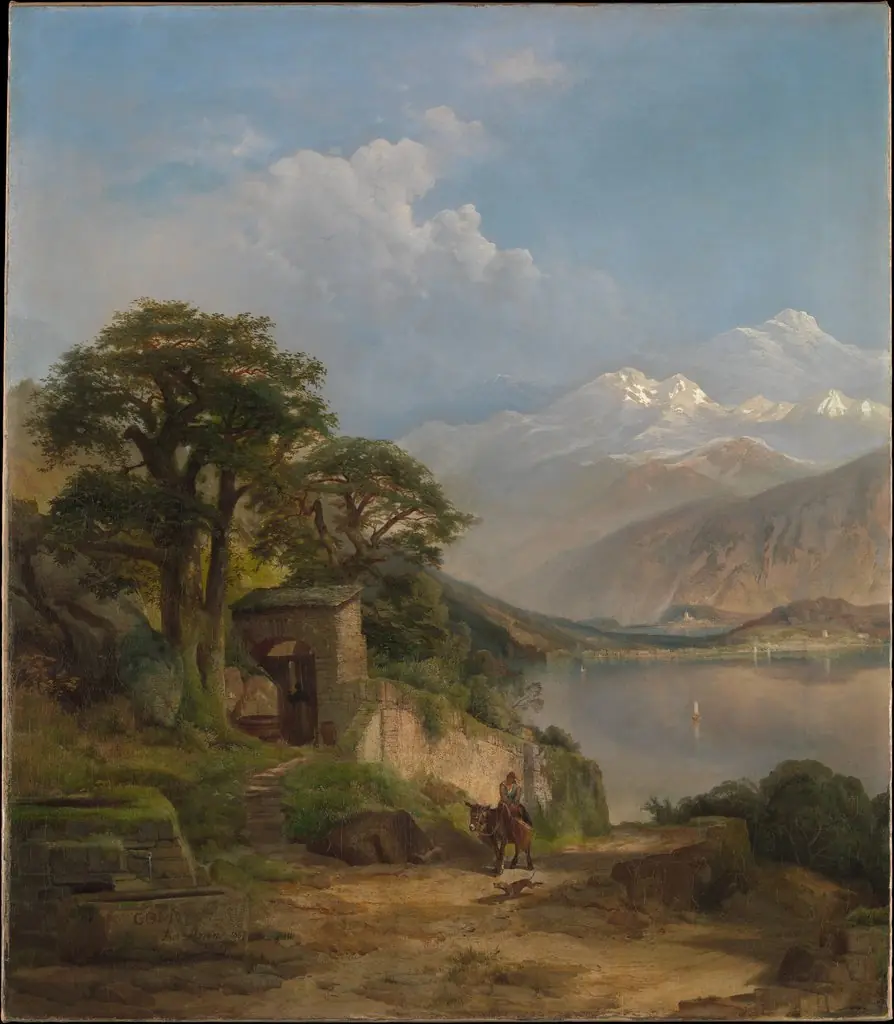
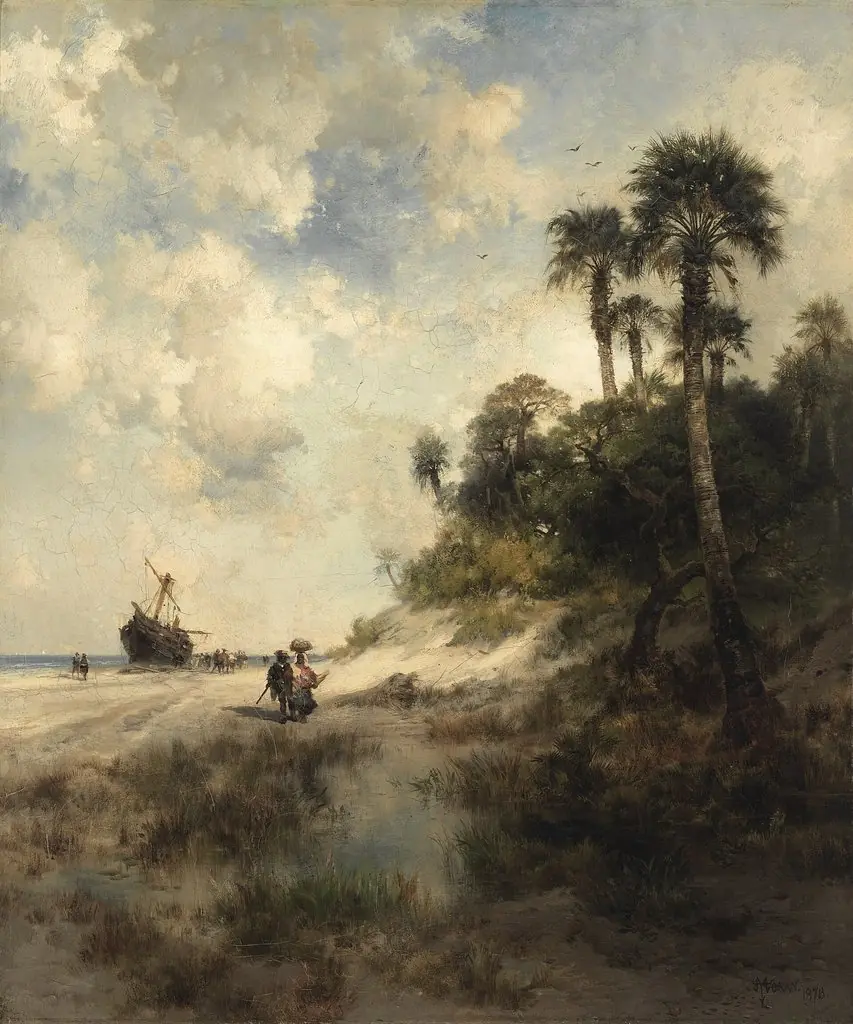
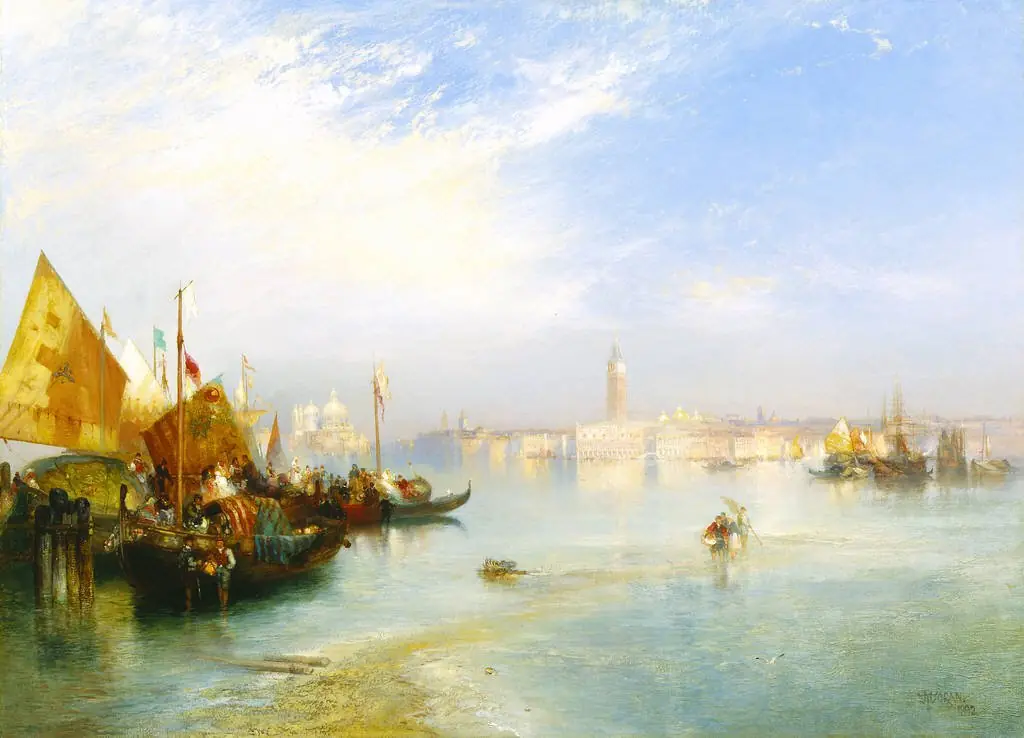
Thomas Moran (February 12, 1837 – August 25, 1926) was an American painter and printmaker of the Hudson River School in New York whose work often featured the Rocky Mountains.






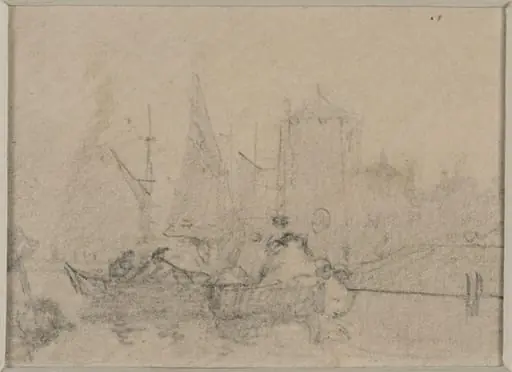
![Shipping in the Port of London [recto], by Félix-Hilaire Buhot](https://artifactworldgallery.com/img/felix-hilaire-buhot--shipping-in-the-port-of-london-recto--fa2d562f3a9aff6c-w320.webp)