Artwork
Strada Colței
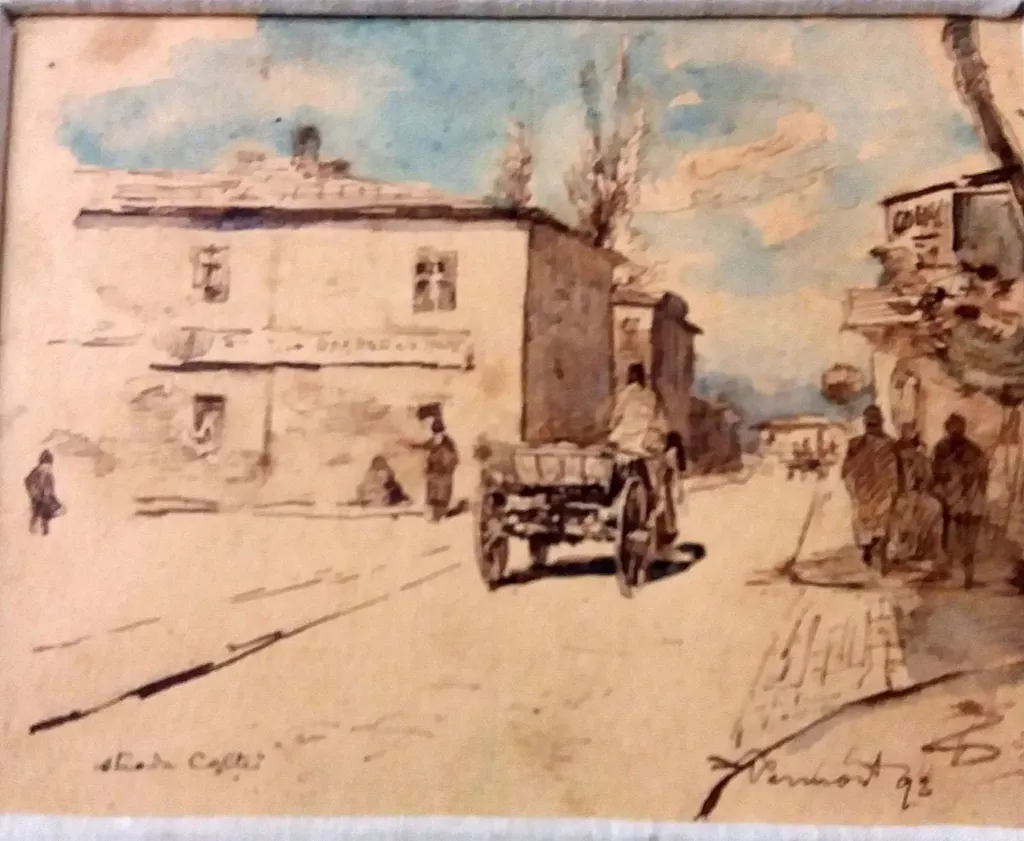
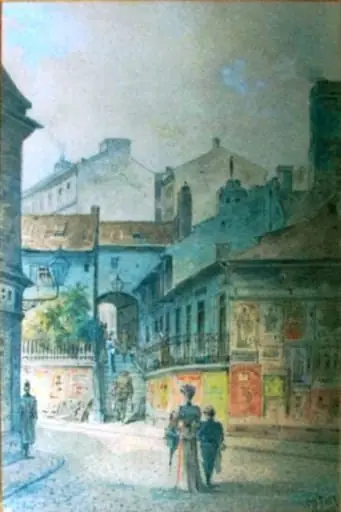
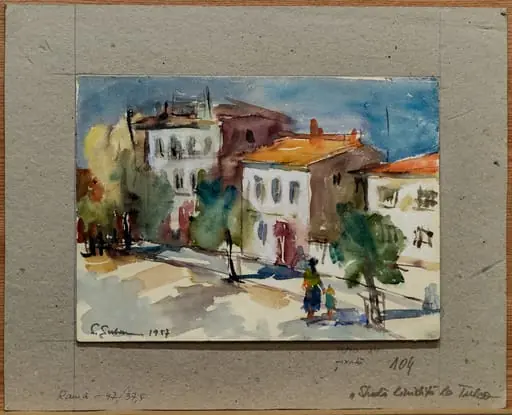
Strada Colței is a print by the Impressionist artist Nicolae Vermont. It dates from 1893 and is held in the collection of the Bucharest Municipality Museum.
About this work
Overview
Strada Colței, painted in 1893 by Nicolae Vermont, is a quiet urban sketch depicting a modest street in Bucharest.
Strada Colței, painted in 1893 by Nicolae Vermont, is a quiet urban sketch depicting a modest street in Bucharest. Executed in oil on canvas, it belongs to the collection of the Museum of Ethnography. The work captures a fleeting moment of daily life without theatricality, emphasizing atmosphere over narrative. Its unadorned composition reflects Vermont’s interest in the rhythms of ordinary existence.
Subject & Meaning
The scene centers on a modest, weathered house flanked by sparse trees and a covered cart, with a handful of figures moving or pausing nearby. No single figure dominates; instead, the painting conveys the quiet solitude of urban labor and routine. The absence of grandeur or drama underscores a deliberate focus on the unnoticed rhythms of street life, aligning with Realist principles of truthful observation.
Technique & Style
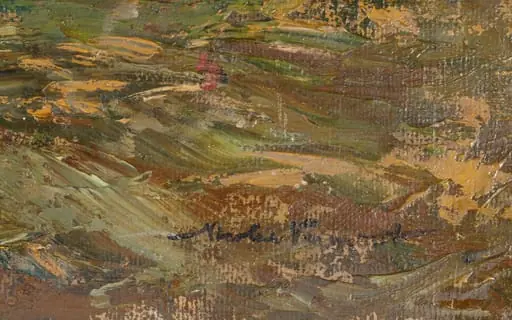
Vermont employed loose, rapid brushwork to suggest movement and light rather than define form precisely. Colors are subdued—muted grays, browns, and pale blues—avoiding vivid contrast. The sky and bare branches are rendered with minimal detail, enhancing the sense of stillness. This approach prioritizes sensory impression over polished finish, reflecting a shift toward modern observational painting.
History & Provenance
Created in 1893, the painting entered the Museum of Ethnography’s collection shortly after its completion. It was not widely exhibited during Vermont’s lifetime but gained recognition later as part of broader interest in Romanian Realist art. Its preservation in an ethnographic institution highlights its value as a document of late 19th-century urban life, not merely as fine art.
Context
In the 1890s, Romanian artists increasingly turned from historical or romantic themes toward scenes of everyday life. Vermont, influenced by French Realism and the Barbizon School, sought to portray the dignity of ordinary spaces. Strada Colței reflects this trend, offering a quiet counterpoint to the grand narratives favored in academic circles at the time.
Legacy
Though not widely known outside Romania, Strada Colței remains a representative example of late 19th-century Romanian Realism. Its understated quality has influenced later generations interested in capturing the texture of urban decay and routine. The work endures as a quiet testament to the artistic value of the unremarkable, preserved not for spectacle but for its sincerity.
Artist & collection
Artist
A Romanian realist painter and printmaker of the late 19th and early 20th centuries, Nicolae Vermont made quiet, precise scenes of daily life.
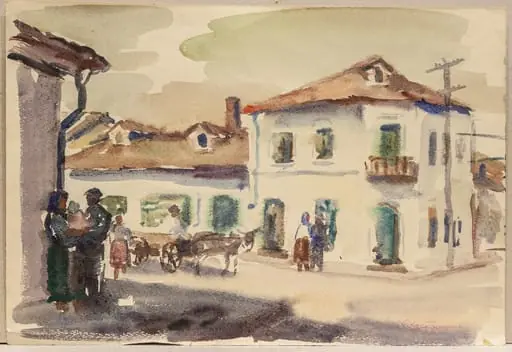 Peisaj cu stradă
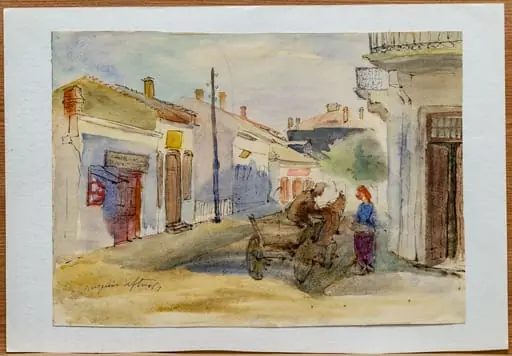 Peisaj citadin cu căruțaș
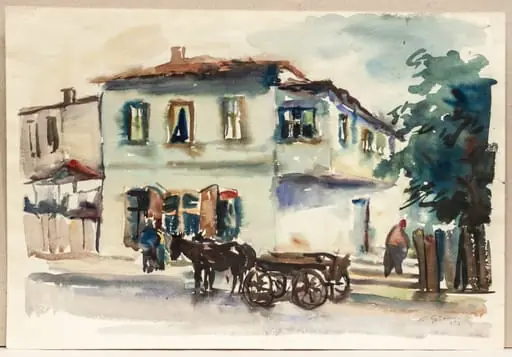 Casă veche cu trepte
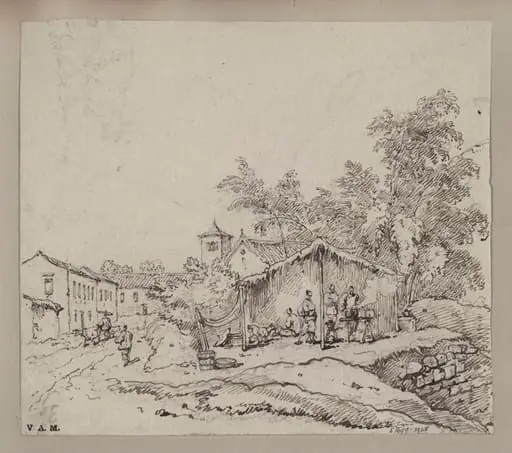 Blacksmiths beneath a thatched shelter, with the church of S. Antonio, Macau
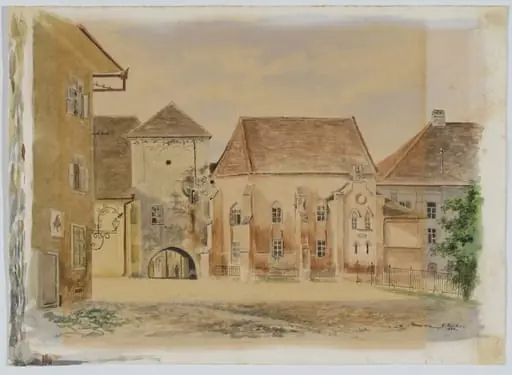 Capela Sf. Jakob și Turnul preoților
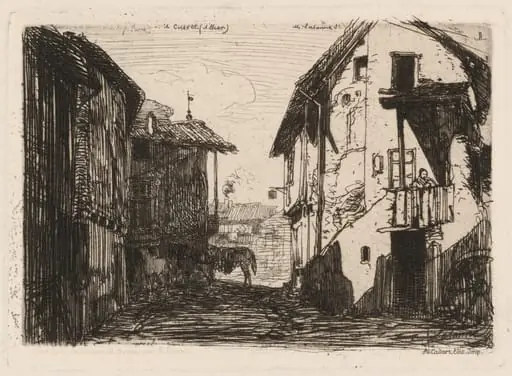 A Cusset (Allier)
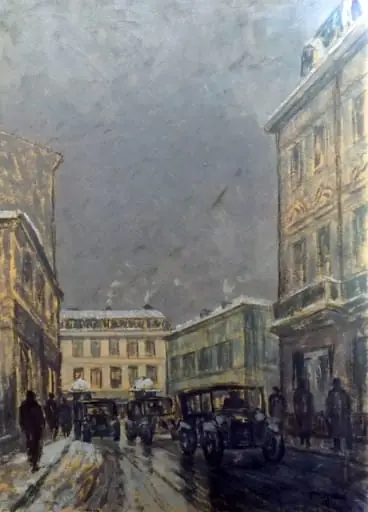 Cal(ea) Vict(oriei)
 Peisaj citadin cu figuri
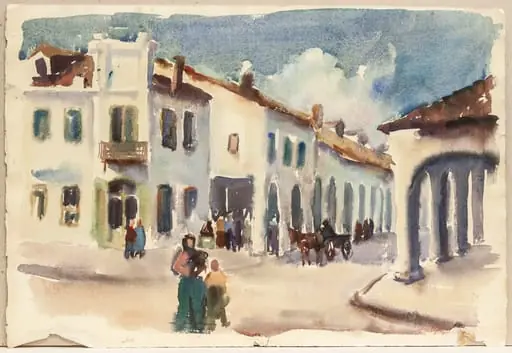 verso: Peisaj cu bărci
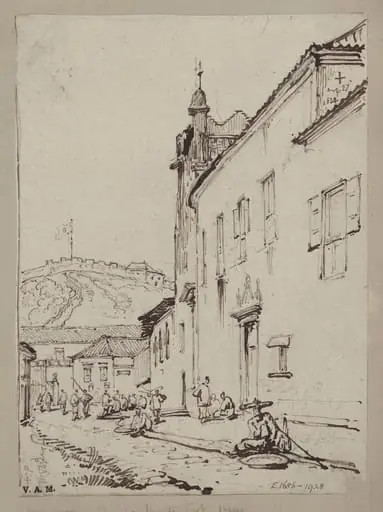 A view past the Misericordia Church towards Fort Monte, Macau
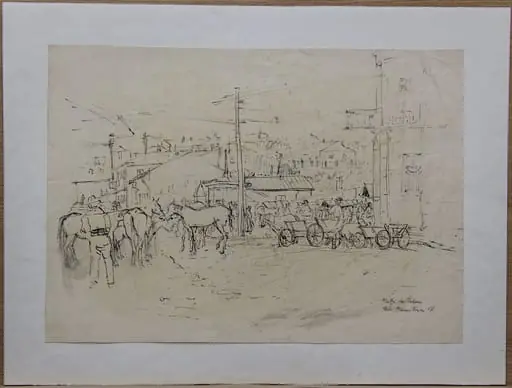 Piață la Tulcea
 Stradă în plin soare (Strada Mare Tulcea)