Artwork
Quayside Figures and a Length of Rope Attached to a Bollard
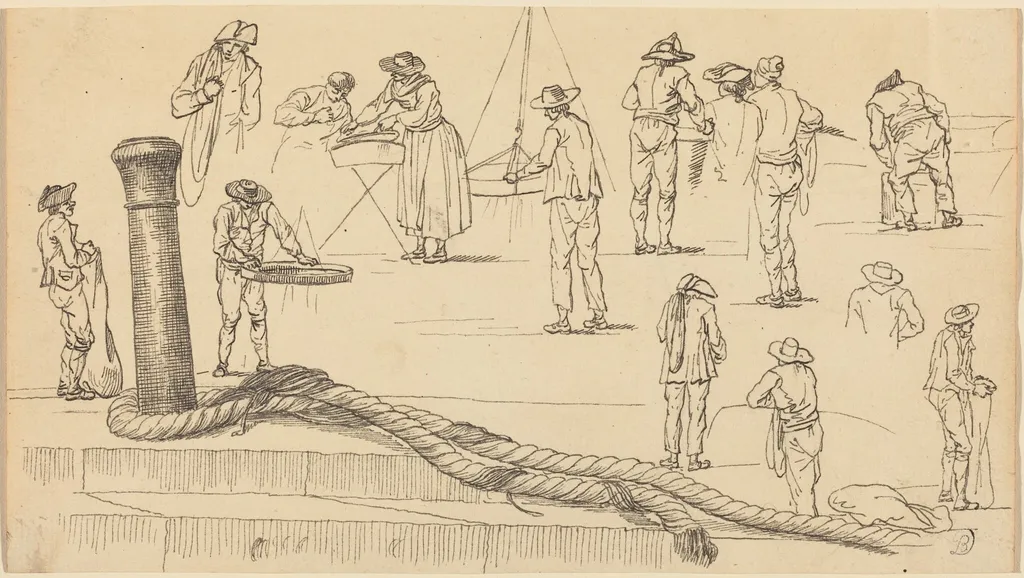
Quayside Figures and a Length of Rope Attached to a Bollard is an ink drawing by the Baroque artist Claude-Joseph Vernet. It dates from 1752 and is held in the collection of the National Gallery of Art.
About this work
Overview
Quayside Figures and a Length of Rope Attached to a Bollard is a drawing created by Claude-Joseph Vernet in 1752. It is executed in pen and black ink on laid paper.
Subject & Meaning
The drawing depicts a harbor scene with figures gathered around a dock, a rope secured to a bollard, and a small boat in the background. The casual attire and everyday activities of the figures suggest a representation of daily life.
Technique & Style
Vernet's use of pen and black ink on laid paper achieves a textured, detailed effect. The interplay of lines and shading creates depth and brings the scene to life, conveying a sense of quiet activity.
History & Provenance
Claude-Joseph Vernet, a French artist known for maritime scenes, produced this work in 1752. Born in 1714, Vernet was active until his death in 1789, and his children also became painters.
Artist & collection
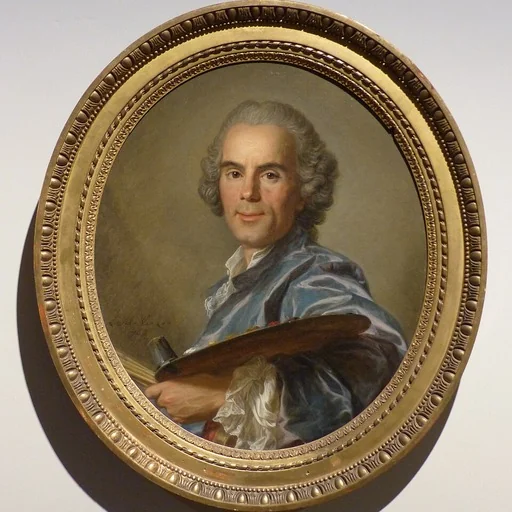
Artist
Claude-Joseph Vernet (French pronunciation: ; 14 August 1714 – 3 December 1789) was a French painter. His son Carle Vernet and daughter Marguerite Émilie Chalgrin were also painters.





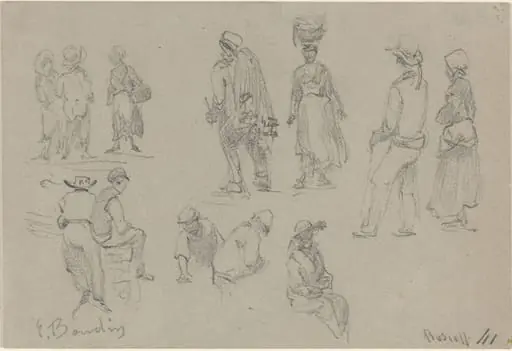 Provincial Figures
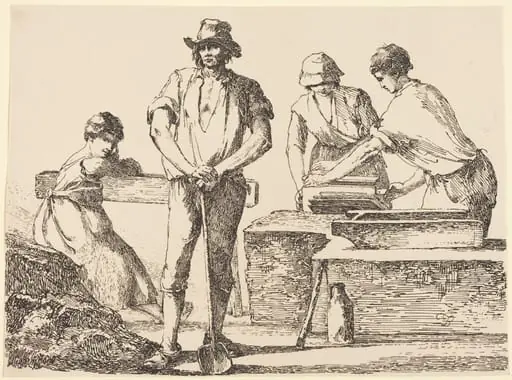 Tilemakers
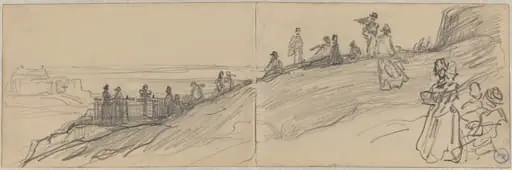 Figures on Top of a Hill, Overlooking the Sea
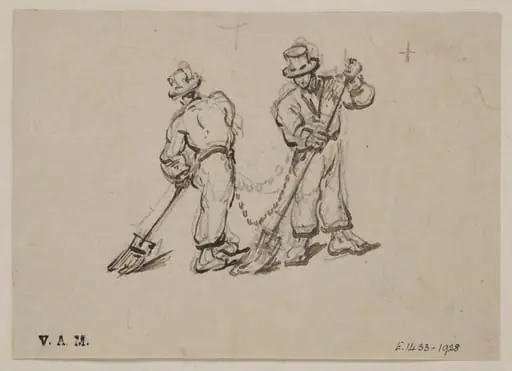 Two sweepers
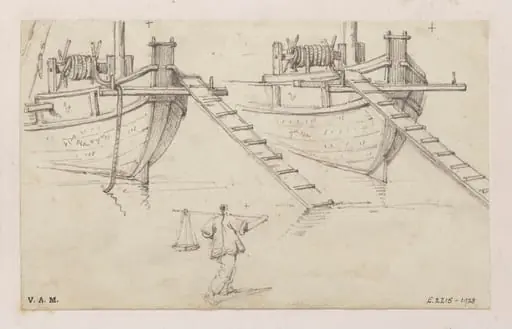 Two drawings of the prow of a Chinese boat
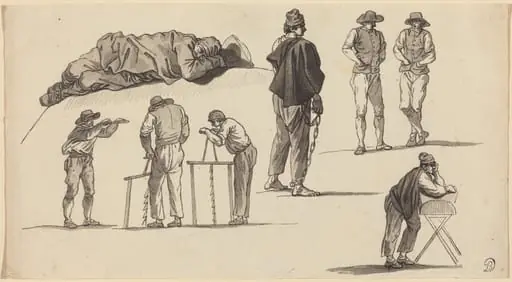 Figure Studies, Including One Man Sleeping on the Ground and Two Men Sawing
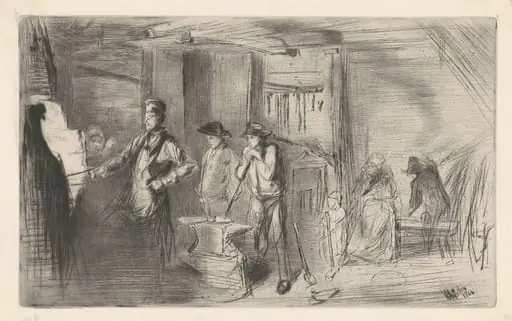 The Forge
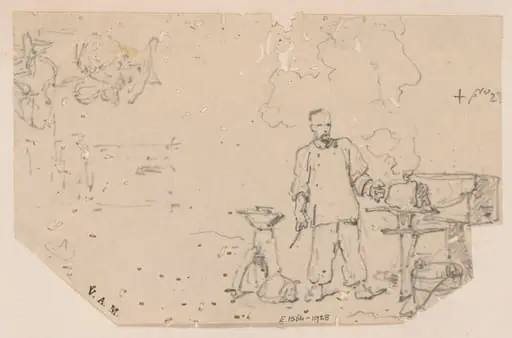 A blacksmith and a seated man
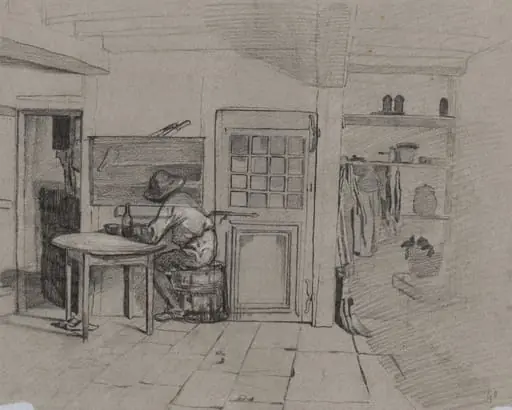 A Farmhouse Interior with a Boy at a Table
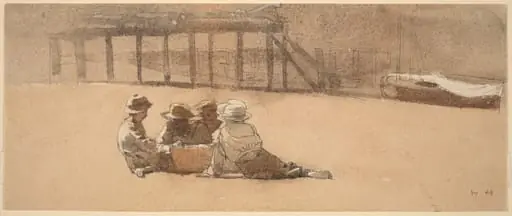 Four Boys on a Beach
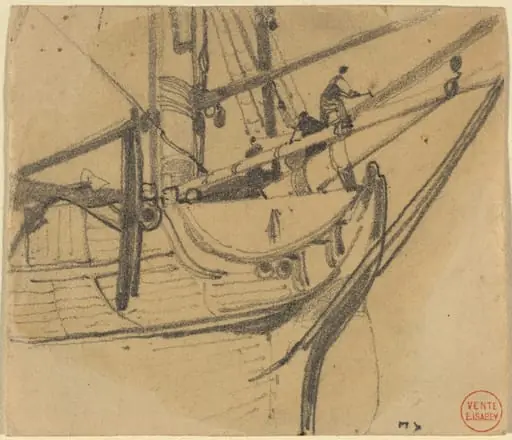 Men Repairing the Boom
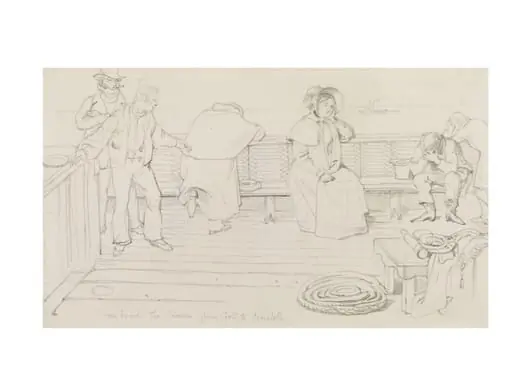 On board the severn from Cork to Bristol