Artwork
Untitled
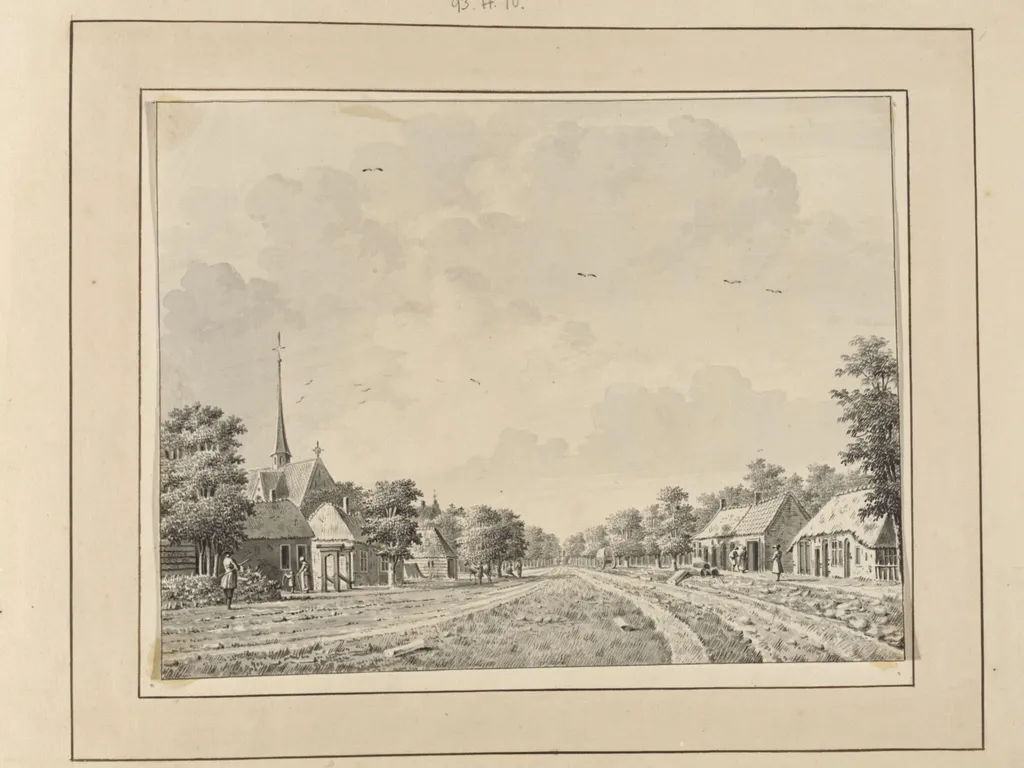
Untitled is a drawing by Dirk Verrijk. It dates from 1750 and is held in the collection of the Victoria and Albert Museum. Two related drawings, acquired by the museum on 20 February 1885 from dealer Edwin Parsons for £3.
About this work
Overview
The works are executed in pencil or ink on paper, with no signature or inscription identifying the artist.
Two related drawings, acquired by the museum on 20 February 1885 from dealer Edwin Parsons for £3.15s, were each marked with the number 1958 in red ink on the reverse. They are presented as a single unit, though their original connection remains unverified. The works are executed in pencil or ink on paper, with no signature or inscription identifying the artist. Their modest purchase price reflects their status as unattributed works at the time of acquisition.
Subject & Meaning
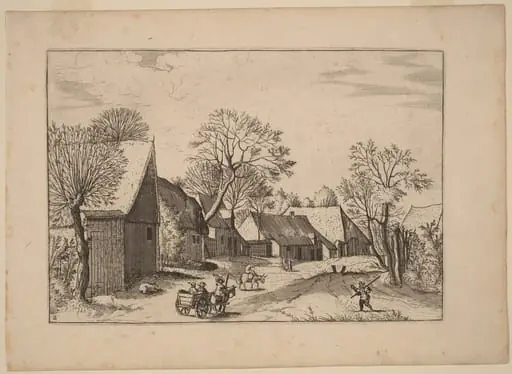
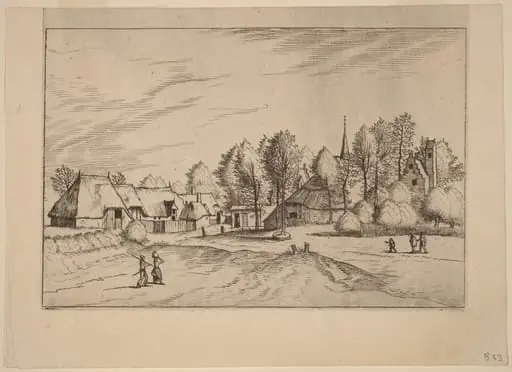
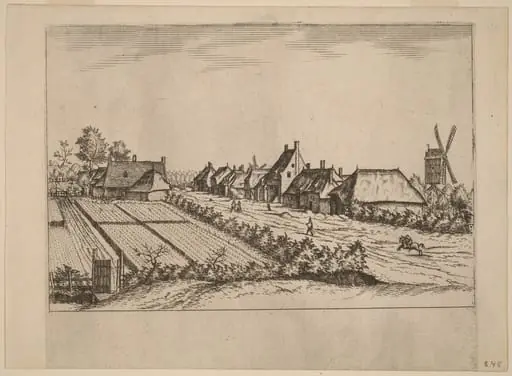
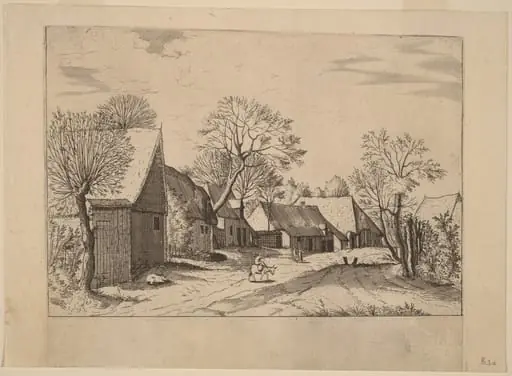
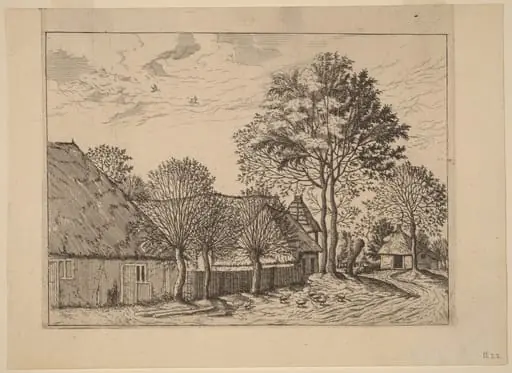
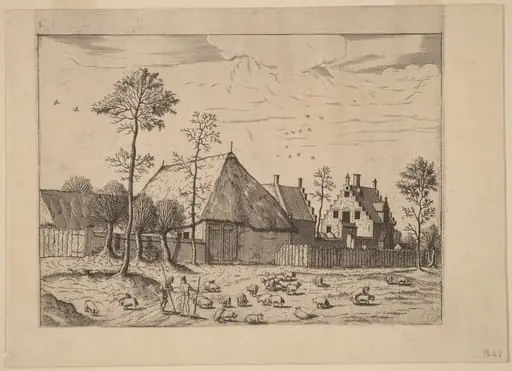
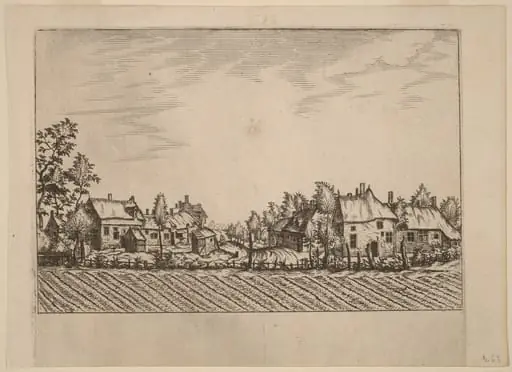
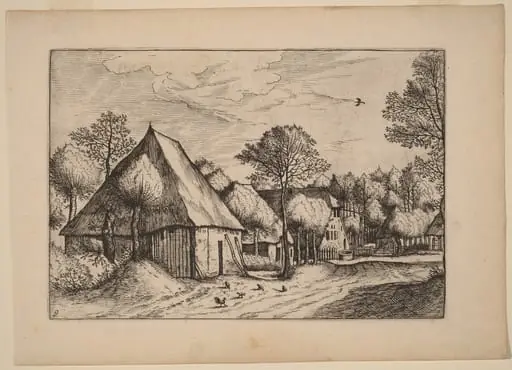
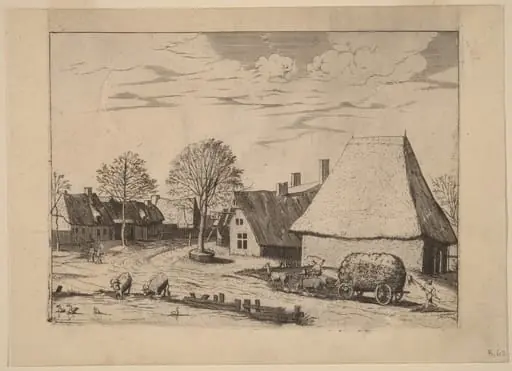
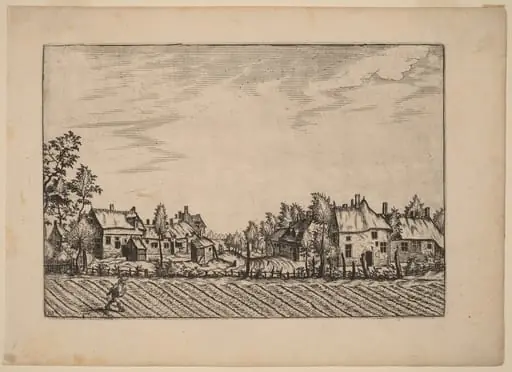
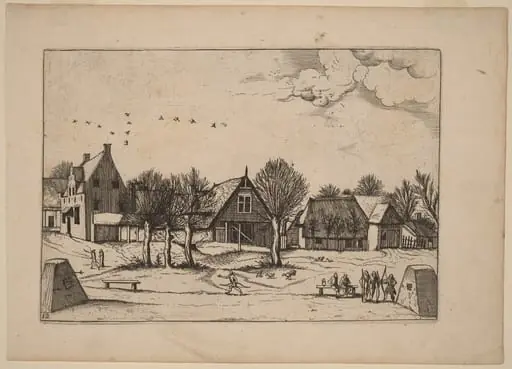
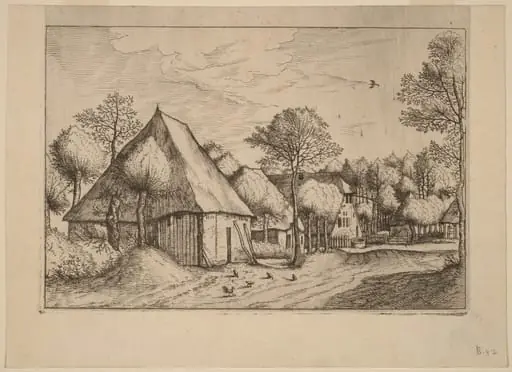
The drawings depict a quiet rural village under an overcast sky, centered on a winding dirt path that leads the eye into the distance. A church with a tall steeple anchors the left side, flanked by modest dwellings and scattered figures engaged in everyday movement. The absence of dramatic action or symbolic elements suggests a focus on ordinary life, evoking stillness and routine rather than narrative or allegory. The scene conveys a sense of calm, grounded in the rhythms of village existence.
Technique & Style
The artist employs cross-hatching and stippling to model form and suggest texture, particularly in the foliage, building surfaces, and shadowed areas. These methods create subtle gradations of tone without relying on wash or color, emphasizing line and density over chiaroscuro. The precision in rendering individual trees and rooflines indicates careful observation, while the loose handling of distant figures maintains a sense of atmospheric depth and spatial recession.
History & Provenance
The drawings entered the museum’s collection in 1885 through dealer Edwin Parsons, who likely sourced them from a private European collection. Their red ink numbering suggests they were part of a larger group cataloged by the dealer. No documentation links them to a known artist or earlier ownership prior to Parsons. Their unattributed status has persisted, and they remain cataloged as anonymous works from the 19th century.
Context
These drawings align with a 19th-century European tradition of topographical and genre sketches made by amateur or itinerant artists, often as records of place or personal study. Similar works circulated in sketchbooks or as standalone sheets, valued for their observational accuracy rather than artistic fame. The absence of a signature or date reflects a practice common among non-professional draftsmen who prioritized documentation over authorship.
Legacy
Though unattributed and modest in scale, the drawings contribute to the museum’s collection of 19th-century graphic works, offering insight into everyday visual culture beyond major artistic movements. Their preservation highlights the value placed on quiet, unassuming scenes of rural life. As examples of hand-drawn observation, they serve as reference points for studying techniques and aesthetic priorities in non-canonical drawing practices of the period.
Artist & collection
Artist
This Dutch draftsman worked in the mid-1700s, leaving behind delicate sheets of paper filled with lines.