Artwork
Farms
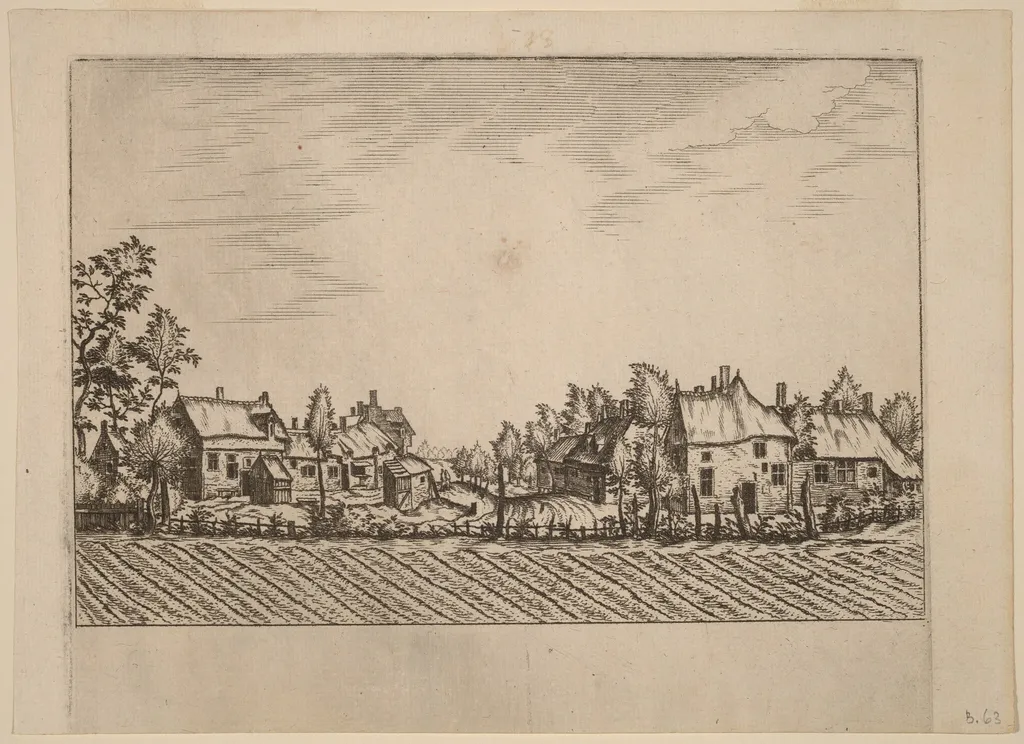
Farms is an ink print by the Renaissance artist Lucas van Doetechum. It dates from 1560 and is held in the collection of the National Gallery of Art.
About this work
Overview
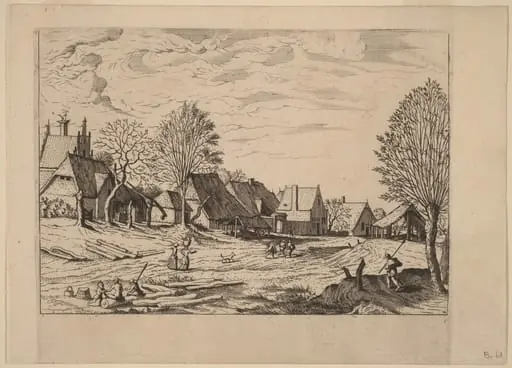
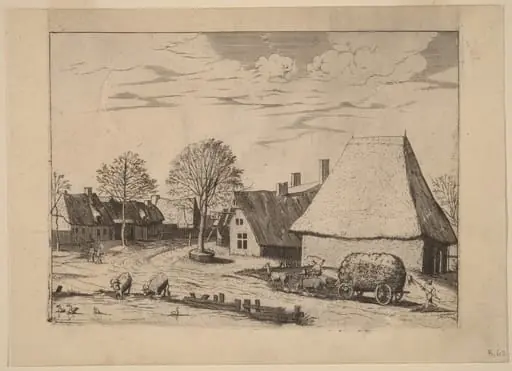
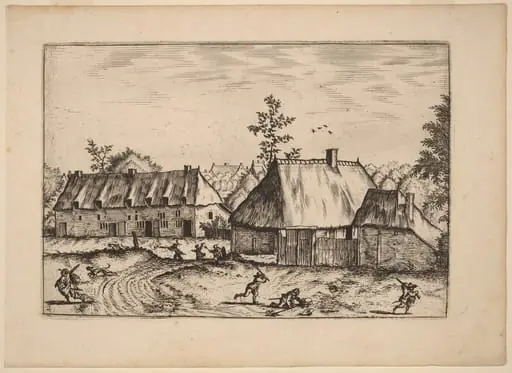
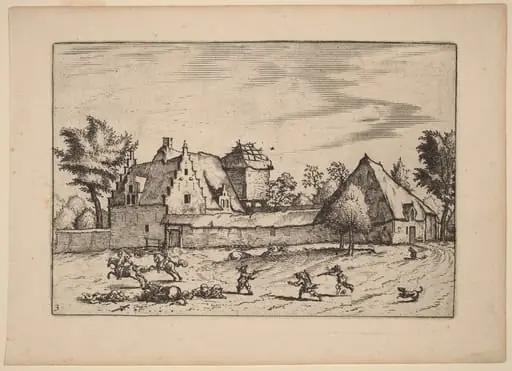
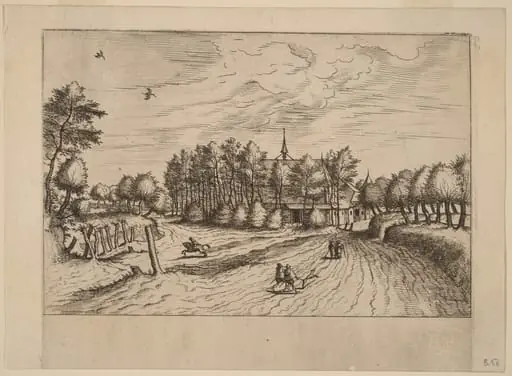
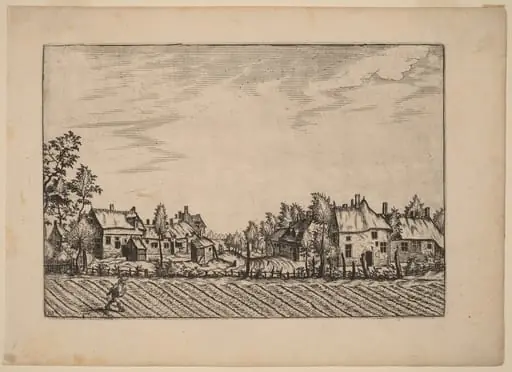
“Farms” is a small print produced in 1560 by the Dutch artist Lucas van Doetechum. Executed as an etching that was later enhanced with engraving, the work measures only a few centimeters across and exemplifies the modest scale typical of mid‑sixteenth‑century printmaking. Its composition presents a tranquil rural scene rendered in monochrome, using a network of lines to suggest form and space.
Subject & Meaning
The image depicts a quiet village set within a cultivated landscape. Simple dwellings with low‑pitched roofs and occasional chimneys line a modest street, while a freshly plowed field occupies the foreground. Sparse, stylised clouds drift across an otherwise empty sky, emphasizing the everyday labor and calm of agrarian life without overt narrative or allegorical content.
Technique & Style
Broad, darker strokes convey shadowed planes, whereas finer, lighter lines articulate architectural details and foliage.
Van Doetechum employed a combination of etching and later engraving to achieve varied line qualities. Broad, darker strokes convey shadowed planes, whereas finer, lighter lines articulate architectural details and foliage. This hybrid approach, common among Northern European printmakers of the period, allowed the artist to control tonal depth and texture within the constraints of a single‑plate print.
History & Provenance
The print is attributed to Lucas van Doetechum, a relatively obscure figure whose surviving oeuvre consists mainly of modest prints such as this one. Created in 1560, “Farms” likely circulated among collectors of the Low Countries interested in depictions of rural life. Its provenance traces through several European private collections before entering a museum holding of early modern prints.
Artist & collection