Artwork
Francis Bacon, Viscount Saint Albans
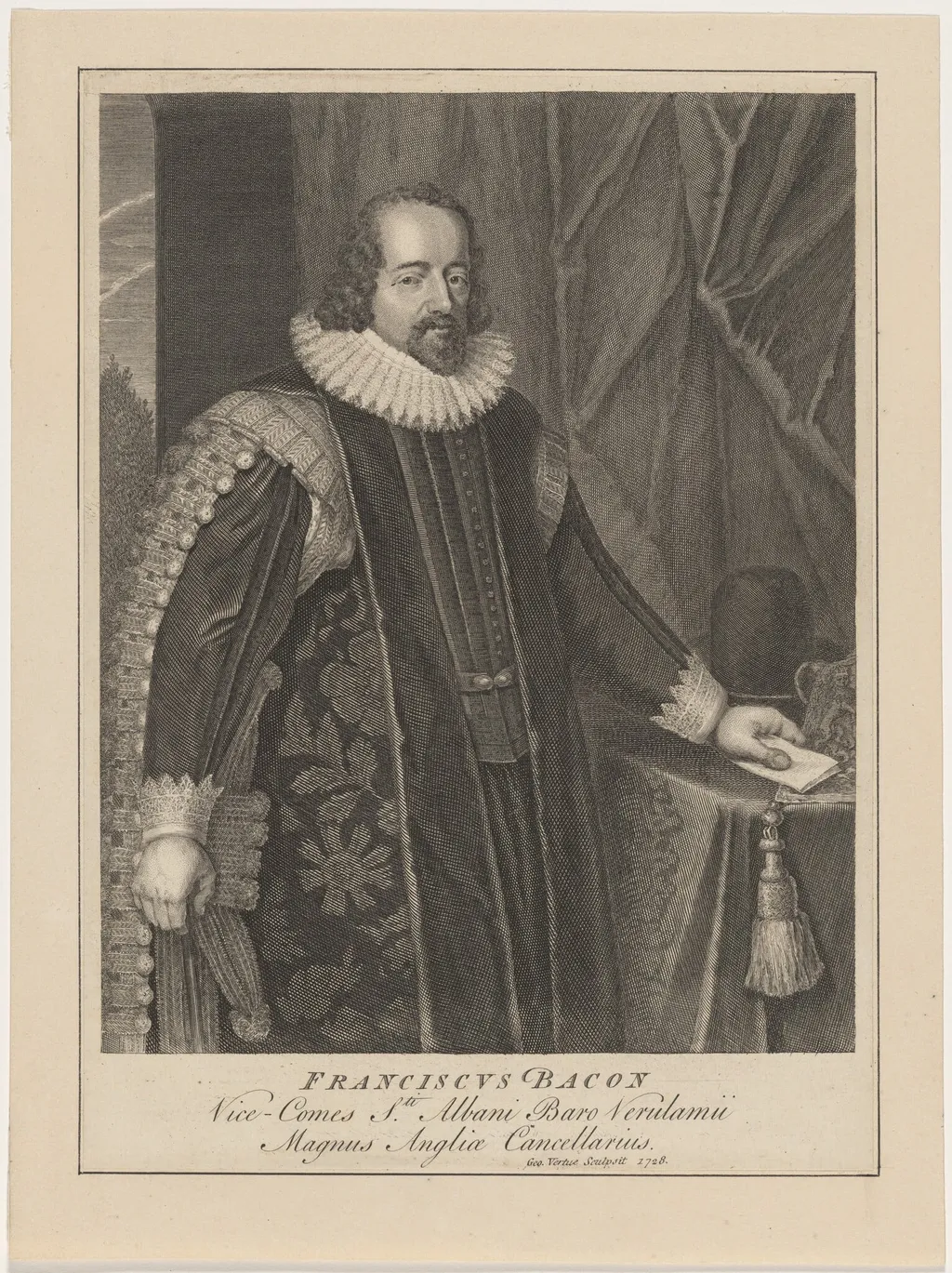
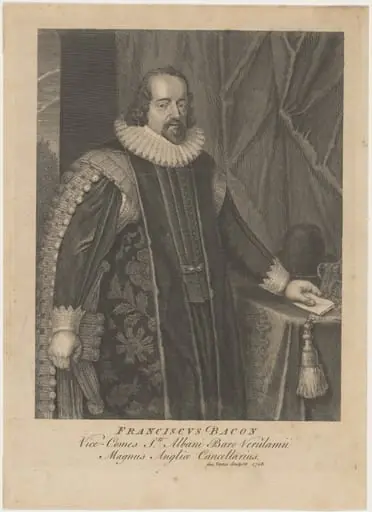
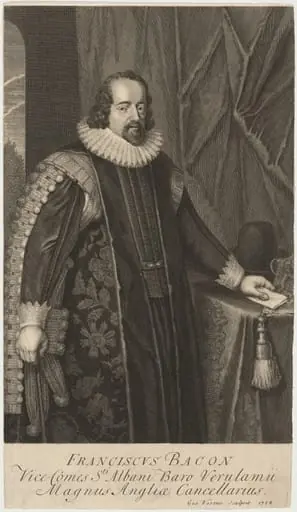
Francis Bacon, Viscount Saint Albans is an ink print by the Baroque artist George Vertue. It dates from 1728 and is held in the collection of the National Gallery of Art.
About this work
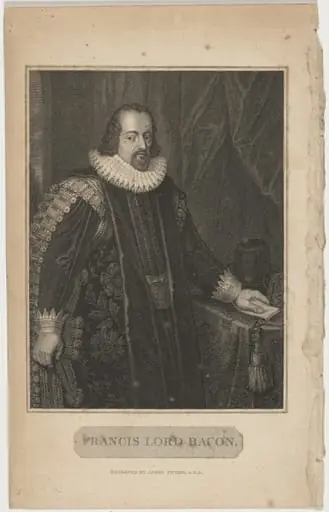
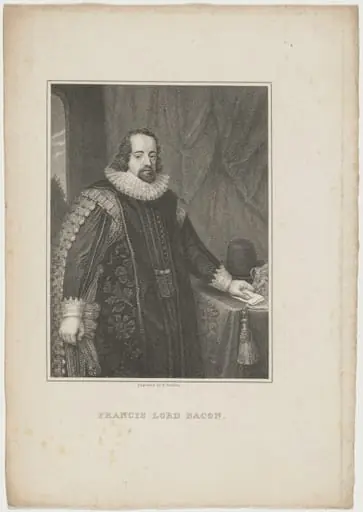
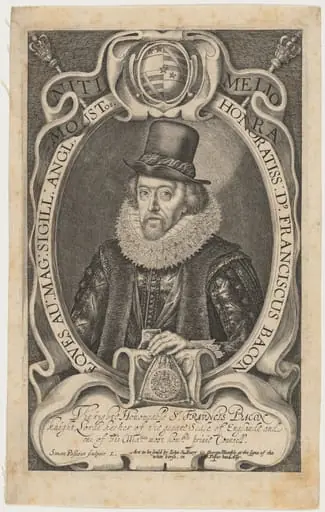
His right hand rests on a table with a feather quill and some papers, while his left hand holds a long glove.
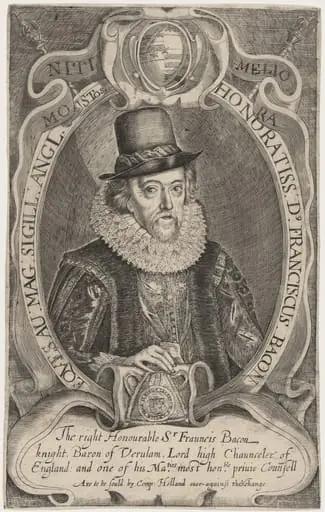
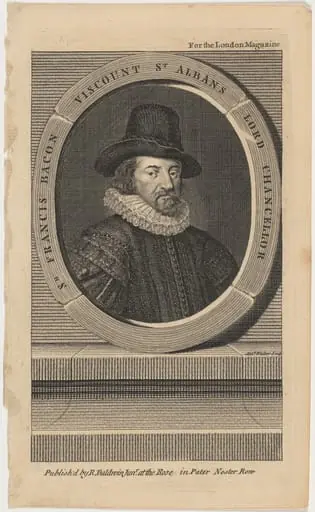
This is a black-and-white engraving of a man in fancy 17th-century clothes. He’s wearing a high-collared coat with ruffles, a wide-brimmed hat, and a chain around his neck. His right hand rests on a table with a feather quill and some papers, while his left hand holds a long glove.
The text below his name calls him "Viscount Saint Albans" and lists his titles. The artist’s name, George Vertue, is signed in the corner with the year 1728.
This is an example of engraving, a technique that uses sharp tools to carve lines into metal plates.
Overview
This 1728 engraving by George Vertue depicts Francis Bacon, Viscount Saint Albans, a prominent English philosopher and statesman. Rendered in monochrome, the portrait follows the conventions of early 18th-century printmaking, emphasizing formal dignity through precise line work. The image was produced by incising lines into a metal plate, then inked and pressed onto paper to create a reproducible image. Vertue’s signature and the date appear in the lower corner, affirming authorship and context.
Subject & Meaning
The portrait presents Bacon in the attire of a 17th-century intellectual and nobleman: a high-collared coat, ruffled cuffs, and a wide-brimmed hat. A chain of office rests around his neck, signaling his status. His right hand rests near a quill and papers, suggesting scholarly activity, while the left holds a glove—an emblem of authority. The inscription below reinforces his titles, anchoring the image in his public identity rather than personal expression.
Technique & Style
Executed in the engraving technique, the image relies on fine, controlled lines carved into a copper plate to define form and texture. Vertue uses cross-hatching and delicate strokes to render fabric folds, facial features, and the sheen of metal. The composition is symmetrical and restrained, typical of portraiture in print form during the period. The absence of color and the emphasis on linear precision reflect the medium’s function in disseminating likenesses of notable figures.
History & Provenance
Created in 1728, the engraving was made nearly a century after Bacon’s death, reflecting a later interest in commemorating early modern thinkers. George Vertue, a noted antiquarian and printmaker, specialized in historical portraiture and often reproduced images from earlier sources. This work likely drew from existing paintings or drawings of Bacon, serving as a printed record for scholars and collectors rather than a contemporary likeness.
Context
In the early 18th century, engraved portraits were widely circulated among the educated elite as tools of intellectual commemoration. Bacon, though deceased, remained a key figure in the history of empirical philosophy. Vertue’s print contributed to a broader cultural project of preserving and honoring England’s scientific and political heritage through visual means, aligning with the period’s growing interest in historical documentation.
Legacy
The engraving endures as a representative example of 18th-century portraiture in print, illustrating how historical figures were visually codified long after their lifetimes. It reflects the role of engravers like Vertue in shaping public memory through standardized imagery. Though not a direct likeness, it became one of the most widely recognized visual representations of Bacon, influencing later depictions in textbooks and scholarly works.
Artist & collection