Artwork
Francis Bacon
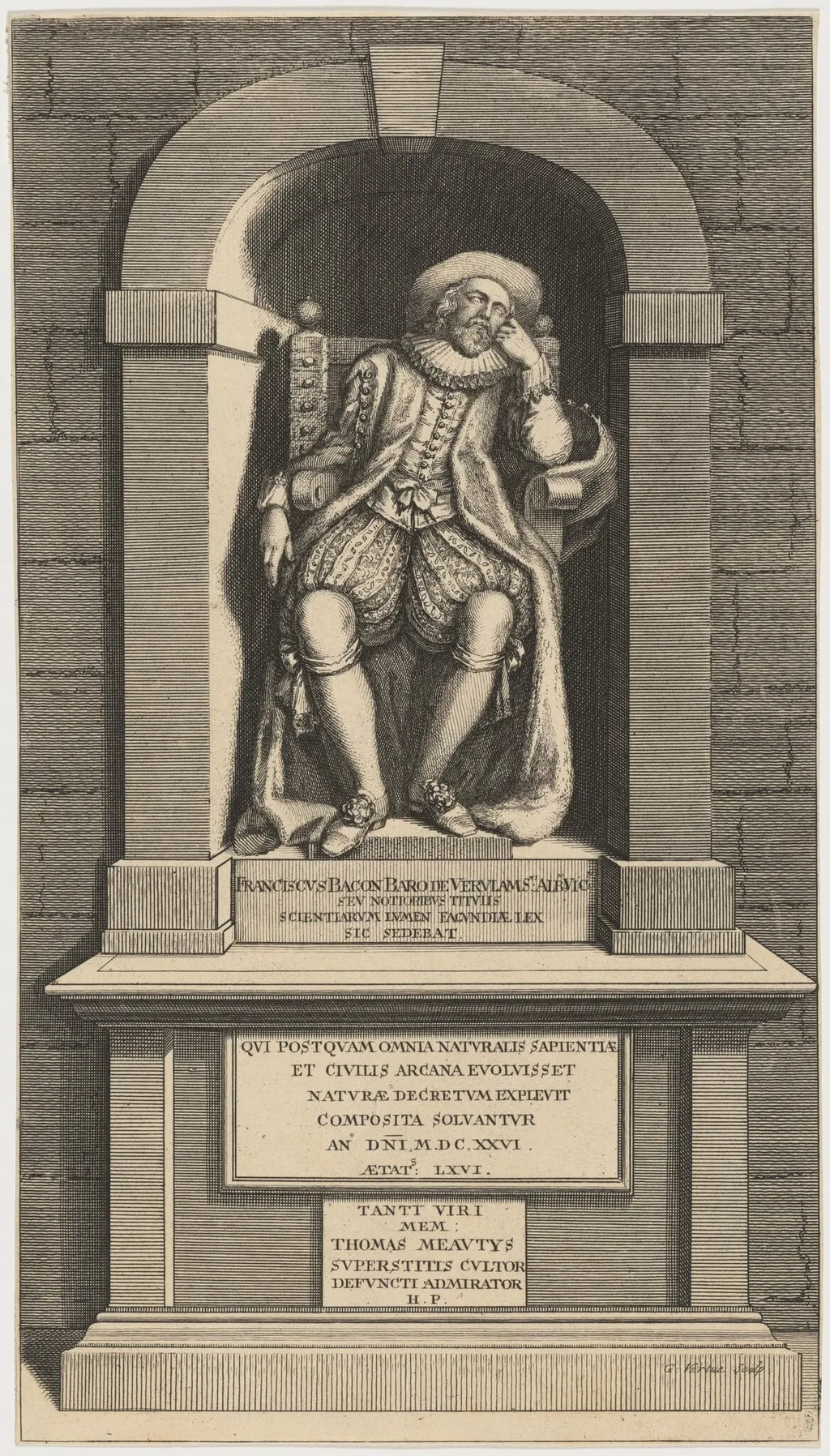
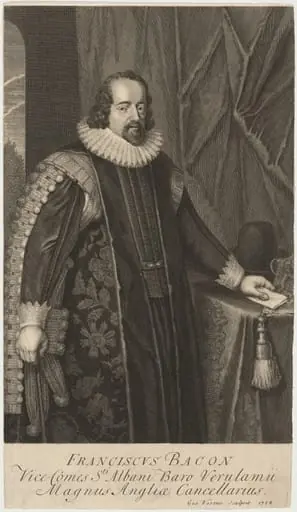
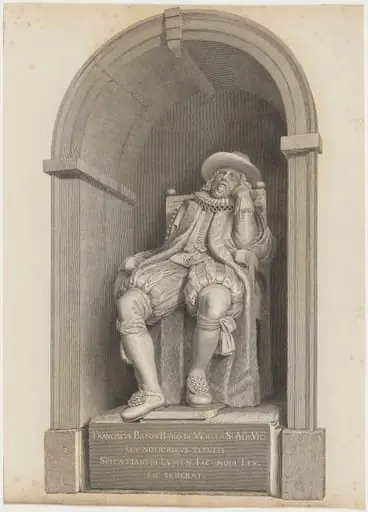
Francis Bacon is an ink print by the Baroque artist George Vertue. It dates from 1720 and is held in the collection of the National Gallery of Art.
About this work
Overview
George Vertue’s 1720 engraving presents a portrait of the English philosopher and statesman Francis Bacon. Executed in black and white, the image captures Bacon seated in a chair, his posture composed and scholarly, reflecting the conventions of early eighteenth‑century portraiture.
Subject & Meaning
The sitter is shown wearing a broad ruffled collar, a long buttoned coat, and a hat, with his legs crossed and a book held in one hand while his chin rests on the other. These attributes underscore Bacon’s intellectual reputation and his role as a writer and thinker.
Technique & Style
Vertue employs fine line work to render the folds of fabric, the texture of the stone‑like background, and subtle shadows that give the figure a three‑dimensional presence. The engraving’s meticulous hatching reflects the precision typical of printmaking in the period.
History & Provenance
Created in 1720, the print was likely produced for a learned audience familiar with Bacon’s contributions to philosophy and science. It has survived as a representative example of Vertue’s work as an engraver and as a visual record of Bacon’s enduring legacy.
Context
During the early eighteenth century, portrait engravings served to disseminate images of notable figures beyond the reach of painted portraits. Vertue’s depiction of Bacon aligns with this practice, offering a reproducible likeness for books, pamphlets, and scholarly collections.
Artist & collection

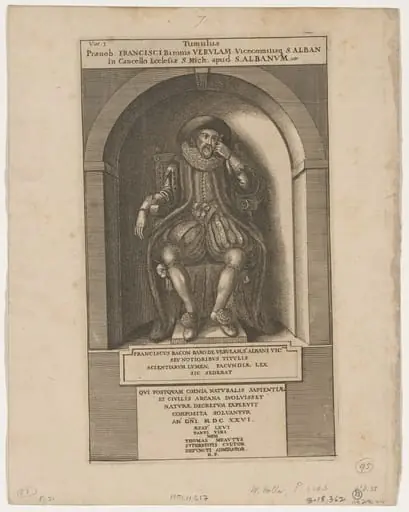 Francis Bacon in a Niche
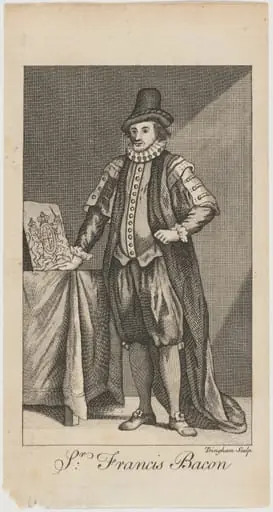 Sir Francis Bacon
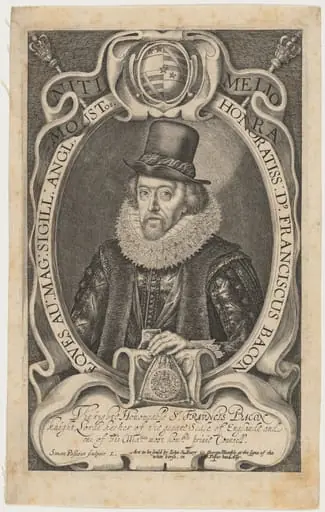 Sir Francis Bacon
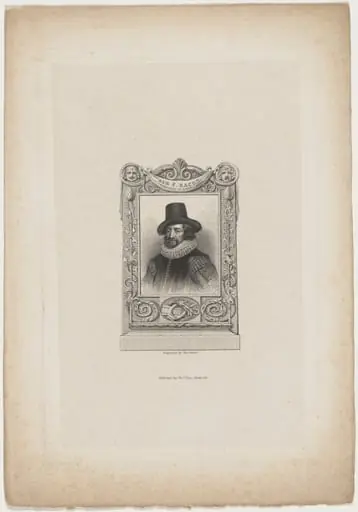 Sir Francis Bacon
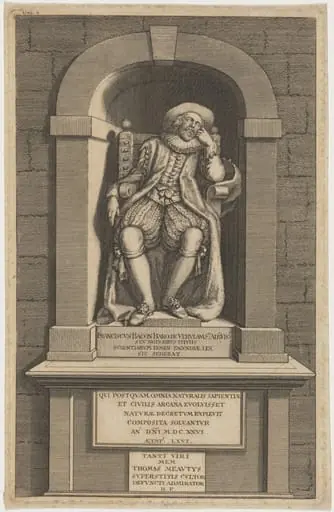 Monument of Bacon in Saint Michael's Church, Saint Albans
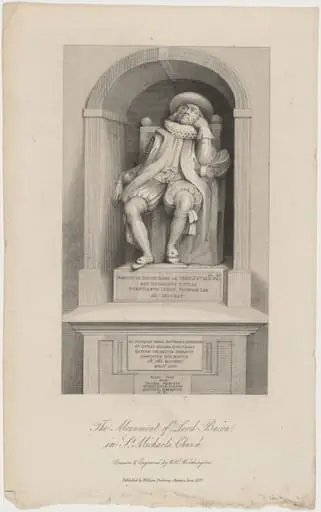 Monument of Lord Bacon in Saint Michael's Church
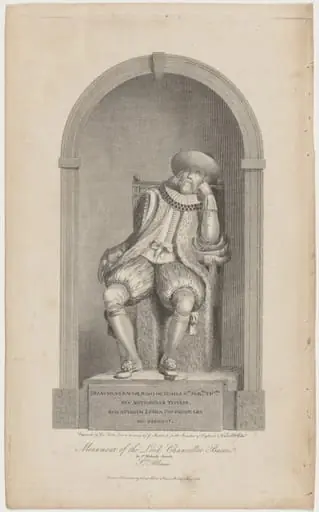 Monument of the Lord Chancellor Bacon, Saint Michael's Church
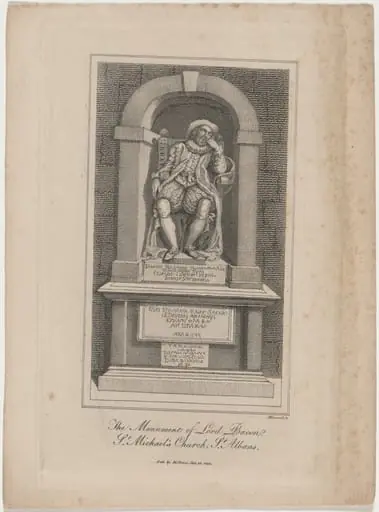 The Monument of Lord Bacon, Saint Michael's Church
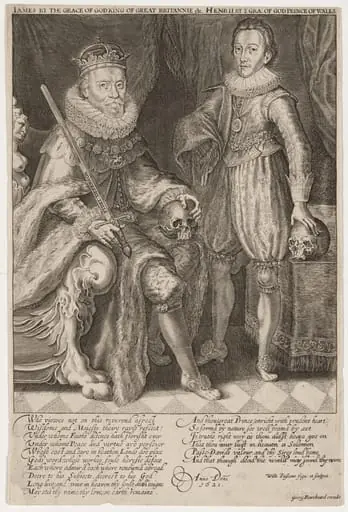 James I, King of England and Charles, Prince of Wales
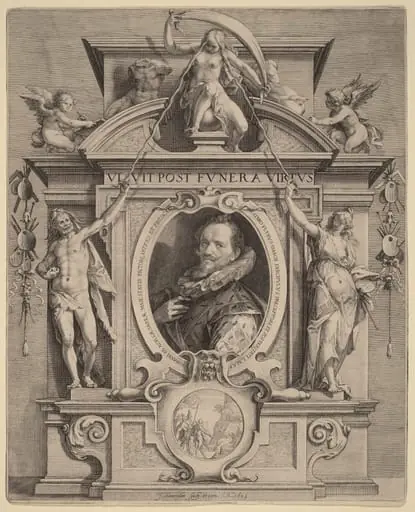 Hans van Aachen
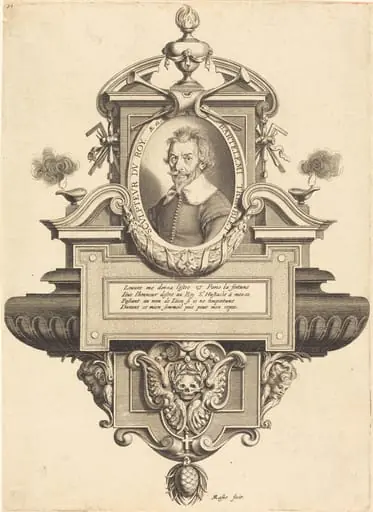 Barthelemy Tremblay
 Francis Bacon