Artwork
Francis Bacon, Viscount Saint Albans
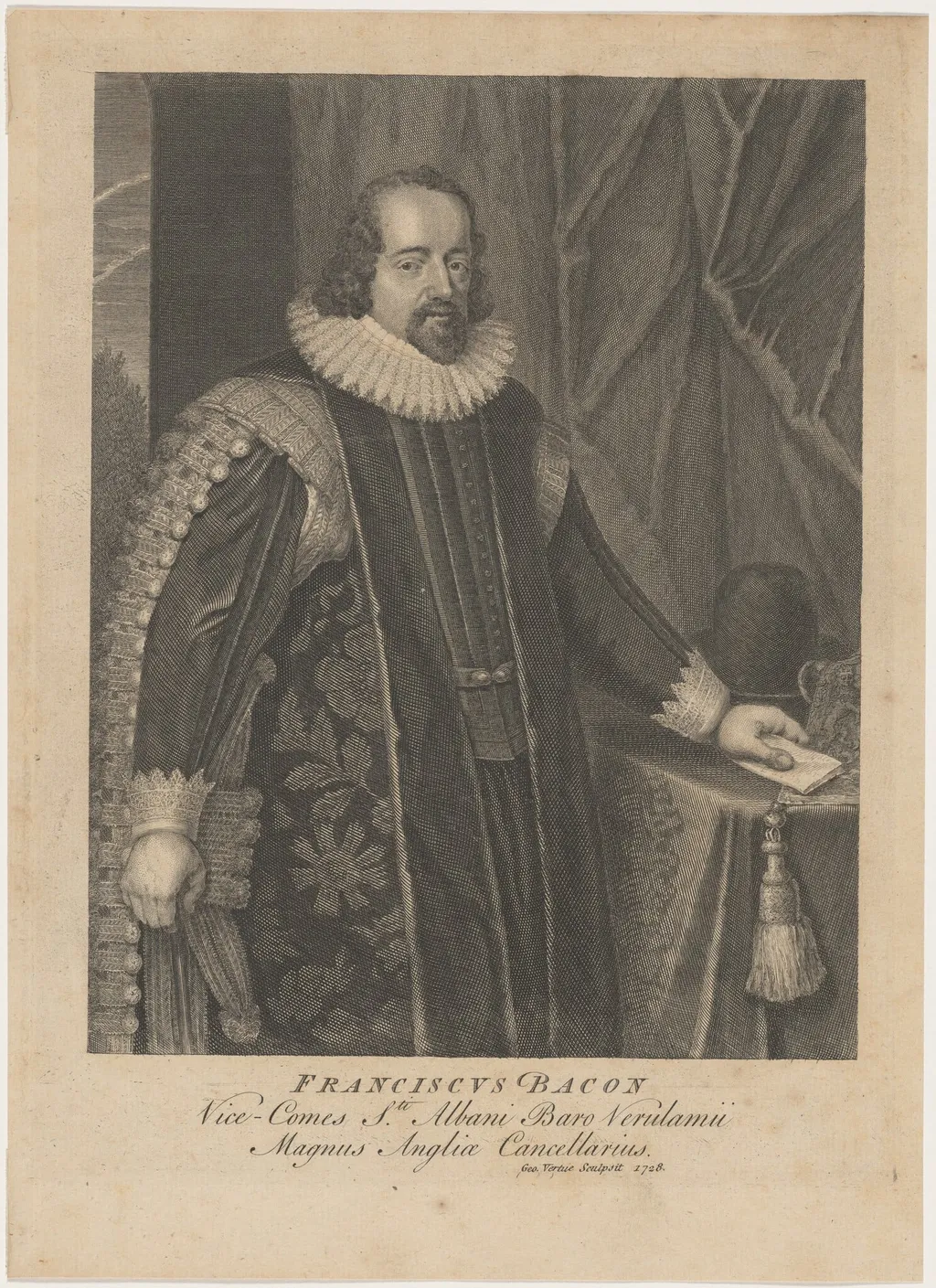
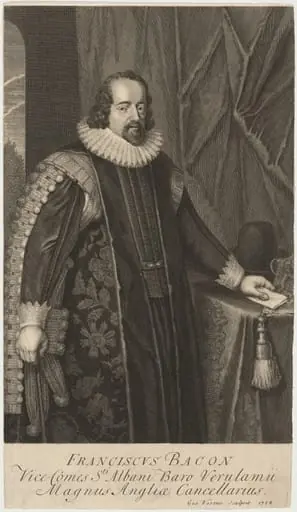
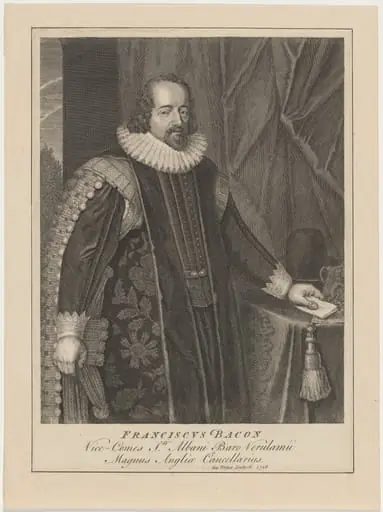
Francis Bacon, Viscount Saint Albans is an ink print by the Baroque artist George Vertue. It dates from 1728 and is held in the collection of the National Gallery of Art.
About this work
Overview
George Vertue’s 1728 engraving portrays Francis Bacon, Viscount Saint Albans, in his capacity as Lord Chancellor of England. Executed in black‑and‑white, the print presents a formal portrait that emphasizes Bacon’s official status through his attire and regalia.
Subject & Meaning
The figure is shown in elaborate early‑seventeenth‑century dress, featuring a high‑collared robe trimmed with fur, a decorative chain, and a crown held in his left hand. A quill and a rolled document rest in his right hand, symbols of his legal authority and scholarly pursuits.
Technique & Style
Vertue employed fine line work and delicate shading to render the textures of fabric, metal, and fur. The engraving’s precise incisions in the metal plate allow for subtle gradations of tone, characteristic of early eighteenth‑century printmaking.
History & Provenance
Created in 1728, the print reflects the period’s interest in commemorating notable statesmen. As a work by the English antiquarian and engraver George Vertue, it forms part of his broader output documenting prominent figures of the era.
Context
Francis Bacon served as Lord Chancellor during a time when the office held considerable political and judicial power. The portrait’s iconography—crown, chain, and legal implements—reinforces his role within the governance of England in the early modern period.
Artist & collection