Artwork
The Zeughaus, Danzig
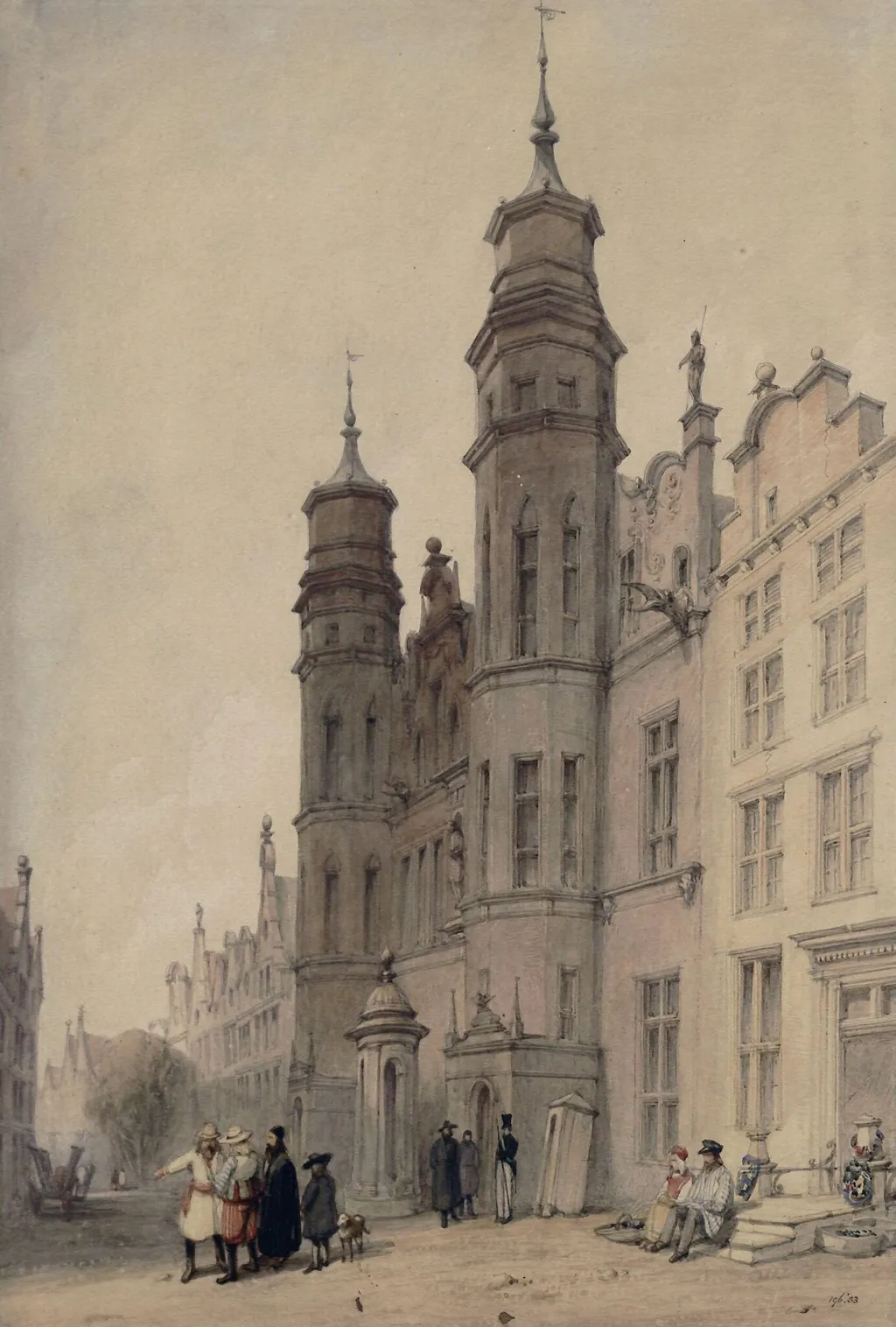
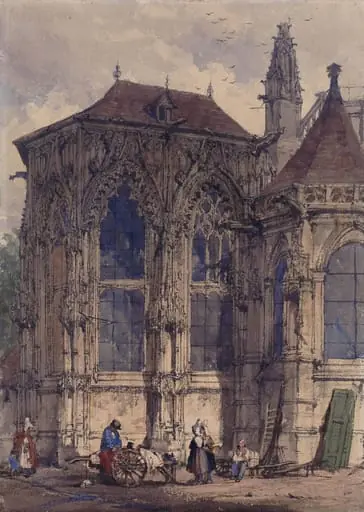
The Zeughaus, Danzig is a watercolor work on paper by the British Romanticist artist Alfred Gomersal Vickers. It dates from 1830 and is held in the collection of the Victoria and Albert Museum.
About this work
Overview
Painted in 1830 by Alfred Gomersal Vickers, this watercolour depicts the Zeughaus, a historic arsenal in Danzig (now Gdańsk). Rendered in delicate washes, the work captures the building’s imposing stone structure under a muted, overcast sky. The composition emphasizes architectural detail over human activity, with figures reduced to small, quiet presences in the foreground.
Subject & Meaning
The sparse human figures and calm atmosphere convey a sense of quiet dignity, reflecting the building’s role as a silent witness to political change.
The Zeughaus served as a military storage facility in the Polish-Lithuanian Commonwealth and later under Prussian rule. Vickers’ depiction focuses on its enduring physical presence rather than its function, suggesting an interest in historical continuity. The sparse human figures and calm atmosphere convey a sense of quiet dignity, reflecting the building’s role as a silent witness to political change.
Technique & Style
Vickers employed transparent watercolour washes to model the building’s weathered stone surfaces and intricate stonework. Sharp lines define the towers’ spires and window tracery, while soft gradients in the sky and ground create atmospheric depth. The restrained palette—dominated by greys and muted earth tones—enhances the sense of stillness and historical weight.
History & Provenance
The painting was created during Vickers’ travels in the Baltic region, a period when British artists documented European architecture. It entered the Victoria and Albert Museum’s collection in the 19th century, likely through acquisition or donation. Its preservation reflects early Victorian interest in architectural records of Central European cities undergoing transformation.
Context
In the 1830s, Danzig was part of the Kingdom of Prussia, and its historic buildings were increasingly viewed as cultural relics. Vickers’ watercolour aligns with a broader trend among British artists who recorded continental architecture as both documentary and aesthetic subjects, often for private collections or institutional archives.
Legacy
The painting remains a modest but valuable record of the Zeughaus before later 19th-century renovations. It contributes to the visual archive of Baltic urban heritage, offering insight into how foreign observers interpreted the region’s architectural identity during a period of shifting national boundaries and cultural redefinition.
Own this work as a print
Artist & collection
Artist
Alfred Gomersal Vickers painted English landscapes and seascapes in watercolor around the 1830s.

 Rouen
Rouen Hôtel du Grand Cerf, Les Andelys
 Utrecht: The Cathedral Tower
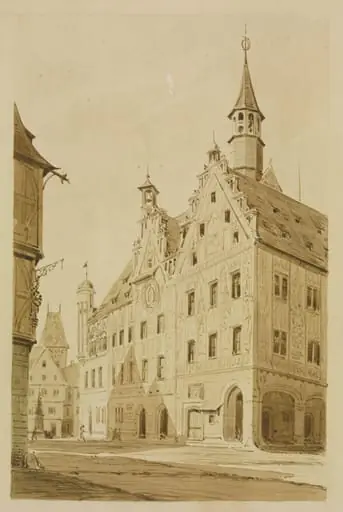 Topographical drawing
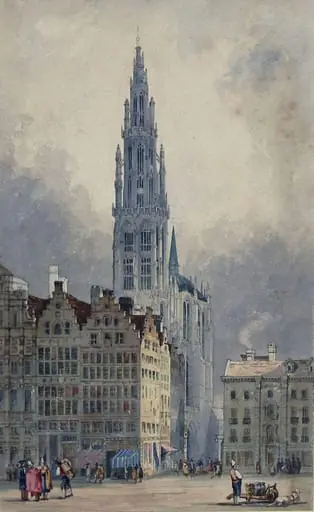 Cathedral Tower in Antwerp
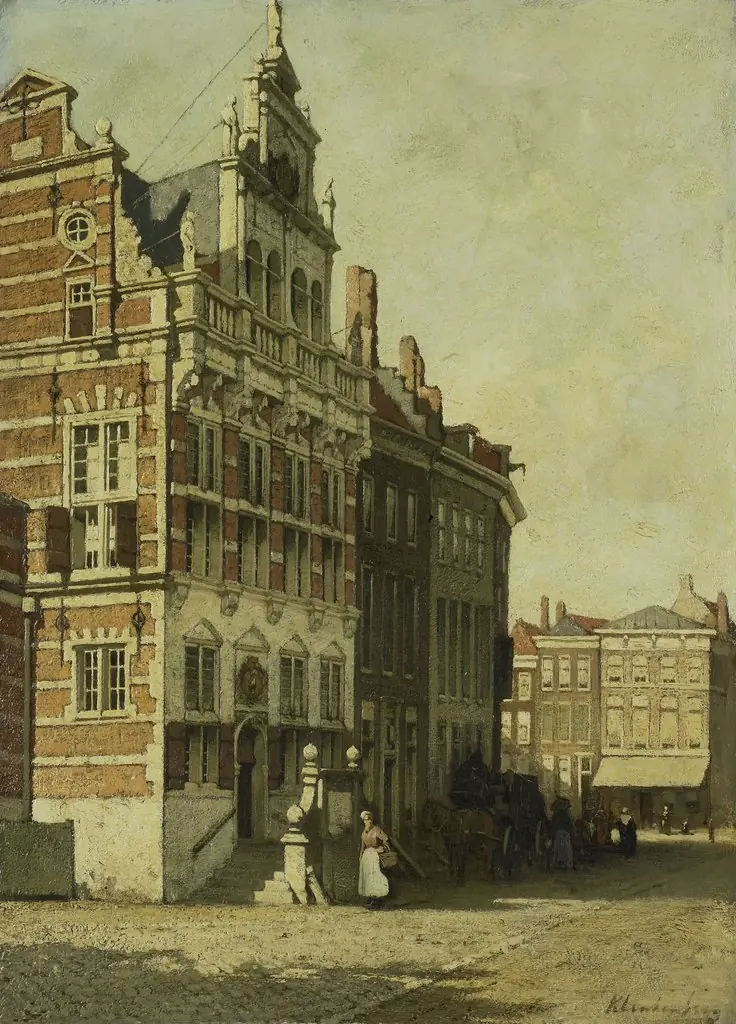 The Town Hall, The Hague
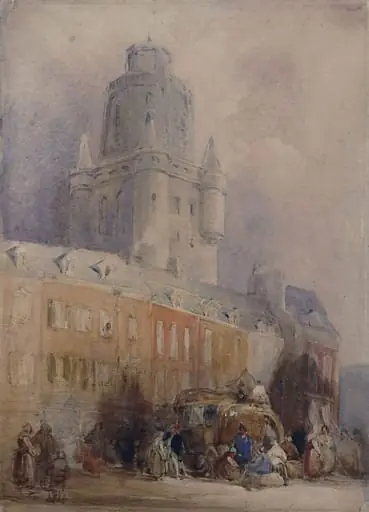 Scene in a continental town
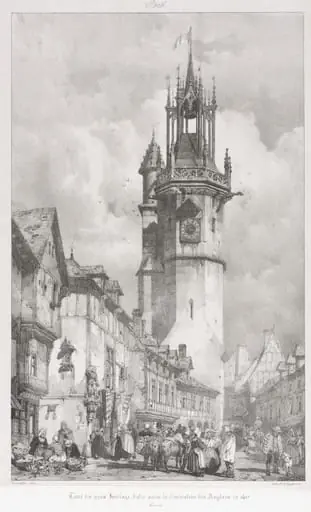 Voyages Pittoresques et Romantique dans l'Ancienne France, Normandie: Tour du Gros-Horlage, Évreux
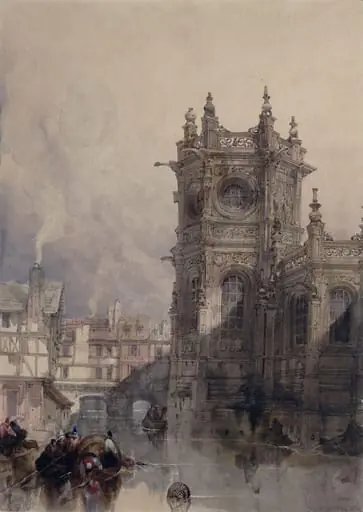 Church of St. Pierre, Caen
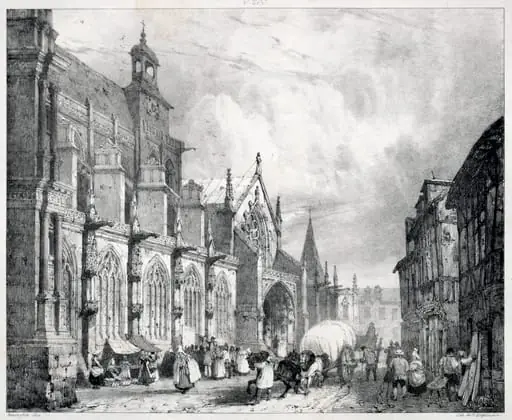 Voyages pittoresques et romantiques dans l'ancienne France, Normandie: Église de Saint Gervais et Saint Protais à Gisors
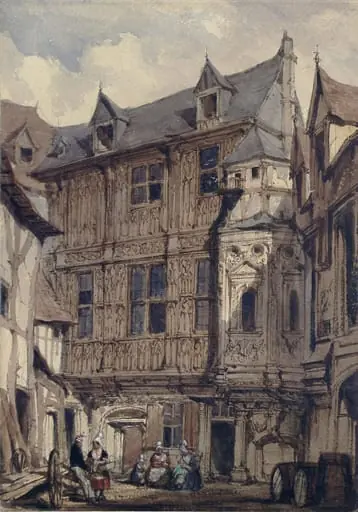 Rouen, St. Etienne
 East End of the Church of St. Jacques, Dieppe