Artwork
Arena in Arles
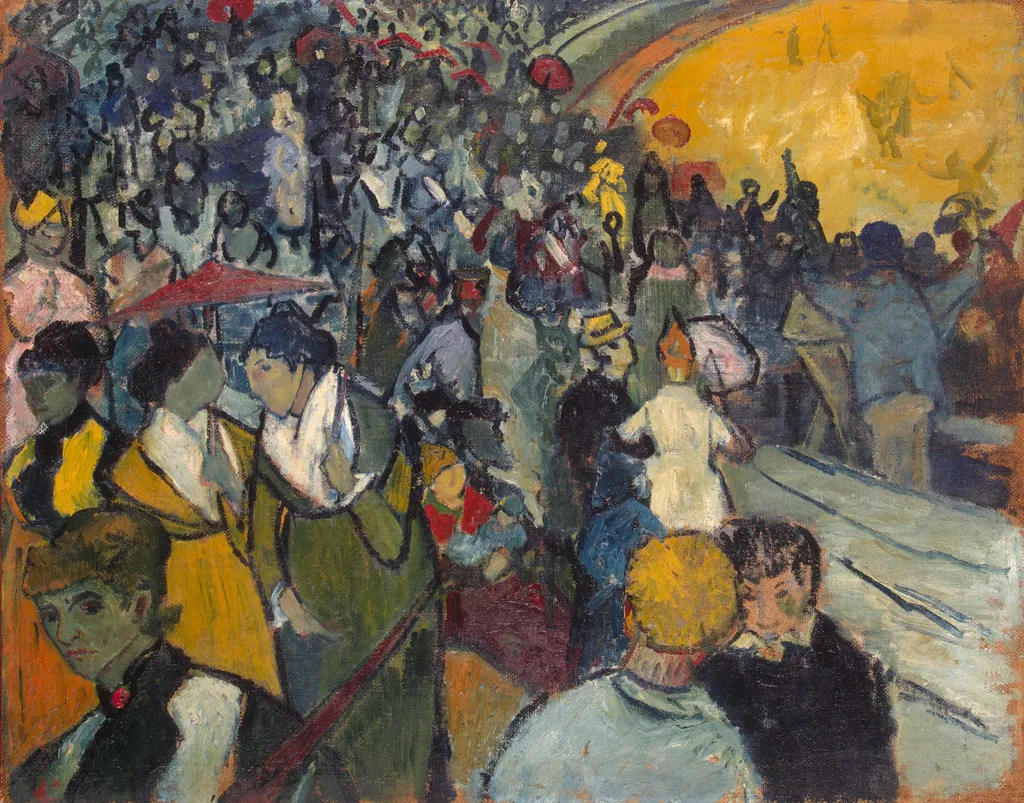
Arena in Arles is an oil painting by the Post-Impressionist artist Vincent van Gogh. It is held in the collection of the Hermitage Museum.
About this work
Overview
Painted in late 1888 in Arles, Vincent van Gogh’s Les Arènes depicts a bullfight arena filled with spectators under a vivid yellow sky.
Painted in late 1888 in Arles, Vincent van Gogh’s Les Arènes depicts a bullfight arena filled with spectators under a vivid yellow sky. Created after the official season had ended, the work was composed from memory rather than direct observation. Van Gogh worked indoors, following Paul Gauguin’s advice to rely on imagination and emotional recollection. The surface is thinly painted in places, revealing the coarse jute canvas beneath, suggesting the piece may have been left incomplete.
Subject & Meaning
The scene captures a crowd gathered in the arena, their figures rendered with minimal detail but strong silhouettes. Among them, figures believed to be members of the Roulin family appear, including a woman in traditional Arlésienne dress whose features resemble Madame Ginoux. The painting evokes the ritualized spectacle of the bullfight, possibly resonating with van Gogh’s fascination with symbolic acts of sacrifice and honor, though the connection to the bull’s ear-cutting custom remains speculative and historically uncertain.
Technique & Style
Van Gogh applied oil paint in uneven, textured strokes, building color through layered hues of red, blue, and green without blending. The brushwork is energetic and visible, creating a sense of movement and tension across the canvas. Thin areas expose the raw jute, contrasting with denser patches of pigment. This uneven application, sometimes called impasto, enhances the vibrancy of the palette and contributes to the painting’s agitated, almost pulsating surface.
History & Provenance
Created during van Gogh’s stay in The Yellow House, shortly before his mental health crisis culminated in the ear-cutting incident, the painting reflects a period of intense artistic exchange with Gauguin. It was not exhibited publicly during his lifetime and entered the collection of the Musée d’Orsay through later acquisitions. Its incomplete state and emotional intensity mark it as a transitional work, bridging his observational landscapes and more psychologically charged later compositions.
Context
Bullfighting in Arles was a seasonal social event, distinct from Spanish corridas and often less lethal. While van Gogh may have been drawn to its theatricality, historical records question whether the practice of presenting a bull’s ear as a trophy occurred there. The painting’s emotional charge likely stems more from van Gogh’s personal preoccupations with ritual, sacrifice, and human spectacle than from accurate ethnographic depiction.
Legacy
Les Arènes stands as a testament to van Gogh’s shift toward expressive, memory-based composition under Gauguin’s influence. Though not widely known during his lifetime, it has since become a key example of how emotional experience could reshape visual reality in post-impressionist practice. Its raw technique and unresolved form anticipate the psychological depth that would define modern expressionism.
Own this work as a print
Artist & collection
Artist
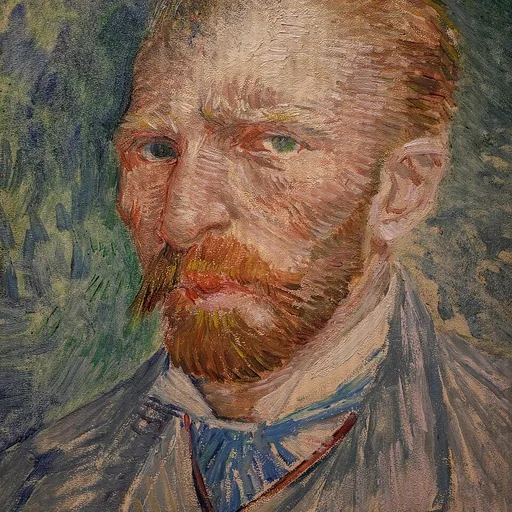
Vincent Willem van Gogh was a Dutch Post-Impressionist painter who is among the most famous and influential figures in the history of Western art.