Artwork
Pietà
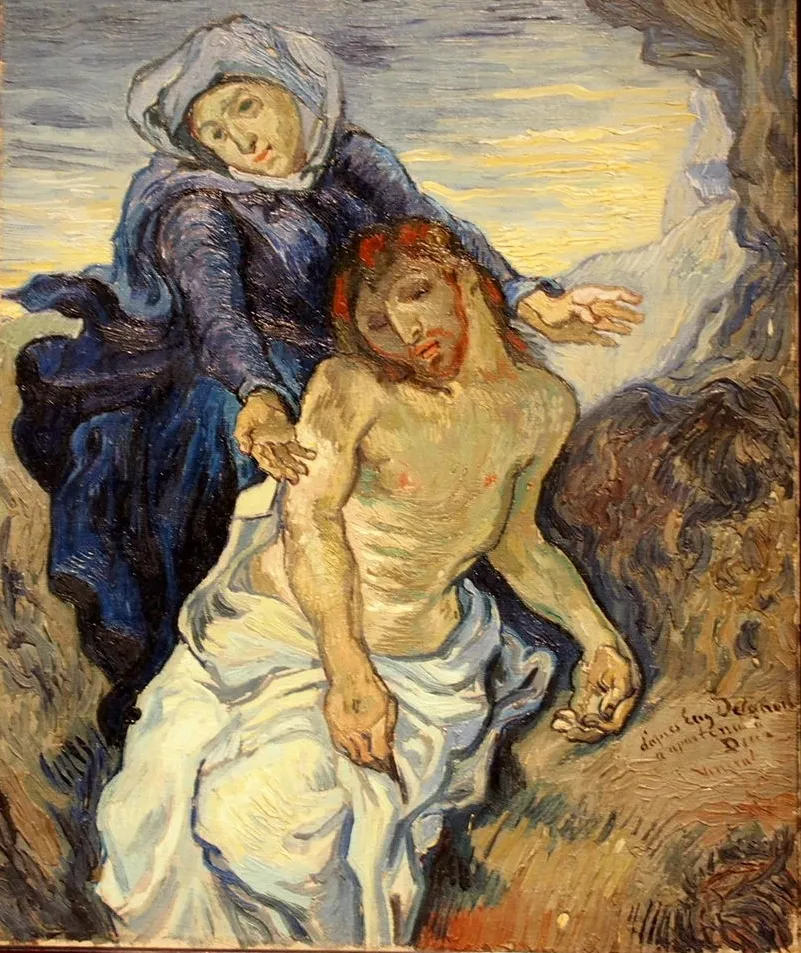
Pietà is an oil painting by the Post-Impressionist artist Vincent van Gogh. It dates from 1889 and is held in the collection of the Vatican Museums.
About this work
Overview
Pietà is a religious oil painting created by Vincent van Gogh in 1889, now part of the Vatican Museums' collection.
Subject & Meaning
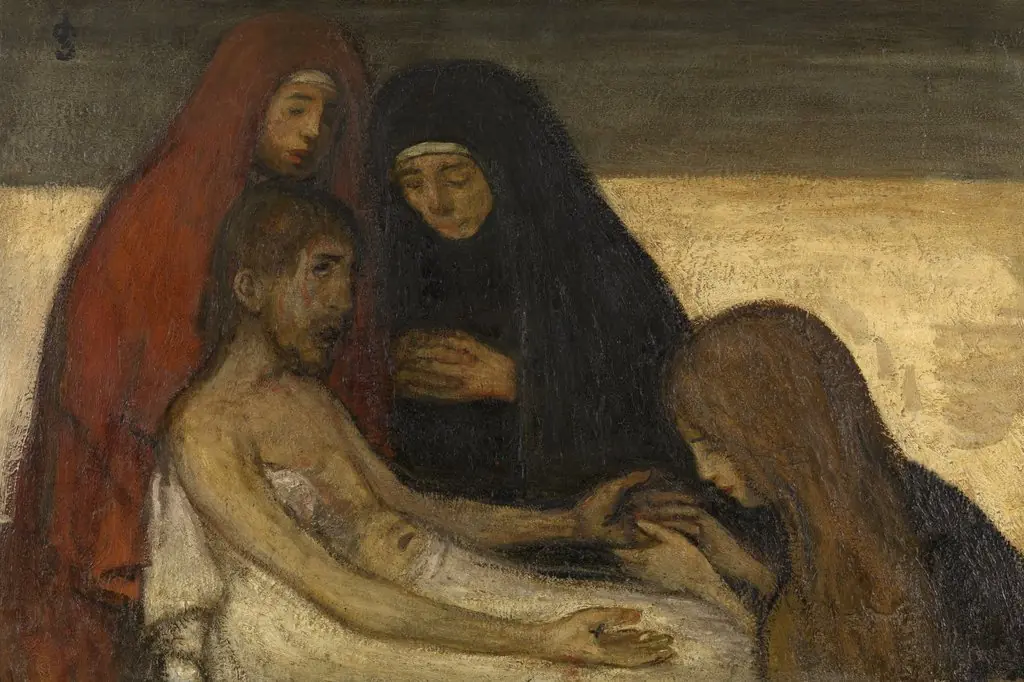
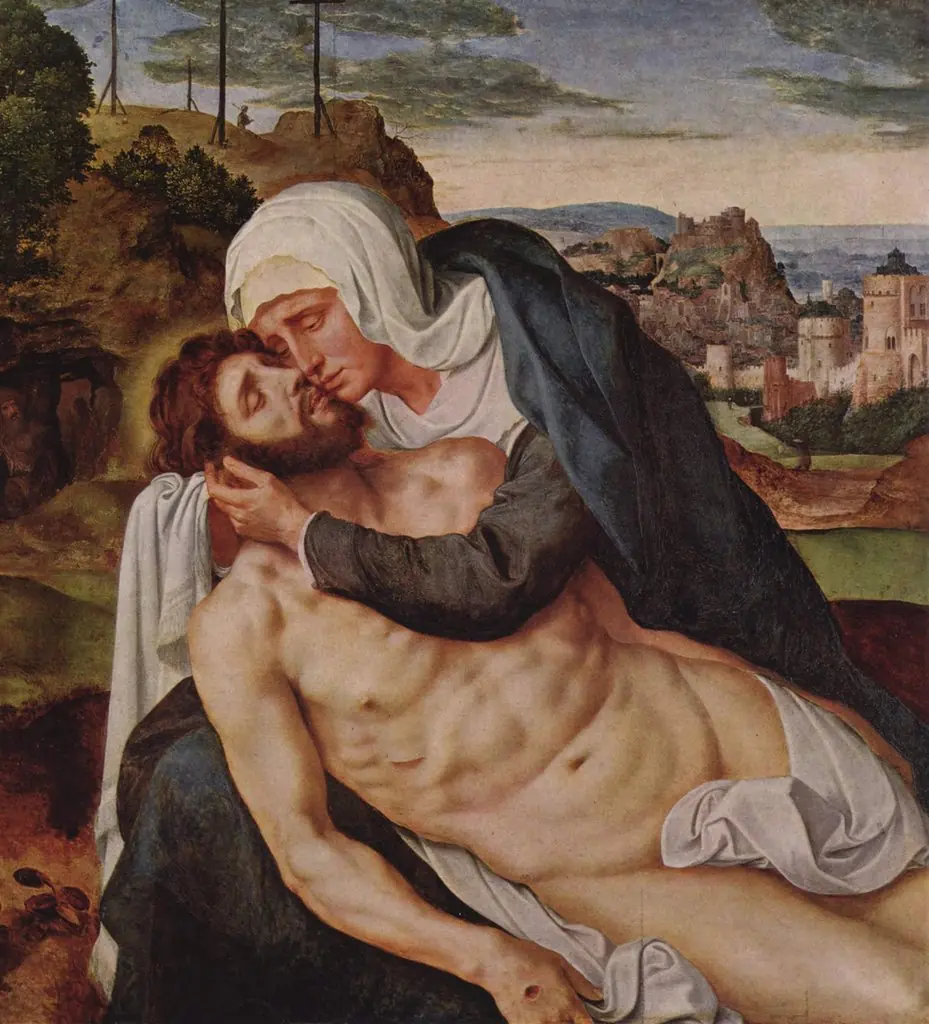
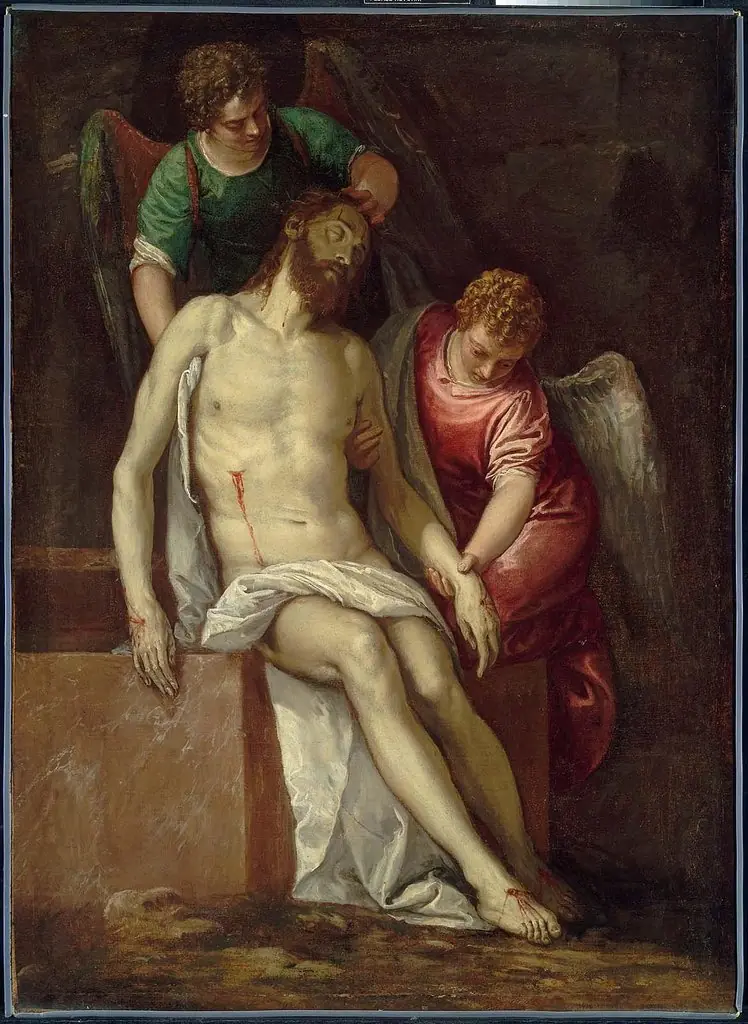
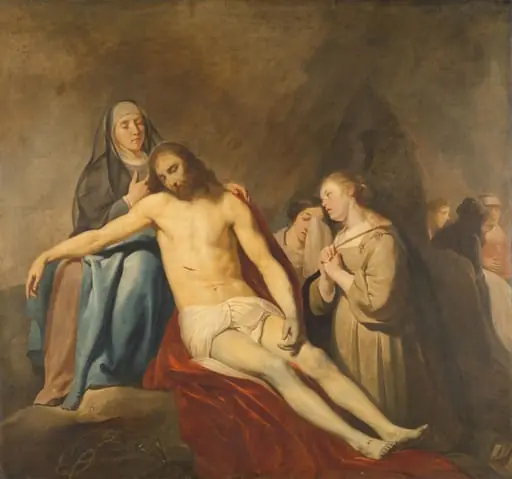
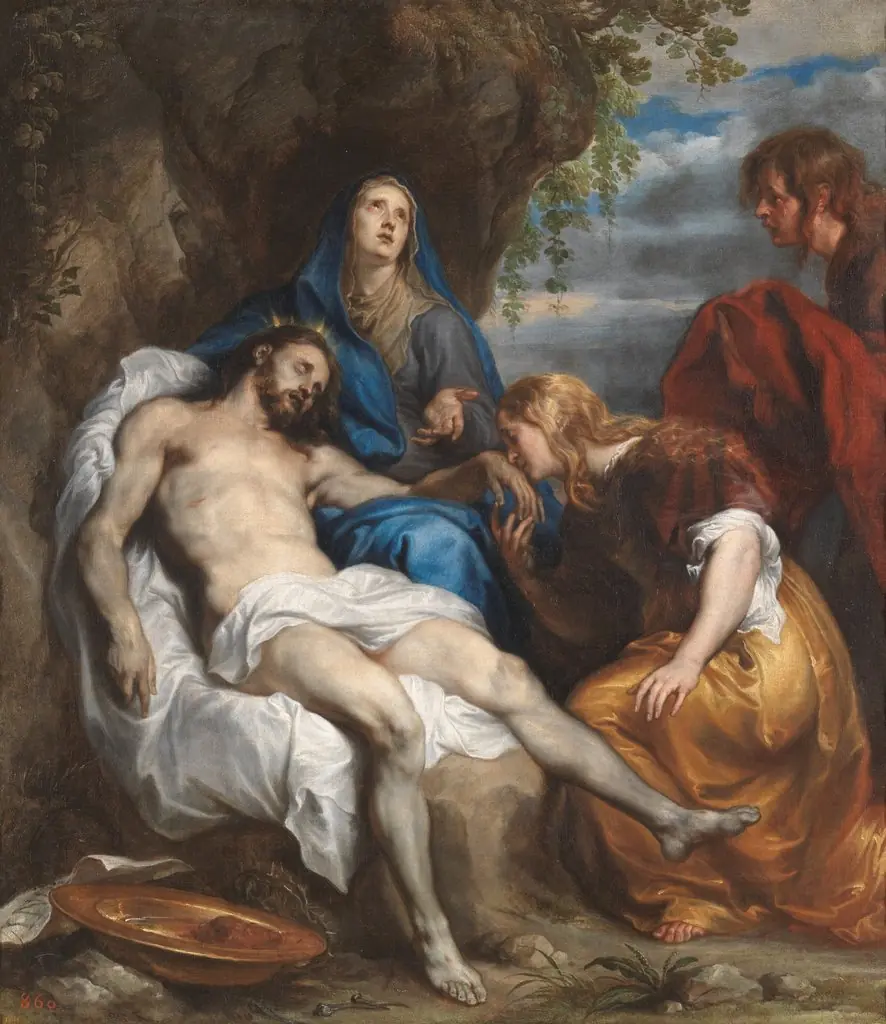
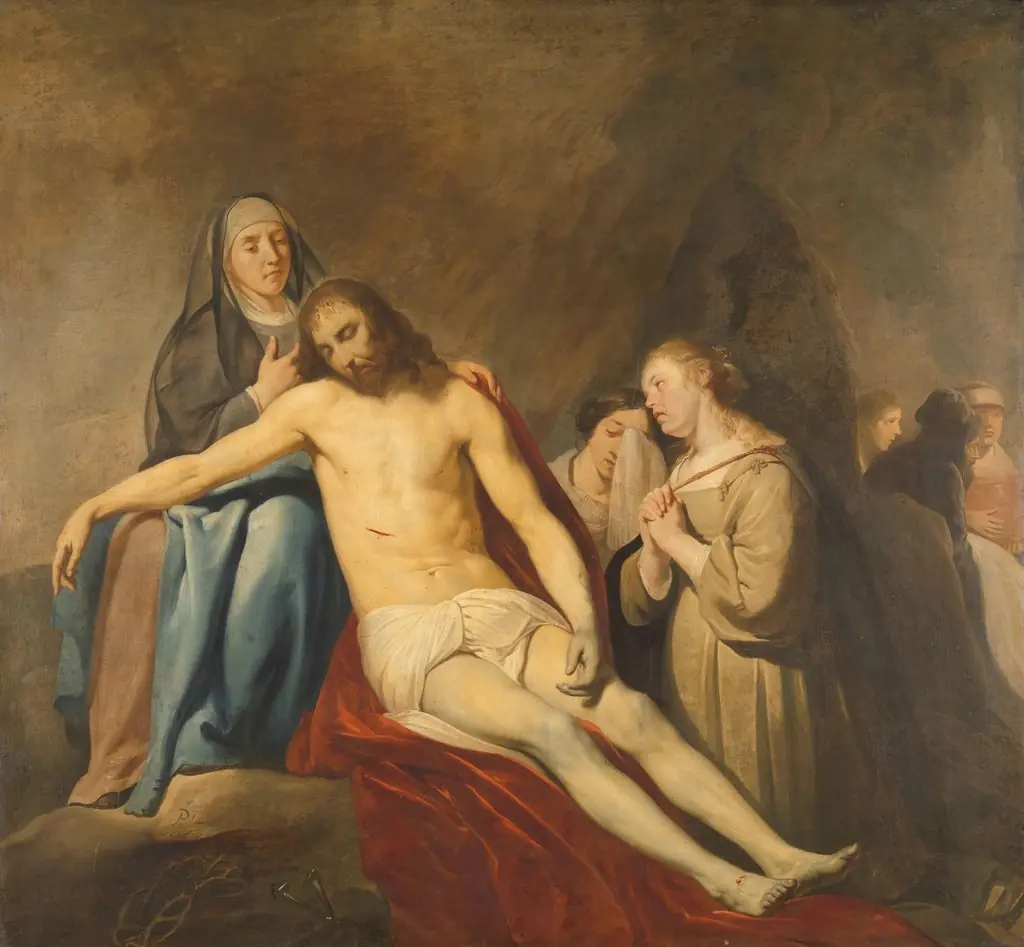
The painting depicts a poignant scene of a woman, clad in a prominent blue robe and white headscarf, cradling a man.
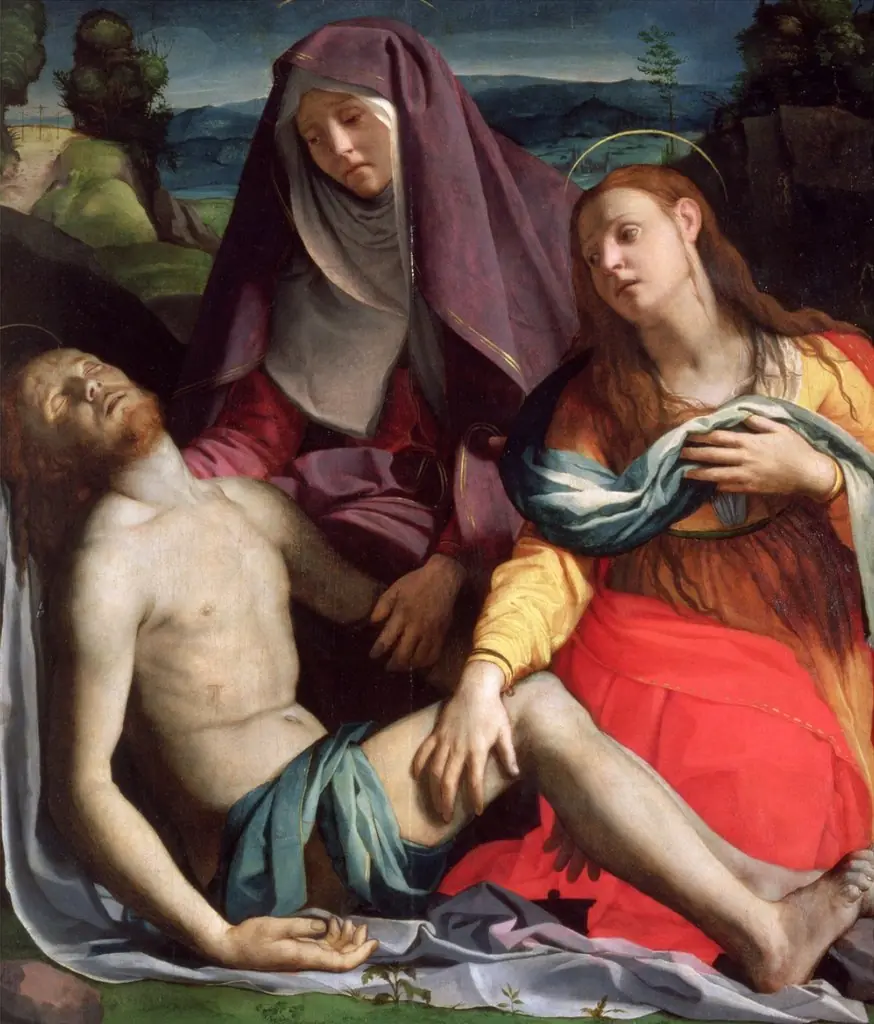
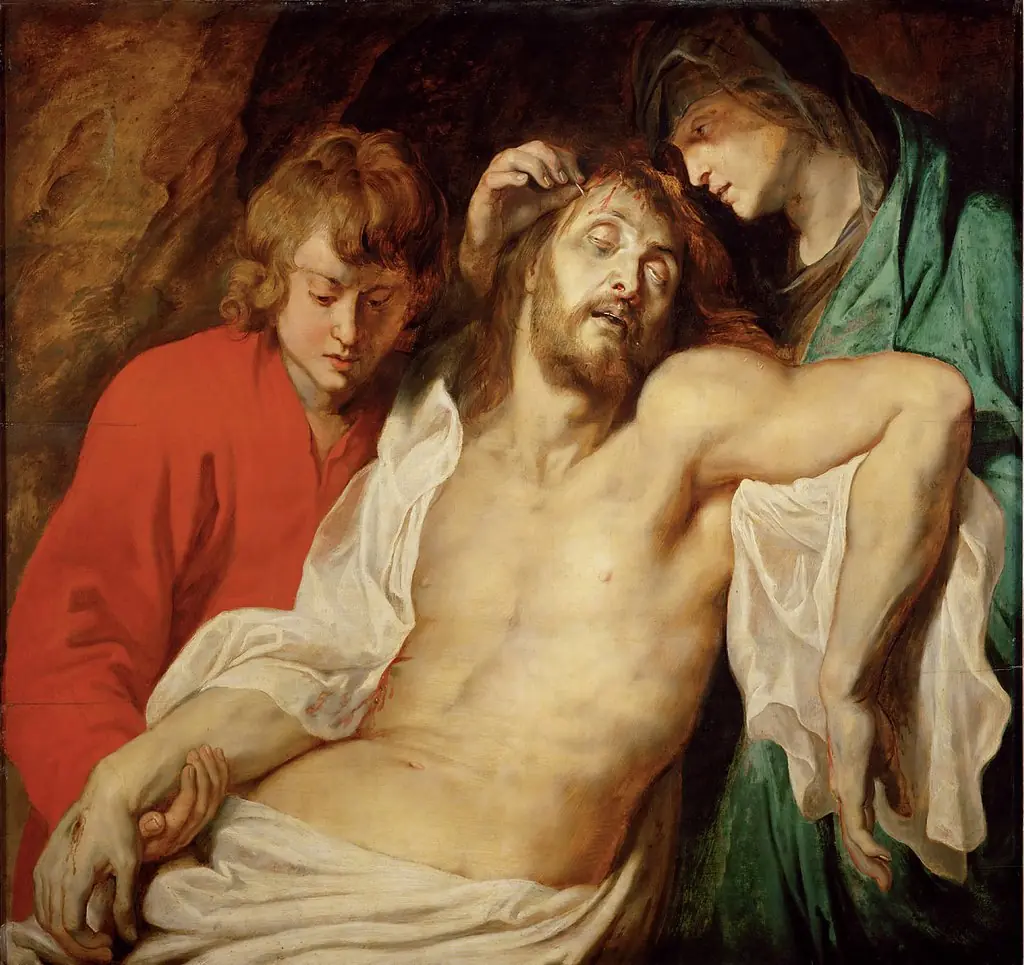
The painting depicts a poignant scene of a woman, clad in a prominent blue robe and white headscarf, cradling a man. The woman's downward-cast eyes and the man's closed eyes convey sorrow. The man's limp body, with one arm bent and the other hanging, suggests a state of repose or mourning, evoking the traditional Christian depiction of the Pietà, where the Virgin Mary holds the body of Jesus Christ after his crucifixion.
Technique & Style
Visible brushstrokes impart a textured, expressive quality to the work. The vibrant blue of the woman's robe contrasts with the subdued, yellow-clouded blue sky, drawing focal attention to the central figure.
History & Provenance
Created in 1889 by Vincent van Gogh, the painting is currently housed at the Vatican Museums.
Context
While the piece shares its name with traditional Christian art depicting the Virgin Mary mourning over Jesus, Van Gogh's interpretation, with its blurred facial features and emotive brushwork, reflects his characteristic Post-Impressionist style and emphasis on emotional depth over realism.
Legacy
As part of the Vatican's collection, Pietà contributes to the broader discourse on religious themes in modern art, juxtaposing Van Gogh's unique vision with traditional religious iconography.
Artist & collection
Artist
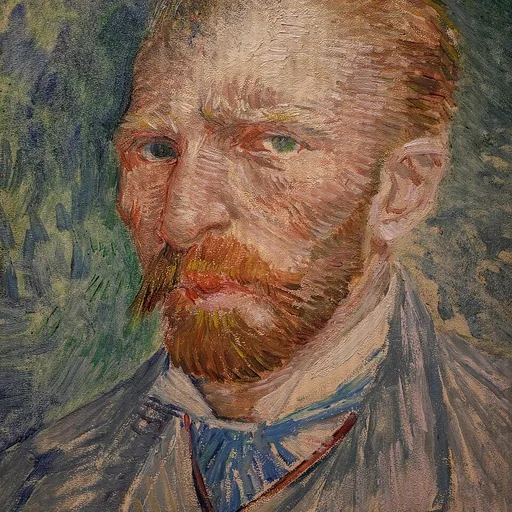
Vincent Willem van Gogh was a Dutch Post-Impressionist painter who is among the most famous and influential figures in the history of Western art.