Artwork
The Bedroom
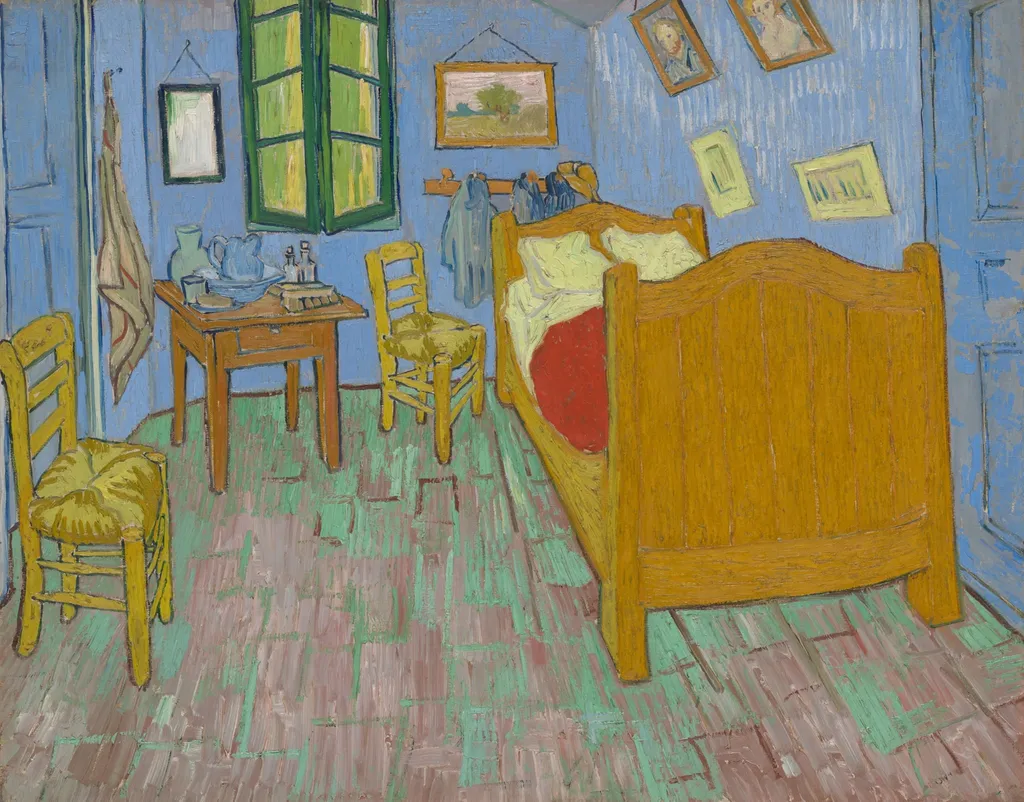
The Bedroom is an oil painting by the Impressionist artist Vincent van Gogh. It dates from 1889 and is held in the collection of the Art Institute of Chicago.
About this work
Overview
The Art Institute’s version is the second, completed in September 1889, shortly after he left the hospital following a mental health crisis.
Vincent van Gogh painted three versions of his bedroom in Arles, France, between 1888 and 1889. The Art Institute’s version is the second, completed in September 1889, shortly after he left the hospital following a mental health crisis. Each iteration differs slightly in color and composition, reflecting his evolving emotional state and technical experimentation. The subject remains consistent: a modest, personal space rendered with intense, non-naturalistic hues and dynamic brushwork.
Subject & Meaning
The painting depicts van Gogh’s private sleeping quarters in the Yellow House, a space he hoped would become a haven for artists. Though the room appears tense due to its skewed perspective and vivid contrasts, van Gogh intended it as a sanctuary of rest. He described the palette as deliberately soothing—lavender walls, pale greens, and soft yellows—meant to quiet the mind. The empty chairs and unmade bed suggest absence, yet also invite contemplation and solitude.
Technique & Style
Van Gogh applied oil paint thickly, using impasto to create texture that catches light and emphasizes movement. Brushstrokes are directional and broken, defining surfaces without blending—walls, floor, and furniture emerge through bold, flat planes. Perspective is deliberately distorted: the floor tilts upward, walls lean, and lines warp, rejecting academic realism. This visual instability contrasts with his stated goal of tranquility, revealing a tension between emotional expression and intended calm.
History & Provenance
The first version was painted in October 1888, soon after van Gogh moved into the Yellow House. He created the second version in September 1889 while staying at the asylum in Saint-Rémy, using the original as a reference. A smaller third version followed, made as a gift for his mother and sister. The Art Institute’s painting was acquired in 1922 and remains one of the most studied works in its collection, valued for its insight into van Gogh’s personal world.
Context
Painted during a period of intense isolation and psychological strain, the bedroom series reflects van Gogh’s desire to anchor himself in routine and domesticity. He saw his studio-home as a potential artistic commune, though few visitors came. The work aligns with his broader interest in depicting ordinary interiors with emotional weight, drawing from Japanese prints in its flattened space and bold outlines, while rejecting their serenity in favor of expressive intensity.
Legacy
The Bedroom paintings transformed how domestic space could be portrayed in modern art—not as a neutral setting, but as a psychological landscape. Their use of color as emotional language and structural distortion as inner expression influenced later Expressionist and Fauvist movements. Though initially overlooked, they are now central to understanding van Gogh’s vision: a quiet room made vivid not by grandeur, but by the intensity of personal feeling.
Own this work as a print
Artist & collection
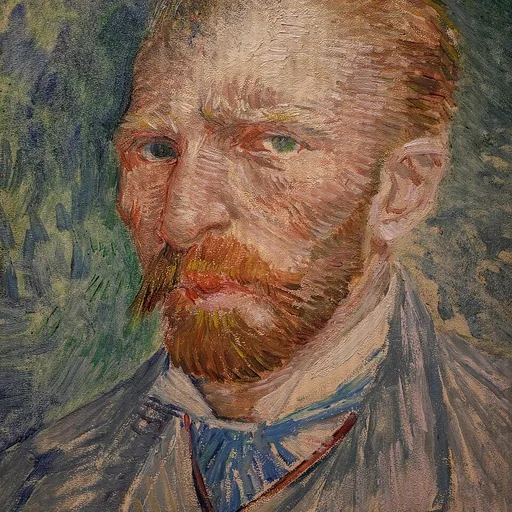
Artist
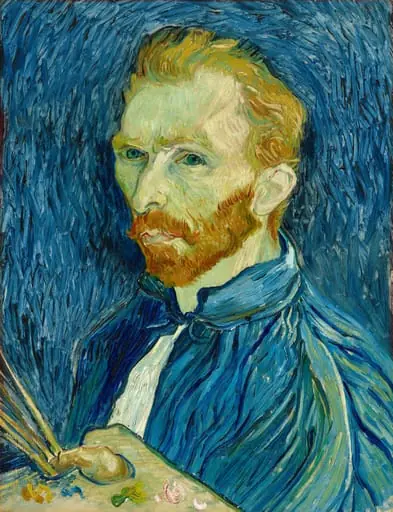
Vincent Willem van Gogh was a Dutch Post-Impressionist painter who is among the most famous and influential figures in the history of Western art.