Artwork
Two Peasant Women Digging Potatoes
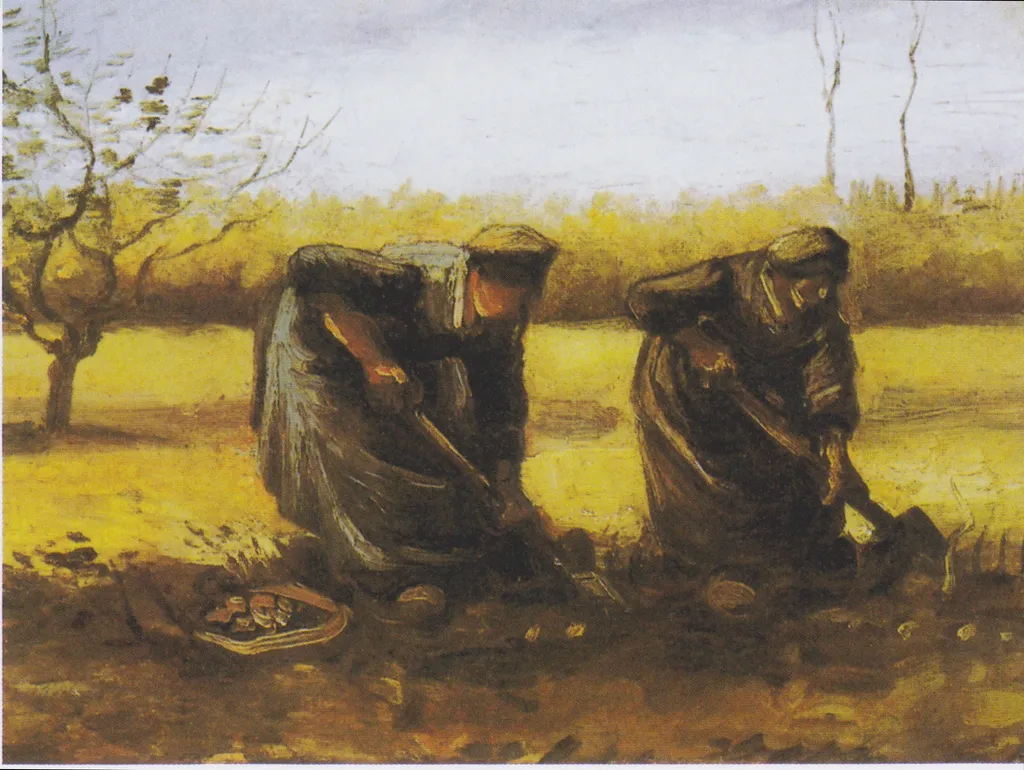
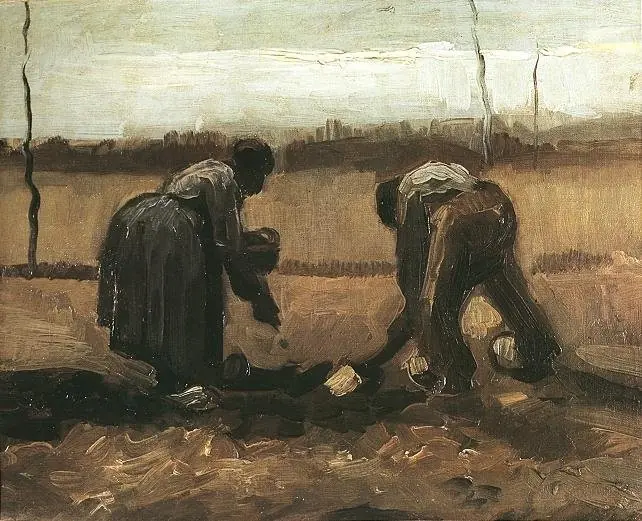
Two Peasant Women Digging Potatoes is an oil painting by the Post-Impressionist artist Vincent van Gogh. It dates from 1885 and is held in the collection of the Kröller-Müller Museum.
About this work
Overview
Vincent van Gogh painted Two Peasant Women Digging Potatoes in 1885. The oil work portrays a rural labor scene, focusing on two women bent over a field as they extract potatoes. The composition is anchored in a bright, yellow landscape that stretches toward a line of distant trees, emphasizing the everyday toil of agricultural life.
Subject & Meaning
The canvas captures a moment of manual labor, highlighting the physical effort of peasant women engaged in potato harvesting. Their dark garments and wide-brimmed hats contrast with the luminous ground, underscoring the relationship between human activity and the natural environment. The painting reflects van Gogh’s interest in the dignity of ordinary work.
Technique & Style
Executed in oil, the piece features loose, textured brushwork that conveys the tactile quality of soil and foliage. Van Gogh employs a restrained palette of earth tones and muted yellows, allowing the figures to emerge from the field without elaborate detail. The straightforward, rustic rendering aligns with the genre tradition of depicting daily life.
History & Provenance
Since its creation, the work has entered the collection of the Kröller-Müller Museum in the Netherlands, where it is displayed among other 19th‑century Dutch paintings. The museum acquired the piece as part of its effort to represent van Gogh’s early period, offering insight into his pre‑Parisian artistic development.
Artist & collection
Artist
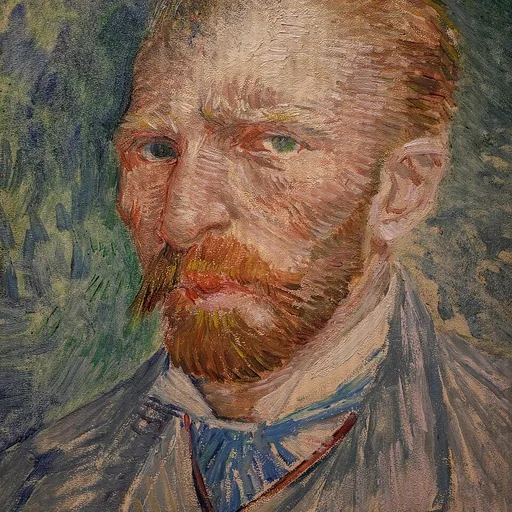
Vincent Willem van Gogh was a Dutch Post-Impressionist painter who is among the most famous and influential figures in the history of Western art.