Artwork
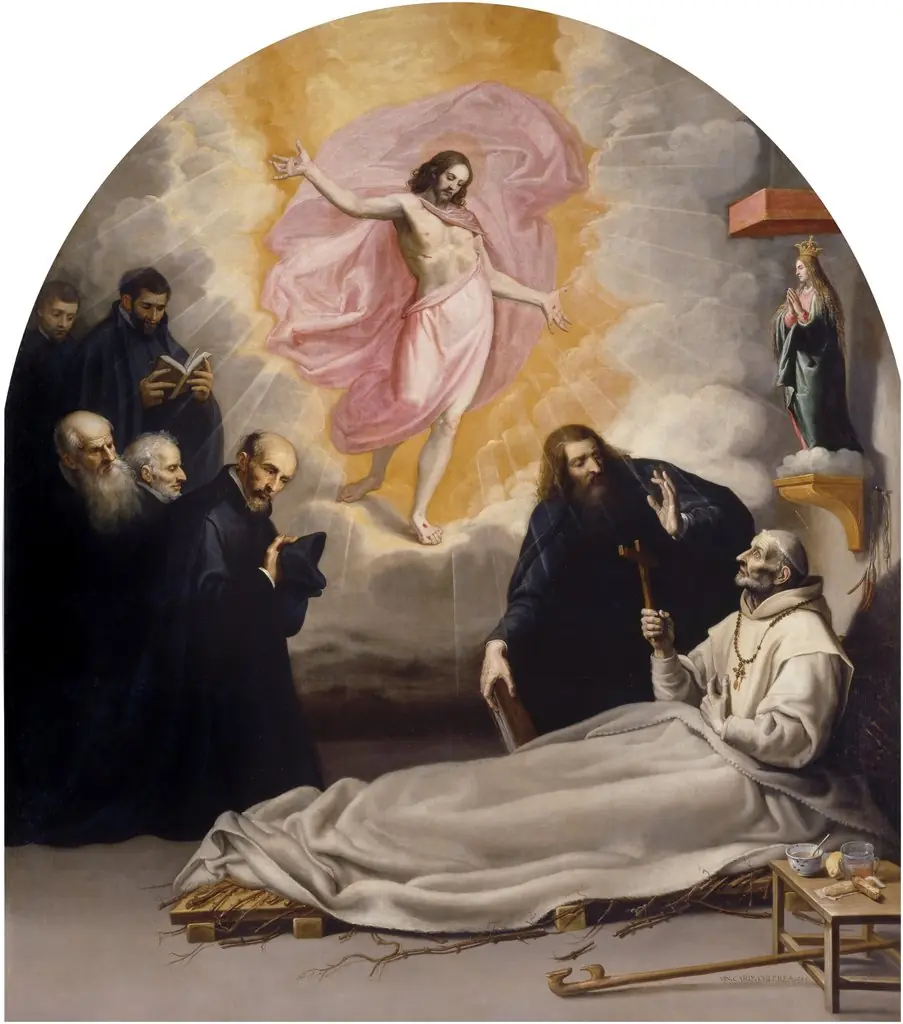
Saint Bruno Appears to Rogerio Guiscardo Count of Apulia and Calabria
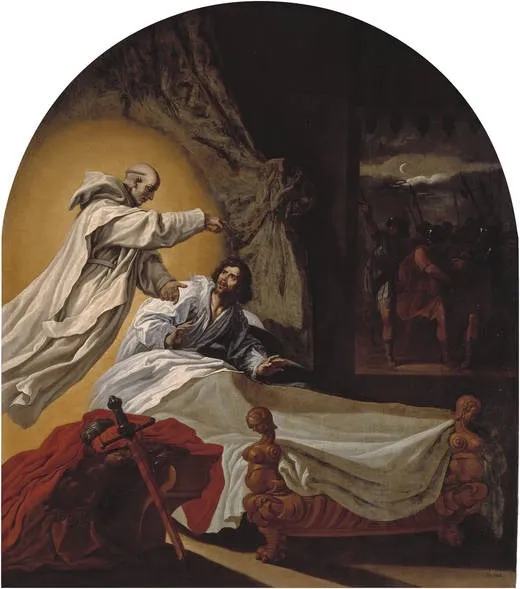
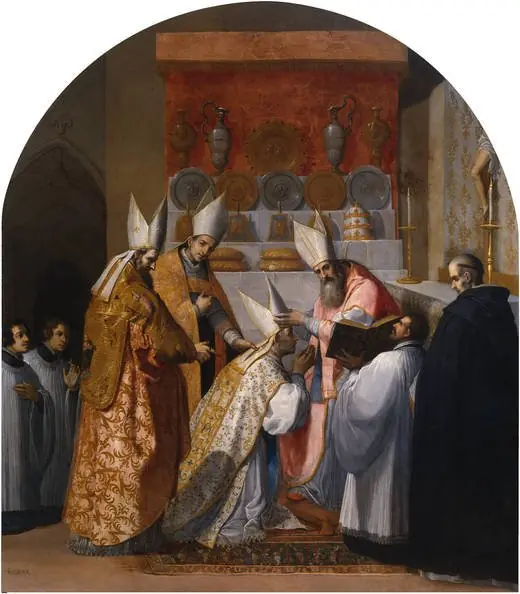
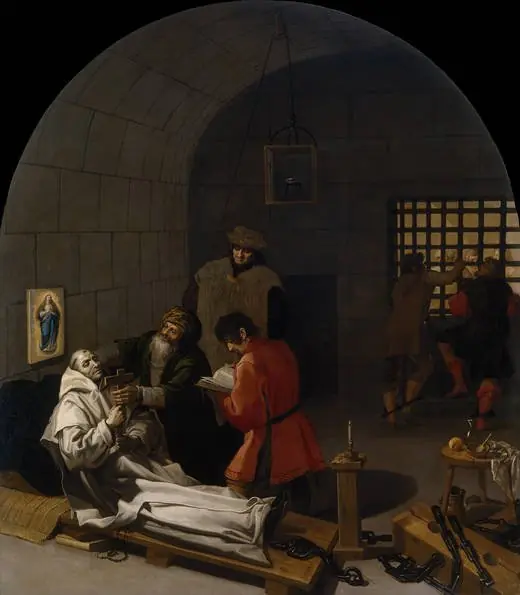
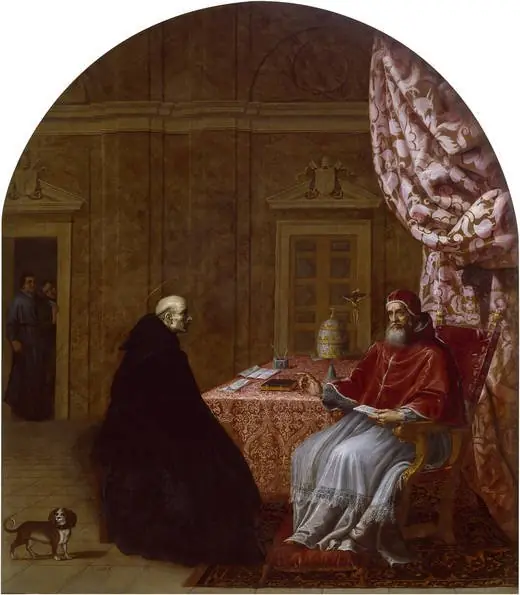
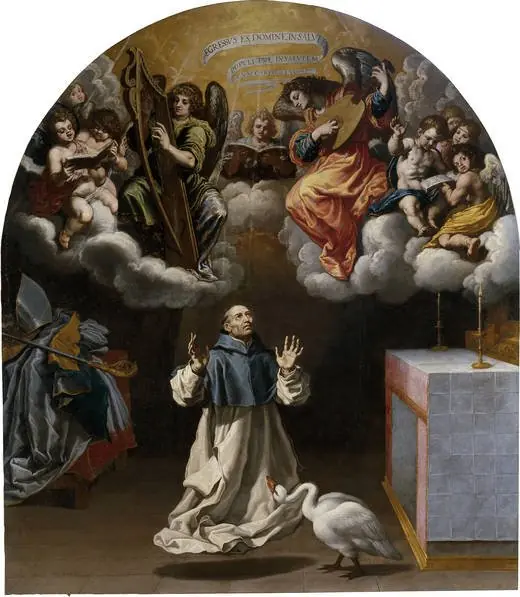
Saint Bruno Appears to Rogerio Guiscardo Count of Apulia and Calabria is an oil painting by the Early Baroque Italian artist Vincenzo Carducci. It dates from 1626 and is held in the collection of the Museo del Prado.
About this work
Overview
Vincenzo Carducci’s 1626 oil painting, *Saint Bruno Appears to Rogerio Guiscardo, Count of Apulia and Calabria*, is part of the Prado Museum’s collection. Executed during the early Baroque period, the work combines a domestic interior with a supernatural visitation, using dramatic lighting to emphasize the encounter between the saint and the nobleman.
Subject & Meaning
The composition shows Saint Bruno, robed in luminous white, hovering above a bed where the count lies in armor. The saint points toward the sleeping figure, whose expression mixes surprise and reverence. A small cherubic figure at the foot of the bed and a moonlit landscape beyond the window deepen the sense of divine intervention in a moment of personal crisis.
Technique & Style
Carducci employs chiaroscuro, contrasting the soft glow of the saint’s garment with the deep shadows of the interior. The oil medium allows for rich, layered colors, especially in the red blankets and the metallic sheen of the armor. The atmospheric window scene, rendered in muted tones, creates a spatial depth typical of early Baroque drama.
History & Provenance
An Italian artist active in Spain, Carducci painted this work for a patron connected to the House of Anjou. It entered the Spanish royal collection in the 18th century and was later transferred to the Museo del Prado, where it remains on display as an example of cross‑cultural Baroque art.
Artist & collection
Artist
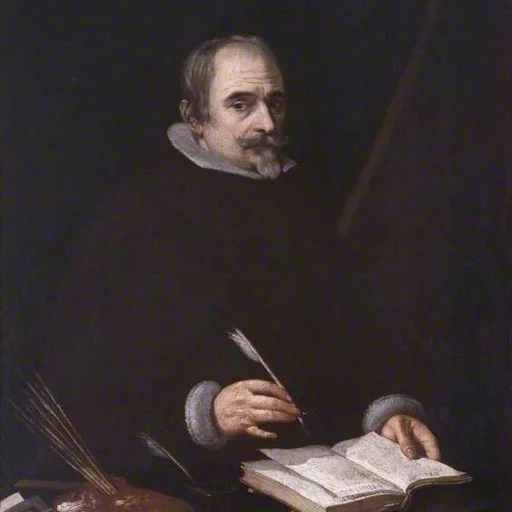
Vincenzio Carduccio (in Spanish, sometimes Vicencio or Vicente Carducho; 1576 or 1578–1638) was an Italian painter who spent his career in Spain.