Artwork
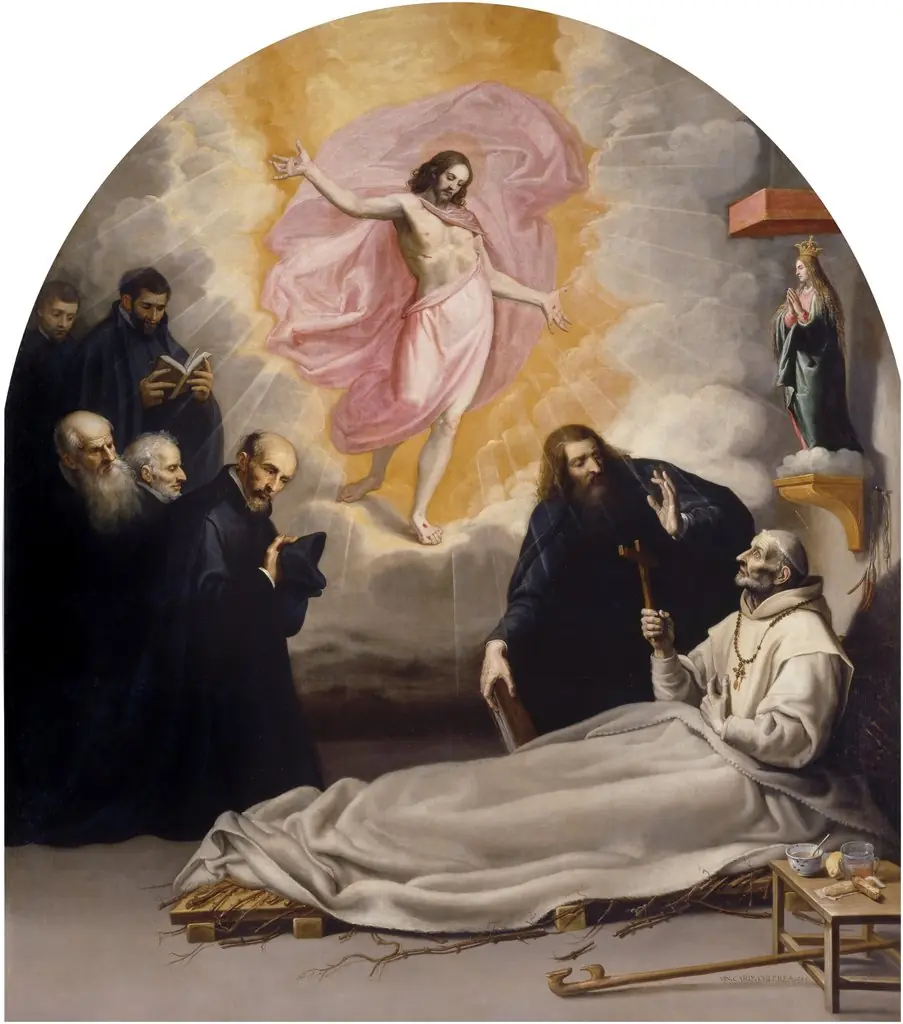
Saint Bruno Prays in La Torre Calabria
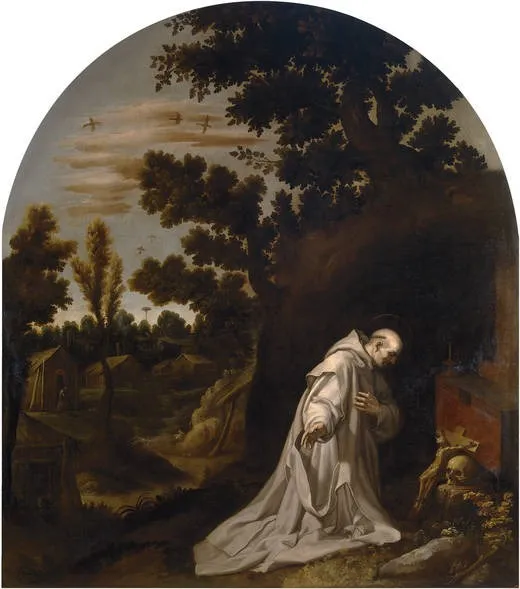
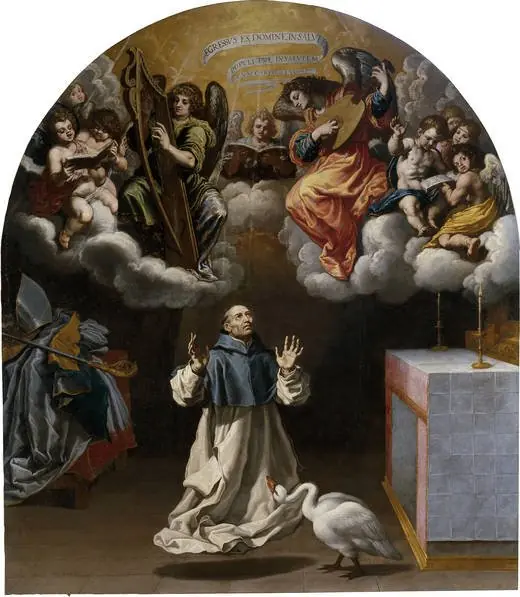
Saint Bruno Prays in La Torre Calabria is an oil painting by the Early Baroque Italian artist Vincenzo Carducci. It dates from 1626 and is held in the collection of the Museo del Prado.
About this work
Overview
Vincenzo Carducci, an Italian-born painter active in Spain, completed the oil painting Saint Bruno Prays in La Torre Calabria in 1626. The work exemplifies early Baroque sensibilities and is part of the Museo del Prado’s collection.
Subject & Meaning
The composition shows a monk in a white habit kneeling before a red wall, his hands joined in prayer. To his right a skull and crossbones rest on a stone plinth, evoking memento mori themes, while the monk’s downward gaze suggests contemplation of mortality and divine intercession.
Technique & Style
Carducci employs chiaroscuro to model the figure, contrasting the illuminated monk with the deep shadows that veil his face. The background recedes into a tranquil landscape of trees, water and distant buildings, with birds in the sky that introduce subtle movement.
History & Provenance
Created in the mid‑1620s, the painting entered the Spanish royal collection and later was transferred to the Museo del Prado, where it remains on display as part of the museum’s Baroque holdings.
Context
The work reflects the Counter‑Reformation emphasis on personal piety and the visual language of early Baroque Italy, where dramatic lighting and symbolic objects such as skulls were used to inspire devotional reflection.
Artist & collection
Artist
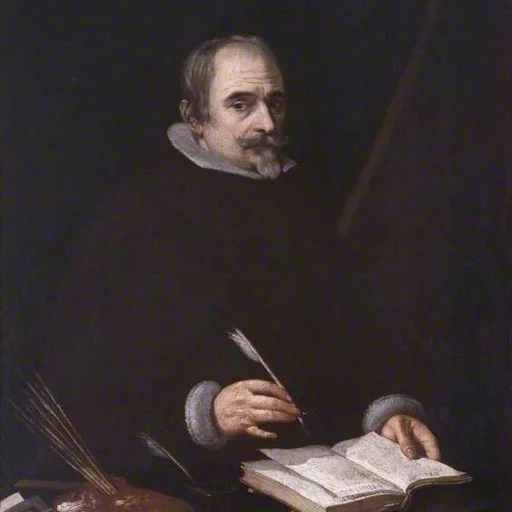
Vincenzio Carduccio (in Spanish, sometimes Vicencio or Vicente Carducho; 1576 or 1578–1638) was an Italian painter who spent his career in Spain.