Artwork
The Death of Saint Bruno
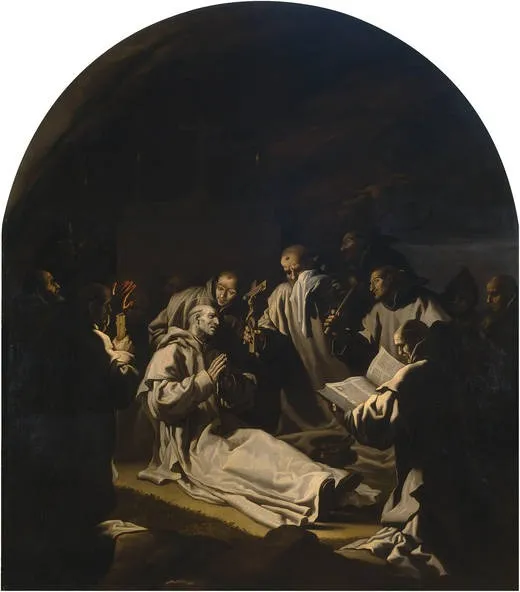
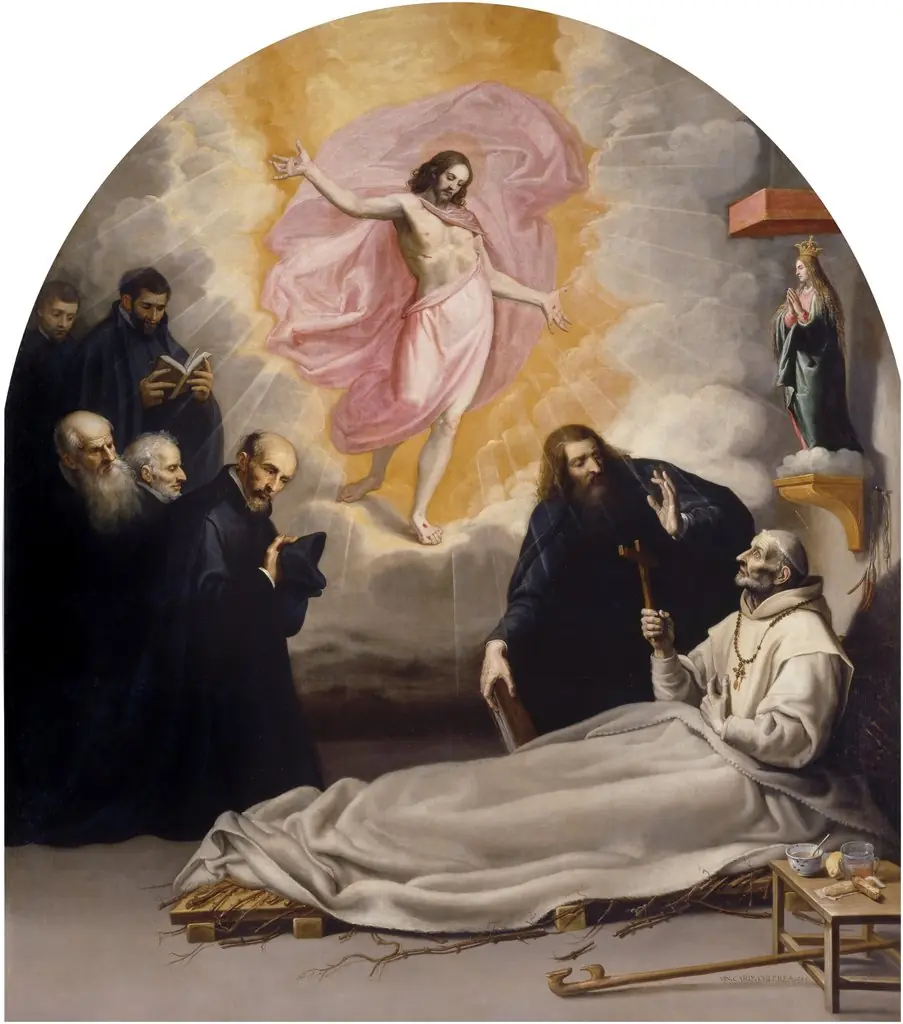
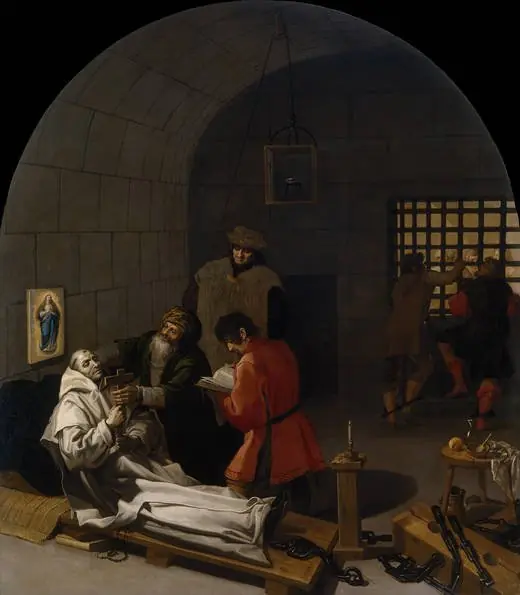
The Death of Saint Bruno is an oil painting by the Early Baroque Italian artist Vincenzo Carducci. It dates from 1626 and is held in the collection of the Museo del Prado.
About this work
Overview
Created in 1626 by Vincenzo Carducci, an Italian artist active in Spain, this oil painting portrays the final moments of Saint Bruno. Executed in the early Baroque idiom, the work is part of the Prado Museum’s collection and presents a quiet, reverent tableau centered on a solitary figure in white robes.
Subject & Meaning
The composition shows the saint lying supine, his head reclined and eyes closed, surrounded by monks in dark habits. The presence of a book, a candle and a crucifix underscores the spiritual significance of the scene, suggesting contemplation of death as a passage to divine union.
Technique & Style
Carducci employs a restrained palette of browns and beiges, allowing a single warm light to illuminate the central figure. The chiaroscuro effect creates a palpable sense of volume, while the subdued tones reinforce the solemn atmosphere typical of early Baroque religious painting.
History & Provenance
After its completion in 1626, the painting entered Spanish collections and eventually was acquired by the Museo del Prado. Its provenance reflects Carducci’s career in the Spanish court, where his Italian training merged with local devotional tastes.
Context
The work belongs to a period when artists sought to convey piety through dramatic yet intimate scenes. Saint Bruno, founder of the Carthusian order, was a frequent subject for Spanish patrons, and Carducci’s rendering aligns with contemporary efforts to visualize holy death as a model of humility and devotion.
Artist & collection

Artist
Vincenzio Carduccio (in Spanish, sometimes Vicencio or Vicente Carducho; 1576 or 1578–1638) was an Italian painter who spent his career in Spain.