Artwork
Portrait of Pierre Noel Violet
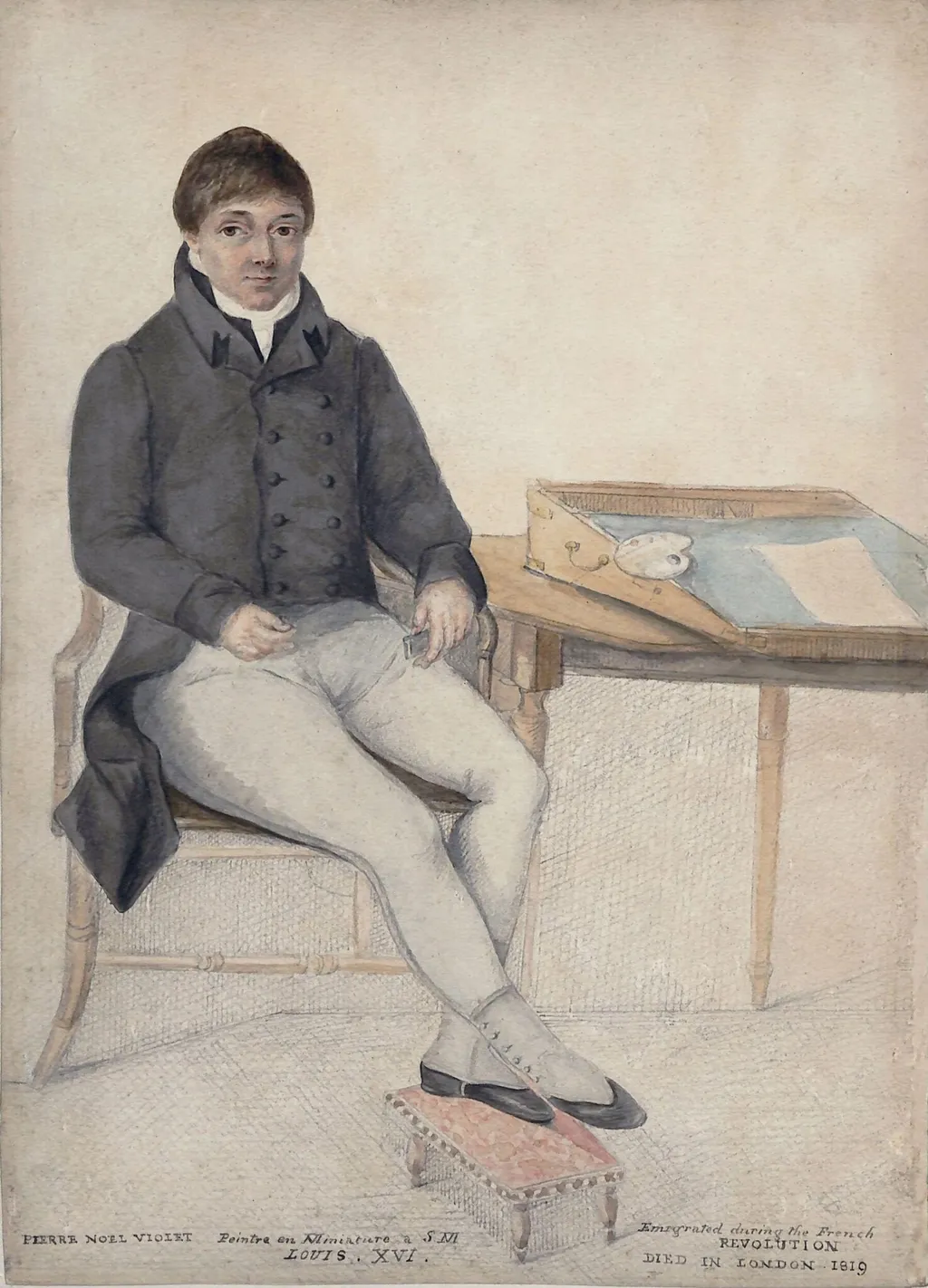
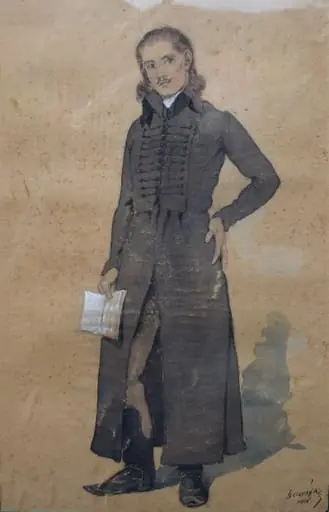
Portrait of Pierre Noel Violet is a watercolor work on paper by the Biedermeier artist Maria Violet. It dates from 1810 and is held in the collection of the Victoria and Albert Museum.
About this work
Overview
A watercolour portrait of Pierre Noel Violet, created in 1810 by his daughter Maria Violet, captures the sitter in a quiet, intimate setting.
A watercolour portrait of Pierre Noel Violet, created in 1810 by his daughter Maria Violet, captures the sitter in a quiet, intimate setting. Executed in delicate washes with pencil underdrawing, the work combines observational detail with a restrained, sketch-like quality. The composition is framed by handwritten inscriptions that contextualize the subject’s life, grounding the image in personal and historical narrative rather than formal grandeur.
Subject & Meaning
Pierre Noel Violet, a former miniature painter to Louis XVI, is depicted in middle age, dressed in clothing that reflects his pre-revolutionary status. His crossed legs and resting foot on a stool suggest a moment of repose, while the open box of art supplies behind him alludes to his professional identity. The inscriptions, added by his daughter, frame him not merely as a subject but as a figure displaced by political upheaval, emphasizing his exile and eventual death in London.
Technique & Style
Maria Violet employed watercolour with a light, fluid hand, allowing the paper’s texture to show through in areas of the coat and background. Pencil lines define facial features and folds in fabric with precision, while washes of colour soften contours and suggest volume without heavy modeling. The overall effect is intimate and immediate, characteristic of domestic portraiture in early 19th-century Britain, where spontaneity and personal connection outweighed formal polish.
History & Provenance
The portrait was drawn from life in London in 1810, as noted on the reverse by Maria Violet. Pierre Noel Violet had fled France during the Revolution and settled in England, where he lived until his death in 1819. The work remained within the family and later entered institutional collections, preserving both the image and its handwritten annotations as primary evidence of an artist’s exile and the role of familial memory in documenting displaced lives.
Context
Created during a period when many French émigrés settled in London, the portrait reflects the quiet resilience of displaced aristocratic artists. Watercolour was a favored medium among British amateur and professional artists for its portability and suitability for personal works. Maria Violet’s choice to document her father’s life in this format aligns with a broader trend of domestic portraiture that valued emotional authenticity over public display.
Legacy
The portrait endures as a quiet testament to familial devotion and the impact of political upheaval on artistic communities. Its survival with original inscriptions offers rare insight into the personal lives of émigré artists. Though not widely exhibited, it contributes to scholarly understanding of how art functioned within private spheres during a time of national and cultural fracture.
Artist & collection
Artist
She painted nothing but family faces—no grand saints or mythic heroes—just her husband, her children, the dog curled by the stove.