Artwork
Title Page: Two Cripples Receiving Alms
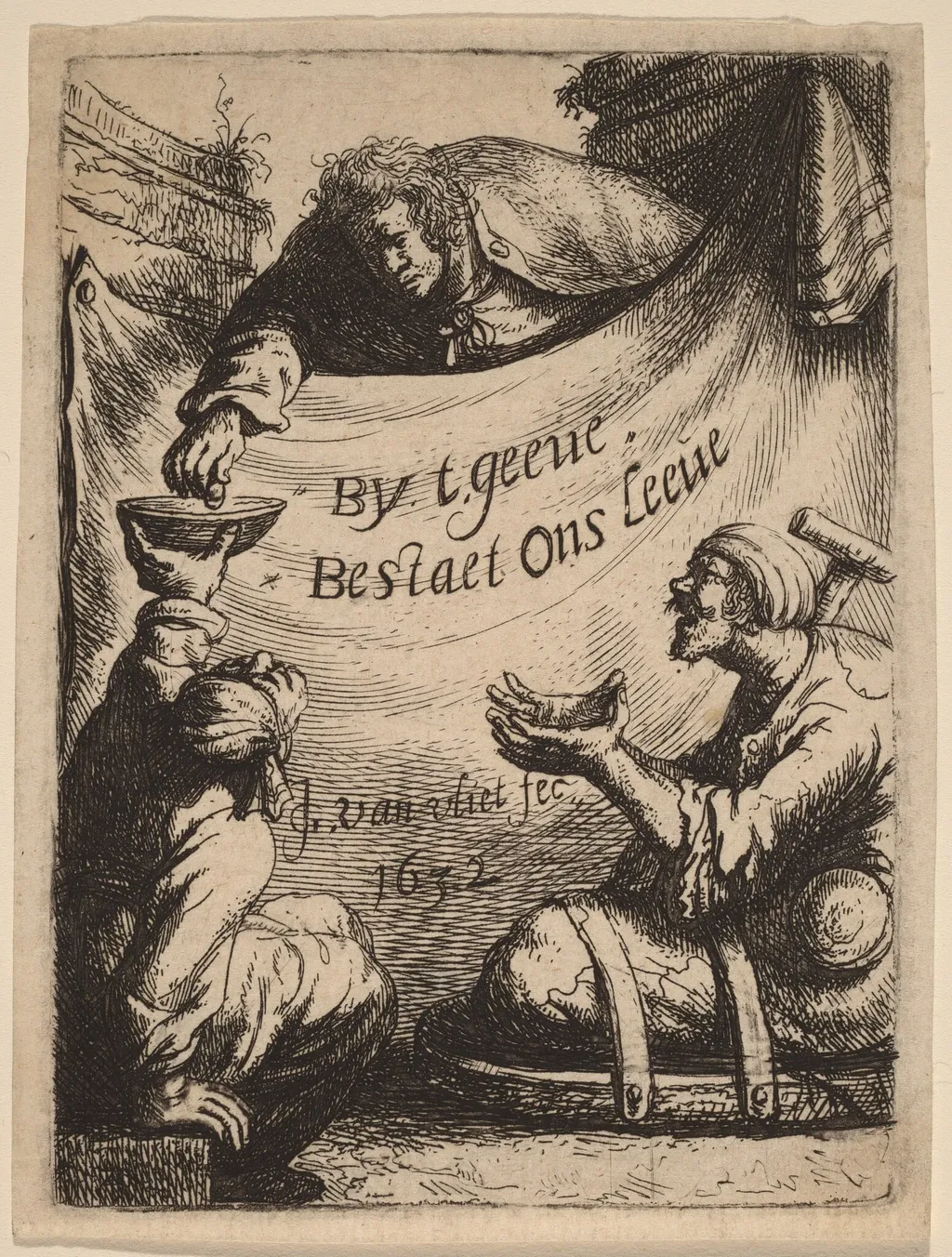
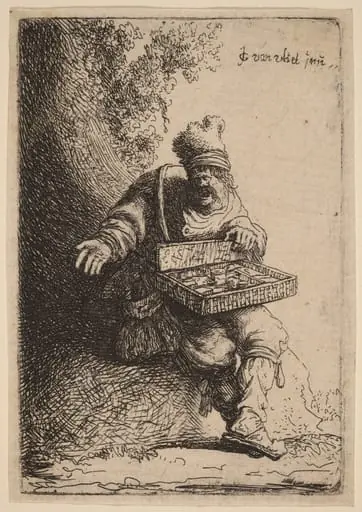
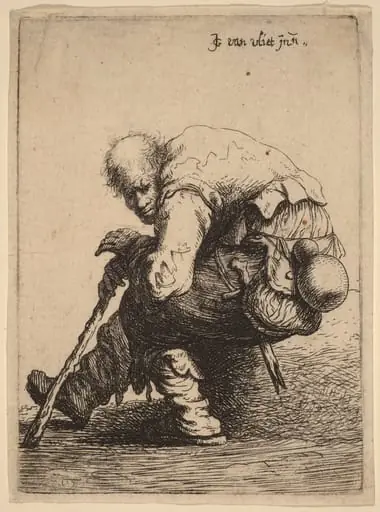
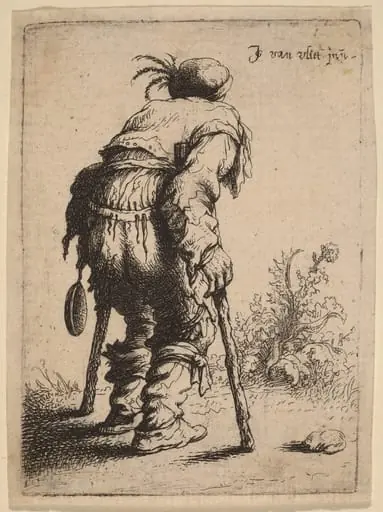
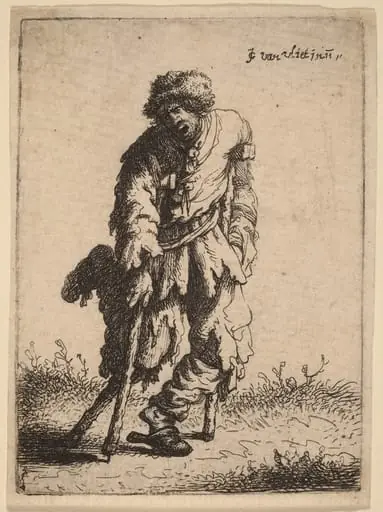
Title Page: Two Cripples Receiving Alms is an ink print by the Baroque artist Johannes van Vliet. It dates from 1632 and is held in the collection of the National Gallery of Art.
About this work
Overview
Created in 1632 by Johannes van Vliet, this etching serves as a title page for a printed work, likely a pamphlet or religious text. It depicts two disabled figures in a moment of charitable exchange, rendered with stark, angular lines that convey immediacy and emotional weight. The composition centers on gesture and posture rather than detailed environment, emphasizing human vulnerability.
Subject & Meaning
The scene portrays two individuals with physical impairments—one kneeling, accepting alms; the other standing, leaning on a staff and gazing upward.
The scene portrays two individuals with physical impairments—one kneeling, accepting alms; the other standing, leaning on a staff and gazing upward. Their postures suggest dependence and supplication, while the upward gaze may imply prayer or appeal to divine aid. The inscription 'Bestact Oms Lecie' appears to be a phonetic rendering of Dutch, possibly meaning 'Bestow upon us mercy,' reinforcing the theme of charity and spiritual petition.
Technique & Style
Van Vliet employed sharp, incised lines typical of etching to create a sense of urgency and rawness. The background is composed of agitated, swirling strokes that suggest disorder or spiritual turbulence, contrasting with the focused clarity of the figures. Minimal detail in the setting directs attention to the interaction between the two subjects, enhancing the emotional intensity of the moment.
History & Provenance
The print was produced in the early 17th century in the Netherlands, likely as part of a devotional or charitable publication. Van Vliet’s signature appears at the base, indicating authorship and possibly a commercial or artisanal context. Its survival as a single known impression suggests limited circulation, possibly tied to local religious or civic printing efforts of the period.
Context
In early 17th-century Dutch society, images of the poor and disabled were common in religious prints, often used to encourage almsgiving and moral reflection. Van Vliet’s work aligns with a broader tradition of genre scenes that humanized marginalized figures, reflecting Calvinist values of charity and the visibility of suffering as a spiritual test.
Legacy
Though van Vliet is not widely known today, this print remains a rare example of intimate, socially conscious printmaking from the Dutch Golden Age. Its directness and emotional clarity offer insight into how visual culture addressed poverty and compassion, contributing to the understudied realm of non-elite print production in early modern Europe.
Artist & collection