Artwork
The Backgammon Players
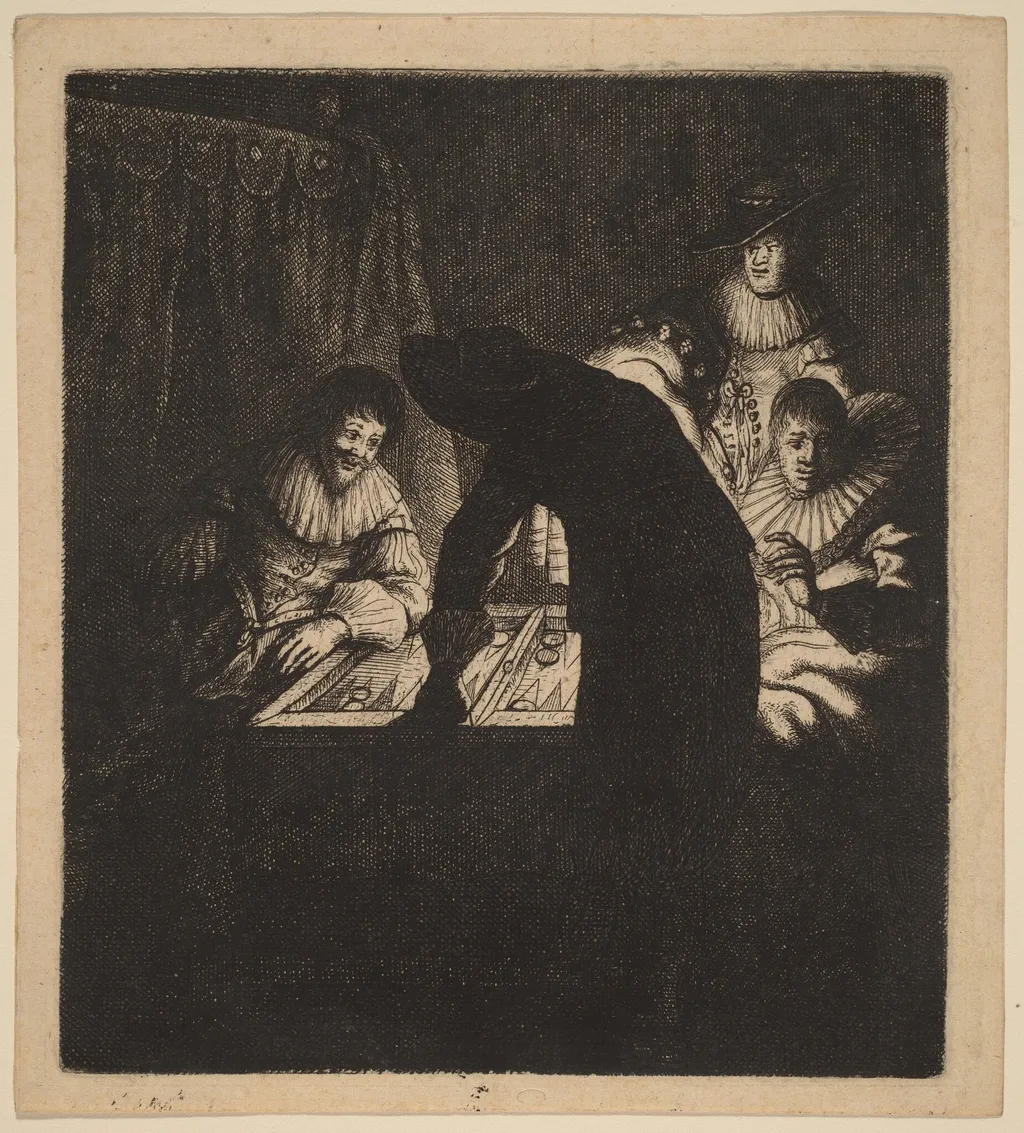
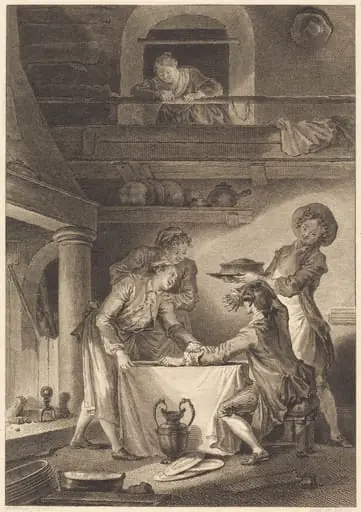
The Backgammon Players is an ink print by the Baroque artist Johannes van Vliet. It dates from 1630 and is held in the collection of the National Gallery of Art.
About this work
Overview
Created around 1630, this etching by Johannes van Vliet depicts two men engaged in a game of backgammon. Rendered in monochrome on laid paper, the work captures a quiet domestic moment with precise line work. The composition centers on the players, framed by minimal interior elements that suggest a modest interior space without overt decoration.
Subject & Meaning
The scene portrays two men absorbed in a game of chance, their postures revealing focus and tension. One leans forward, hands active at the board; the other, wearing a broad hat and ruffled collar, observes closely. The empty chair behind them hints at an absent third party or a pause in the game, reinforcing the intimacy and stillness of the moment without narrative resolution.
Technique & Style
Van Vliet employed fine, controlled etching lines to render textures: the folds of fabric, the grain of wood, and the contours of furniture. The contrast between dense shadow and sparse light, particularly near the window, adds depth. The meticulous attention to detail in clothing and surfaces reflects a preference for realism over idealization, characteristic of Dutch printmaking of the period.
History & Provenance
The print is attributed to Johannes van Vliet, a lesser-known Dutch artist active in the early 17th century. Few of his works survive, and this etching is among the few documented examples of his output. Its preservation in institutional collections suggests it was valued for its technical precision and genre subject matter during its time.
Context
In early 17th-century Holland, scenes of everyday life gained popularity among collectors. Backgammon, a game associated with leisure and social interaction, was a common motif in genre prints. Van Vliet’s work aligns with this trend, reflecting a cultural interest in capturing quiet, unidealized moments of domestic routine.
Legacy
Though van Vliet did not achieve widespread fame, this etching contributes to the broader understanding of Dutch print culture. Its careful observation of light, posture, and material detail influenced later genre artists. Today, it remains a quiet example of how ordinary activities were elevated through skilled draftsmanship in the Northern Renaissance tradition.
Artist & collection