Artwork
Lucas van Uden
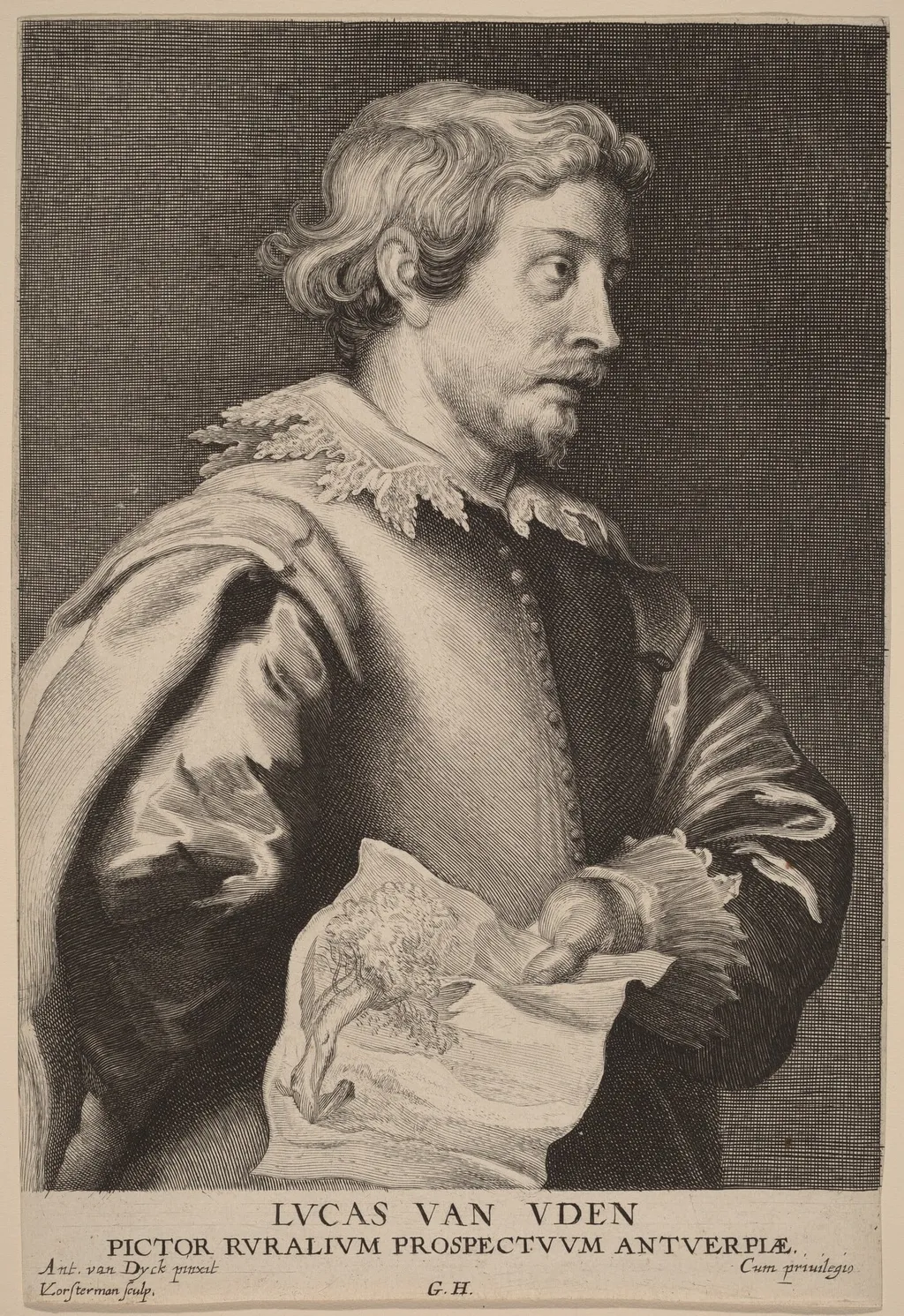
Lucas van Uden is an ink print by the Baroque artist Lucas Emil Vorsterman. It dates from 1634 and is held in the collection of the National Gallery of Art.
About this work
Overview
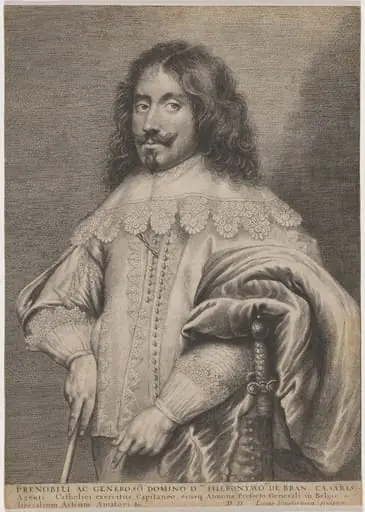
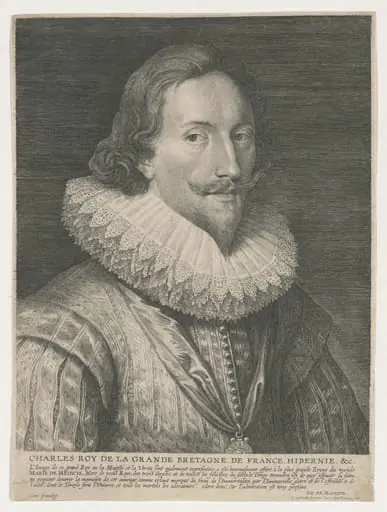
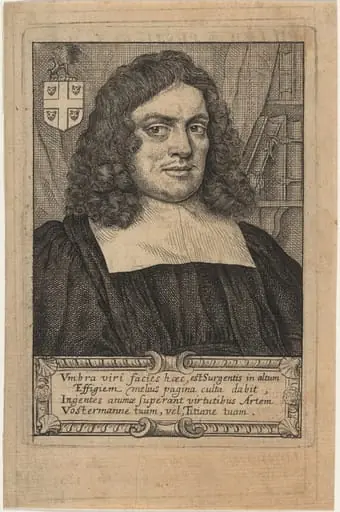
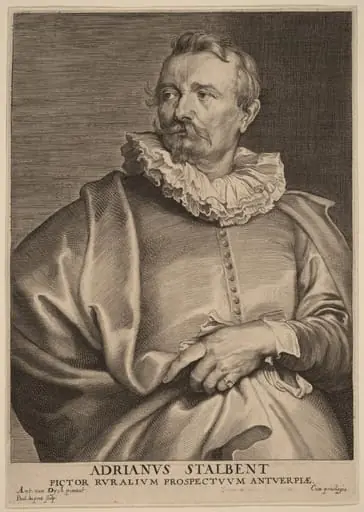
This copperplate engraving, executed around 1634 by Lucas Emil Vorsterman, presents a profile portrait of the Flemish landscape painter Lucas van Uden. Rendered in monochrome, the image captures the sitter’s distinctive curly hair, beard, and a lace‑trimmed ruffled collar, emphasizing the conventions of early‑modern portraiture in print form.
Subject & Meaning
The work serves as a visual commemoration of van Uden, identifying him by name beneath the image. The inclusion of a hand placed on the chest and a folded cloth or glove may allude to the sitter’s status or profession, while the careful rendering of facial features underscores a desire for likeness within the limits of the engraving medium.
Technique & Style
Vorsterman employed fine line work and cross‑hatching to achieve tonal variation, a hallmark of 17th‑century Dutch engraving. The crisp delineation of hair and lace demonstrates the artist’s skill in translating texture onto metal, while the overall composition adheres to the profile format popular in portrait prints of the period.
History & Provenance
Created in the early 1630s, the print was likely circulated among collectors and fellow artists as a means of disseminating van Uden’s image. The signature of Vorsterman and the Latin term *Pictor* affirm the work’s attribution and its function as a printed portrait rather than a painted likeness.
Context
During the Dutch Golden Age, portrait engravings functioned as both documentary records and promotional tools for artists. Vorsterman, a noted engraver of the time, frequently produced such images, contributing to the visual culture that celebrated individual creators within the broader artistic community.
Artist & collection
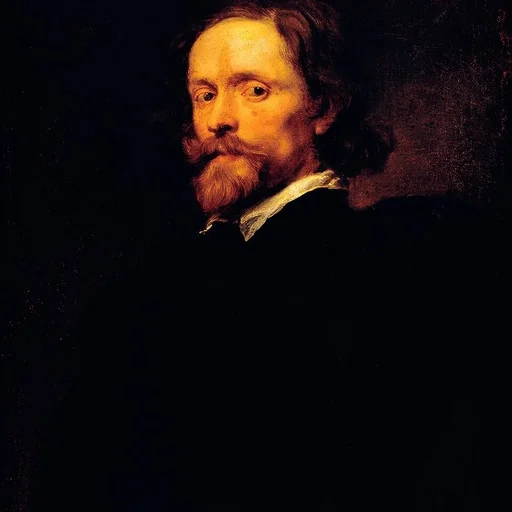
Artist
etching and engraving by Lucas Vorsterman II, NGA 10762), B1977.14.10539 - Yale etc