Artwork
Saint Francis Receiving the Stigmata
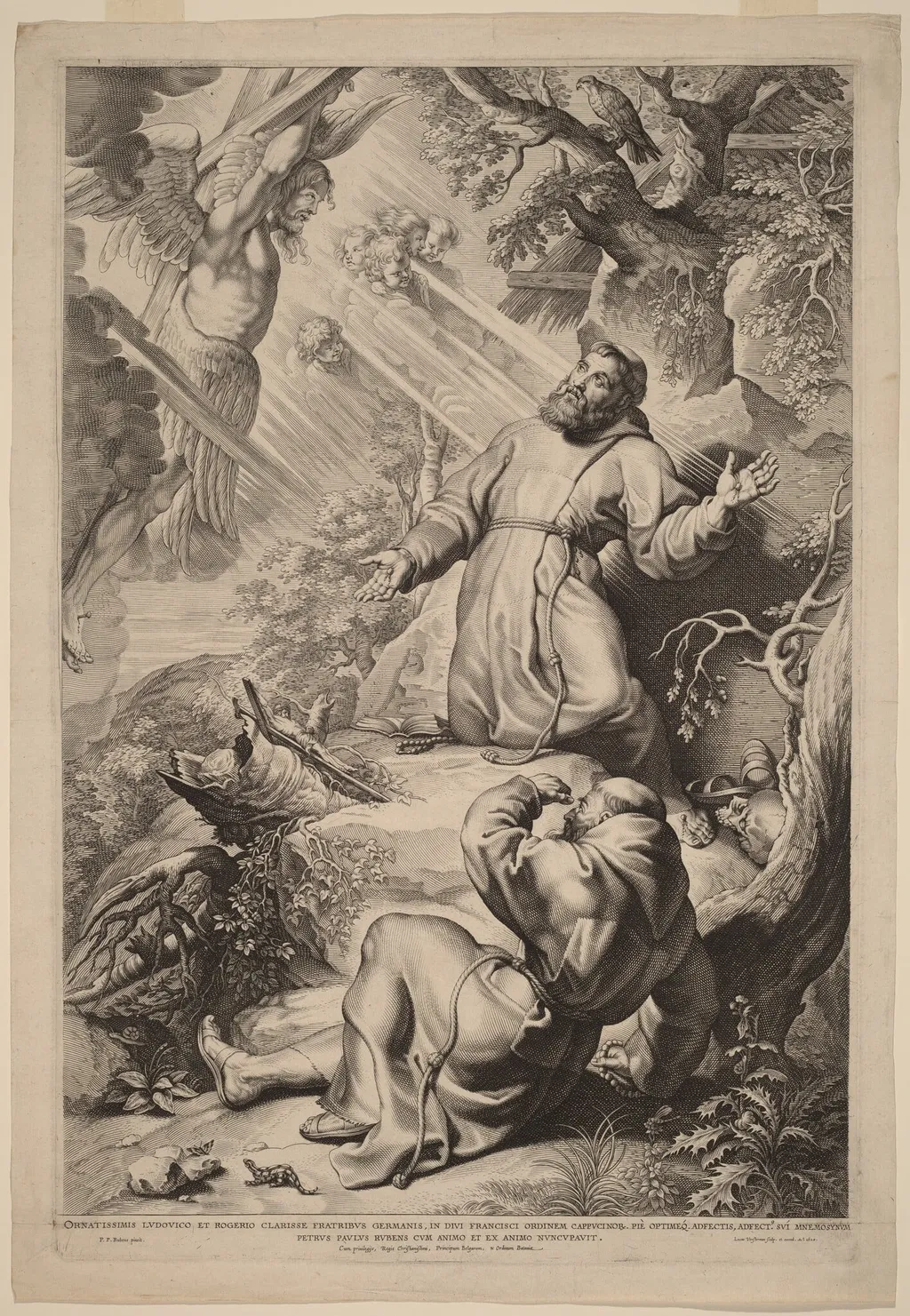
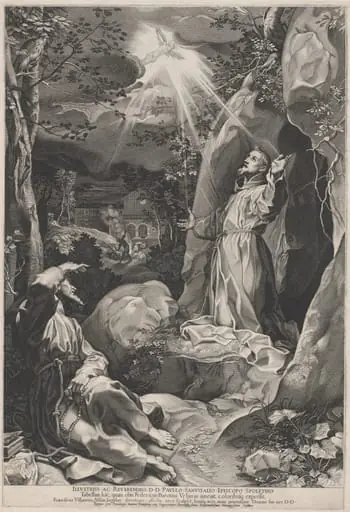
Saint Francis Receiving the Stigmata is an ink print by the Baroque artist Lucas Emil Vorsterman. It dates from 1620 and is held in the collection of the National Gallery of Art.
About this work
Overview
Lucas Emil Vorsterman’s 1620 engraving depicts the moment Saint Francis of Assisi receives the stigmata. Executed on laid paper, the image presents the saint on a craggy ledge, arms outstretched, head thrown back in apparent rapture, while a winged figure hovers above and a kneeling companion watches from below.
Subject & Meaning
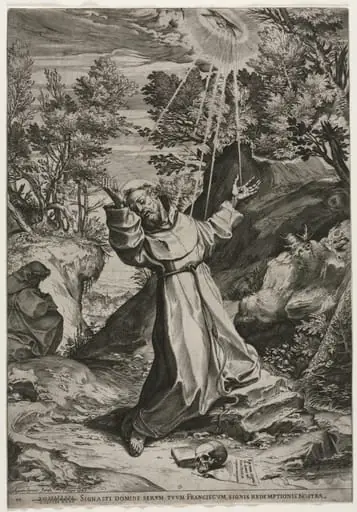
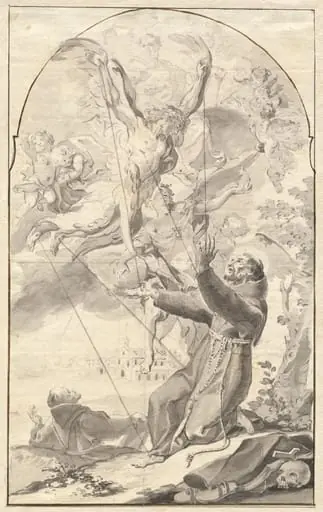
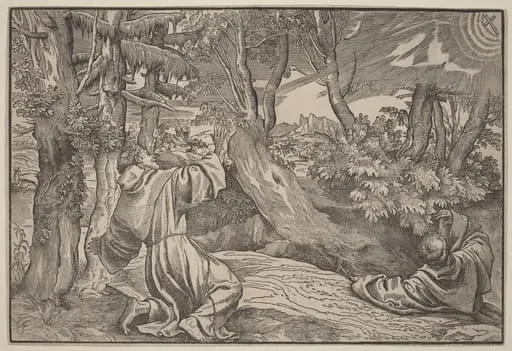
The composition illustrates the legendary episode in which Saint Francis is marked with the wounds of Christ, a symbol of his deep identification with the Passion. The winged presence suggests a divine messenger, reinforcing the theme of spiritual transcendence and the saint’s ecstatic union with the sacred.
Technique & Style
Vorsterman employs fine line work and cross‑hatching to model light and shadow, creating a dramatic chiaroscuro typical of Baroque printmaking. The layered textures of rock, foliage, and drapery convey depth, while the stark contrasts heighten the emotional intensity of the scene.
History & Provenance
Created in the early seventeenth century, the engraving was part of a broader series of religious prints circulated among Catholic patrons. Vorsterman, a noted Dutch engraver, produced the work after a composition likely derived from contemporary paintings, facilitating devotional use across Europe.
Context
The image reflects Counter‑Reformation concerns, emphasizing the power of visual art to inspire piety. By portraying Saint Francis’s mystical experience, the print aligns with Baroque tendencies toward theatricality and the evocation of divine presence within natural settings.
Artist & collection

Artist
etching and engraving by Lucas Vorsterman II, NGA 10762), B1977.14.10539 - Yale etc