Artwork
Springtime
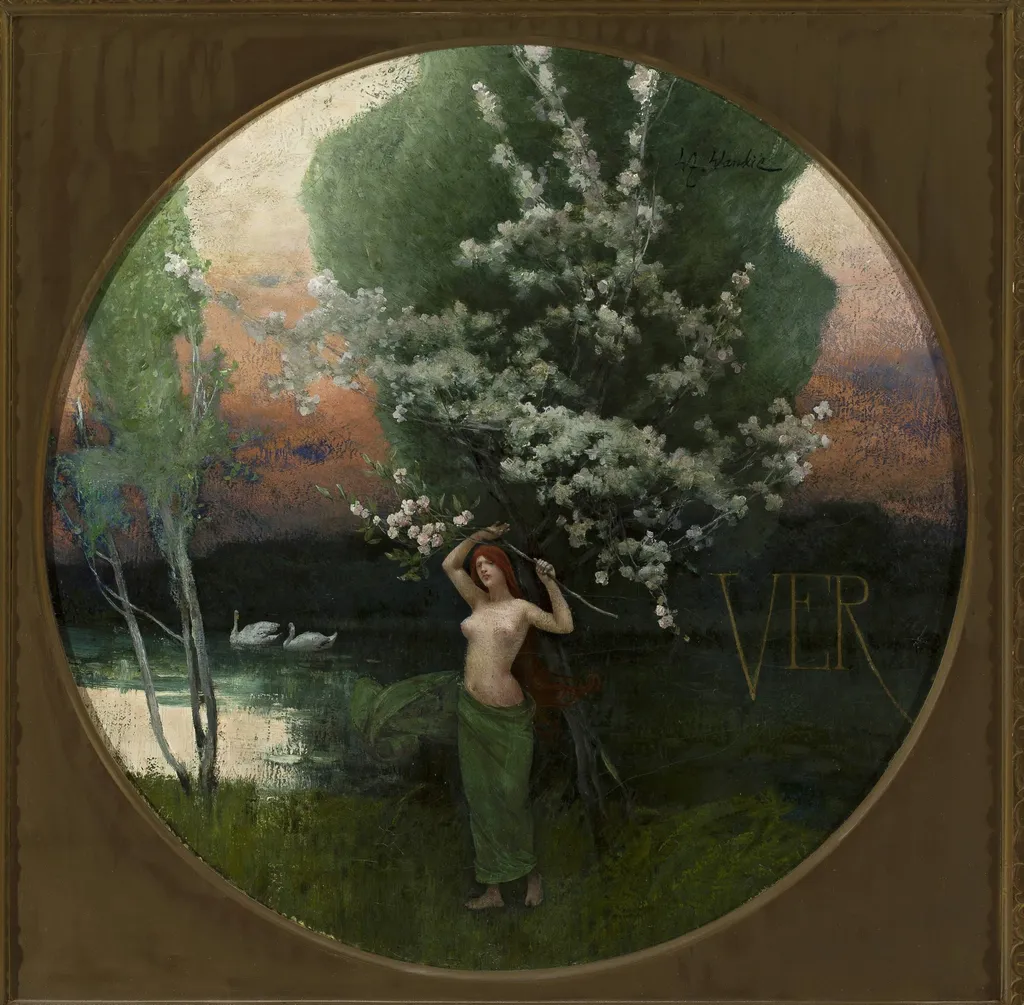
Springtime is an oil painting by Władysław Wankie. It dates from 1902 and is held in the collection of the National Museum in Warsaw.
About this work
Overview
Władysław Wankie, a Polish artist born in Warsaw in 1860 and active until 1925, painted *Springtime* around 1902 in oil. Trained in Warsaw and Kraków under prominent academic painters, he later settled in Munich, where his style matured toward quiet realism. The work reflects his interest in natural settings and human presence within them, now held in the National Museum in Warsaw.
Subject & Meaning
The scene evokes a contemplative harmony between figure and season, without narrative or symbolism beyond the quietude of the moment.
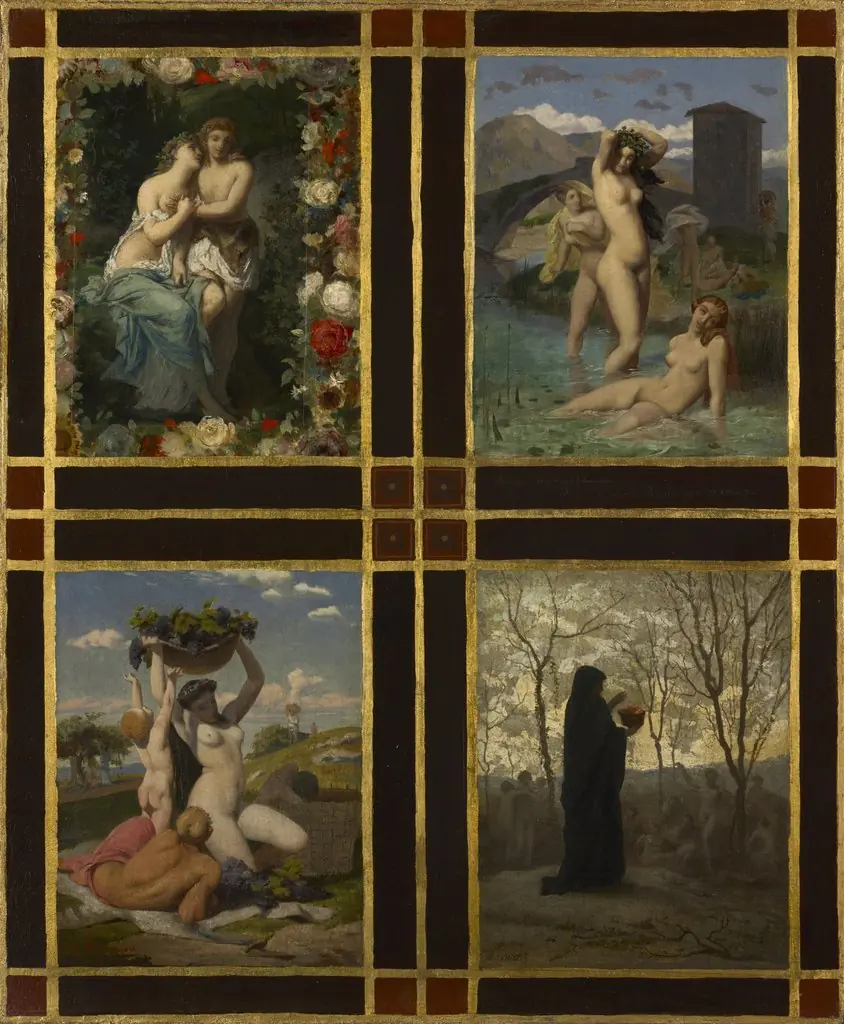
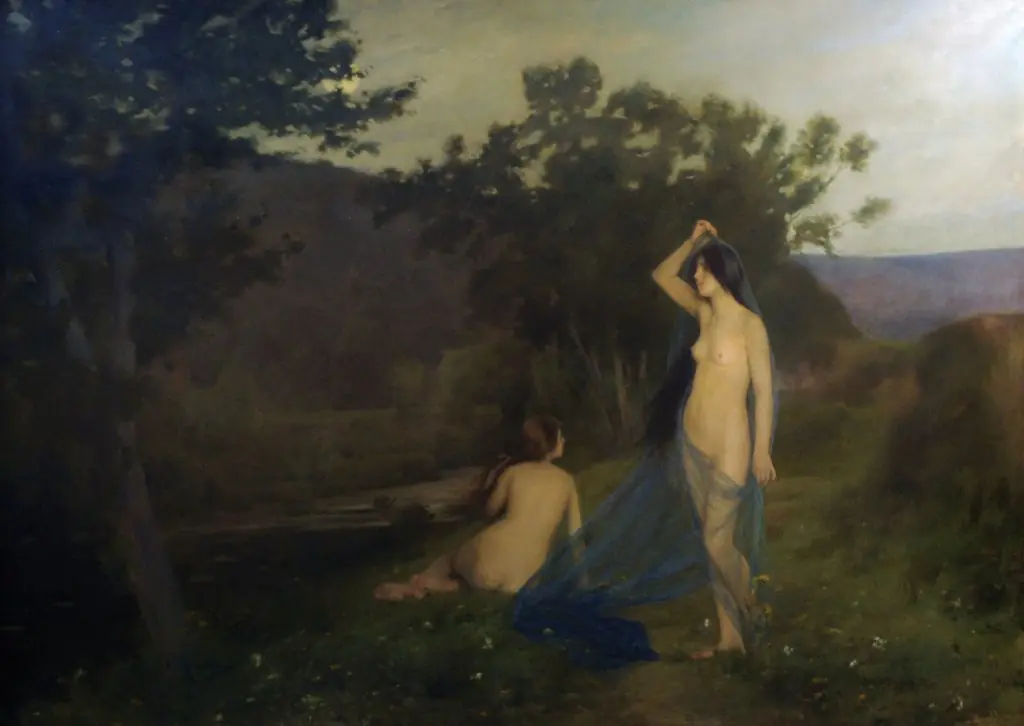
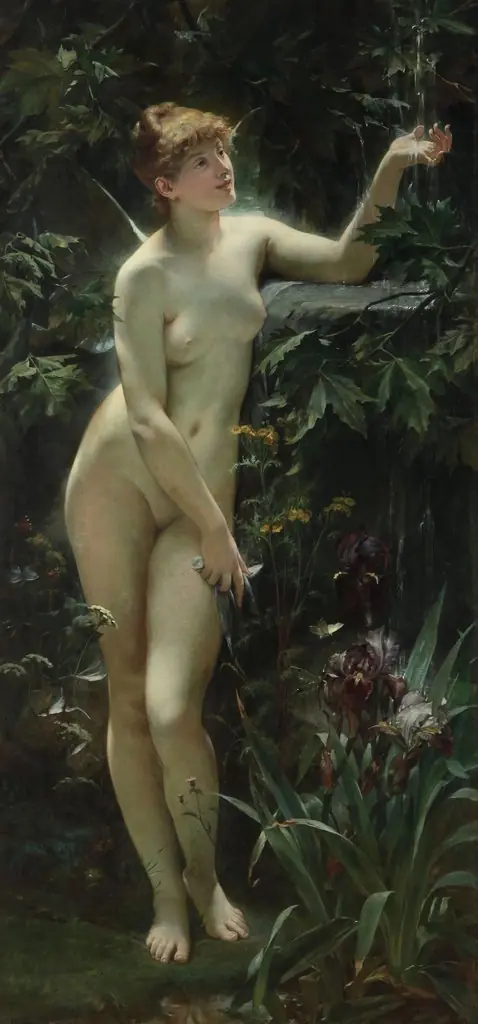
The painting depicts a woman standing alone in a spring landscape, her red hair and green dress contrasting with the soft greens and blooming white flowers around her. She holds a branch aloft, suggesting a gesture of gathering or reverence. Two swans glide on a distant body of water, reinforcing themes of stillness and renewal. The scene evokes a contemplative harmony between figure and season, without narrative or symbolism beyond the quietude of the moment.
Technique & Style
Wankie employed a restrained, observational approach typical of late 19th-century realism. Brushwork is soft and blended, particularly in the sky’s warm gradients and the foliage’s subtle tonal shifts. The woman’s form is rendered with gentle definition, avoiding idealization. Light is handled to suggest early morning or late afternoon, enhancing the painting’s calm mood through atmospheric diffusion rather than dramatic contrast.
History & Provenance
Created around 1902, *Springtime* entered the collection of the National Museum in Warsaw at some point after its completion. Wankie, known more for his critical writings than widespread fame, did not exhibit the work widely during his lifetime. Its preservation in a national institution reflects its recognition as a representative example of Polish academic landscape painting from the period.
Context
In early 20th-century Poland, artists like Wankie balanced academic training with a growing interest in native landscapes and everyday life. While European trends leaned toward impressionism or symbolism, Wankie retained a measured realism, influenced by his mentors and Munich’s artistic environment. *Springtime* aligns with a broader Polish effort to define national identity through serene, unidealized nature scenes.
Legacy
Though Wankie is remembered primarily as an art critic, *Springtime* endures as a quiet testament to his painterly sensibility. It represents a moment when Polish art sought emotional resonance in natural beauty without overt nationalism or romanticism. The painting remains a modest but enduring example of academic realism in Poland’s national collection.
Artist & collection
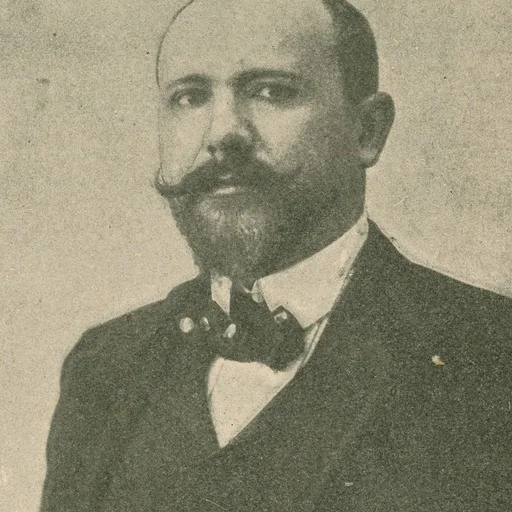
Artist
Władysław Wankie (born 1860 in Warsaw, died 1925 therein) was a Polish painter and art critic.